
Mind map
Subject of modal verbs, use ofgrammar with its rules and sentences
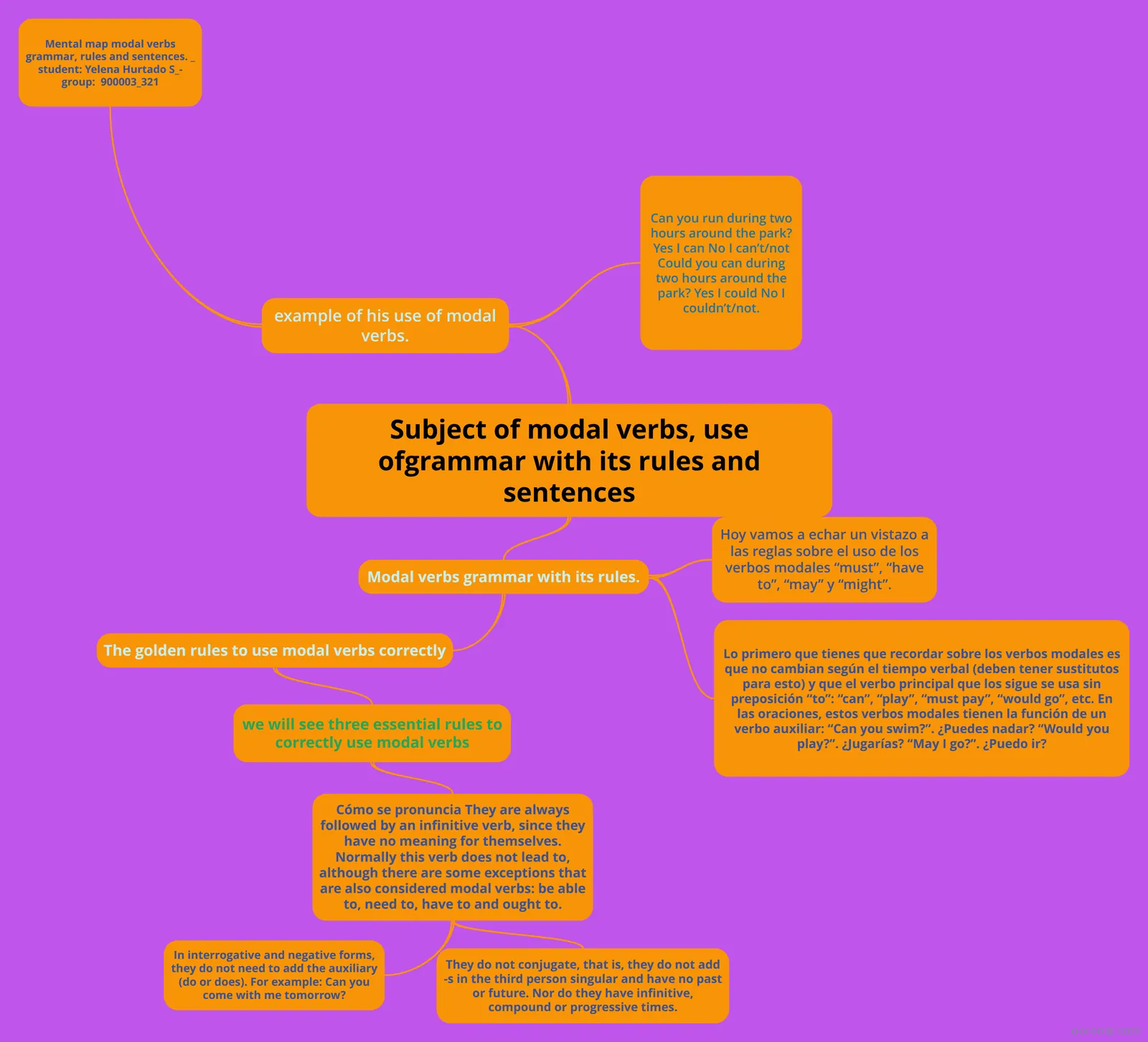
Mapa mental: verbos modales en inglés
Map content
Subject of modal verbs, use ofgrammar with its rules and sentences
example of his use of modal verbs.
- Can you run during two hours around the park? Yes I can No I can’t/not Could you can during two hours around the park? Yes I could No I couldn’t/not.
- Mental map modal verbs grammar, rules and sentences. _ student: Yelena Hurtado S_- group: 900003_321
Modal verbs grammar with its rules.
- Lo primero que tienes que recordar sobre los verbos modales es que no cambian según el tiempo verbal (deben tener sustitutos para esto) y que el verbo principal que los sigue se usa sin preposición “to”: “can”, “play”, “must pay”, “would go”, etc. En las oraciones, estos verbos modales tienen la función de un verbo auxiliar: “Can you swim?”. ¿Puedes nadar? “Would you play?”. ¿Jugarías? “May I go?”. ¿Puedo ir?
- Hoy vamos a echar un vistazo a las reglas sobre el uso de los verbos modales “must”, “have to”, “may” y “might”.
- The golden rules to use modal verbs correctly
- we will see three essential rules to correctly use modal verbs
- Cómo se pronuncia They are always followed by an infinitive verb, since they have no meaning for themselves. Normally this verb does not lead to, although there are some exceptions that are also considered modal verbs: be able to, need to, have to and ought to.
- They do not conjugate, that is, they do not add -s in the third person singular and have no past or future. Nor do they have infinitive, compound or progressive times.
- In interrogative and negative forms, they do not need to add the auxiliary (do or does). For example: Can you come with me tomorrow?
- Cómo se pronuncia They are always followed by an infinitive verb, since they have no meaning for themselves. Normally this verb does not lead to, although there are some exceptions that are also considered modal verbs: be able to, need to, have to and ought to.
- we will see three essential rules to correctly use modal verbs
Information
- Description
- Subject of modal verbs, use of grammar with its rules and sentences.
- Created by
- YELENA HURTADO
- Views
- 30
- Tags
- Rating