
Mind map
Low G+C Gram Positive Bacteria
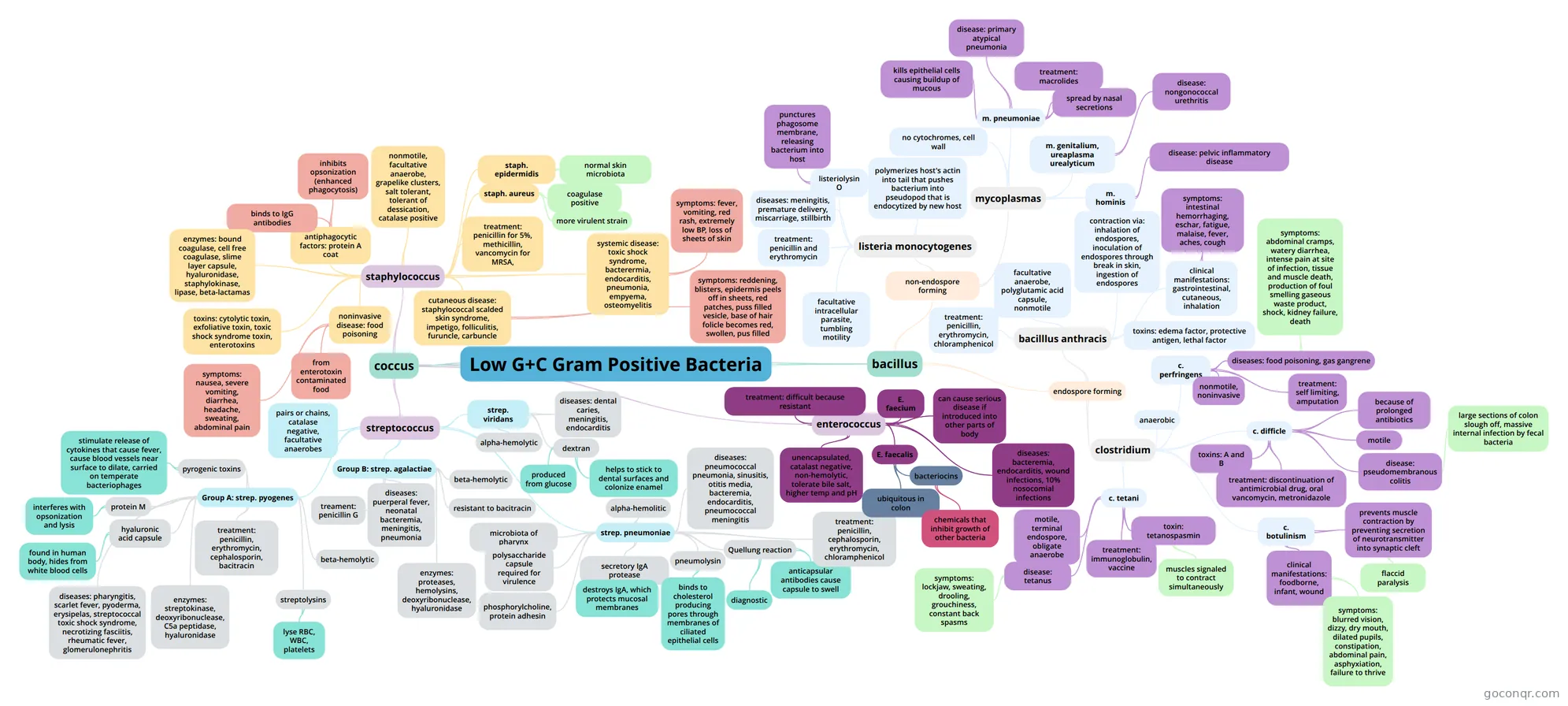
Mind map: Low G+C Gram positive bacteria
Map content
Low G+C Gram Positive Bacteria
coccus
- staphylococcus
- nonmotile, facultative anaerobe, grapelike clusters, salt tolerant, tolerant of dessication, catalase positive
- staph. aureus
- more virulent strain
- coagulase positive
- staph. epidermidis
- normal skin microbiota
- antiphagocytic factors: protein A coat
- binds to IgG antibodies
- inhibits opsonization (enhanced phagocytosis)
- enzymes: bound coagulase, cell free coagulase, slime layer capsule, hyaluronidase, staphylokinase, lipase, beta-lactamas
- toxins: cytolytic toxin, exfoliative toxin, toxic shock syndrome toxin, enterotoxins
- noninvasive disease: food poisoning
- from enterotoxin contaminated food
- symptoms: nausea, severe vomiting, diarrhea, headache, sweating, abdominal pain
- cutaneous disease: staphylococcal scalded skin syndrome, impetigo, folliculitis, furuncle, carbuncle
- symptoms: reddening, blisters, epidermis peels off in sheets, red patches, puss filled vesicle, base of hair folicle becomes red, swollen, pus filled
- systemic disease: toxic shock syndrome, bacterermia, endocarditis, pneumonia, empyema, osteomyelitis
- symptoms: fever, vomiting, red rash, extremely low BP, loss of sheets of skin
- treatment: penicillin for 5%, methicillin, vancomycin for MRSA,
- streptococcus
- pairs or chains, catalase negative, facultative anaerobes
- Group A: strep. pyogenes
- beta-hemolytic
- protein M
- interferes with opsonization and lysis
- hyaluronic acid capsule
- found in human body, hides from white blood cells
- enzymes: streptokinase, deoxyribonuclease, C5a peptidase, hyaluronidase
- pyrogenic toxins
- stimulate release of cytokines that cause fever, cause blood vessels near surface to dilate, carried on temperate bacteriophages
- streptolysins
- lyse RBC, WBC, platelets
- diseases: pharyngitis, scarlet fever, pyoderma, erysipelas, streptococcal toxic shock syndrome, necrotizing fasciitis, rheumatic fever, glomerulonephritis
- treatment: penicillin, erythromycin, cephalosporin, bacitracin
- Group B: strep. agalactiae
- beta-hemolytic
- resistant to bacitracin
- enzymes: proteases, hemolysins, deoxyribonuclease, hyaluronidase
- diseases: puerperal fever, neonatal bacteremia, meningitis, pneumonia
- treament: penicillin G
- strep. viridans
- alpha-hemolytic
- diseases: dental caries, meningitis, endocarditis
- dextran
- produced from glucose
- helps to stick to dental surfaces and colonize enamel
- strep. pneumoniae
- microbiota of pharynx
- polysaccharide capsule required for virulence
- phosphorylcholine, protein adhesin
- secretory IgA protease
- destroys IgA, which protects mucosal membranes
- pneumolysin
- binds to cholesterol producing pores through membranes of ciliated epithelial cells
- diseases: pneumococcal pneumonia, sinusitis, otitis media, bacteremia, endocarditis, pneumococcal meningitis
- alpha-hemolitic
- Quellung reaction
- anticapsular antibodies cause capsule to swell
- diagnostic
- treatment: penicillin, cephalosporin, erythromycin, chloramphenicol
- enterococcus
- unencapsulated, catalast negative, non-hemolytic, tolerate bile salt, higher temp and pH
- E. faecalis
- ubiquitous in colon
- bacteriocins
- chemicals that inhibit growth of other bacteria
- E. faecium
- can cause serious disease if introduced into other parts of body
- diseases: bacteremia, endocarditis, wound infections, 10% nosocomial infections
- treatment: difficult because resistant
- staphylococcus
bacillus
- endospore forming
- bacilllus anthracis
- facultative anaerobe, polyglutamic acid capsule, nonmotile
- contraction via: inhalation of endospores, inoculation of endospores through break in skin, ingestion of endospores
- clinical manifestations: gastrointestinal, cutaneous, inhalation
- symptoms: intestinal hemorrhaging, eschar, fatigue, malaise, fever, aches, cough
- treatment: penicillin, erythromycin, chloramphenicol
- toxins: edema factor, protective antigen, lethal factor
- clostridium
- anaerobic
- c. perfringens
- diseases: food poisoning, gas gangrene
- symptoms: abdominal cramps, watery diarrhea, intense pain at site of infection, tissue and muscle death, production of foul smelling gaseous waste product, shock, kidney failure, death
- nonmotile, noninvasive
- treatment: self limiting, amputation
- diseases: food poisoning, gas gangrene
- c. difficle
- because of prolonged antibiotics
- motile
- disease: pseudomembranous colitis
- large sections of colon slough off, massive internal infection by fecal bacteria
- treatment: discontinuation of antimicrobial drug, oral vancomycin, metronidazole
- toxins: A and B
- c. botulinism
- prevents muscle contraction by preventing secretion of neurotransmitter into synaptic cleft
- flaccid paralysis
- clinical manifestations: foodborne, infant, wound
- symptoms: blurred vision, dizzy, dry mouth, dilated pupils, constipation, abdominal pain, asphyxiation, failure to thrive
- prevents muscle contraction by preventing secretion of neurotransmitter into synaptic cleft
- c. tetani
- motile, terminal endospore, obligate anaerobe
- disease: tetanus
- symptoms: lockjaw, sweating, drooling, grouchiness, constant back spasms
- toxin: tetanospasmin
- muscles signaled to contract simultaneously
- treatment: immunoglobulin, vaccine
- bacilllus anthracis
- non-endospore forming
- listeria monocytogenes
- facultative intracellular parasite, tumbling motility
- listeriolysin O
- punctures phagosome membrane, releasing bacterium into host
- polymerizes host's actin into tail that pushes bacterium into pseudopod that is endocytized by new host
- diseases: meningitis, premature delivery, miscarriage, stillbirth
- treatment: penicillin and erythromycin
- mycoplasmas
- no cytochromes, cell wall
- m. pneumoniae
- kills epithelial cells causing buildup of mucous
- disease: primary atypical pneumonia
- treatment: macrolides
- spread by nasal secretions
- m. genitalium, ureaplasma urealyticum
- disease: nongonococcal urethritis
- m. hominis
- disease: pelvic inflammatory disease
- listeria monocytogenes
- endospore forming
Information
- Description
- Mind Map on Low G+C Gram Positive Bacteria, created by retm216 on 14/11/2015.
- Created by
- retm216
- Views
- 0
- Rating
More on Bacterial Classification and Morphology