
Mind map
Climate and Change
Map content
Climate and Change
Past climate change
- Natural causes of climate change
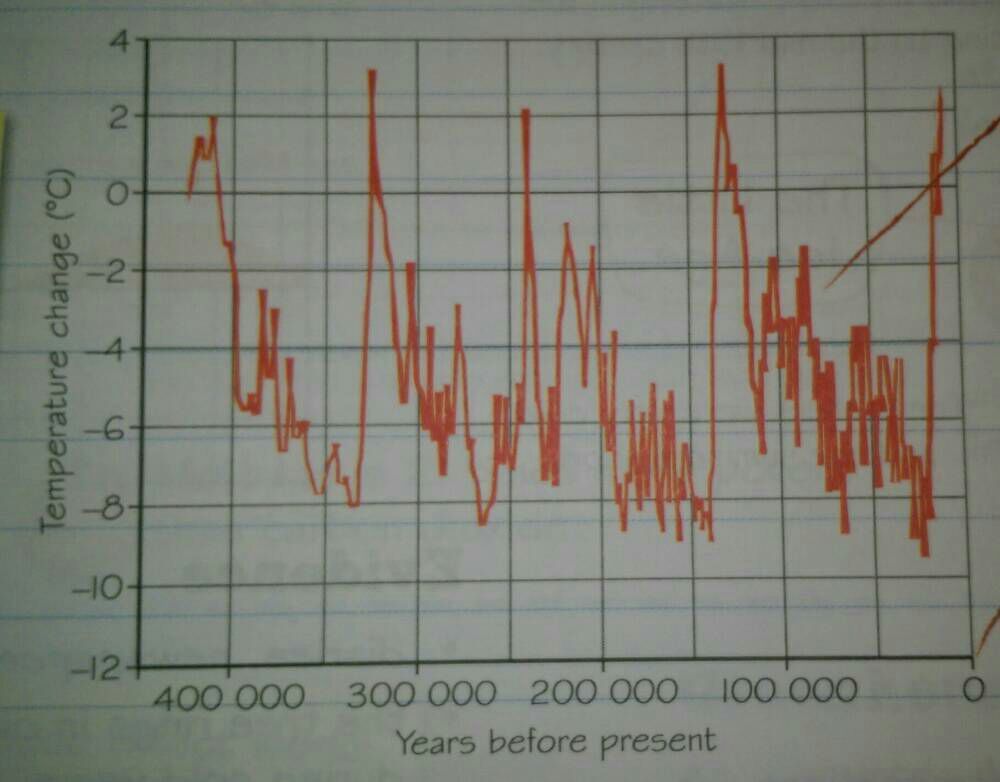
- Earth's orbit changes slightly once every 100000 years (Milankovitch cycles)
- Every 11 years, sun changes amount of energy emitted
- Volcanic eruption pump ash into atmosphere, cooling it
- Large asteroid collisions block sunlight, Fires from asteroids release CO2
- Ocean current changes
- How it's changed
- When temp is cooler for a long time, more of the Earth covered in ice (Ice Ages/Glacials)
- Now, we're in a warmer period (interglacial)
- Natural causes of climate change
Impact of climate change
- Little Ice Age, 15th-19th century
- Winters were cold and summers were short. Crops didn't grow well so there was less productivity and food.
- Could be caused by fewer sunspots or volcanic ash in atmosphere. But probably not humans because not a lot of industry.
- Evidence from diaries, newspapers and paintings. Also, tree's rings are thinner in cold years.
- Impact on megafauna
- 1. Megafauna like mammoths and sabre-tooth tigers evolved during Ice Age.
- 2. After Ice Age, temps rose 5C in 10000 years.
- 3. Megafauna couldn't adapt and became extinct (hunting could also be a cause)
- Little Ice Age, 15th-19th century
Present and future
- Rise in greenhouse gases
- CO2 and CH4 (Methane) are linked to human activity
- Rise in greenhouse gases matches the start of industrial revolution
- Current levels of CO2 thought to be at their highest for 650000 years
- For CH4, highest in 900000 years
- Methane is 21 times more potent than CO2
- Reasons for rise
- More greenhouse gases are released as a country becomes more developed
- More CO2 because: More industry, more energy from fossil fuels needed, more transport, land is needed so there's deforestation (trees burned)
- More CH4 because more animals are raised for meat
- How greenhouse effect works
- 1. Sun warms earth's surface
- 2. Some warmth radiates into atmosphere
- 3. Without gases warmth espaces into space
- 4. But with gases, some warmth is trapped, we need them but not too much
- Rise in greenhouse gases
Climate change challenges
- UK climate
- Latitude affects how much sun we get
- North Atlantic current (drift) keeps UK warmer than other places on same latitude.
- Air masses bring weather to UK from where they originated. UK affected by 5 air masses
- Prevailing winds from Atlantic in south west pick up moisture and bring rain to the UK.
- UK climate change
- Possible changes include: Average temp rises, less predictable rainfall patterns, drier summers and changing seasons
- Changes will happen because...
- North Atlantic current likely to move, less rainfall
- More air masses from north, more storms and extreme cold in winter
- Paths of depressions (which bring rain) may be altered because of this.
- Predicting effects
- In 2008, global CO2 levels reached 380 ppm
- If conc goes over 550 ppm, global temp may rise by 6C or more
- Consequences: Millions of home losses due to sea level rises
- Changes to weather patterns cause storms and droughts leading to famine and disasters
- Animals and plants wouldn't be able to adapt
- If conc stays under 550, global temp may not go over 2C
- Sea levels may rise 1m, leading to costal flooding
- More storms/ hurricanes
- Some species might become extinct, others would shift to new zones
- UK climate
Case Study: UK
- Environmental impacts
- Sea levels rise, loss of coastal land and increased erosion. Low-lying cities like London may flood
- Severe storms and longer droughts during summer
- Fishing industry changes because species move to different waters
- Some plant and animal species may move and invasive species could emerge
- Warmer temp could encourage diseases like malaria
- Economic impacts
- Increase in refugees from countries hit hard by climate change
- Warmer weather means farmers can grow different crops and have a longer growing season
- Hotter summers, more people holiday in UK rather than overseas
- Damage from flooding to cities like London would be expensive and disruptive
- Cost of protecting places from flooding is expensive and sometimes not practical
- Housing design may need to be altered so less water wastage
- Environmental impacts
Case study: Bangladesh
- Environmental impacts
- River flooding could worsen because of rainfall and sea level rise
- Tropical storms could be more frequent and move inland
- Dry season already getting longer, more droughts
- Economic impacts
- More tropical storms would lead to increased damage to homes, lives and infrastructure
- Bangladesh has large, growing population, many farm so land is needed
- Cost of protecting from flooding is more than people or government can afford
- Coastal flooding makes farmland too salty to grow crops
- More flooding means more homes damaged and lives and economy disrupted
- Even a few cm rise in sea level could reduce Bangladesh's agricultural output by a lot
- Shrimp farming, which is important, could be affected by sea temp
- Increased flooding spreads water-borne diseases like cholera
- Environmental impacts
Images and files in the map
Information
- Description
- Mind Map on Climate and Change, created by Maximillian Holwell on 31/03/2016.
- Created by
- Maximillian Holwell
- Views
- 0
- Rating