
Mind map
Cahora Bassa Dam - Mozambique
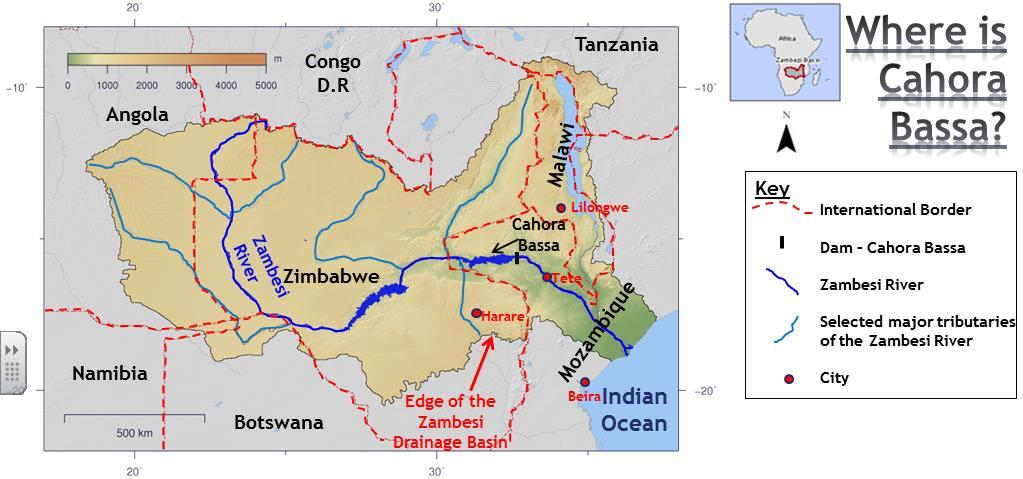
Map content
Cahora Bassa Dam - Mozambique
Details
- Mozmbique was one of the poorest countries in the world, with an HDI of just 0.327
- 52% of Mozambique's population are under the poverty line
- Portugal initially had an 82% stake and Mozambique only 19%, and as they had to contract much of the work to private companies, their profits were diminished further, but now Mozambique has full ownership
- Portugal was the x-colonial ruler of Mozambique, and it was their idea to build the dam
- The construction produces environmentally clean energy and employment
- the dam blocks the 4th largest artificial lake in Africa, and is one of 3 major dams along the Zambezi River which goes through Congo, Angola, Zimbabwe, and finally Mozambique
- it has created a lake that is 292Km long, up to 32Km wide and a max. of 157m deep
- Started in the 1960s and finished 30yrs later, although development and use of the scheme was stunted by civil war 1977-1992.
- Mozmbique was one of the poorest countries in the world, with an HDI of just 0.327
Location map:
Key terms:
- bilateral
- top-down
- long term
- large-scale project
Effects?
- Positive
- Long term
- the dam provides an important power import facility to the South African grid, transmitting 1920MW of power, and one MW can power 1,000 average US homes
- Most of the power is sold to South Africa, boosts the national economy
- A Kapenta fishery industry has developed, harvesting 10,000 tonnes in 2003
- Long term
- Negative
- Short term
- only 1% of Mozambique actually have access to electricity
- so they cannot access what the dam is producing
- This level has hardly changed during the dam
- The local shrimp industry has been destroyed
- only 1% of Mozambique actually have access to electricity
- Long term
- The dam could produce more energy but its potential is limited by other upstream dams that keep river flows very low
- The potential for the dam to reduce flooding has been a disappointment as floods downstream and on other rivers occurred, which are an environmental limit to development which the dams were hoped to reduce
- Even though selling the electricity to South Africa benefits the economy, it does not directly benefit the citizens
- Short term
- Positive
Success?
- YES
- It is a success because is provides important power, and has enabled Mozambique to pay off some of its debt. It is also a long term investment, allowing Mozambique to eventually develop slightly, and is a source of clean electricit. Some success has been experienced, but with more careful planning and control much more could be achieved.
- NO
- It is not a success because even though it is generating such large amounts of electricity, the people of Mozambique cannot access it, and the dam would have a larger potential if other dams were not further upstream. Furthermore the dam was built to increase Mozambique's development, but subsequent flooding has held it back even further
- YES
Images and files in the map
Information
- Description
- Mind Map on Cahora Bassa Dam - Mozambique, created by jeacur on 10/03/2014.
- Created by
- jeacur
- Views
- 963
- Rating