
Mind map
Intoxication essay breakdown
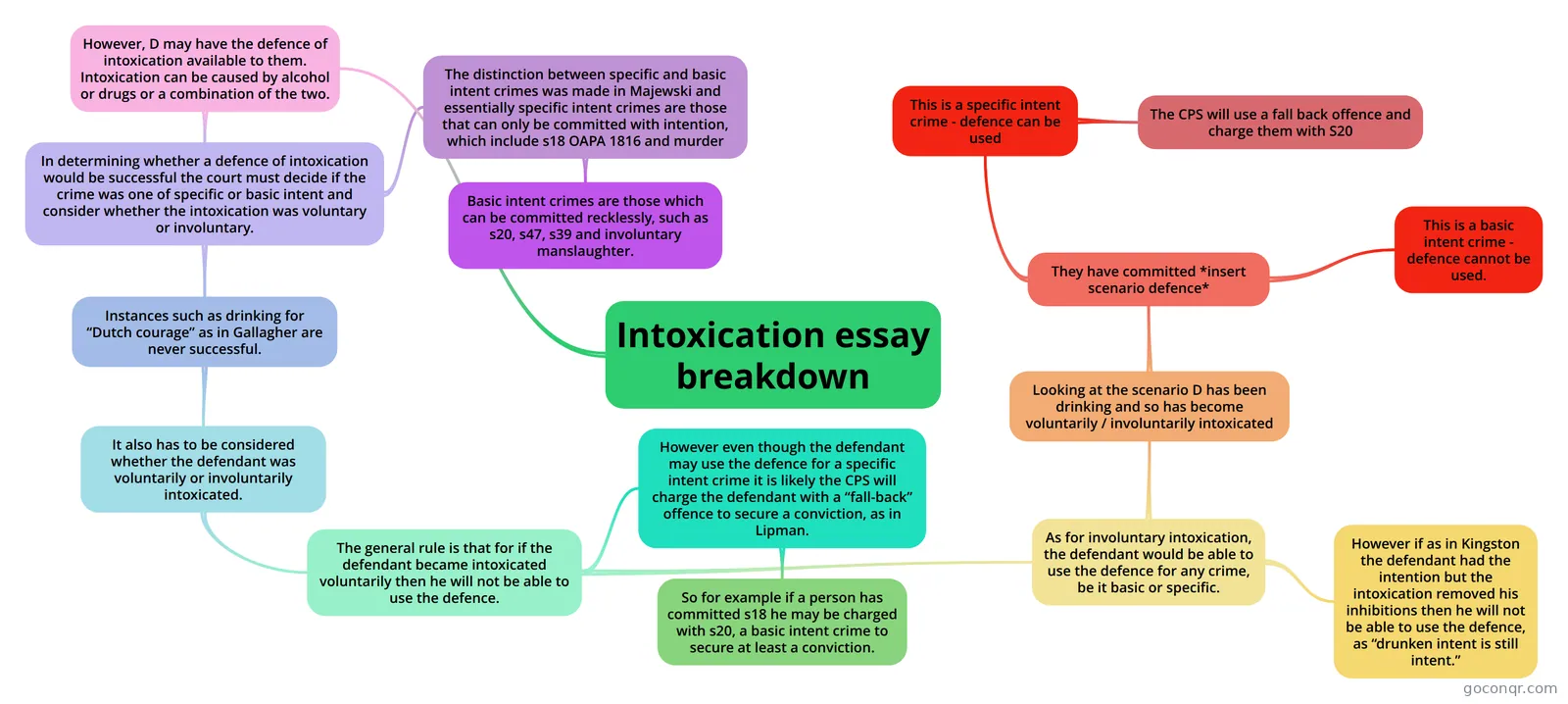
Mind map: Intoxication defence law essay breakdown
Map content
Intoxication essay breakdown
However, D may have the defence of intoxication available to them. Intoxication can be caused by alcohol or drugs or a combination of the two.
- In determining whether a defence of intoxication would be successful the court must decide if the crime was one of specific or basic intent and consider whether the intoxication was voluntary or involuntary.
- The distinction between specific and basic intent crimes was made in Majewski and essentially specific intent crimes are those that can only be committed with intention, which include s18 OAPA 1816 and murder
- Basic intent crimes are those which can be committed recklessly, such as s20, s47, s39 and involuntary manslaughter.
- Instances such as drinking for “Dutch courage” as in Gallagher are never successful.
- It also has to be considered whether the defendant was voluntarily or involuntarily intoxicated.
- The general rule is that for if the defendant became intoxicated voluntarily then he will not be able to use the defence.
- However even though the defendant may use the defence for a specific intent crime it is likely the CPS will charge the defendant with a “fall-back” offence to secure a conviction, as in Lipman.
- So for example if a person has committed s18 he may be charged with s20, a basic intent crime to secure at least a conviction.
- As for involuntary intoxication, the defendant would be able to use the defence for any crime, be it basic or specific.
- However if as in Kingston the defendant had the intention but the intoxication removed his inhibitions then he will not be able to use the defence, as “drunken intent is still intent.”
- Looking at the scenario D has been drinking and so has become voluntarily / involuntarily intoxicated
- They have committed *insert scenario defence*
- This is a basic intent crime - defence cannot be used.
- This is a specific intent crime - defence can be used
- The CPS will use a fall back offence and charge them with S20
- They have committed *insert scenario defence*
- However even though the defendant may use the defence for a specific intent crime it is likely the CPS will charge the defendant with a “fall-back” offence to secure a conviction, as in Lipman.
- The general rule is that for if the defendant became intoxicated voluntarily then he will not be able to use the defence.
- It also has to be considered whether the defendant was voluntarily or involuntarily intoxicated.
- The distinction between specific and basic intent crimes was made in Majewski and essentially specific intent crimes are those that can only be committed with intention, which include s18 OAPA 1816 and murder
- In determining whether a defence of intoxication would be successful the court must decide if the crime was one of specific or basic intent and consider whether the intoxication was voluntary or involuntary.