
Notes
Lifespan Development
Content of the notes (1)
Page 1
Introduction to Lifespan Development
Developmental psychology concerns the physiological, behavioral, cognitive, and social changes that occur throughout human life, which are guided by both genetic predispositions (nature) and environmental influences (nurture).
Developmental psychologists explore three questions throughout their careers:
Does our development occur gradually over time or in strict stages? Schleichender, allmählicher Prozess oder gibt es strikte Phasen?
Do our childhood experiences have a stronger impact than later experiences in life? Was ist wichtiger? Kindheits-Erfahrungen oder spätere?
What roles do genetics and the environment play in our development? Nature vs. Nurture? Welche Rolle spielen Gene und welche unsere Umwelt für unsere Entwicklung?
Development starts with conception
Overview:
Introduction to Lifespan Development
Prenatal and Early Development
Cognitive Development In Childhood
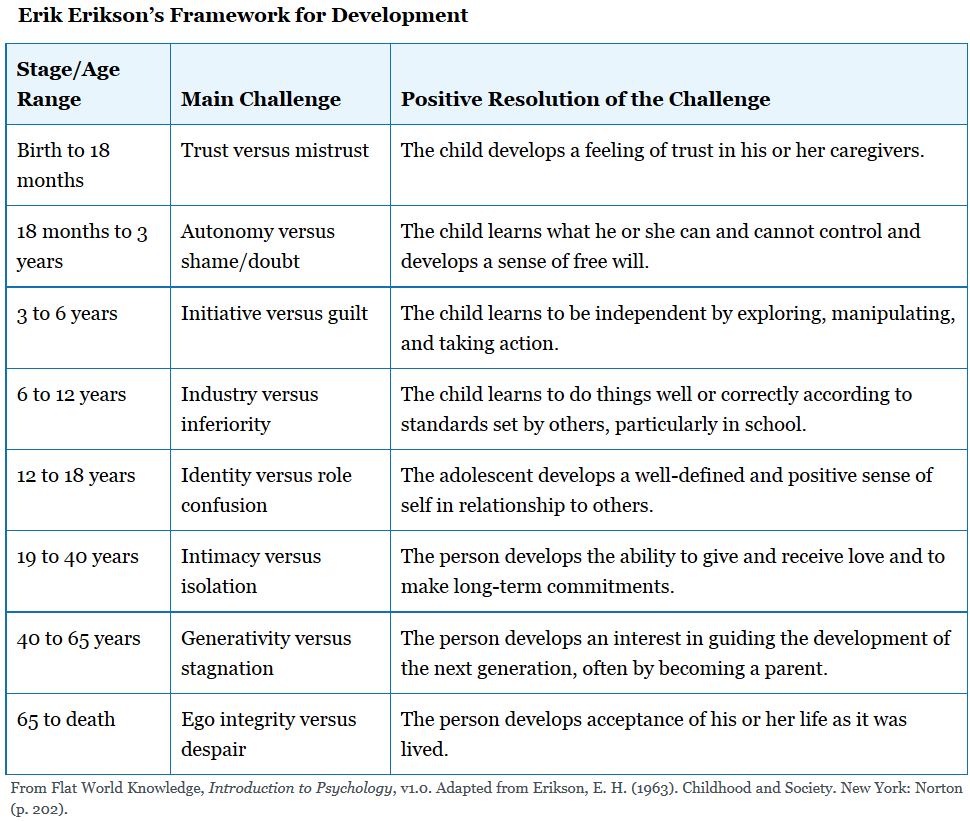
Social & Personality Development in Children
Development During Adolescence
Adulthood: Early, Middle, and Late
Conception occurs when an egg from the mother is fertilized by a sperm from the father In humans, the conception process begins with ovulation, when an ovum, or egg (the largest cell in the human body), which has been stored in one of the mother’s two ovaries, matures and is released into the fallopian tube.
zygote, which starts as a fertilized egg, or ovum, with the full complement of 23 pairs of chromosomes Once the zygote attaches to the wall of the uterus, it is known as the embryo
The amniotic sac is the fluid-filled reservoir in which the embryo (soon to be known as a fetus) lives until birth. The amniotic sac also acts as a cushion against outside pressure and as a temperature regulator. The placenta is an organ that allows the exchange of nutrients between the embryo and the mother, while at the same time filtering out harmful material. Finally, the umbilical cord links the embryo directly to the placenta and transfers all material to the fetus
Conception occurs when an egg from the mother is fertilized by a sperm from the father In humans, the conception process begins with ovulation, when an ovum, or egg (the largest cell in the human body), which has been stored in one of the mother’s two ovaries, matures and is released into the fallopian tube.
zygote, which starts as a fertilized egg, or ovum, with the full complement of 23 pairs of chromosomes Once the zygote attaches to the wall of the uterus, it is known as the embryo
The amniotic sac is the fluid-filled reservoir in which the embryo (soon to be known as a fetus) lives until birth. The amniotic sac also acts as a cushion against outside pressure and as a temperature regulator.
The placenta is an organ that allows the exchange of nutrients between the embryo and the mother, while at the same time filtering out harmful material.
Finally, the umbilical cord links the embryo directly to the placenta and transfers all material to the fetus
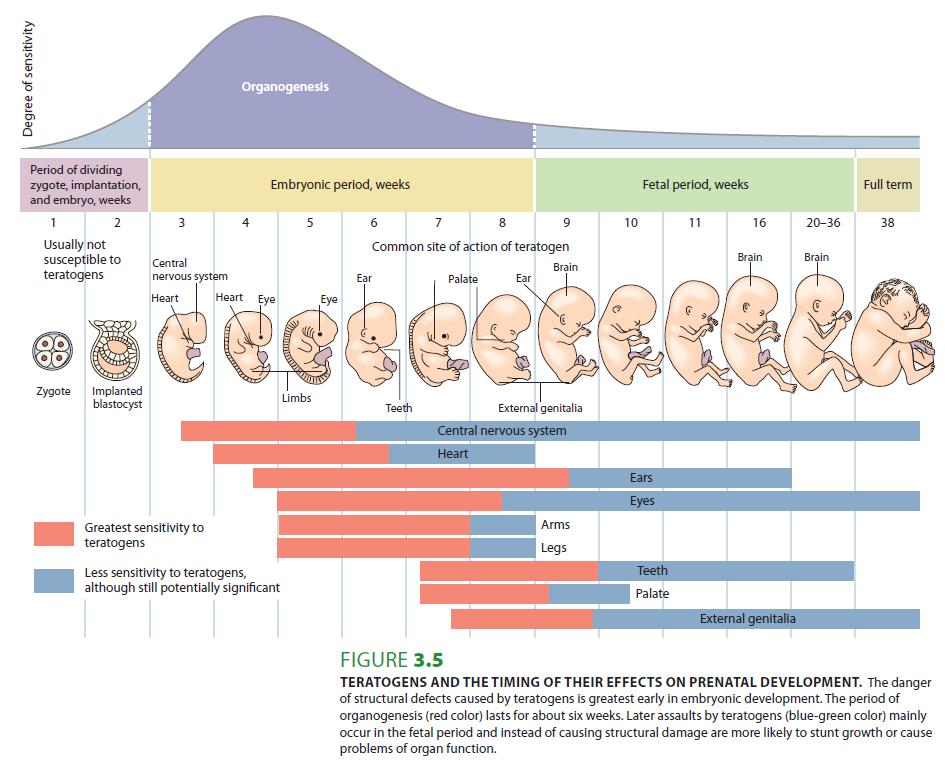
Teratogens and Other Dangers to Fetal Development substances that can harm the fetus, known as teratogens, may nevertheless cause problems fetal alcohol syndrome (FAS), a condition caused by maternal alcohol drinking that can lead to numerous detrimental developmental effects, including limb and facial abnormalities, genital anomalies, and mental retardation
Introduction to Lifespan Development
Overview
Prenatal and Early Development
Cognitive Development In Childhood
Information
- Description
- Week 7 - Introduction to Psychology as a Science
- Created by
- micha102
- Views
- 1,115
- Tags
- Rating