
Notes
Electric Charge
Content of the notes (5)
Page 1
Electrostatic Phenomena:
Electrostatic phenomena is an event where static electricity has a specific effect: for example a static shock. Electrons move from one material to another, the material with a negative charge will then look for some way to earth its charge: like clouds through lightening or a car through your hand and body.
Charges within an atom:
Atoms have protons, neutrons, electrons
Protons found in the nucleus and have +1 charge
Neutrons found in nucleus with no charge
Electrons travel around nucleus in orbit with -1 charge
No of protons = No of electrons
Therefore, atom has no overall charge and is neutral
If atom loses electrons, positively charged; if gains electrons negatively charged
Charged atom - ion
Page 2
Charging materials by friction:
Good electrical conductors - metals
Electrical insulators - plastic, rubber, glass, wood, etc. They can be given an electric charge by rubbing them.
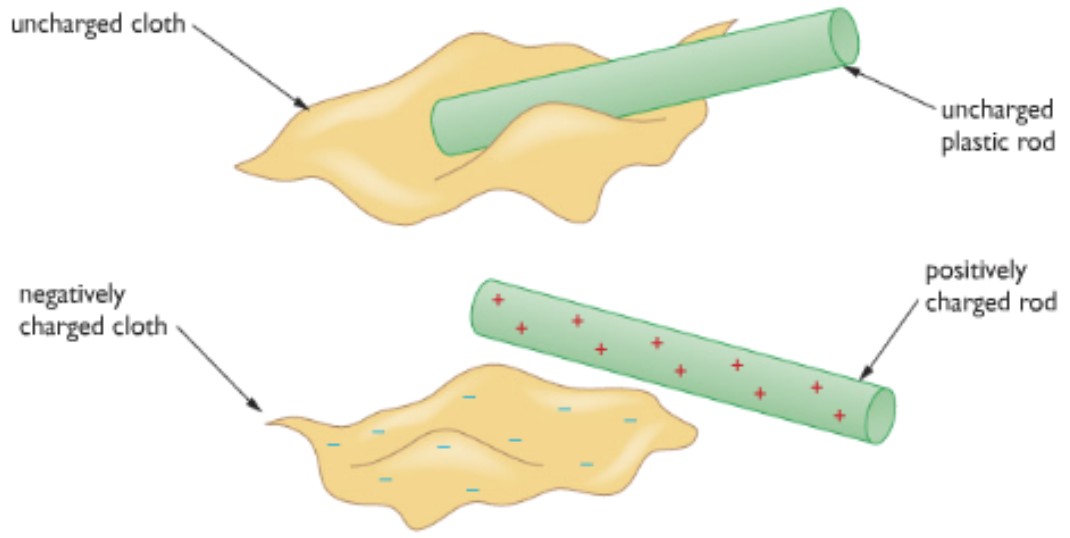
Uncharged plastic rod rubbed with uncharged cloth - both can become charged through friction.
When rubbed, electrons from atom of rod may move onto cloth - imbalance of charge in both electrons - rod is short and so positively charged, cloth has excess and so negatively charged.
Page 3
Forces between charges:
Charged objects can exert forces on other charged objects without touching.
Like charges repel.
Opposite charges attract.
Van de Graaff generator - when on, charges flow onto large metal dome - some flow over hands of person touching and body, including hair - strands of hair have same type of charge so repel and stand on end - person needs to stand on isolator to stop charges escaping to floor
When step off insular - charges escape
Earthing - when path provided for charges to escape
Page 4
Uses of static electricity:
Electrostatic paint spraying:
Have a metal spray nozzle connected to positive terminal.
Charged droplets of paint emerge from spray gun.
Since they have same charge, they repel and spread, forming fine spray.
Metal bicycle frame has wire attached to electrical supply giving frame opposite charge, so paint droplets attracted to surface of frame.
Therefore, paint attracted to tight corners too.
Inkjet printers:
Inkjets direct fine jet of ink drops onto paper.
Each spot of ink is given charge so when falls between pair of deflecting plates, electrostatic forces direct to correct position.
Plate charges change many times per second so each drop falls in different position - pictures and words formed as needed.
Photocopiers:
1. Drum is charged
2. Image of object to be copied formed and charge stays only where image is dark
3. Toner drops on to drum and sticks to charged areas
4. Surplus toner removed
5. Paper pressed against toner image to give image on paper
6. Paper heated to melt toner image, forming permanent image on paper
Page 5
Information
- Description
- IGCSE Physics Note on Electric Charge, created by Aarushi Jain on 06/04/2017.
- Created by
- Aarushi Jain
- Views
- 0
- Rating