
Drift to War 1933-1939

Slides in this set (6)
-
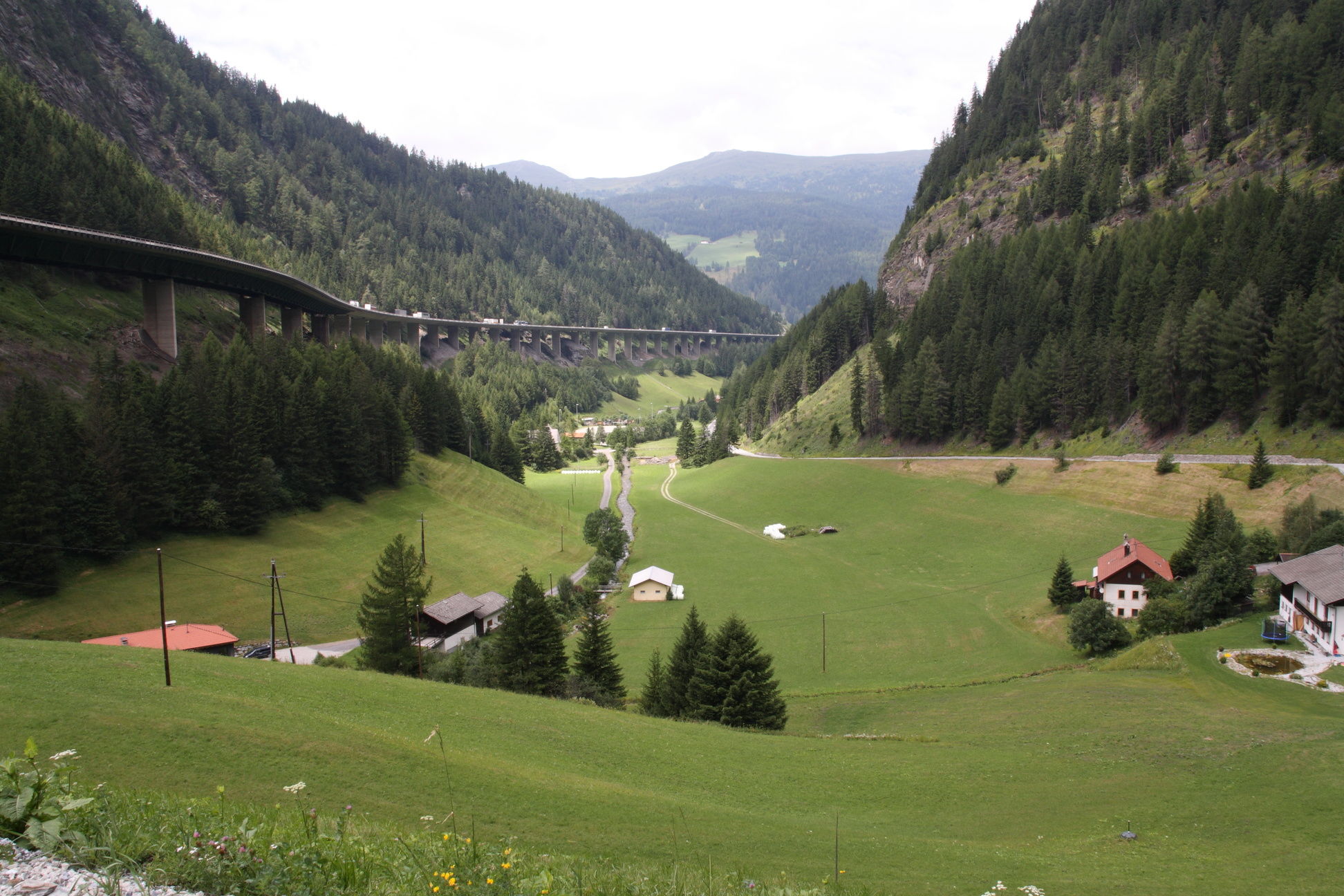
- Caption: Brenner Pass modern day
- Hitler’s foreign policy suffered a major setback in 1934
- In July 1934, Austrian Prime Minister, Engelbert Dolfuss was murdered by Nazi sympathisers
- Mussolini at this time feared a coup d’état
- An independent Austria would act as a buffer zone between Italy and Germany
- Mussolini feared Hitler might try to unite German-speaking people in the North of Italy
- 40,000 Italian troops marched to the Brenner Pass to prevent German invasion
- Hitler ordered Austrian Nazis to abandon their plans for a coup d’état
-
- Italy invaded Abyssinia (now Ethiopia) in 1935, this was to draw from the country's fertile lands and mineral wealth, while increasing the size of the Italian Empire.
- December 1934, Mussolini took advantage over who owned the land at the Wal-Wal Oasis and prepared to invade Abyssinia
- Emperor of Abyssinia, Haile Selassie, appealed to the League for help
- Abyssinia laid close to both French and British territories; the League's response would demonstrate its effectiveness
-
Abyssinian Crisis Phases 1 & 2
- Phase 1: January to October 1935
- Britain and France were attempting to negotiate with Italy after the invasion
- Mussolini dispatched forces to Africa at this time
- Britain and France wanted to remain friendly with Italy, and to stop an alliance between Mussolini and Hitler
- April 1935, Britain, France and Italy sign the Stresa Pact (formal statement against German rearmament and stand against Hitler)
- Abyssinia was ignored here, until British Foreign Secretary, Samuel Hoare, mentioned Britain's commitment to collective security
- A League Committee investigated the Wal-Wal incident, reporting in September 1935
- The report claimed neither side could be blamed and Italy should receive some Abyssinian territory
- Phase 2: October to May 1936
- Mussolini rejected the League proposals and invaded Abyssinia in October 1935
- The League imposed sanctions on Italy (banned arms sales and financial loans to Italy, and exports of Italian rubber, tin and metals)
- The Suez Canal, which was owned by Britain and France, was not closed to Mussolini's supply ships
- Britain and France were afraid closing this route might result in war with Italy
- December 1935 - British and French foreign ministers developed a plan to give Italy two-thirds of Abyssinia to end the invasion
- They developed this plan without consulting Selassie or the League of Nations beforehand; resulted in the leaking of details to the press
- Both foreign ministers, Samuel Hoare and Pierre Laval, were sacked
-

- The US Congress was appalled by the actions of Hoare and Laval and exporters began to increase exports to Italy.
- Further, on March 7, 1936, Hitler marched troops into the Rhineland, defying the terms of the Treaty of Versailles. With French attention elsewhere, Italy defied the League's orders and took full control of Abyssinia in May 1936.
- Consequences of Abyssinia:
- The League failed in its policy of collective security
- Hitler gained strength against the British and French
- In November 1936, Mussolini and Hitler sign the alliance pact known as the Rome-Berlin Axis
-
- Hitler came to power on 30 January 1933 as the new Führer (dictator of Germany). As a strong nationalist, Hitler wanted to bring his ideology to Germany, which he outlined in his autobiography Mein Kampf:
- Destroying Communism - believed Communism was a disease and therefore, persecuted communists in Germany
- Militarism - regarded war as a measure of the health and strength of a nation
- Racial theory and Lebensraum - claimed the Germans were a master race (Aryans). While claiming Jews and Slavs were inferior. Further, the German empire would rule these peoples and create an empire to give Germans needed 'living space' (Lebensraum)

-
German relations with France and Britain
- British Response to Hitler's actions:
- Responding to rearmament in Germany, Britain signed the The Anglo-German Naval Agreement
- with Germany
- Germany was allowed to establish a navy 35% the size of the British navy
- This behaviour encouraged Hitler to believe that Britain did not mind his actions
- French Response to Hitler's actions:
- The French felt threatened by Germany at the time of the Rhineland occupation in 1936
- France sought an alliance with Britain against the Germans
- The British refused, therefore, France sought alliance with the USSR
Information
- Description
- User has deleted their subject information Slide Set on Drift to War 1933-1939 , created by Deleted user on 01/09/2017.
- Created by
- Deleted user · Sep 2017
- Updated
- Sep 1, 2017
- Views
- 13
- History
-
- Created by Andrew Burke · Jun 28, 2017
- Copied by Andrew Burke · Jun 30, 2017
- Copied by Andrew Burke · Sep 1, 2017
- Rating