
Disease Diffusion
Slides in this set (7)
-
- Diffusion is the process of diseases spreading outward from their origin and across space.
- This takes several forms:
- expansion diffusion
- relocation diffusion
- contagious diffusion
- hierarchical diffusion
-
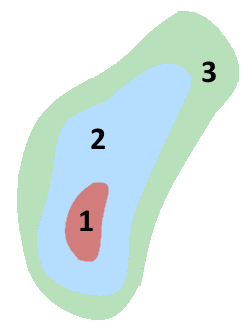
- Expansion diffusion occurs where a disease starts in one location and spreads out, similar to the "snowball" effect.
- Many cultural practices are spread by a type of cultural diffusion called expansion diffusion.
-
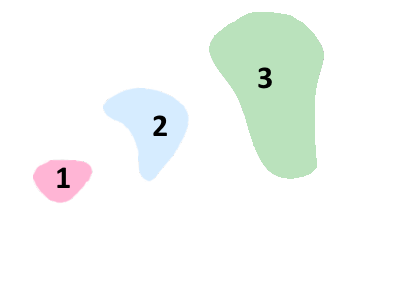
- Relocation diffusion occurs when a disease completely leaves one area and moves to another.
- An example of this is the cholera epidemic in Haiti in 2010.
- Diseases like this can spread by people flying from one location to another.
-
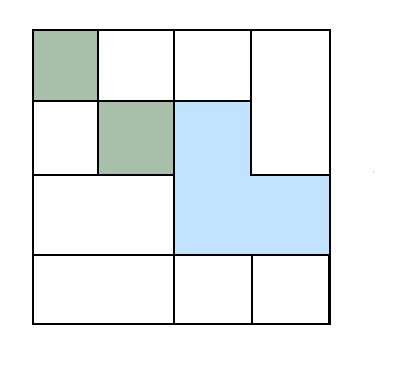
- Contagious diffusion describes the spread of a disease through direct contact with a carrier.
- An example of this is the Ebola outbreak in Africa in 2014-15.
-
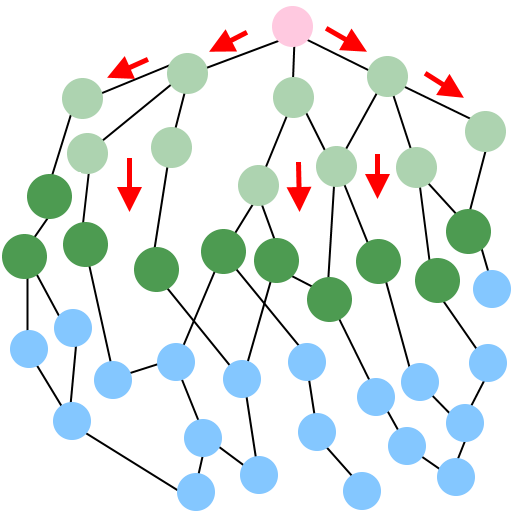
- Hierarchical diffusion is diffusion through a sequence of carriers.
- This type of diffusion is usually spread along roads and railways.
- In 2009, the H1N1 virus spread to locations with international airports.
-
- The most important barrier to diffusion is distance. The probability of catching a contagious disease decreases with distance from the source.
- Physical barriers such as mountains, oceans and deserts also stop diffusion.
- Climate can act as a barrier to many tropical diseases.
- Political barriers such as immigration control stop a disease from spreading to the public within a country.
- Mass vaccinations can act as a barrier to diffusion also.
-
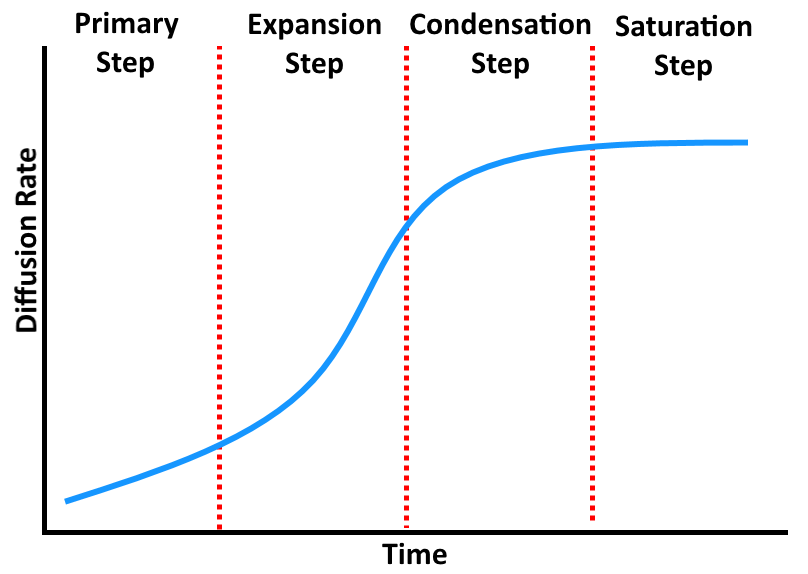
- The Hägerstrand Model traces the diffusion process by imitating it with numbers.
- The model is based on probability rather than fixed numbers.
- There are several important concepts in the model:
- The probability of contact between a carrier and a non-carrier is determined by the number of people living within a 5x5km square. This is called the neighbourhood effect.
- The number of people infected by a disease over time follows an S-shaped curve.
- The process of diffusion can be stopped by physical barriers.
Information
- Description
- User has deleted their subject information Slide Set on Disease Diffusion, created by Deleted user on 01/09/2017.
- Created by
- Deleted user · Sep 2017
- Updated
- Sep 1, 2017
- Views
- 2,382
- History
-
- Created by Antonia Blankenberg · Sep 1, 2017
- Copied by Antonia Blankenberg · Sep 1, 2017
- Rating