
Mind map
Classical Conditioning Mechanisms Part 2
Map content
Classical Conditioning Mechanisms Part 2
SS and SR Theories stress the importance of the US and the CS.
Newer Models and Theories
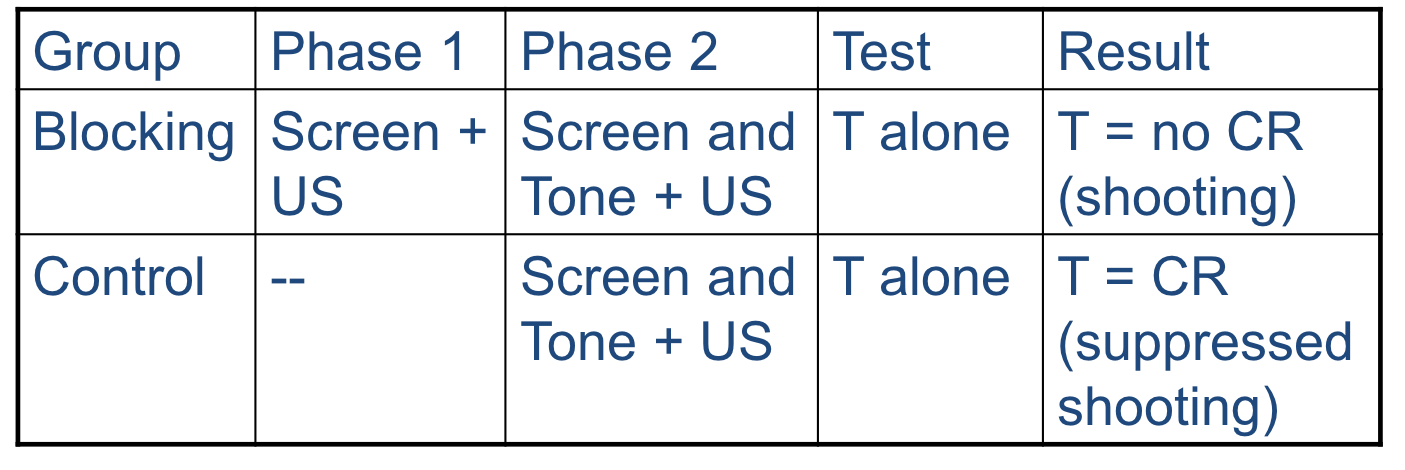
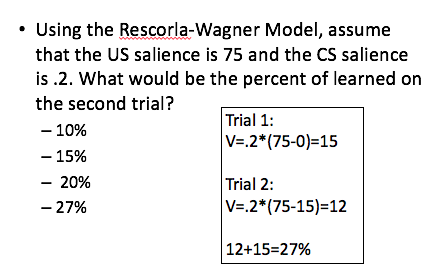
- Rescorla-Wagner Model
- Determines the strength of an association on a trial by trial basis.
- Two factors determine associative strength
- The subject’s expectation
- The salience of the US
- Mathematical Model
- V=CS salience (US salience-0)= % 2nd Trial: V=CS salience(US salience-%)=%% %+%%=Trial 2 %
- Six Rules
- Two factors determine associative strength
- Determines the strength of an association on a trial by trial basis.
- Attentional Model
- Cocktail Party Phenomenon (all about attention)
- Associations formed on a trial by trial basis
- CS salience and attention to CS determine associations
- Procedures or expereinces that distract attention from CS disrupt learning
- No difficulty explaining blocking
- Rate Estimation Theory
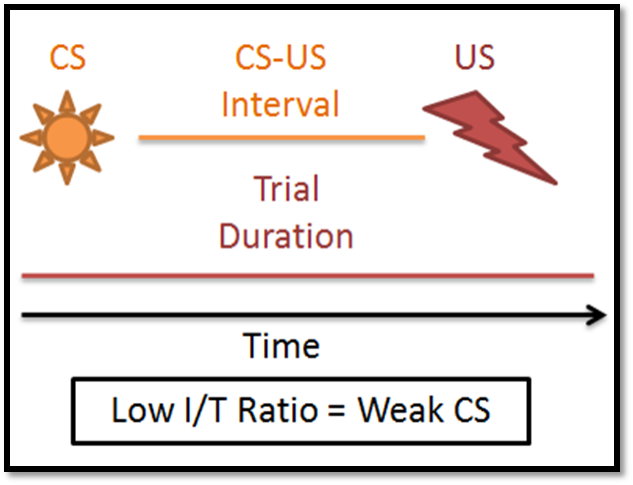
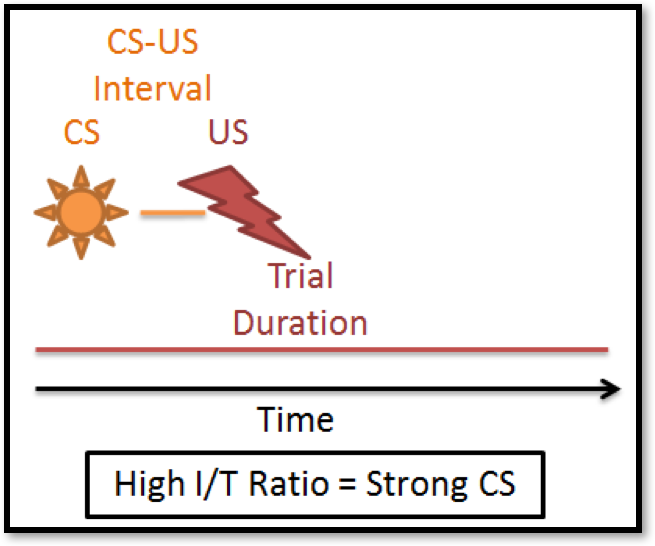
- Associations are formed based on the temporal relationship between the CS and US Interval relative to the Trial Duration
- Scalar Expectancy theory or Relative-Waiting-Time Hypothesis
- The association strength is determine or can be scaled by comparing the CS-US Interval with the Trial Duration The difference between the CS-US interval and the Trial Duration is the relative-waiting-time.
- Comparator Hypothesis
- All stimuli within a context develop some association
- Strength is determine by comparing:
- The association between the target CS and the US
- And other stimuli (or comparators) in the environment
- Connectionist Model
- Conceptual Nervous System
- Associations formed in neural networks
- Response comes from activation across a network
- Spreading Activation Model
- Supported by Priming
- Spreading Activation Model
- The Delta Rule
- Conceptual Nervous System
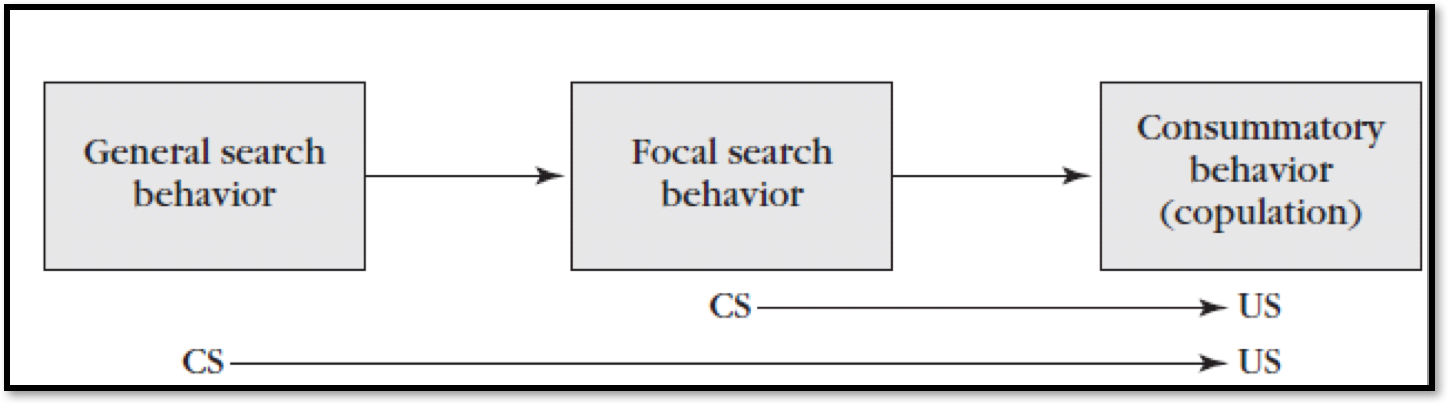
- Behavior Systems Approach
- Stimuli are not neutral
- Stimuli have biological significance
- The strength of the association is, in part, determined by the CS-US Relevance or Belongingness
- Rescorla-Wagner Model
Images and files in the map
Information
- Description
- User has deleted their subject information Mind Map on Classical Conditioning Mechanisms Part 2, created by Deleted user on 25/01/2018.
- Created by
- Deleted user · Jan 2018
- Updated
- Jan 25, 2018
- Views
- 16
- History
-
- Created by Micailah Moore · Jan 25, 2018
- Copied by Micailah Moore · Jan 25, 2018
- Rating