
Flashcards
Environmental Science - FINAL - Biotechnology and Food Resources
Cards in this deck (36)
- 1Food Securitythe guarantee of an adequate, reliable, and available food supply to all people at all times
- 2what are the 5 A's of food security?Availability - food vs biofuel
Affordability - poverty, food banks
Accessibility - transportation, regional unrest
Acceptability - what constitutes food?
Adequacy - nutritional quality - 3undernourishmentpeople receive lass than 90% of their daily caloric needs
- 4overnutritionreceiving too many calories each day
in canada, 48% of adults exceed their healthy weight and 14% are obese - 5Malnutritiona shortage of nutrients the body needs
the diet lacks adequate vitamins and minerals - 6Extensificationbringing more land into production
- 7Intensificationbetter productivity per unit of land
- 8What is the green revolution?Great increase in production of food grains (especially wheat and rice) that resulted in large part from the introduction into developing countries of new, high-yielding varieties, beginning in the mid-20th century
- 9Explain how the green revolution has caused the environment both benefit and harmNegative effects: the green revolution depended on large amounts of : synthetic fertilizers, chemical pesticides, irrigation, and heavy equipment
this caused pollution, erosion, salinization, and desertification.
Positive effects: prevented some deforestation, and biodiversity - 10What is the difference between Monoculture and PermaculturePermaculture gardening promotes biodiversity. It seeks to maximize the number of productive species of plant within a plot
Monoculture is the exact opposite. Think of vast fields of wheat or barley, plantations of a single species of fruit tree, or furrowed fields of a single vegetable crop - 11What are the effects of monoculture farming?more efficient, increases output
devastates biodiversity
susceptible to disease and pests
narrows the human diet - 12Pests vs weedpest = any organism that damages valuable crops
weed = any plant that competes with crops - 13what is a pesticide? what subtypes of pesticides are there?pesticides are poisons that target pest organisms
insecticides = targets insects
herbicides = targets plants
fungicides = targets fungi - 14What happens to pest organisms after a long time of enduring a pesticide?pests can evolve resistance to pesticides
resistance is passed through genes to insect offspring, causing pesticides to stop being affective. - 15Evolutionary arms racechemists increase chemical toxicity to compete with resistant pests
- 16Biological Control (Biocontrol)uses a pest's natural predators to control the pest
- 17What are the problems with biocontrol?no one can predict the effects of an introduced species
biocontrol agents themselves could become pests, and have "non target" effects on the environment and surrounding economies
due to these problems, proposed biocontrol use must be carefully planned and regulated - 18What multiple techniques does the IPM (integrated pest management) use to suppress pests?biocontrol
chemicals, when necessary
population monitoring
habitat alteration
crop rotation and transgenic crops (GMO)
alternative tillage methods
mechanical pest removal - 19Pollinationmale plant sex cells fertilize female sex cells
we depend on insects to pollinate crops - 20How can we conceive bees to increase/maintain pollination?beekeepers are hired regularly to bring honeybee colonies to crops for pollination
reducing or eliminating pesticide use
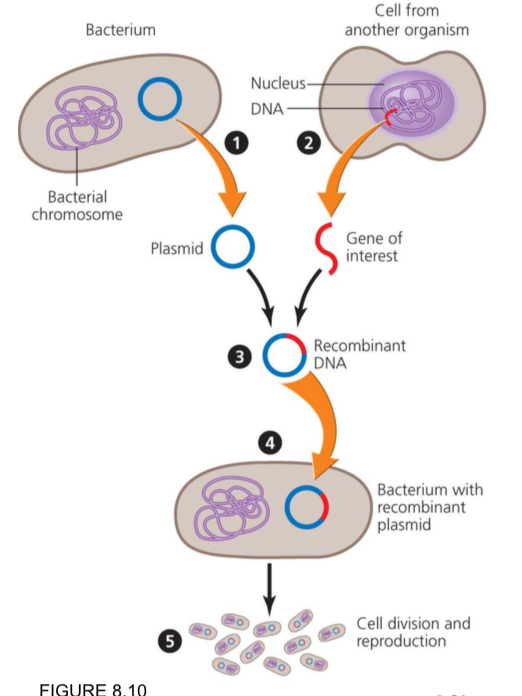
planting more flowering plants - 21Genetic Engineeringlaboratory manipulation of genetic material
- 22Recombinant DNADNA patched together from the DNA of multiple organisms
- 23Biotechnologythe material application of biological science to create products derived from organisms
(the exploitation of biological processes for industrial and other purposes, especially the genetic manipulation of microorganisms for the production of antibiotics, hormones) - 24What is the difference between transgenic organisms and transgenes?Transgenic organism = an organism that contains DNA from another species
Transgenes = the genes that have moved between organisms - 25What are the similarities/differences between genetic engineering and traditional agricultural breeding?similarities :
- both alter gene pools for preferred characteristics
- both apply to plants and animals
differences :
- traditional breeding uses genes from the same species
- selective breeding deals with whole organisms, not just genes
- in traditional, genes come together on their own - 26What are the impacts of GM crops?- Dangerous to human health
- Escaping transgenes could pollute ecosystems and damage non target organisms
- Pests could evolve resistance
- Could ruin the integrity of native ancestral races
- Interbreed with closely related wild plants - 27What are the counters that the supporters of GM crops are using? Why can the precautionary principle possibly be used to argue their counters?supporters make the following points:
- GM crops pose no ill health effects
- They benefit the environment by using less herbicides
- herbicide-resistant crops encourage no-till farming
- GM crops reduce the carbon emissions by needing fewer fuel-burning tractors and sequestering carbon in the soil by no-till farming
critics argue the precautionary principle should be adopted due to the lack of knowledge - 28What are seed banks, and how do they affect the genetic diversity of plants?Out of the 7,000 species of plants currently used for agriculture around the planet, only 30 crops make up the world's diet. Wheat, corn and rice alone account for more than half of the world's food consumption
Think of a seed bank as a savings account. Seeds are "deposited" into secure storage with the intention of "withdrawing" them in the future when they are needed.
they preserve seed types as a living museum of genetic diversity. - 29What are Feedlots? what are the benefits and drawbacks of them?feedlots = huge warehouses delivering energy-rich food to animals living at extremely high densities
benefits = greater production of food, keeps up with high meat consumption, reduces the impact of livestock on land (uses less space)
drawbacks = contributes to water/air pollution, poor waste containment may cause human disease, steroids are used to stimulate growth, heavy use of antibiotics to control disease - 30What is aquaculture?raising aquatic organisms for food in a controlled environment
(open-water pens or land-based ponds)
it is the fastest-growing type of food production (1/3 of the worlds fish for human consumption) - 31What are the benefits/drawbacks of aquaculture?benefits = a reliable protein source, sustainable, reduces fishing pressure on over harvested wild fish stocks, energy efficient
drawbacks = diseases can occur requiring expensive antibiotics, large amounts of waste, farmed fish may escape and introduce disease in the wild - 32Sustainable Agriculturedoes not deplete the soil, pollute water, or decrease genetic diversity
- 33Low-input agricultureuses smaller amounts of pesticide. fertilizers, growth hormones, water, and fossil fuel energy than industrial agriculture
- 34organic agricultureuses no synthetic fertilizers, insecticides, fungicides, or herbicides.
relies on biological approaches (compositing & biocontrol) - 35What are the benefits/obstacles of organic farming for both the farmers and the consumers?For farmers :
Benefits = lower input costs, enhanced income from higher value products, reduced chemical costs & pollution
Obstacles = risks and costs of switching to new farming methods and less market infrastructure
For consumers:
Benefits = no longer have to concern about pesticide's health risks, and improves environmental quality
Obstacles = added expense, and less aesthetically appealing looking product - 36Community-supported agricultureconsumers pay farmers in advance for a share of their yield
consumers get fresh food, farmers get a guaranteed income
Information
- Description
- User has deleted their subject information Flashcards on Environmental Science - FINAL - Biotechnology and Food Resources, created by Deleted user on 08/04/2018.
- Created by
- Deleted user · Apr 2018
- Updated
- Apr 8, 2018
- Views
- 11
- History
-
- Created by abby Radske · Apr 8, 2018
- Copied by abby Radske · Apr 8, 2018
- Rating