
Dealing with Climate Change
Slides in this set (7)
-
-
- The effects of climate change are estimated to grow in the coming decades.
- There is no way to undo the damage that has already been done to the planet. Instead, there are two options for dealing with climate change; mitigation and adaptation.
- Mitigation aims to deal with the cause of the problem at hand by developing ways to reduce further greenhouse gas emissions.
- Adaptation searches for ways to respond to the impacts of climate change and to help those affected.
-
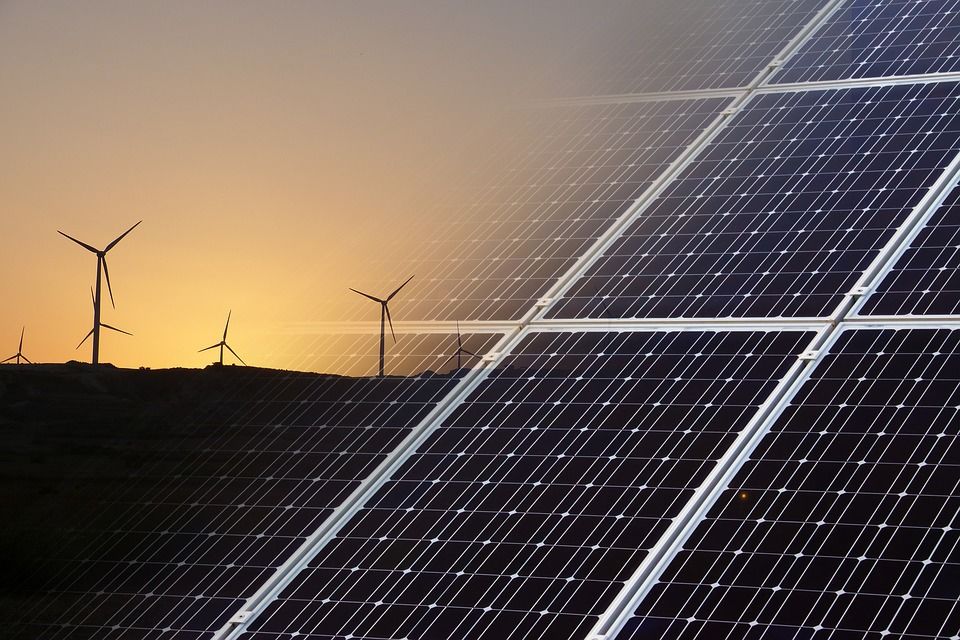
- Renewable energy relies on naturally occurring sources of energy to replace the burning of fossil fuels.
- Methods include wind, solar, geothermal, wave, tidal, and biomass.
- These sources are generally more expensive to implement than fossil fuels but are becoming cheaper and more competitive due to their long-term sustainability.
-
- Carbon Capture and Storage (CCS) aims to replicate the way in which the Earth stores carbon.
- This is one of the biggest methods of mitigation apart from renewable energy innovation.
- CCS removes carbon from the atmosphere, converts it into "supercritical" liquid carbon dioxide, and injects it into sedimentary rock.
- A "cap rock" stops this carbon from escaping.
- This process is expensive and it is unknown whether this is a long term solution.
- This process does not promote renewable energy, it is rather just a cover up of the effects of fossil fuels.
-

- Reforestation aims to plant trees to remove the carbon dioxide from the atmosphere.
- This is done to try to reduce the impact of deforestation.
- The UK has many forest programs which aim to plant trees but this process is only effective if it becomes widespread.
-
Adaptation: Changes in Agriculture
- Because climate change is affecting agriculture dramatically, changes need to be made to adapt to new conditions.
- Many areas of agriculture have moved location to move away from extreme weather conditions. This affects jobs in both locations.
- Irrigation can be increased to combat minimal rainfall.
- Changes in crop varieties and the time at which they are planted can help to adapt to changing conditions. This includes planting drought-resistant crops and moving to livestock production.
- These adaptations are sometimes costly and are extremely difficult for poorer farmers.
-
Adaptation: Managing Water Supply
- Reducing demand for water can help to deal with drought seasons.
- By 2030, London aims to offer water-efficient devices to all homes, including aerators that limit water usage.
- The UK aims to increase the supply of fresh water available to its residents.
- A new Thames Water desalinisation plant opened in 2010 to treat water from the Thames river at low tide when it is least salty.
- Reverse osmosis is used to provide drinking water to 400,000 homes in the region.
- This plant uses a huge amount of energy that is offset by a biodiesel electricity plant nearby.
Information
- Description
- User has deleted their subject information Slide Set on Dealing with Climate Change, created by Deleted user on 28/08/2018.
- Created by
- Deleted user · Aug 2018
- Updated
- Aug 28, 2018
- Views
- 26
- History
-
- Created by Antonia Blankenberg · Jun 16, 2017
- Copied by Antonia Blankenberg · Aug 28, 2018
- Rating