
Notes
Histology - created from Mind Map
Content of the notes (1)
Page 1
If you see a lesion...
fixation
epithelial cells
mesenchymal (connective tissue)
1. make a diagnosis
2. Determine a prognosis - is it malignant/aggressive?
3. Plan treatment
4. Predict/confirm response to drugs
Asymmetry | Border | Colour | Diameter | Evolving
biopsy - what needs to be done?
excision - is it comepletley out?
related to prognosis: is additional/aggressive treatment needed?
will a post-operative (adjuvant) treatment be beneficial?
did a pre-operative (neoadjuvant) treatment show an effect?
preserves the tissue by...
fixatives
tissue processing: dehydration via ethanol, replace alcohol with xylene (clearing), replace xylene with wax (wax infiltration), formalin fixed
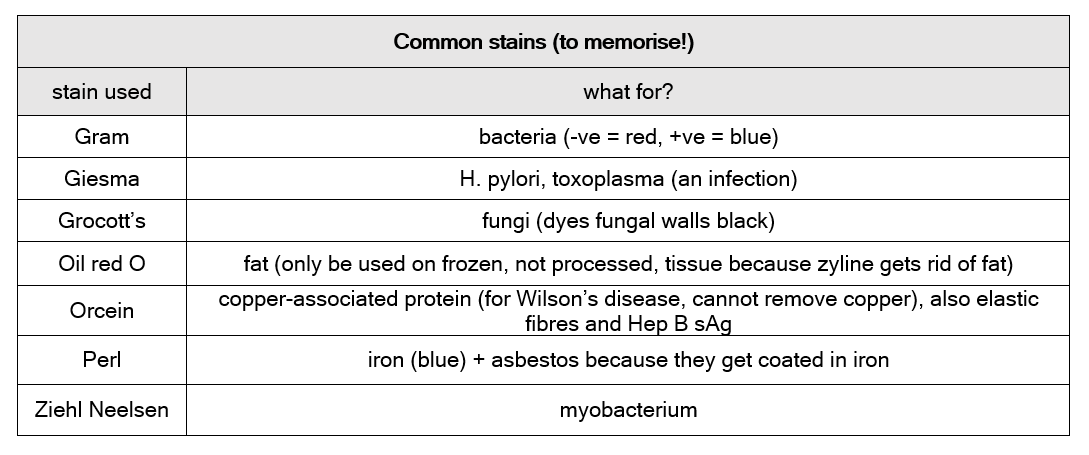
Periodic Acid Schiff (PAS): detection of mucin --> fungal organisms and visualisation of basement membranes. Problem = glycogen is PAS positive
detection of mucin --> fungal organisms and visualisation of basement membranes. Problem = glycogen is PAS positive
combined with diastase (DPAS) - enzyme diastase removes glycogen
stopping intrinsic autolytic enzyme action
prevents putrefication/decay
increases mechanical strength to preserve morphology
aldehyde
alcohol
oxidative - forms protein cross-links
freezing (quick but poor morphology)
e.g. formalin (formaldehyde solution) | forms protein cross-links, good mechanical strength and penetration | poor nucleic acid preservation
e.g. glutaraldehyde (like formalin but larger) | needs smaller tissue samples | works well at low temperatures | used for electron microscopy
e.g. ethanol | reduces protein solubility --> percipitation | nucleic acid research (doesn't cross link) | used in cytology smears
main features
classification
specialisation
epithelium
endothelium
disorders of epithelial function
line all body surfaces except articular cartillage, tooth enamel and anterior iris
cellular
sits on basal lamina
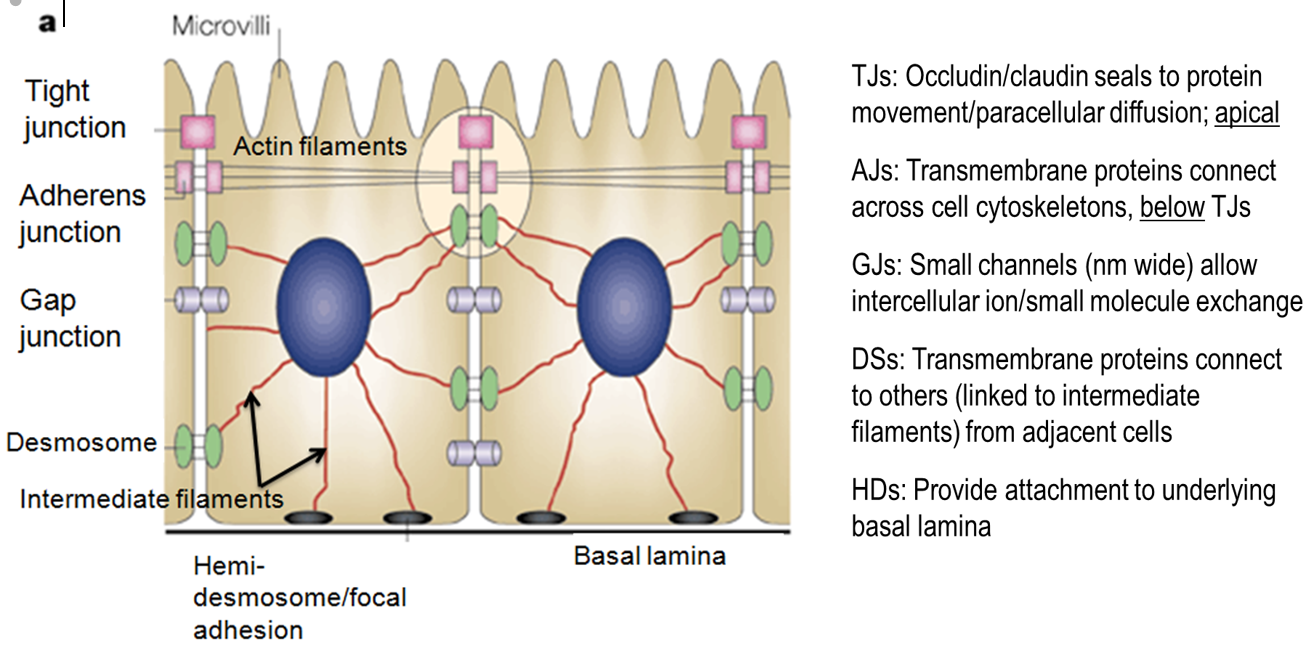
stuck tightly together by intracellular junctions
polarity - apical or basal
avascular
rapid turn-over
number of cells
shape of cells
1 layer = simple
multi-layered = stratified
psuedo-stratified - single layer of columnar cells e.g. upper airways - cillia and goblet cells
transitional - multiple layers but changes shape (squamous and flat), bladder and urinary tract
squamous (flat)
cuboidal
columnar
cillia - push mucus along
secretory - release stuff
microvilli increase SA of epithelium
for protection
for absorption
for surface movement
for gas exchange
prevents dehydration, chemical, mechanical etc. damage
covering of inter/outer surfaces
stratified
replicative to replace sloughed (shed) cells
tight seals between cells
keratinisation
locations
squamous: oesophagus, skin, vagina
transitional: bladder, urinary tract
epithelial lining of gut specialised for absorption e.g. glucose, ions, water
relies on cell polarity
adaptations such as brush border
cilia move in co-ordination to provide unidirectional movement
locations
airways - mucus
testes - sperm
fallopian tubes - ova
simple squamous cells that line blood vessels - minimal distance for diffusion
for surface lubrication
for sensation
for secretion
mesothelium is simple epitheloium e.g. serosa (which secrete a lubricating fluid which reduces friction from muscle movement)
lines all body cavities
potential spaces contain protein rich fluid (serous)
sensory organs are highly specialised epithelia
ectoderm - nervouse system - all senses
isolated epithelial cells e.g. goblet cells
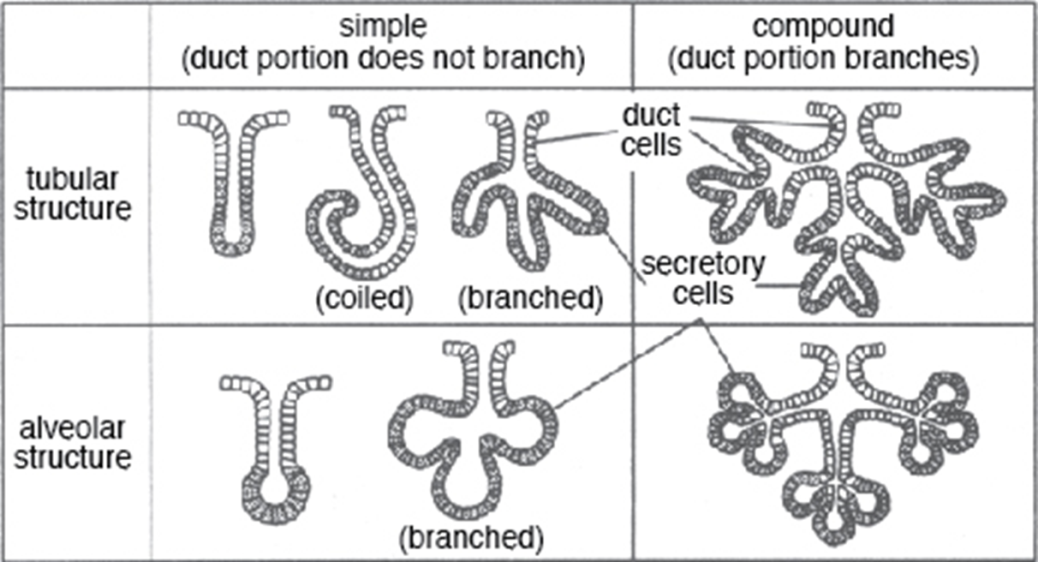
organised multicellular glandular structures
secretory glands
endocrine glands - product released into blood
exocrine glands - product is released onto surface
classification
mechanisms of exocrine secretion
mercorine
apocrine
holocrine
fused plama membrane recycled by endocytosis
e.g. breast milk casein
apical membrane is pinched off (loss of membrane)
e.g. breast milk lipids
cell disintegrates to release product (cell suicide)
e.g. sebum in sebaceous glands
epidermolysis bullosa
congenital cilliary dyskinesia / Kartagener's syndrome
cystic fibrosis
blistering skin disorder
inherited gene mutation of adhesion molecules that stick epithelium to basement membrane - abnormal anchoring of epidermis to dermis
autosomal recessive
abnormal cilliary function - secretion accumulation
brinchiectasis | sinusitis | situs inversus
mutation in CFTR gene
defective Cl channel on apical surface of epithelila cells - less water in mucus - thickens and builds up
Information
- Description
- Medicine Note on Histology - created from Mind Map, created by Barirah Ashfak on 26/12/2018.
- Created by
- Barirah Ashfak · Dec 2018
- Updated
- Dec 26, 2018
- Views
- 0
- History
-
- Created by Barirah Ashfak · Dec 26, 2018
- Copied to Note by Barirah Ashfak · Dec 26, 2018
- Rating