
Flashcards
Brain Basics
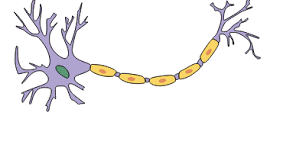
Cards in this deck (52)
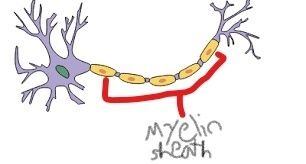
- 1Parts of a Neuron1) Axon
2) Dendrite
3) Cell Body
4) Myelin Sheath - 2AxonWhere an impulse leaves a neuron
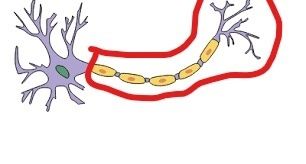
- 3DendriteWhere a neuron collects an impulse
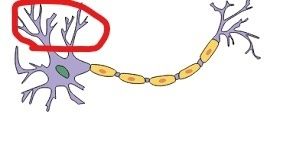
- 4Cell Body (Soma)Where the decision to "fire" or not is made (particularly at the Axon Hillock)
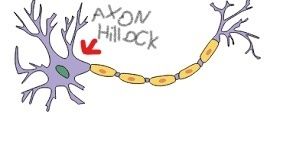
- 5Myelin SheathInsulator from schwann cells (PNS) and oligodendrocytes (CNS) that wraps around the axon and speeds up transmission
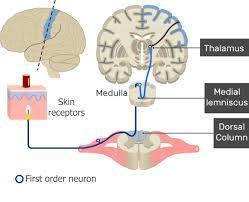
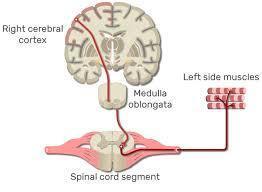
- 6Neural PathwaysSensory neural pathway
Motor neural pathway - 7Sensory Neural PathwaySensory input travels to brain
- 8Motor Neural PathwaySignal from brain to muscles and/or glands
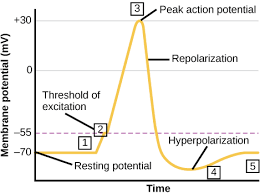
- 9Neural Impulse (Action Potential)An electrical/chemical signal from one neuron to another
All-or-none response - 10Absolute Refractory PeriodPeriod of time in which a neuron is completely unable to fire
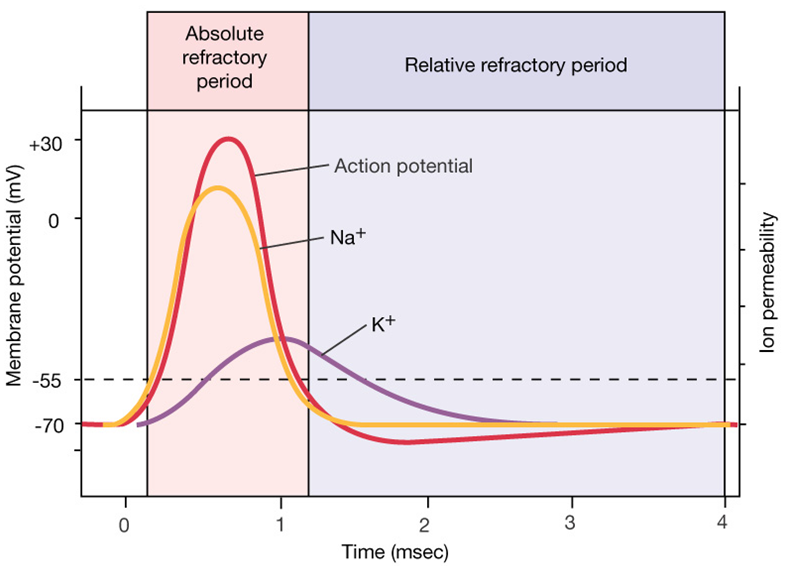
- 11Relative Refractory PeriodGreater rate of input required for neuron to fire
- 12Threshold of ExcitationThe minimum membrane potential required for an action potential to occur (around -55 mV)
- 13SynapseWhere the axon of on neuron meets the dendrite/cell body of another
- 14Parts of the Synapse1) Synaptic cleft
2) Presynaptic cleft (synaptic vesicles)
3) Postsynaptic cleft (receptor sites) - 15Synaptic CleftThe gap which an impulse must cross if the neural signal is to continue
- 16Presynaptic cleft (Synaptic vesicles)Where neurotransmitters are released from
- 17Postsynaptic cleft (Receptor sites)Where neurotransmitters are received
- 18NeurotransmittersThe chemical messengers in the brain like:
Acetylcholine (ACh)
Dopamine (DA)
Serotonin (5-HT)
GABA
Endorphins - 19Brain PlasticityThe brain is plastic - it is able to change the function of certain neurons and brain areas as necessary
Plastic = malleable - 20What two types of cells primarily make up the brain?Neurons and glial (provide structure and support) cells
- 21Three parts of the Brainstem1) Midbrain
2) Medulla
3) Pons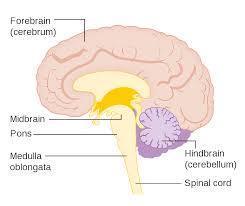
- 22MidbrainContains several structures like the reticular formation (controls attention, alertness, and arousal)
- 23MedullaRegulates heart rate and breathing
- 24PonsHelps relay messages from the cortex and the cerebellum.
Involved in the control of sleep cycles and the regulation of deep sleep - 25CerebellumAids in the coordination of movement.
As motor signals are sent to the spinal cord the cerebellum regulates them (resulting in smooth and balanced muscle activity) - 26Parts of the Forebrain1) Limbic system
2) Cerebral cortex - 27Limbic System1) Thalamus
2) Hippocampus
3) Amygdala
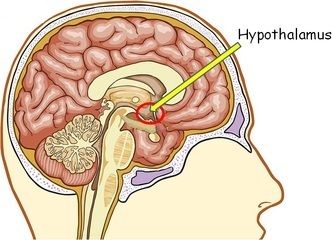
4) Hypothalamus
5) Basal Ganglia
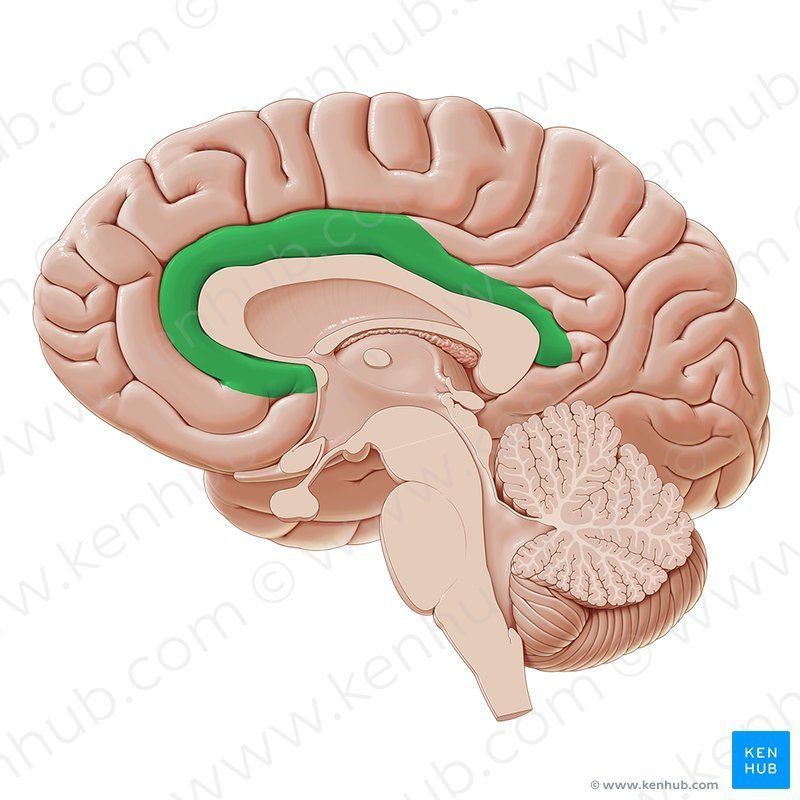
6) Cingulate Gyrus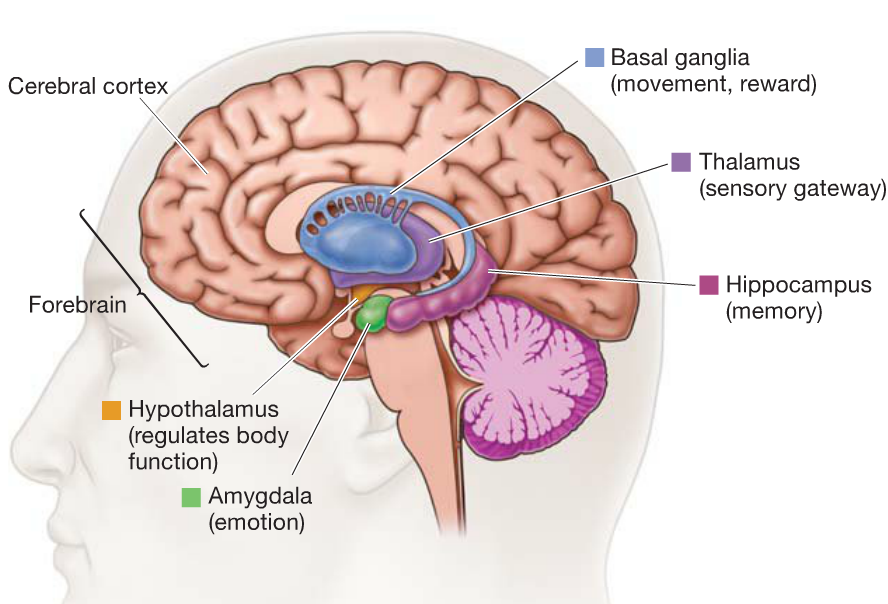
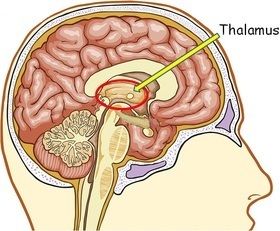
- 28ThalamusSensory relay station
- 29HippocampusInvolved in LTM and memory consolidation
Issues with the hippocampus leads to memory issues (Alzheimer's, PTSD, etc.)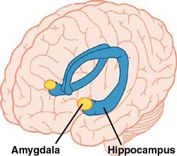
- 30AmygdalaPlays a key role in processing emotions
- 31HypothalamusThe hypothalamus' main role is to keep the body in homeostasis
- 32Basal GangliaThe basal ganglia are associated with a variety of functions, including control of voluntary motor movements, procedural learning, habit learning, eye movements, cognition, and emotion.
- 33Cingulate GyrusInvolved in processing emotions and behavior regulation. It also helps to regulate autonomic motor function.
- 34Lobes of the CortexFrontal
Parietal
Occipital
Temporal
FPOT - 35Association Areas of the BrainA region of the cortex of the brain which connects sensory and motor areas
Memory areas
Broca's area
Wernicke's area
Somatosensory cortex
Motor cortex - 36Broca's AphasiaCharacterized by partial loss of the ability to produce language (spoken, manual, or written), although comprehension generally remains intact
Broca's patient Tan - 37Wernicke's AphasiaThe ability to grasp the meaning of spoken words and sentences is impaired, while the ease of producing connected speech is not very affected.
- 38Left Hemisphere SpecializationLanguage, writing, logic, math
Analytic - 39Right Hemisphere SpecializationSpatial cues, abstract information, fantasy, art, music, creativity
Holistic - 40Corpus CallosumConnects the two hemispheres
- 41Peripheral Nervous SystemConnects the CNS to the organs, limbs, and skin
Made up of:
1) Somatic nervous system
2) Autonomic nervous system - 42Somatic Nervous SystemVoluntary movement of the muscles and organs and reflex movements. In the process of voluntary movement, sensory neurons carry impulses to the brain and the spinal cord.
- 43Autonomic Nervous SystemA control system that acts largely unconsciously and regulates bodily functions.
Made up of:
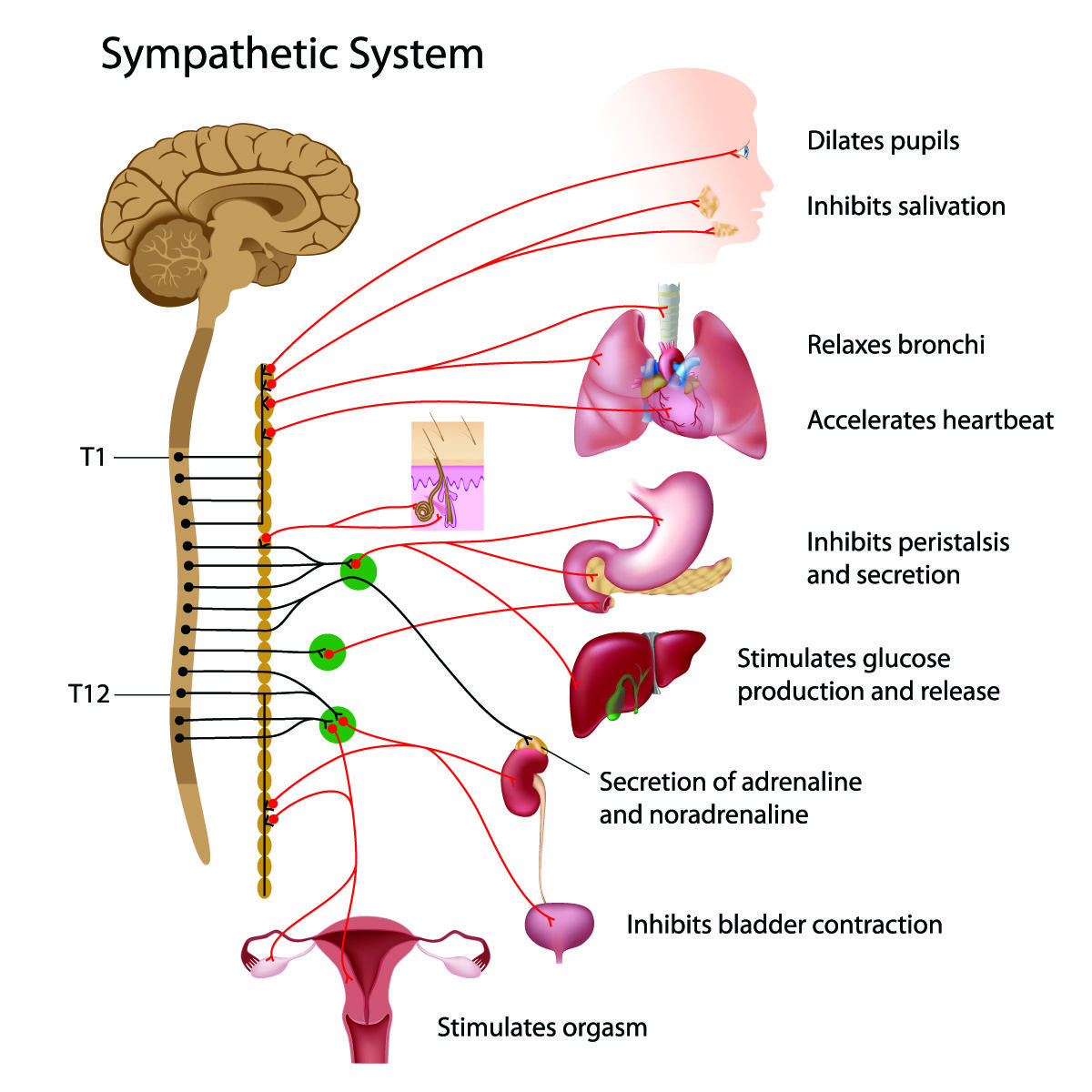
1) Sympathetic nervous system
2) Parasympathetic nervous system - 44Sympathetic Nervous SystemFight or Flight
- 45Parasympathetic Nervous SystemRest and Relax
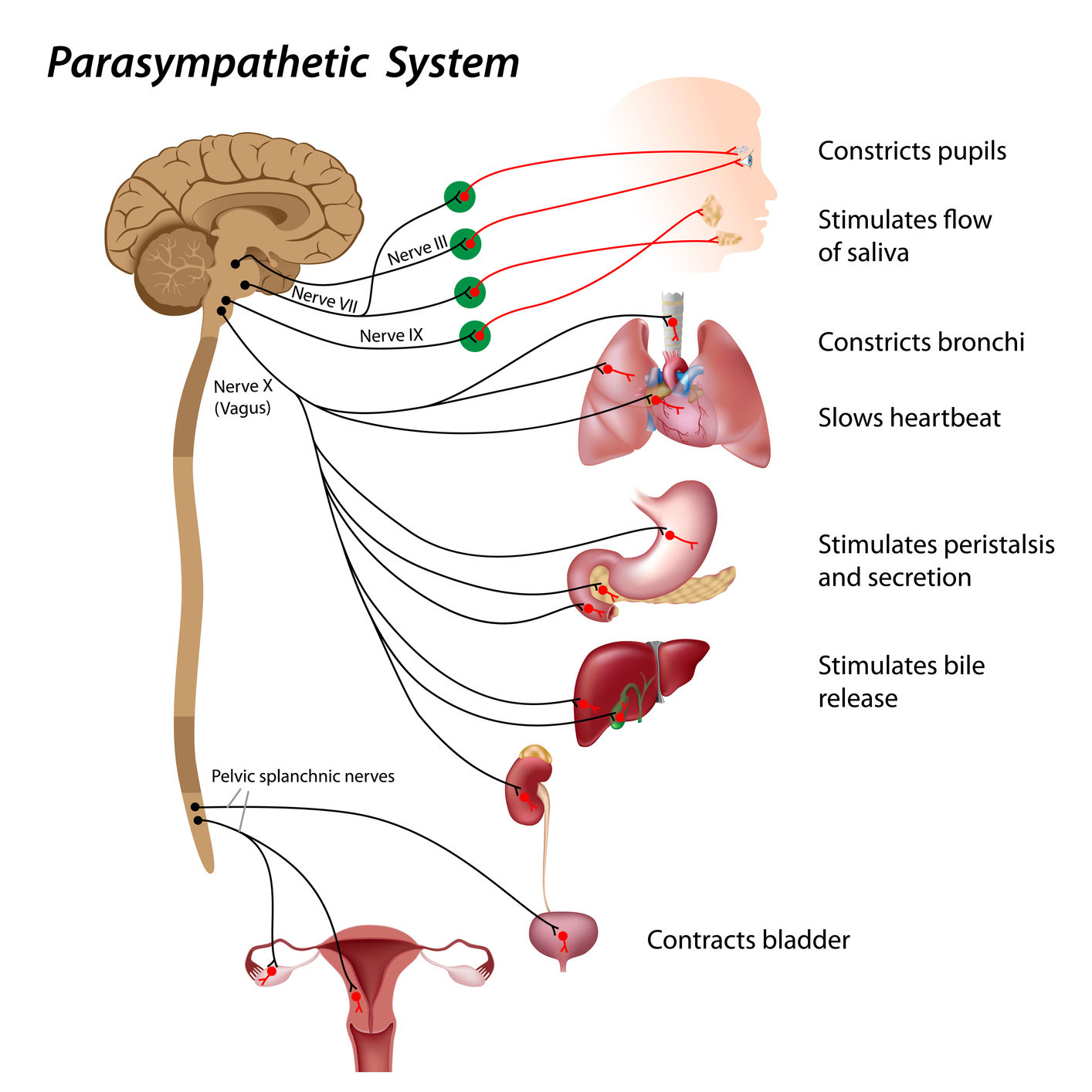
- 46Modern Methods Used to Study the Brain1) EEG
2) Single-cell recording
3) PET
4) MRI
5) fMRI
6) TMS - 47What does EEG measure?Electrical activity from the surface of the brain (called event related potentials - ERP)
- 48What is the benefit of Single-cell Recording?It allows us to determine what individual neurons react to
- 49What does PET measure?Metabolic activity in the brain. Increased metabolic activity is correlated to increased activity (using glucose, oxygen, etc.)
- 50What does an MRI measure?Anatomical structure and density of tissue.
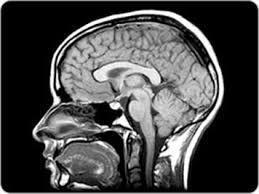
- 51What does fMRI measureSmall changes in blood flow in the brain (metabolic activity)
- 52What does TMS do?Creates a temporary lesion in brain tissue by disrupting communication
Information
- Description
- User has deleted their subject information Flashcards on Brain Basics, created by Deleted user on 01/07/2019.
- Created by
- Deleted user · Jul 2019
- Updated
- Jul 1, 2019
- Views
- 12
- History
-
- Created by Thomas Davis · Jul 1, 2019
- Copied by Thomas Davis · Jul 1, 2019
- Rating