
Flashcards
Responses to the environment
Cards in this deck (47)
- 1EnvironmentAll livings things interact with it.
It is always changing. To be able to survive and reproduce, living organisms must detect these changes and respond to them accordingly - 2Different stages1. A stimulus is detected by structures or organs called RECEPTORS
2. the stimulus is relayed to COORDINATION systems, these interpret the signal and produce a responde
3. The organism responds by means of organs or structures called EFFECTORS - 3Internal conditionsTemperature, water content and the concentration of mineral salts and glucose in the blood
- 4HomeostasisThe ability of an organism to maintain the internal conditions stable
- 5Stimulichanges that occur in an organism external and internal environment, which the organism can detect
- 6Types of stimuliPhysical
Chemical - 7Physical StimuliLight: caused by light radiation
Electrical: caused by electrical phenomena.
Gravitational
Mechanical: changes in pressure, contact forces and vibrations
Thermal: changes in temperature
Magnetic - 8Chemical stimulicaused by the presence of certain substances, either dissolved in air or water or a part of solids
- 9ReceptorsStructures through which living organisms detect stimuli
- 10Classification of receptorsInteroceptors
Exteroceptors
Propioceptors - 11InterceptorCollect information about the body's internal conditions.
These respond to chemical stimuli - 12ExteroceptorsAlso called external receptors, they provide information about the outside environment.
Located on the body surface
Ex: sense organs - 13PropioceptorsProvide information concerning body positions, the relative position of its different parts, and its state of motion.
- 14Sense organsComplex structures that contains receptors capable of detecting a specific type of stimulus.
- 15Depending on the type of stimulus, receptors are classified as...Photoreceptors
Thermoreceptors
Mechanoreceptors
Electroreceptors
Magnetoreceptors
Chemoreceptors - 16PhotoreceptorsThe organs of sight
Cells detect light stimuli - 17ThermoreceptorsChanges of temperature in the environment are detected by these. They are found in the skin of mammals and the head of some snakes.
- 18MechanoreceptorsCells sensitive to touch, pressure or vibrations in the environment. They are found all over the body of animals.
They also detect sound waves. - 19ElectroreceptorsAnimals such as the shark, eel and platypus have specialised organs that detect the electricity generated by the muscle movement of their prey
- 20MagnetoreceptorsAnimals that respond to the earth's magnetic fields.
Ex: turtles, dolphins and the bees - 21ChemoreceptorsSpecialised cells that detect the presence of substances in the environment, through the smell and taste of vertebrates animals.
- 22Nociceptorscells that detect different types of stimuli that are damaging to the organism and require and IMMEDIATE response.
These receptors are linked to the pain. - 23RodsHighly sensitive to changes in light intensity
- 24ConesDetect colors and fone details
- 25CrypsisAbility of living organisms to resemble their surroundings
- 26Mimicryability of living organisms to closely imitate another organism
- 27Coordination in animalsMulticellular organisms need all their cells, tissues and organs to be properly organized and coordinates
- 28Roles1. Perceive the stimuli
2. Interpretate the information
3. Produce a response - 29The nervous systemIs a set of structures and organs that receive and processes the information collected by the receptors and coordinates the actions.
Formed by cells and neurons
Electrical impulses with responses are immediate - 30Nervous system in living organismsPlants: basic (network of neurons: nerve net)
Invertebrates: organized into nerves and nerves cords
Vertebrates: more complex, composed by the brain and the spinal cord and the network of nerves. - 31Central Nervous System (CNS)Formed by the brain and the spinal cord
Protected by the skull and the backbone - 32Peripheral Nervous System (PNS)Formed by nerves
Receptors -> nerves -> spinal cord -> brain -> form a response -> spinal cord -> motor nerves -> response - 33NeuronsCells specialized in producing and transmiting electrical nerve impulses
- 34Types of neuronsSensory: detect external stimuli
Motor: send responses to the CNS
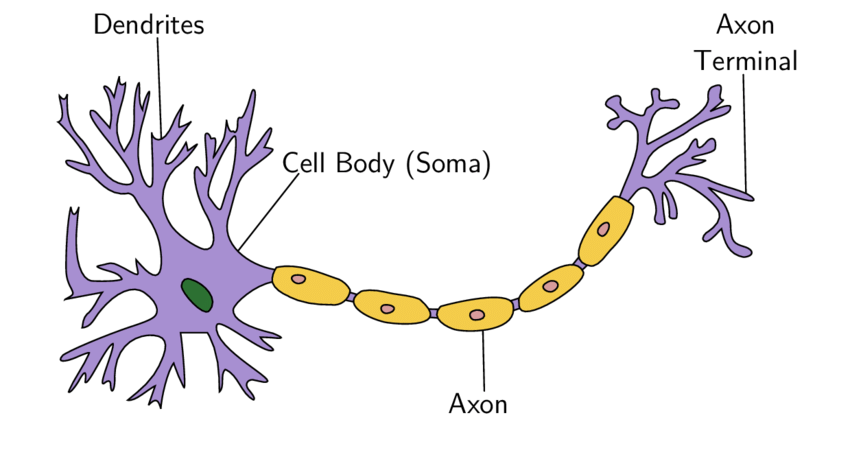
Relay: linked to other neurons, they produce a response - 35Parts of the neuronSoma
Axons
Dendrites - 36SomaContains the nucleus
- 37AxonsNeuron's extensions
- 38Dendritescome from the soma and connect with other neurons
- 39Synapsesconnects the axon of a neuron with another neuron
- 40The endocrine systemFormed by endocrine glands that produces hormones
Slow responses, longer lasting effects
In charge of growth, development, metabolism and reproduction - 41Coordination in plantsPlant hormones are substances that regulate and coordinate life processes of plants
- 42Objective of the plant hormonesTo regulate processes such as growth, flowering, ripening of fruit, leaf fall and production of substances
- 43ResponsesReactions of living organisms to stimuli, that are carried out by muscles or glands
- 44Effectorsorgans, tissues or cells that respond to stimuli
- 45Motor responsesMovement
Muscles are the effectors
Ex: locomotor system - 46Secretory responsesGlands are the effectors
ex: sweat and saliva - 47—
Information
- Description
- User has deleted their subject information Flashcards on Responses to the environment, created by Deleted user on 28/03/2022.
- Created by
- Deleted user · Mar 2022
- Updated
- Mar 28, 2022
- Views
- 10
- History
-
- Created by Luciana Rosell · Mar 22, 2022
- Copied by Luciana Rosell · Mar 28, 2022
- Rating