
Theming & Staging
Slides in this set (6)
-
Importance & Elements of Theming
- Importance
- - the theme is the major artistic and creative decision to be made when organising and designing the event
- - once the theme for the event has been set then all other remaining elements are to fit into that theme
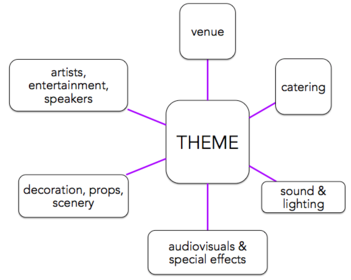
- Caption: Elements of Theming
-
Factors to Consider - Theming & Staging
- Audience & Guests
- - position of entrances and exits
- - arrival times: dump or trickle
- - seating and sight lines
- - facilities
- Audiovisuals & Special Effects (outsourcing, not venue incl.)
- - how presentation fits with overall event design
- - budget allocated to event
- - skills of audiovisual company
- - tech hardware, software and abilities of audiovisual producer and writer
- Venue Selection
- - match venue with size & theme of event
- - availability
- - emergency plans and exits
- - transport to, from and around venue
- - toilets and other amenities
- - power and lighting
- - what venue can provide
- Sound
- - positioning of sound speakers
- - size of sound speakers
- - type of sound speakers
- - overall volume: consider audience demographic
- - acoustics of room
- Catering
- - cleanliness
- - menu selection and design (consider cultural appropriateness)
- - equipment
- - payment terms: deposits, upfront, loss/breakages guarantees
- - responsibility of licences and permits: caterer, venue, event management
- Power
- - type of power: three phase or single phase
- - emergency power
- - amount of power required
- - position and number of power outlets
- - safety: cover-up of leads, correct wiring
- - local and state regulations regarding power
-
Factors to Consider - Theming & Staging
- Performers/Speakers
- - contact: with person responsible for employment of artist(s)
- - staging requirements: sound, space (area needed)
- - availability for rehearsal, media attention and performance: set up, pull down incl. in available times
- - accompanying personnel: establish numbers, roles and needs
- - contracts and legal requirements: agreement between event manager and performers, rider must be costed and understood
- - payment: immediate (minor/smaller performers), -30/-60/-90 day invoicing cycle (headline, major acts)
- - accommodation
- Props and Decoration
- - appropriateness of props & decoration
- - budget allocated for event
- - colour, smell, feel, safety
- - effect on event
-
- - task
- that cannot be underestimated
- - it is
- the opportunity of all the staff involved to integrate their efforts
- - a technical run-through allows to test the set-up
- - it is
- the opportunity to plan and test back-up plan
- - for
- conferences, essential to have a ready room for speakers
-
- Set Up Event
- - establish
- contact with the nominated contractors at the appropriate time and reconfirm
- and agree all requirements
- - agree
- to and make any necessary adjustments with the contractors
- - check
- all aspects of the event set-up against the pre-arranged agreements
- - check
- that all areas of the venue, and equipment, are accessible and safe
- - identify
- any deficiencies and discrepancies and take prompt action to rectify the
- situation
- - brief
- any additional on-site staff on the full details of the events operation.
- Break-Down Event
- - oversee
- the breakdown of the event to ensure it is completed in accordance with
- agreements
- - co-ordinate
- the packing and removal of all material and equipment
- - check
- the venue to ensure items and belongings are not left behind
- - debrief
- with contractors to discuss any difficulties or suggestions for future
- improvements
- - check
- and sign accounts in accordance with contractor agreements
- - note
- any outstanding items requiring post-event action.
-
- - ensure briefing before event that crew/contractors are given the roles/briefs that match their skills
- - ensure that you both aim to compromise and work with one another for the greater good of the event success
- - effective communication (two-way): both able to provide experience and knowledge
- - two-way respect for one another: not simply 'bossing around'
Information
- Description
- event theming and staging considerations
- Created by
- denni.egan · Oct 2015
- Updated
- Aug 9, 2016
- Views
- 177
- Tags
- Rating