
Mind map
Th03L03 Carbohydrates
Map content
Th03L03 Carbohydrates
Properties
- Monosaccharides: sugars
- Water-soluble
- General formula: (CH20)n
- Usually n=3, 4, 5 or 6
- Triose (n=3) e.g. glyceraldehyde, dihydroxyacetone
- Pentose (n=5
- 2-deoxyribose, ribose
- Hexoses (n=6)
- Glucose, fructose
- Usually n=3, 4, 5 or 6
Structure
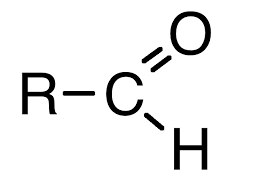
- Carbonyl group (C=0)
- Located in the middle of the ketose molecule and end of the aldose molecule
- Carbon 1 = at the end closest to the carbonyl group
- Anomeric carbon - carbon attached to the original carbonyl group in cyclic form
- Isomers
- Aldose and ketone
- Aldose
- contains the aldehyde groups (-CH=O)
- Adloses with three or more carbon isomers exhibit stereoisomerism
- same molecule that differs in dimensional orientations of their atoms in space affecting properties of the molecule
- Ketone
- contains the fructose groups
- Aldose
- Different molecules with same chemical formula
- Galactose, mannose and glucose
- Aldose and ketone
- D vs. L form
- Isomeric forms
- D-sugar is most common biologically
- Ring formation
- In aqueous solution, the aldehyde or ketone group tend to react with a hydroxyl group of the same molecule, closing the molecule into a ring structure
- Alpha and beta forms
- Hydroxyl group (-OH) of the carbon that carriers the aldehyde or ketone group can rapidly change from one position to another
- Alpha form: hydroxyl group is facing up
- Beta form: hydroxyl group is facing down
- Carbonyl group (C=0)
Biological functions
- Sugars function in short-term fuel for muscle, brain kidney, etc.
- Function as energy forces or energy storage in the form of glucose and glycogen respectively
- Digestion of alpha-amylase results in the random hydrolysis of internal alpha 1>4 linkages in the glycogen molecule
- Pancreatic alpha-amylase mixture of mono and disaccharides continues hydrolysis of internal linkages
- Maltase produces glucose and can be absorbed into intestinal mucosal cells
- In the liver, glucose phosphorylase hydrolyses terminal alpha (1>4) to produce glucose-1- phosphate
- Structurally part of cell walls in the bacteria (peptidoglycan)
- Proteins on the cell surface are often glycosylated (e.g. ABO blood groups and IgG)
Pathology
- Lactose intolerance
- Normally lactose is broken down into galactose and glucose When lactose remains undigested, it can be digested by bacteria in the large intestine producing excess CO2 and other metabolites > bloating and diarrhoea
- Lactose intolerance
Disaccharides
- Sucrose
- glucose + fructose
- Maltose
- glucose + glucose
- Galactose
- glucose + galactose
- Sucrose
Polysaccharides
- Glycogen (branched glucose polymer)
- Stored form
- Linear glucose polymer (alpha 1>4)
- Alpha (1>6) branches
- Amylose (linear glucose polymer)
- Glycosidic bond formation
- Gycosyltransferase via a dehydration (condensation) reaction
- Glycogen (branched glucose polymer)
Monosaccharide
- Reducing form
Images and files in the map
Information
- Description
- User has deleted their subject information Mind Map on Th03L03 Carbohydrates, created by Deleted user on 26/08/2016.
- Created by
- Deleted user · Aug 2016
- Updated
- Aug 27, 2016
- Views
- 40
- History
-
- Created by Emma Allde · Aug 15, 2016
- Copied by Emma Allde · Aug 26, 2016
- Rating