
Fluvial Processes
Slides in this set (3)
-
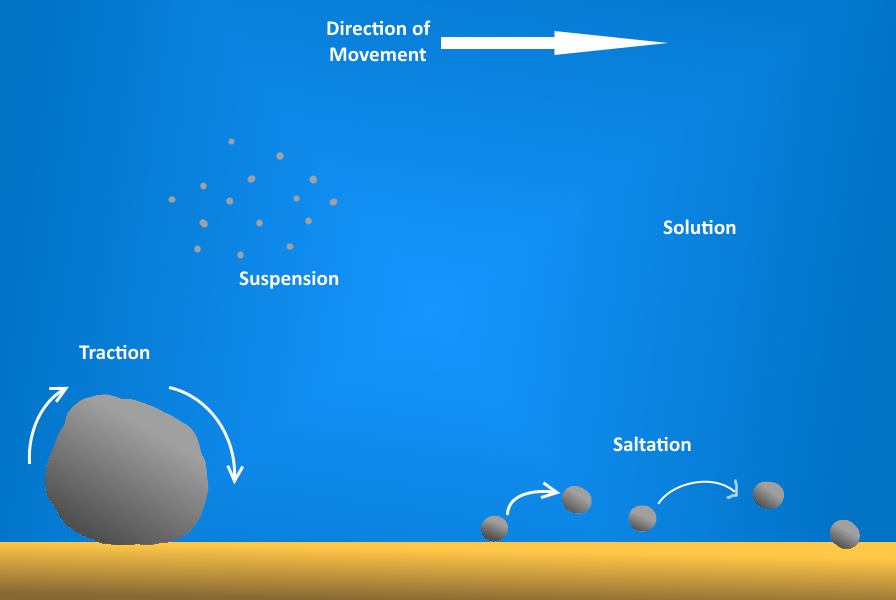
- There are four types of transportation in rivers, as shown on the accompanying diagram.
- Traction is the rolling of larger rocks along the river floor.
- Saltation is the hopping/bouncing of smaller rocks and pebbles across the river floor.
- Very small pieces of sediment are carried through suspension.
- Solution carries dissolved minerals in the water.
-
- There are four types of erosion that take place in rivers:
- Abrasion - the force of sand and pebbles in the river scraping away at the channel.
- Attrition - the wearing away of rocks in the river by hitting off one another.
- Hydraulic action - the wearing away of rocks by the force of the water. This can also occur through the compression of air in small gaps by water.
- Solution - the chemical breakdown of rock by water.
- Rocks can also be broken down by physical and chemical weathering processes.
-
Factors affecting rates of fluvial processes
- Velocity and discharge of the river affect how much sediment a river can carry.
- Relief controls the velocity of the river.
- Climate affects the amount of precipitation that falls and how much water is in the river.
- Sediment size can play a role in the landforms formed, i.e. larger sediment is more difficult for the river to carry.
- Human activity can play a large role in modifying river processes.
Information
- Description
- User has deleted their subject information Slide Set on Fluvial Processes, created by Deleted user on 21/06/2017.
- Created by
- Deleted user · Jun 2017
- Updated
- Jun 21, 2017
- Views
- 130
- History
-
- Created by Antonia Blankenberg · Jun 19, 2017
- Copied by Antonia Blankenberg · Jun 21, 2017
- Rating