
Notes
Causes of Flooding
Content of the notes (10)
Page 1
What is flooding?
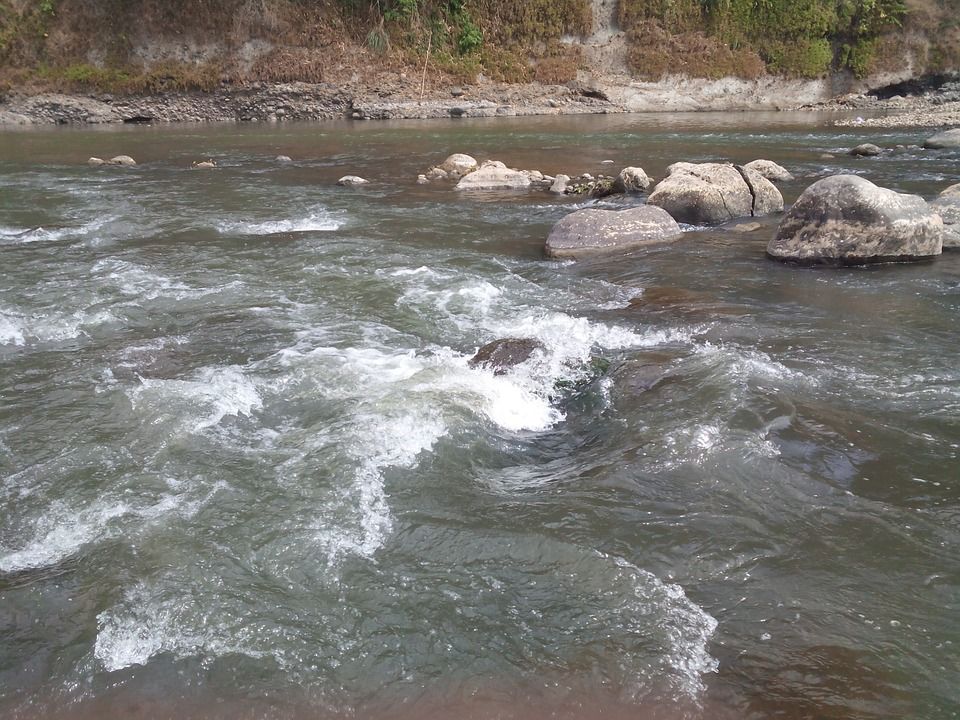
Flooding occurs when the volume of water in a river channel exceeds the carrying capacity of the river, causing it to burst its banks.
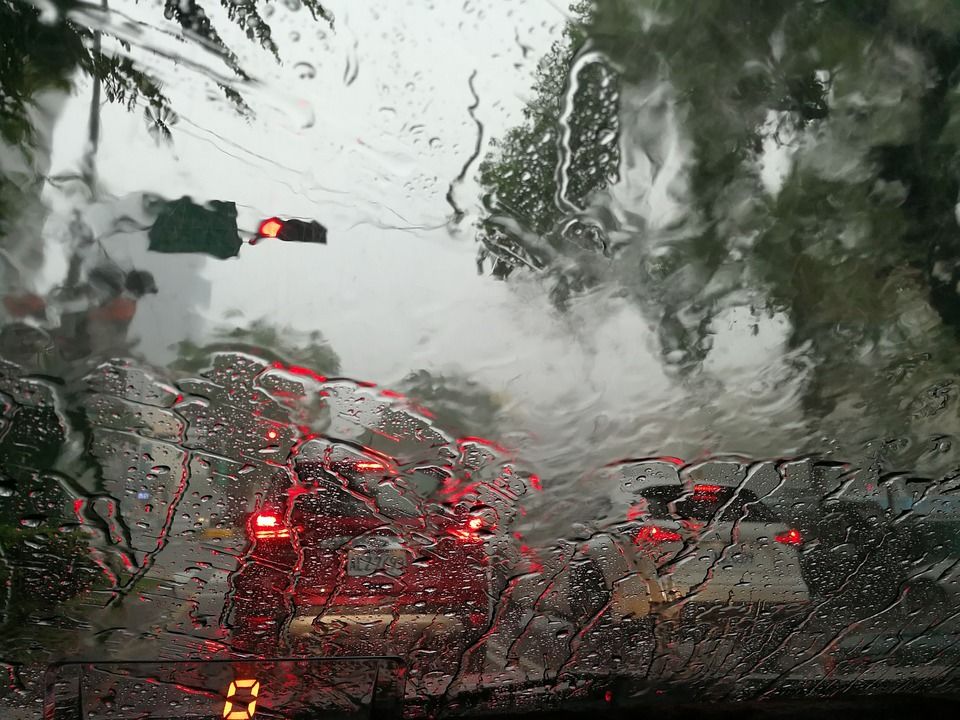
High levels of water from precipitation are the main cause of river flooding.
Flooding usually occurs when the other methods of rainfall drainage (interception, surface storage, evaporation etc.) fail, leading to more water entering the river.
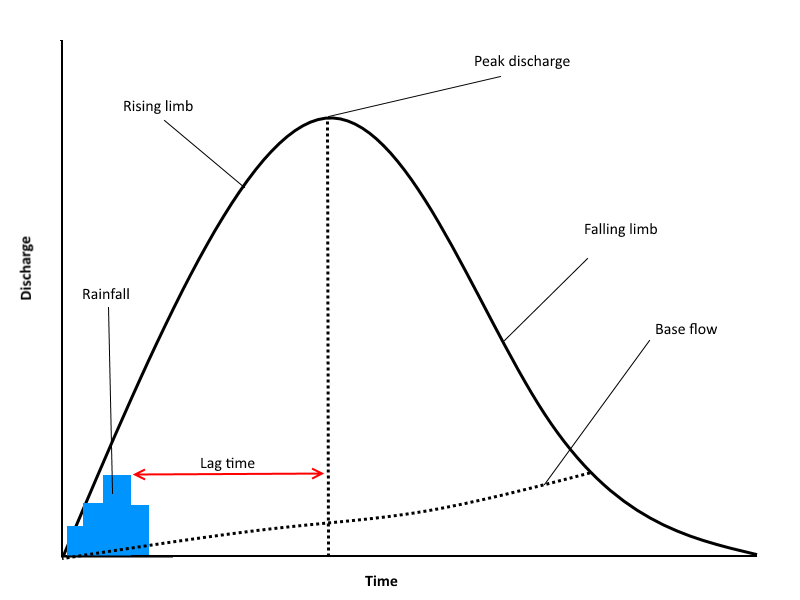
A hydrograph depicts the discharge of a river over time and is usually used to measure flood events.
Hydrographs show peak rainfall, lag time between rainfall and flooding, peak discharge, and the normal base flow of the river.
Page 2
Physical Causes: Weather
If there are prolonged periods of heavy rainfall, the ground can become saturated, making water flow more quickly to the river. This happens in the UK Winter; bands of depressions passing over bring continuous heavy rainfall.
If there is a cloudburst during a thunderstorm, rain droplets will be too large to sink into the ground straight away. They flow straight into the river instead. Sudden bursts of rain affect the infiltration rate of the soil. This causes flash floods.
Sudden rises in temperature can cause ice to thaw quickly and flow into the river.
River channels that contain high amounts of deposited silt can become blocked, meaning they are more likely to flood.
Page 3
Physical Causes: Geology
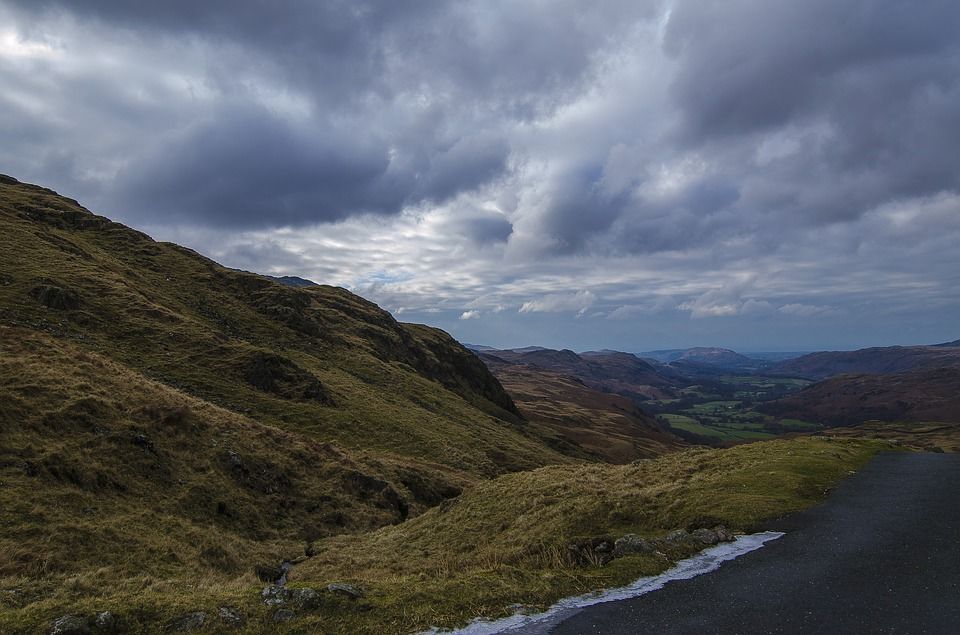
Mountains are usually composed of impermeable rock and are usually bare, meaning that there is little to no soil to intercept the rain.
Low lying areas usually have impermeable clay soils. The compacted nature of these soils means that water flows directly to the river.
Flooding is less likely in areas which have permeable rock such as chalk lying underneath a layer of soil.
Page 4
Physical Causes: Relief
Runoff occurs faster on steep slopes as gravity acts faster than infiltration.
Low-lying, flat floodplains have high risk of flooding because there is not enough gradient to remove excess water.
Page 5
Human Causes: Infrastructure
Urbanisation brings the development of infrastructure near rivers.
Population increase also increases demands for infrastructure.
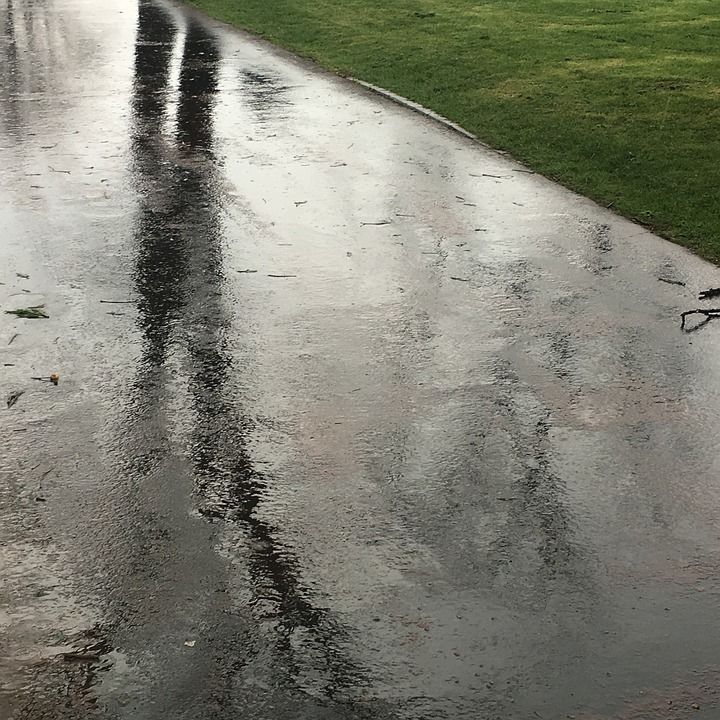
Building roads and other infrastructure means that there is an increase in the amount of impermeable land and a decrease in the amount of permeable land that can drain rainwater.
The greater the area covered by roads and buildings, the greater the flood risk.
Page 6
Human Causes: Housing
Demand for houses during the current housing crisis in the UK means that many new houses are being built on greenfield sites.
Housing density is increasing, property developers are now trying to increase the amount of houses that fit into one plot of land.
7% of homes built in England in 2011 were built on floodplains with a severe risk of flooding.
Housing development increases the area of impermeable surfaces near rivers.
Cities have few natural areas that can absorb excess water.
Faster runoff by gutters and culverts means that a river's discharge will rise quickly during rainfall.
Page 7
Human Causes: Disappearing Gardens
In residential environments, grass is being removed in a growing number of gardens.
Grass is often replaced with tarmac or concrete so that people do not have to mow the lawn.
This is very common in rented accomodation.
Front gardens are often paved over to allow for parking space for cars.
This increases impermeable surfaces near rivers.
Page 8
Human Causes: Forestry
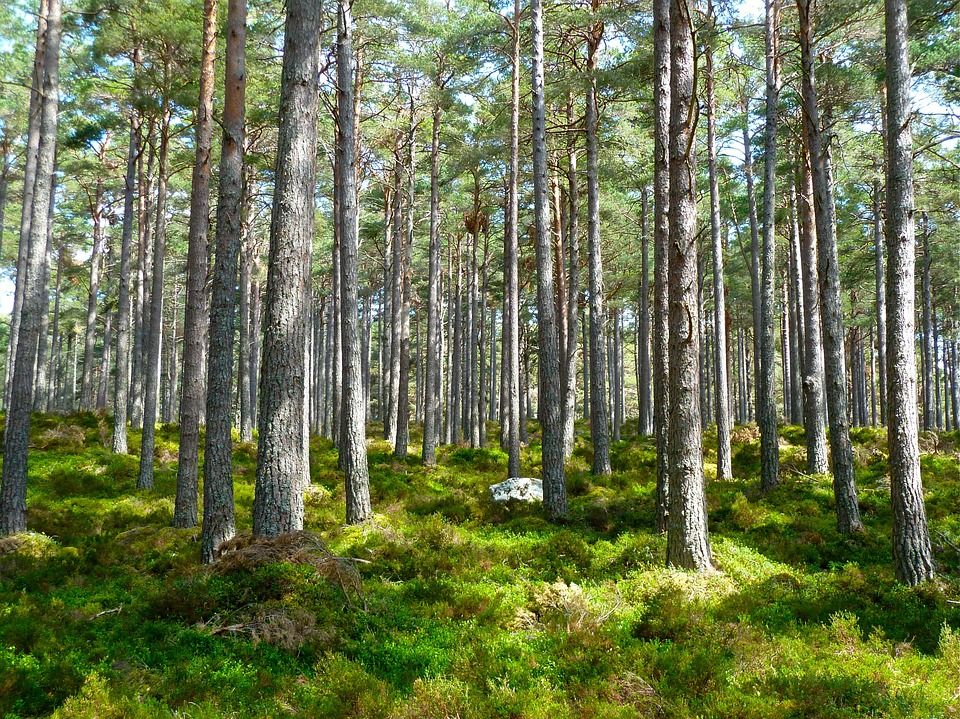
Deforestation reduces interception.
Roots no longer take water from the soil.
Soil becomes saturated quicker and runoff occurs, causing increased flooding.
Heavy rainfall can wash exposed soil into rivers. This builds up river beds and reduces the capacity of channels.
Page 9
Human Causes: Farming
The removal of hedges is common to make fields more efficient for mechanised farming. This decreases interception.
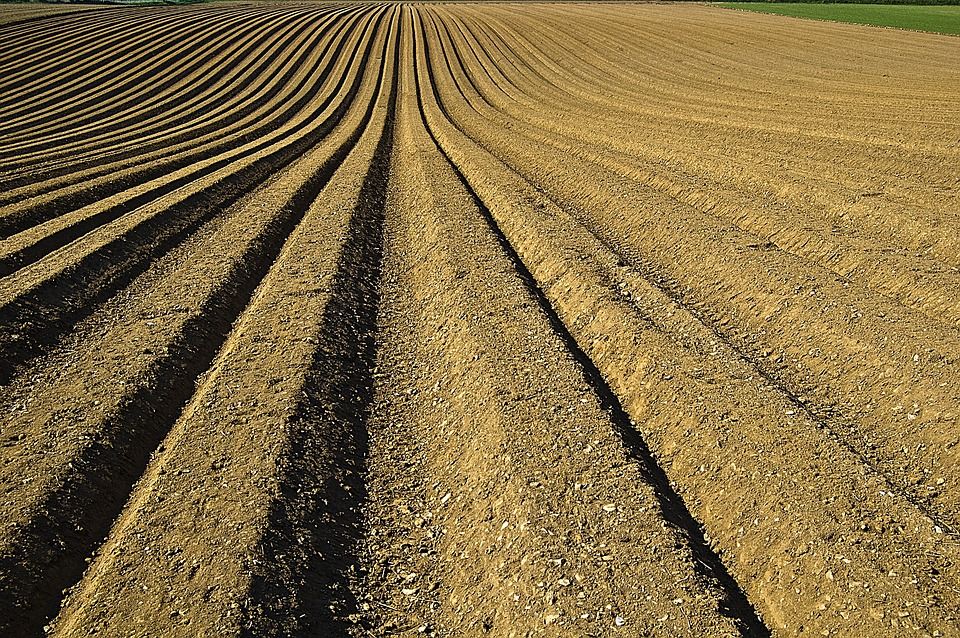
There has been a rise in arable farming and a decrease in pastoral farming in the UK. This means that soils are left bare in the winter, leaving no vegetation to intercept rainfall.
Fields are usually plowed to create furrows up and down hills. This increases soil drainage and leads to an increase in the soil being transported by rivers.
Page 10
Human Causes: Disappearing Fields
A growing number of fields are being sold to property developers, increasing the impact of new housing.
Large-scale farming is increasing, replacing fields with greenhouses and concrete yards.
Overgrazing on pastures compacts the soil, resulting in muddy runoff. Grazing pastures often have to be moved because of this degradation.
Polytunnels used to grow fruit and vegetables take up large green areas and reduce interception and evaporation.
Information
- Description
- User has deleted their subject information Note on Causes of Flooding, created by Deleted user on 21/06/2017.
- Created by
- Deleted user · Jun 2017
- Updated
- Jun 21, 2017
- Views
- 16
- History
-
- Created by Antonia Blankenberg · Jun 20, 2017
- Copied by Antonia Blankenberg · Jun 21, 2017
- Rating