
Notes
Glacial Landforms
Content of the notes (9)
Page 1
Glacial Landforms
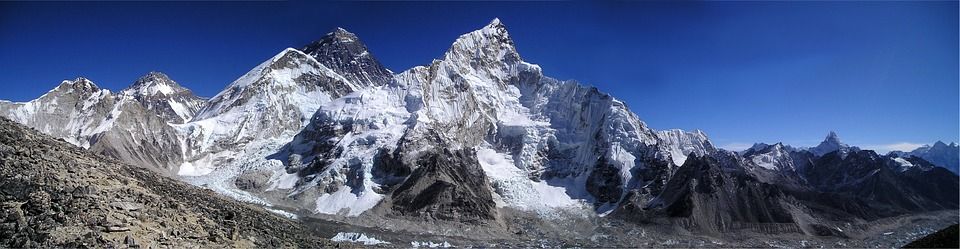
Landforms formed by glacial erosion include:
Corries, arêtes, and pryamidal peaks
Troughs
Truncated spurs
Hanging valleys
Glacial lakes
Ribbon lakes
Roche moutonnés
Landforms formed by glacial deposition include:
Ground and terminal moraines
Erratics
Landforms formed by glacial erosion and deposition include:
Crag and tail
Drumlins
Page 2
Corries, Arêtes, and Pyramidal Peaks

A corrie is a deep armchair-shaped hollows found in the side of mountains.
An arête is a ridge that forms between two corries that form beside each other.
A pyramidal peak is produced when there are corries on all sides of a mountain, giving the peak a sharp appearance.
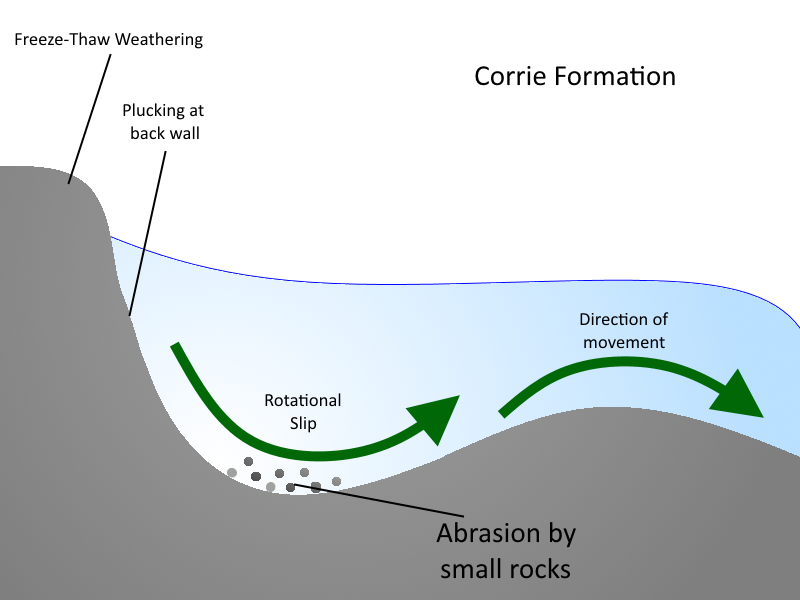
Corries are formed where glaciers begin.
Corries are formed when snow in high altitude regions becomes compacted and dense.
When the ice moves away due to gravity, it carves out a section of the mountainside.
It does this through the action of plucking on the back wall.
The rotational force of the ice causes greater pressure on the base of the hollow.
Corries usually form on the side of the mountain that receives the least sunshine due to the lower temperatures. In the UK, this is usually the northeast side of mountains.
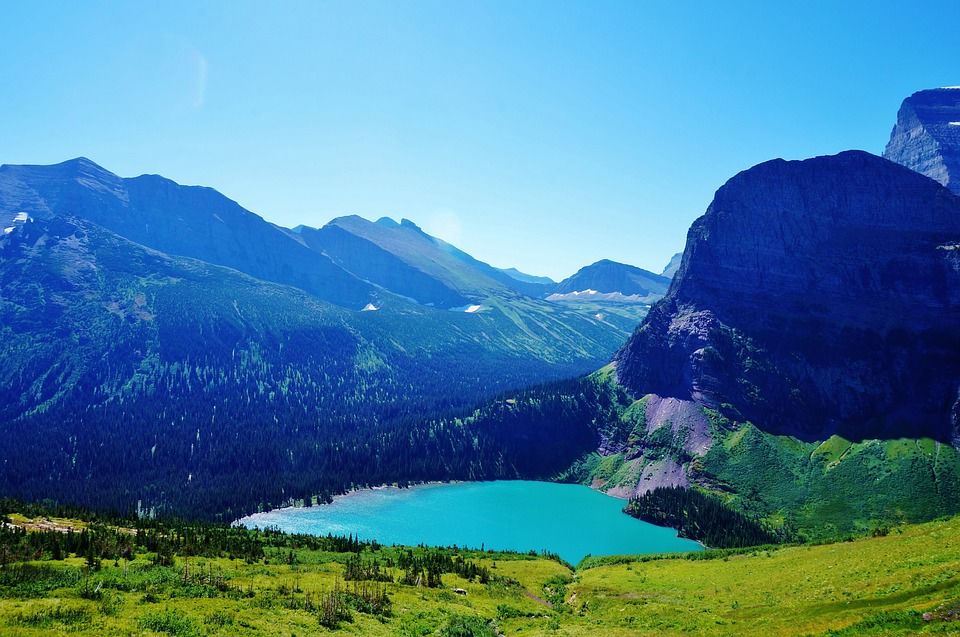
Corries have deep depressions when glaciers begin to move away. These can fill with water to form glacial lakes.
Page 3
Glacial Troughs
The traditional shape of a river valley before glaciation is a V-shaped valley.
During glaciation, glaciers usually move down the easiest path. This is usually the existing river valley.
Large glaciers tearing away the sides and bottom of the previous valley give it a completely different shape.
Glacial valleys are usually U-shaped and are referred to as glacial troughs.
The tributaries that once flowed gradually into the river valley now exit abruptly, entering the glacial trough as if it were a cliff. This cliff is referred to as a hanging valley.
Truncated spurs form when a glacier cuts through the existing interlocking spurs formed by the river.

Page 4
Ribbon Lakes
A ribbon lake is a long and narrow glacial lake, usually found in a glacial trough.
These form when a glacier moves over alternating bands of hard and soft rock.
The softer rock is eroded quicker by the glacier, creating dips in the surface.
When the glacier melts, these areas will fill with water first, creating the lake.
Page 5
Roche Moutonnés
Roche Moutonnés are small rocky outcrops that vary in size.
These form from an outcrop of resistant rock that was left behind with the glacier passing.
The glacier slows upon meeting it and melting occurs.
As the ice moves again, the material is dragged down through the process of plucking.
These have a smooth upstream slope.
Page 6
Moraines
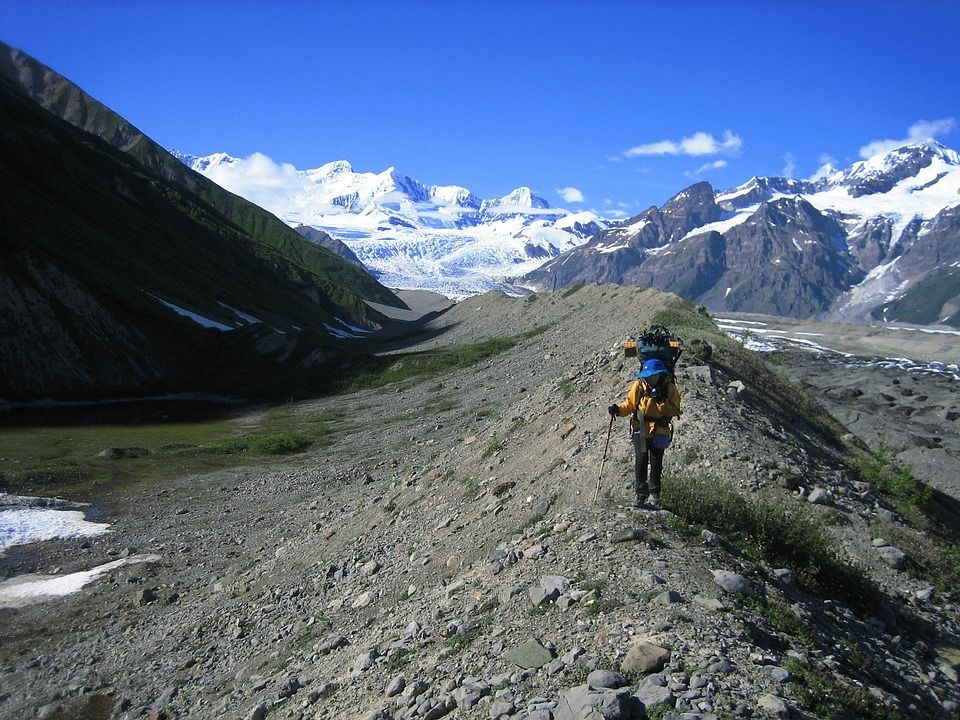
Lateral moraines are a ridge of deposited material that runs along the edges of a glacial trough.
The source of the material is freeze-thaw weathering.
Ground moraines are a deposit of material lodged under a glacier.
Ground moraines cover large areas of the UK.
The load of material that is bulldozed at the front of the glacier forms a terminal moraine.
These allow us to figure out how far glaciers moved during the ice age.
Medial moraines form where glaciers meet.
They are formed where two lateral moraines are joined together to make a large ridge of rock debris.
Page 7
Erratics
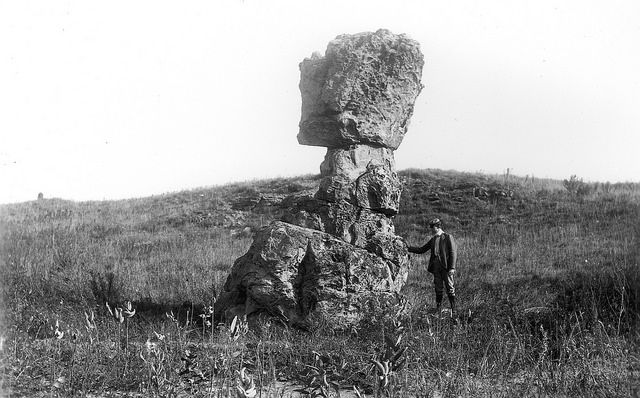
Erratics are rocks that differ in size and type from the area they're sitting in.
Glaciers can pick up large rocks and carry them hundreds, sometimes thousands, of kilometers from where they were formed.
Erratics are usually carried deep in the ice and so do not wear down like the rocks at the edges. This is how they retain their size.
Page 8
Crag and Tail
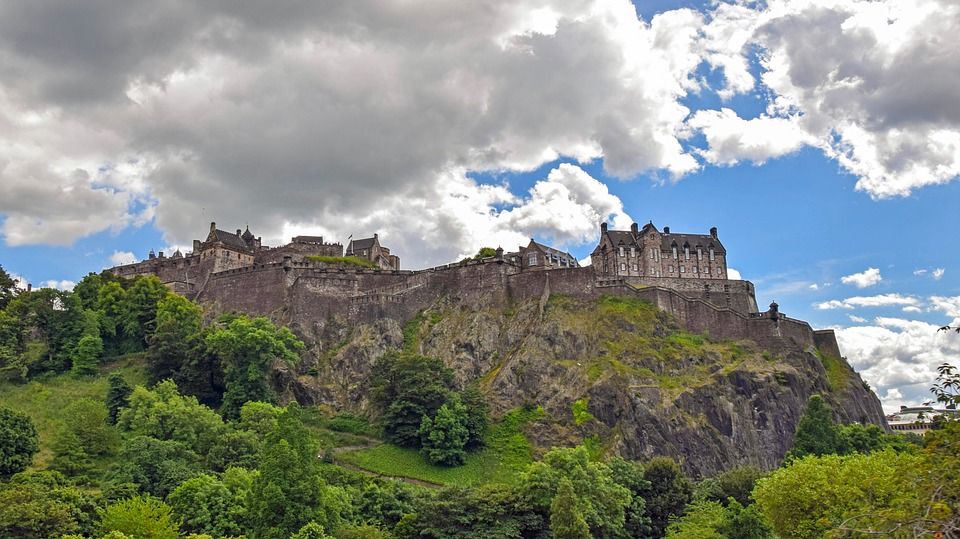
Crags form where a glacier meets a resistant rock or volcanic plug.
The glacier passes over the rock but leaves it standing, eroding the softer rock around it.
Material is deposited on the lee slope and tapers away with distance.
Edinburgh Castle is built on a crag, as seen in the image below.
Page 9
Drumlins
Drumlins are egg-shaped, elongated platforms made out of glacial till.
They form when glaciers are blocked by an obstruction and material is deposited by the glacier as a ground moraine.
This material is then shaped by the moving ice.
Drumlins range in size, but can be up to 1km in length, 500m in width, and 50m high.
Drumlins are often found in groups called swarms.
The direction of previous ice movement is shown by drumlins.

Information
- Description
- User has deleted their subject information Note on Glacial Landforms, created by Deleted user on 23/06/2017.
- Created by
- Deleted user · Jun 2017
- Updated
- Jun 23, 2017
- Views
- 49
- History
-
- Created by Antonia Blankenberg · Jun 22, 2017
- Copied by Antonia Blankenberg · Jun 23, 2017
- Rating