
Notes
Concentration, pH and Balanced Equations
Content of the notes (4)
Page 1
Concentration
Remember!
\(Concentration = \frac{\text{Amount dissolved}}{\text{Volume of solution}}\)
Example Question:
What is the concentration in terms of \(gdm^{-3}\) of a solution containing \(6g\) of solute dissolved in \(50cm^{3}\) ?
Solution:
\(Concentration = \frac{\text{Amount dissolved}}{\text{Volume of solution}} = \frac{6}{0.05}=120gdm^{-3}\)
Note: Divide \(cm^3\) by 1000 to change into \(dm^3\)
Page 2
pH
Remember!
If the concentration of hydrogen ions is increased by 10, the pH decreases by 1
If the concentration of hydrogen ions is decreased by 10, the pH increases by 1
Example Question:
An acid with a pH of 4 is diluted by a factor of 10. What will the new pH be?
Solution:
The new pH will be 5.
Page 3
Balancing neutralisation equations
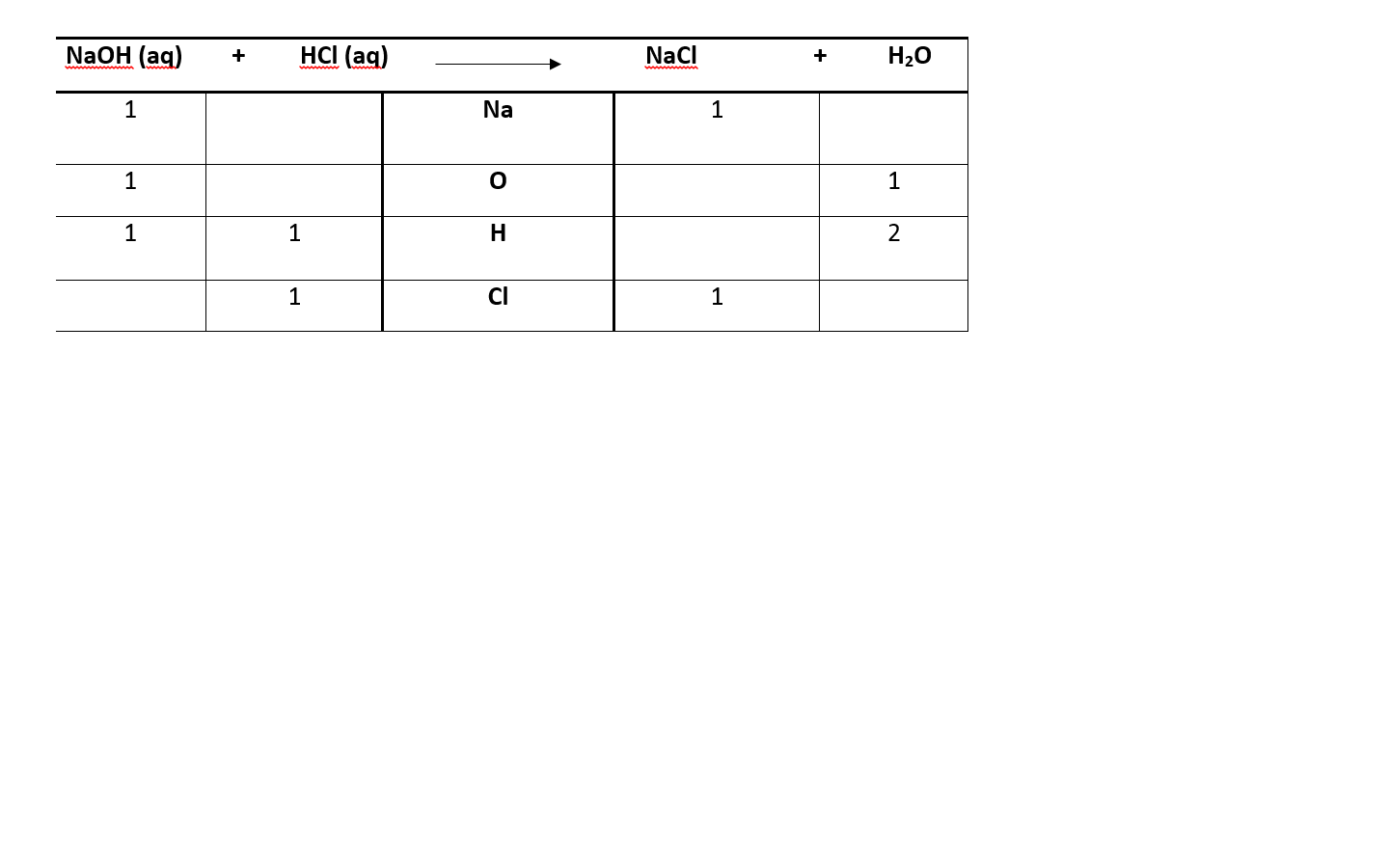
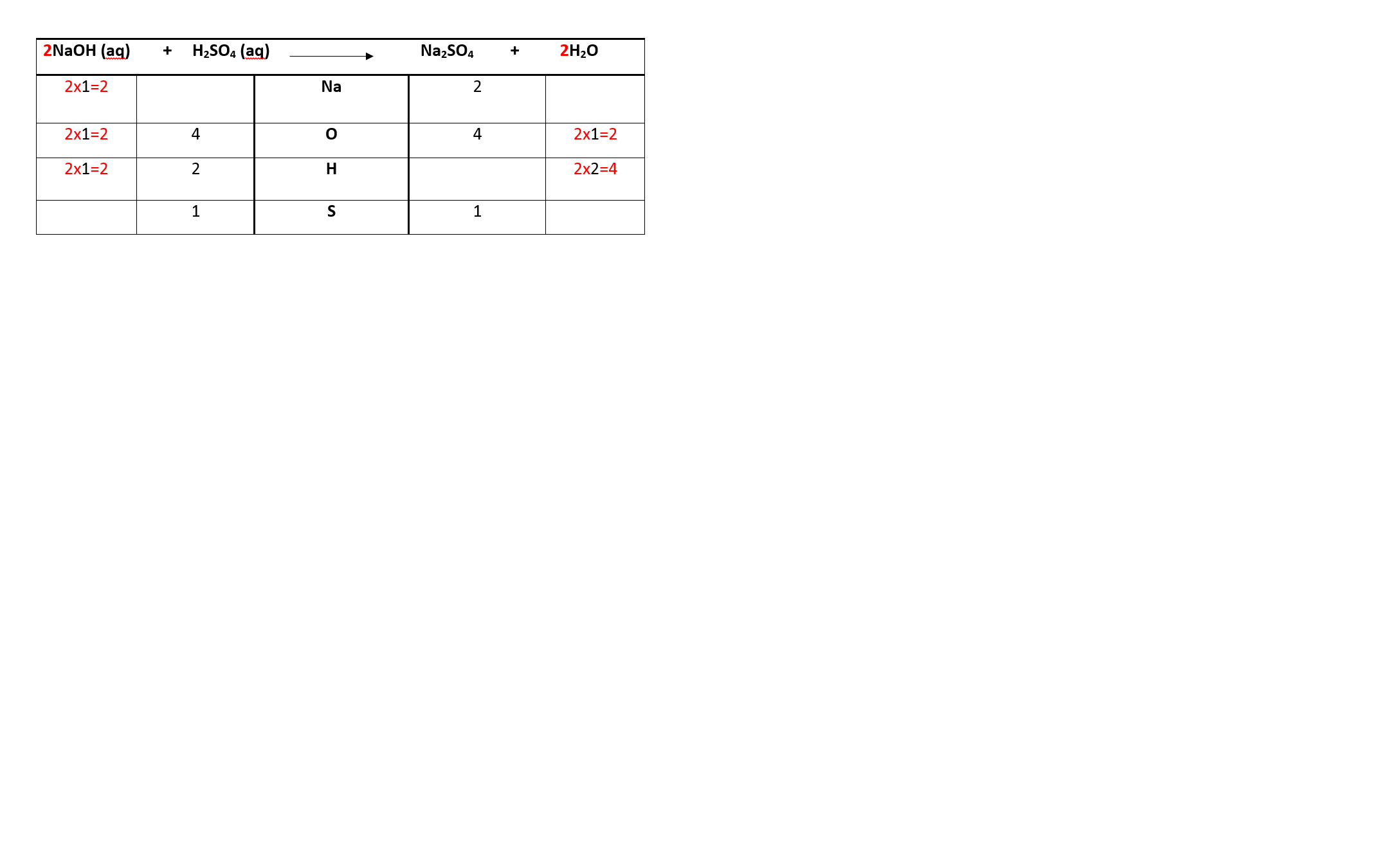
Each side of the equation must have equal numbers of each type of atom. To balance an equation, make a tally of how many of each atom there are on each side. Add coefficients to each species until the left hand side numbers match the right hand side.
The numbers already match in this case and therefore the equation is already balanced
Page 4
Balancing neutralisation equations
Some changes must be made to this equation in order to get it to balance. These changes are shown in red.
Information
- Description
- User has deleted their subject information Note on Concentration, pH and Balanced Equations, created by Deleted user on 30/06/2017.
- Created by
- Deleted user · Jun 2017
- Updated
- Aug 22, 2017
- Views
- 16
- History
-
- Created by Niamh Ryan · Jun 28, 2017
- Copied by Niamh Ryan · Jun 30, 2017
- Rating