
Illness and Disease

Slides in this set (3)
-
- Infection:
- Infection of a wound was a major cause of death
- Bullet and shell fragments carried materials such as mud and soil into the body which often became infected
- Many soldiers recovered from initial injuries but died from infections
- The infection that caused the highest number of deaths was gas gangrene (carried by bacteria living in soil and develops rapidly)
- Wounds infected by this bacteria swelled up with gas
- Before the development of antibiotics, doctors could do nothing to fight this infection
- Trench fever:
- Also known as pyrexia, Trench fever was spread by lice that lived in clothing and blankets
- Its symptoms included headaches, shivering and pains in joints and bones
- Trench fever was widespread
- It debilitated soldiers leaving them unfit to fight
- July 1917 - July 1918: 15% British soldiers could not fight due to the fever
- To help combat the fever, clothes were disinfected and washed thoroughly when soldiers were not on the front line
-
- Trench Foot:
- Trench floors were quickly filled with water and mud in rainy conditions
- To prevent soldiers from standing in water-logged ground duckboards were utilised
- However, these did not stop a soldier from developing trench foot
- This was a fungal infection from constant immersion of feet in water; feet became numb and blistered, while turning blue from lack of blood flow
- The condition deteriorated rapidly and could lead to gangrene, and sometimes the only preventative treatment was amputation
- As trench foot became more common, medical officers ordered soldiers to regularly change socks and rub whale oil on their feet to repel water
- Caption: Severe case of Trench foot
-
- Frostbite:
- This was caused by exposure to extreme cold, damaged skin and sometimes muscle tissue
- Circulation was cut off to hands and feet; fingers and toes sometimes had to be amputated
- 1917 - 21,000 British soldiers brought to hospital with frostbite
- Body Lice:
- Lived in the uniforms of soldiers and on the skin
- These insects live off the blood of their hosts
- Their bites would have resulted in intense itching
- Sometimes wounds caused by the lice could become infected and lead to trench fever
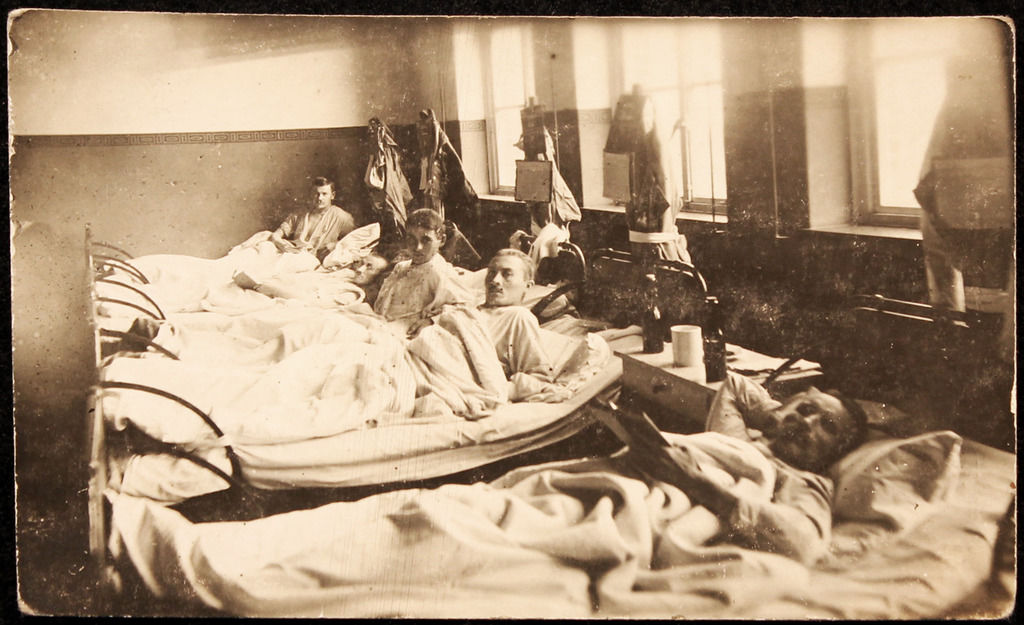
- Caption: Patients in hospital
Information
- Description
- User has deleted their subject information Slide Set on Illness and Disease, created by Deleted user on 12/07/2017.
- Created by
- Deleted user · Jul 2017
- Updated
- Jul 12, 2017
- Views
- 44
- History
-
- Created by Andrew Burke · Jul 10, 2017
- Copied by Andrew Burke · Jul 12, 2017
- Rating