
Theatre of War - Ypres
Slides in this set (2)
-
- One important area during the war was the town of Ypres:
- Ypres lay on the most direct route to the Channel ports of Calais and Dunkirk
- If Germany were to catch these ports they would cut off British supplies
- Ypres had to be defended to keep the British War effort going
- The Ypres Salient (salient means ‘bulge’) was a vulnerable area of the Allied line
- German forces occupied high ground overlooking the Salient, which made it easy to fire down at the British and American forces
- These higher areas were well drained and made for better treatment and defence on the German front
- British trenches were on low-lying ground that was easily waterlogged and flooded
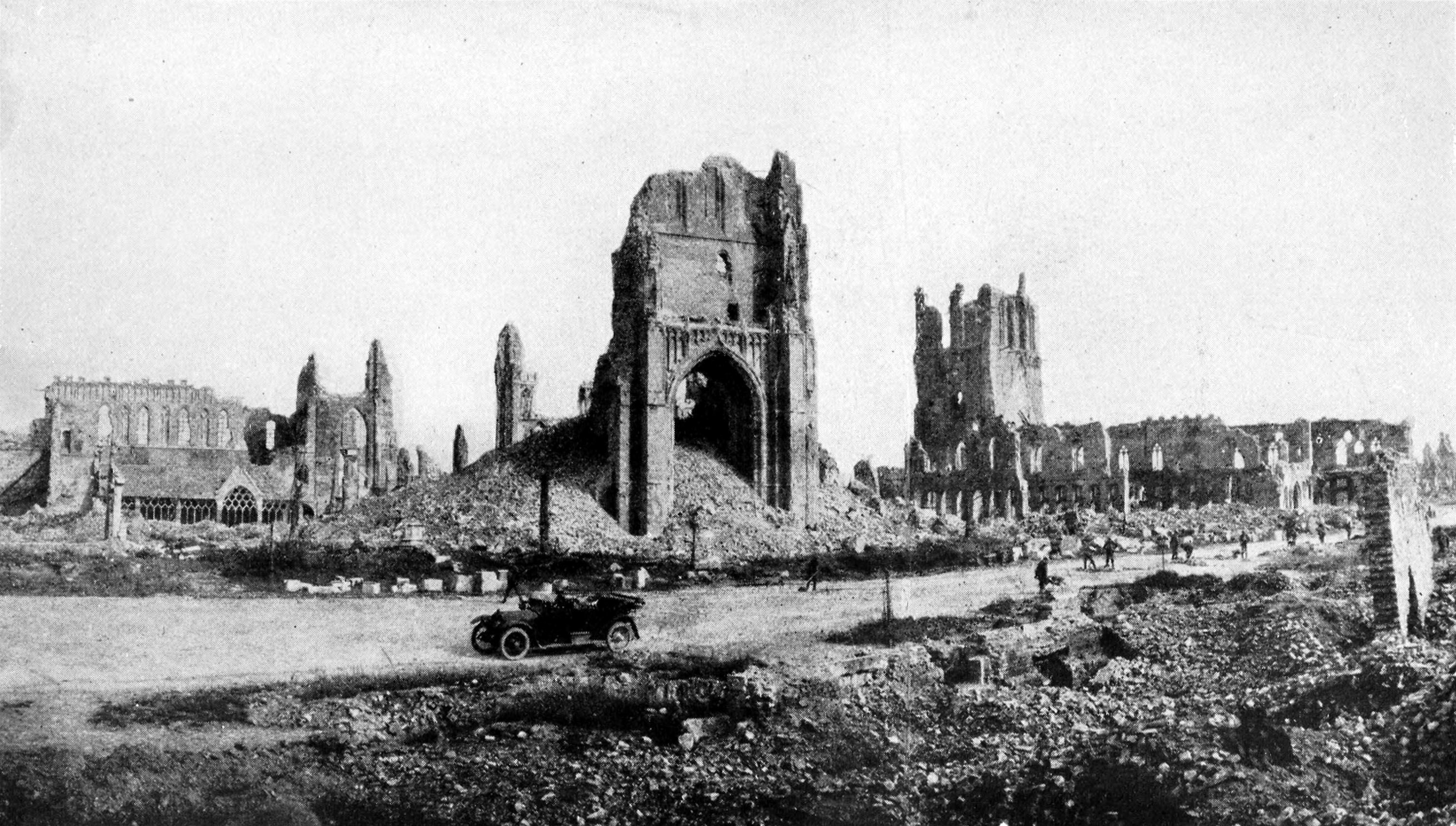
- Caption: Ypres towards the end of the war
-
- The second Battle of Ypres in 1915 saw the first extensive use of poison gas by German troops
- The Battle for Hill 60 near Ypres in April 1915 was an example of how German armed forces maintained control of the higher ground but also of the methods utilised to try and capture this ground:
- Hilll 60 was a man-made hill
- This gave the German troops an advantage over the British armed forces
- In 1915, a decision was made to attack Hill 60
- Soldiers who had worked as coal miners in Wales and Northumberland dug tunnels into and under the hill
- The Germans dug counter-tunnels
- Tunnels either caved in or were blown in by the enemy
Information
- Description
- User has deleted their subject information Slide Set on Theatre of War - Ypres, created by Deleted user on 13/07/2017.
- Created by
- Deleted user · Jul 2017
- Updated
- Aug 27, 2018
- Views
- 106
- History
-
- Created by Andrew Burke · Jul 12, 2017
- Copied by Andrew Burke · Jul 13, 2017
- Rating