
Notes
Within You, Without You
Content of the notes (5)
Page 1
About the Piece:
Key: Modal (Mixolydian mode)
Tempo: Moderate but gets faster
Style: Indian
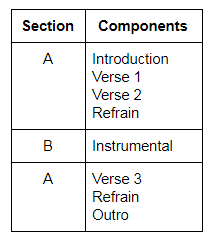
Structure: Extended ABA (see below)
Within You, Without You is the 8th track on Sgt. Pepper's Lonely Hearts Club Band.
Although regarded by some as a dull interlude in the otherwise masterful album, Within You, Without You encapsulated the exploration of spiritual themes that had become popular in 1967's Summer of Love.
This song is a fusion between Western and Indian traditional music styles and was inspired by George Harrison's love of Indian music.
This is the only George Harrison song on the album and was composed using a harmonium (a type of organ) at Klaus Voorman’s home after a dinner party. Harrison is also the only member of the band to perform on the track.
The song appears in three sections, similar to ABA or ternary form. Apart from this, there are long improvised sections that play in between the vocal sections.
Within You, Without You incorporates the floating rhythmic/metric feeling associated with traditional Indian music. The time signature varies to match this feeling; Indian music uses a fixed rhythmic pattern, called a "tala", which may contain an uneven number of measures, not all of which are in the same meter.
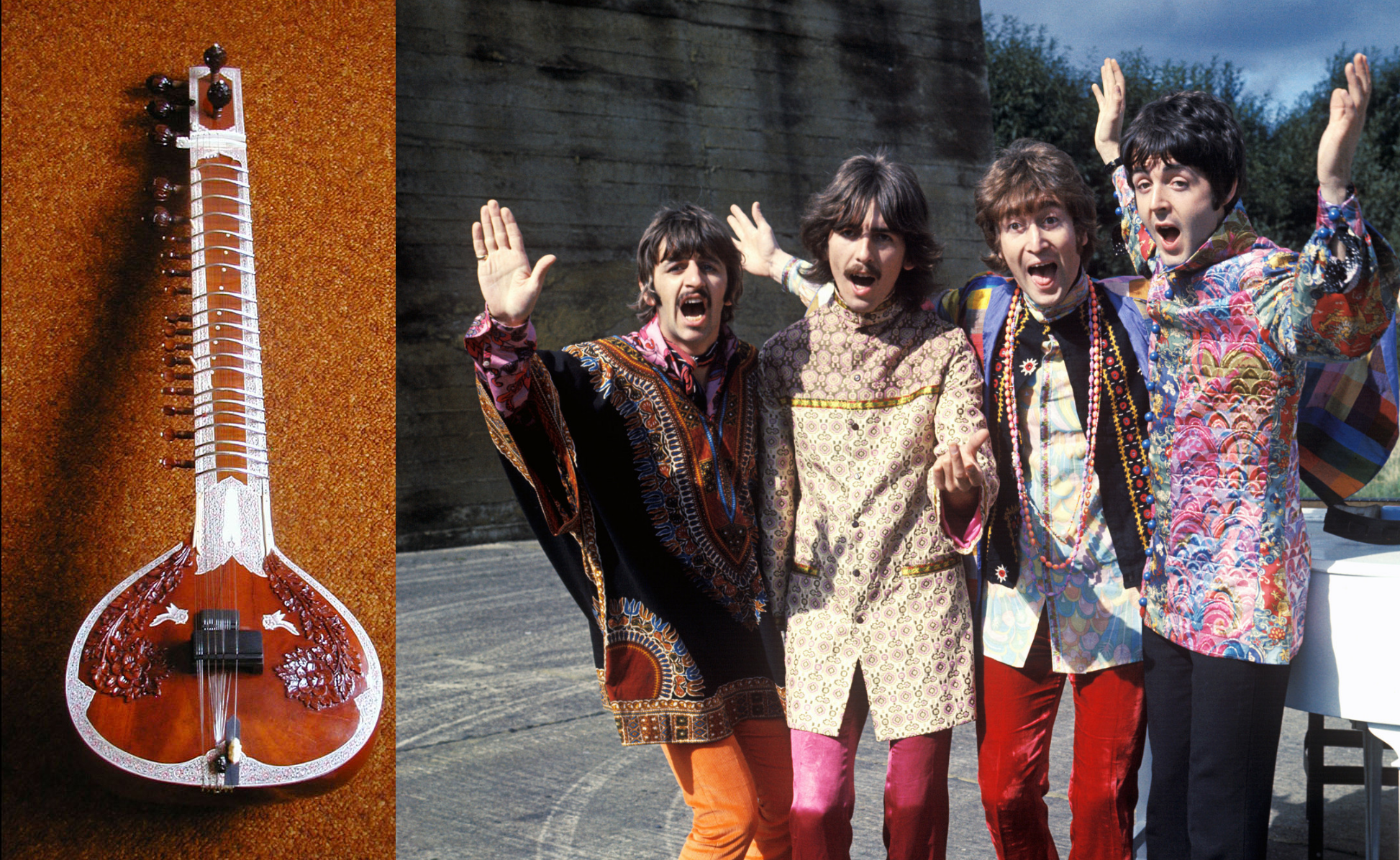
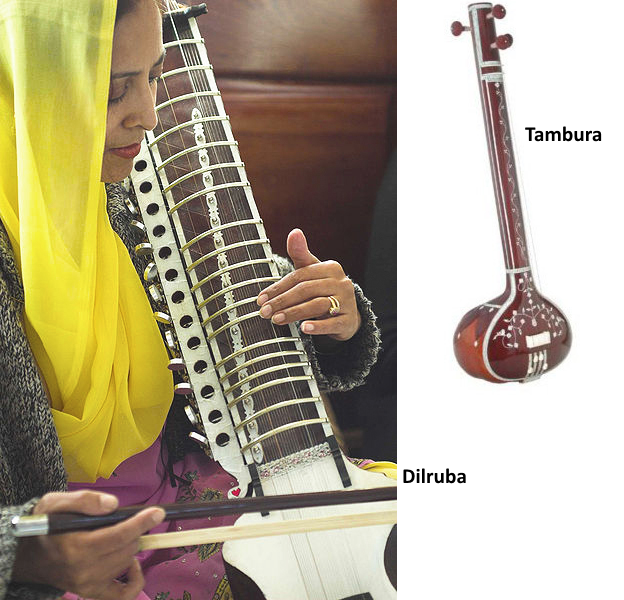
This song uses both traditional Indian instruments and Western instruments. Indian instruments used include: tamboura, tabla drums, dilruba, and sitar. These are accompanied by orchestral string instruments (violins, violas, etc.).
Indian music is not written in the same type of notation as Western music. Indian music uses a melodic system of "ragas" instead of our scales, this means there is no accurate way of mapping Indian music into Western notation. The closest scale to match this song is the Western "Mixolydian mode" (a scale with a Major third at the bottom and a flattened seventh at the top).
Page 2
Introduction:
The song opens with a long, sustained drone from the tambura (pictured below). This drone consists of two notes, Db and Ab, which complete a perfect fifth and create a hypnotic effect.
After a few seconds, the dilruba enters, playing a leisurely, extended and decorated melody.
The lack of a solid pulse at the beginning of the piece adds to the dreamy quality of the music.
Emphasis is placed on the mixolydian mode here. Note that the melody (shown below) starts on an E (the 3rd) and puts emphasis on the Bb (flattened 7th).
The end of this section features an atmosphere-setting glissando on the swarmandal (a type of Indian zither with a harp-like quality). This is recorded with heavy echo to add to the feel of the song.
This is followed by a two-bar rhythmic pick-up on the tablas leading into the verse. A seamless link into the first verse is achieved by the continuation of the drone in the Tambura.

Page 3
Verses:
The beat of the verse is given by a tala-like rhythm on the tablas. Traditionally, a tala varies in metre, allowing the instrumental/vocal parts to
improvise and weave around freely. The tala is quite strict in this song to match the much more strict vocal melody from Harrison.
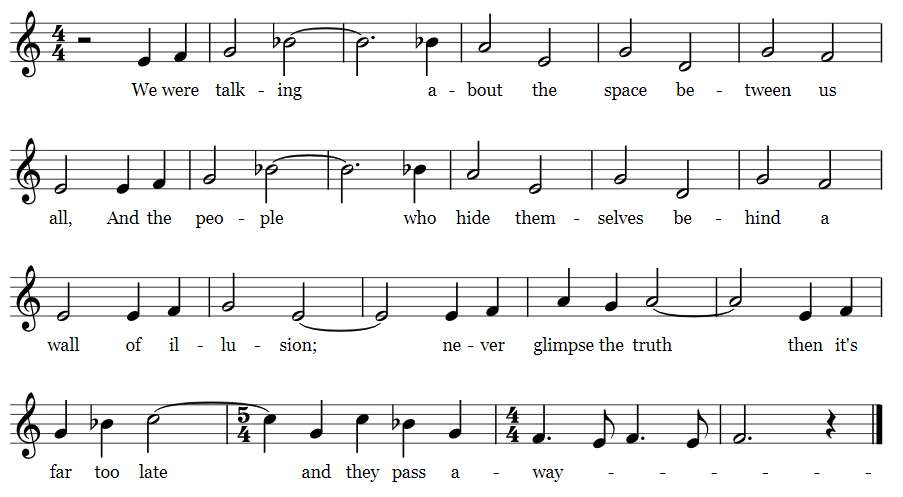
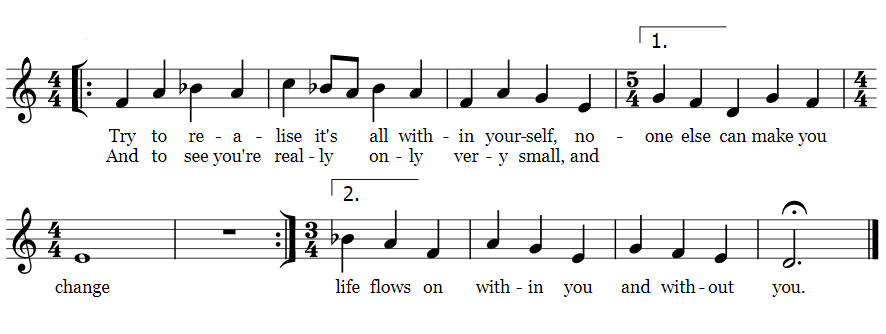
The vocal line is in the mixolydian mode, similar to the dilruba introduction. As seen on the notation below, there is a lot of emphasis put on the flattened 7th (Bb).
The dilruba doubles up on the vocal line in the verse, adding in extra ornamentation.
The verse has very unusual phrasing; two six bar phrases followed by an extended nine bar phrase.
There is effective word painting at the end of the melody to the words ‘They pass away’. Notice the descending melodic shape followed by the extension to the word ‘away’ as it wavers and hesitates before finally dying away.
The addition of a 5/4 bar is very unusual in pop music. It easily goes unnoticed while listening to the track due to the sustained melody.
At the end of the first verse the Western string instruments are added. The violins play four distinct, descending crotchets to signal the repeat.
During the second verse, the Western strings develop the melodic ideas from the first verse through a counter-melody playing in the violins, creating a contrapuntal texture. Meanwhile, the cellos join the main melody with the dilruba and Harrison.
The second verse is slightly extended as a lead into the chorus. Interestingly, this is something we've seen in other more traditional pop songs from The Beatles. This extension features triplets that hint at the changing tempo; these triplets contain a flattened 3rd (Eb) to draw attention. The drum fill at the of the second verse gives the new, slightly faster tempo for the chorus.
The third verse is very similar to the first two, but with the addition of Western strings playing in octaves.
Page 4
Chorus:
The chorus seems to have a greater sense of urgency created largely by the use of almost continuous crotchet movement in the vocal melody and the faster tempo.
The continuous crotchet movement and changing rhythms on the tabla make it difficult to sense the time signature.
The violins give an antiphonal response to the lyrics at the end of the first repeat. The descending crotchets contrast the gentle rising vocal melody.
The end of the second repeat section features a drone from the tambura and cellos to and back into the instrumental section of the song.
The emphasis is taken off the flattened 7th in this section. When the note is used, it is instantly resolved to the 6th (A).
Page 5
Instrumental:
The instrumental section of Within You, Without You is very different to the verse and chorus sections of the song.
The drone is maintained, along with the Mixolydian tonality, but the tempo moves up a gear, accompanied by a change of metre to a 5/8 time signature, which is extremely uncommon in Western pop/rock music.
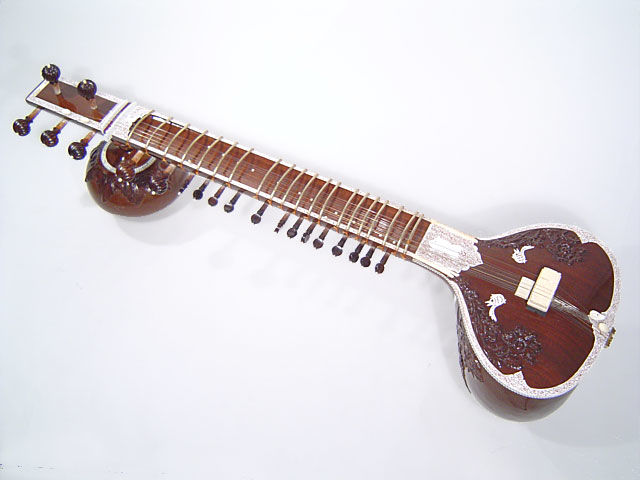
The dilruba plays the main melody in this section and is answered by the sitar (shown below), these antiphonal phrases vary in length. The Western strings soon enter playing their own octave, pizzicato ostinato figure (shown below). The sitar also plays this figure.
The second part of the instrumental features the violins joining the dilruba playing the melody.
At the end of the instrumental, the rhythmic drive returns and the swarmandal glissando heard in the introduction signals the return to the final verse and chorus.

Information
- Description
- User has deleted their subject information Note on Within You, Without You, created by Deleted user on 17/07/2017.
- Created by
- Deleted user · Jul 2017
- Updated
- Jul 17, 2017
- Views
- 35
- History
-
- Created by Antonia Blankenberg · Jul 12, 2017
- Copied by Antonia Blankenberg · Jul 17, 2017
- Rating