
Notes
Periodicity

Content of the notes (4)
Page 1
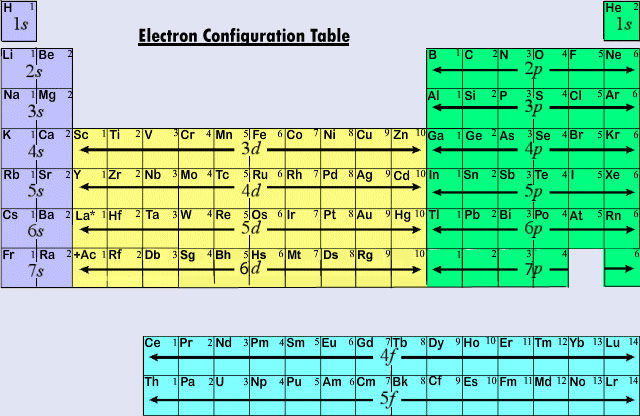
The Periodic Table
Groups: The vertical columns in the Periodic Table
Periods: The horizontal rows in the Periodic Table
Blocks:
S-block: The s-block consists of elements in Group 1 and Group 2. The highest energy electron of an element in the s-block is in an s orbital.
P-block: The p-block consists of elements in Groups 3 to 8. The highest energy electron of an element in the p-block is in a p orbital
D-block: The d subshell is being filled for an element in the d block
Page 2
Atomic Radii
Types of Atomic Radii
Covalent radius: Half the distance between the nuclei when two atoms of that element are covalently bonded together in a homonuclear diatomic molecule
Van der Waals radius: Half of the distance between the closest approach of two non-bonded atoms of a given element
The covalent radius will always be smaller than the Van der Waals radius.
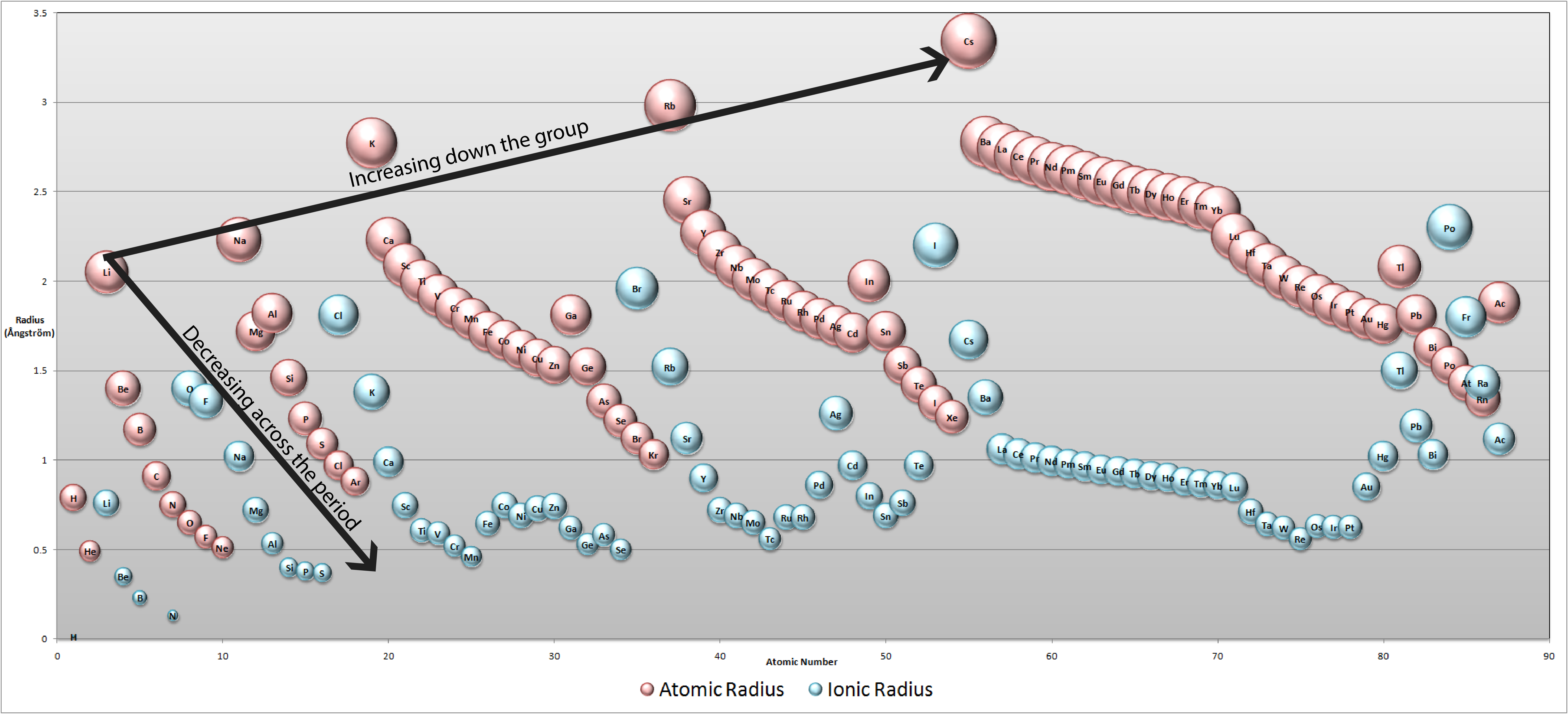
Trends in Atomic Radii
In general:
Decrease across period
Increasing number of protons → Increasing nuclear charge
Electrons feel stronger attractive force of nucleus → Pulled towards the nucleus → Smaller radius
Increase down the group
Electrons are being added to new quantum shell → Placed further away from nucleus → Larger radius
Electrons experience shielding by lower energy electrons → Less attracted to nucleus → Larger radius
Page 3
Melting and Boiling Points
Element with giant lattice structure have high melting and boiling temperatures.
Elements with simple molecular structure have low melting and boiling temperatures
Page 4
First Ionisation Energies
First ionisation energy: The first ionisation energy of an element is the energy required to remove an electron from each atom in one mole of atoms in gaseous atoms
In general:
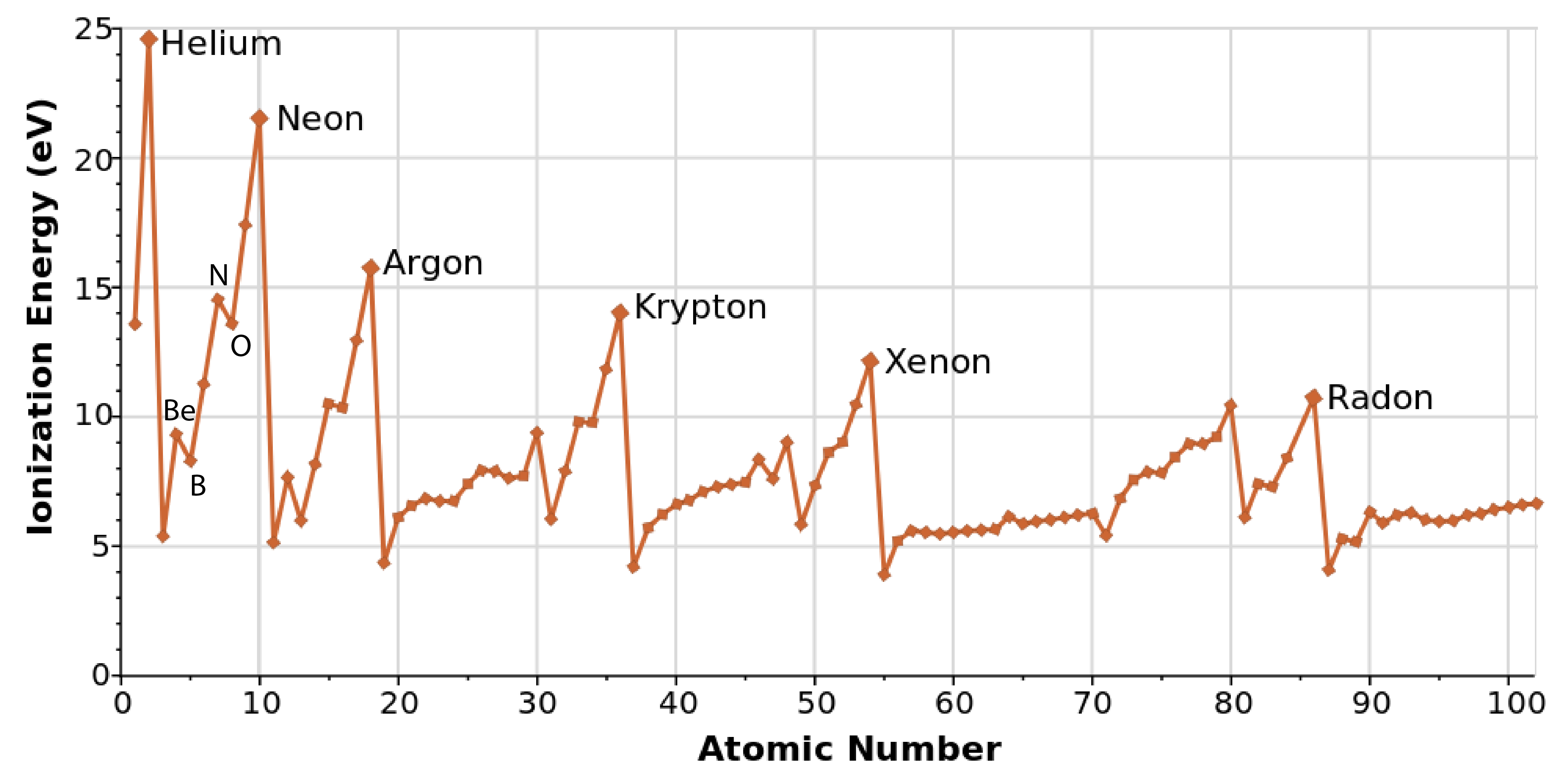
Increase across the period
Increasing number of protons → Increasing nuclear charge → Electrons are lower in energy → More energy needed to remove them → Higher first ionisation energy
Decrease down the group
Electrons added to new quantum shell → New shell has higher energy and electrons are more shielded by lower electrons → Higher energy electrons → Less energy needed for removal → Lower first ionisation energy
However, there are some anomalies:
Ionisation energy of Group 3 element is less than that of Group 2 element
Example: Ionisation energy of beryllium is greater than that of boron
Orbital energies
Outer electron of boron is in p orbital
Outer electron of beryllium is in s orbital
Therefore, outer electron of boron is higher in energy → Easier to remove than outer electron of beryllium → Lower ionisation energy than beryllium
Shielding
Outer electron of boron experiences shielding from two inner electrons subshells
Outer electron of beryllium experiences shielding from only one inner electron subshell
Therefore, outer electron of beryllium is lower in energy→ Electron on beryllium feels more attractive force of nucleus → Beryllium has higher ionisation energy
Ionisation energy of Group 6 element is less than that of Group 5 element
Example: Ionisation energy of nitrogen is greater than that of oxygen
Paired electrons
Presence of two electrons in one orbital increases electron-electron repulsion → Electrons will be higher in energy
First electron removed from oxygen comes from a pair → Higher in energy → Requires less energy to remove than unpaired outer electron of nitrogen
Information
- Description
- User has deleted their subject information Note on Periodicity, created by Deleted user on 14/08/2017.
- Created by
- Deleted user · Aug 2017
- Updated
- Aug 14, 2017
- Views
- 29
- History
-
- Created by Niamh Ryan · Aug 4, 2017
- Copied by Niamh Ryan · Aug 14, 2017
- Rating