
Flowchart
Whitechapel - Local Context
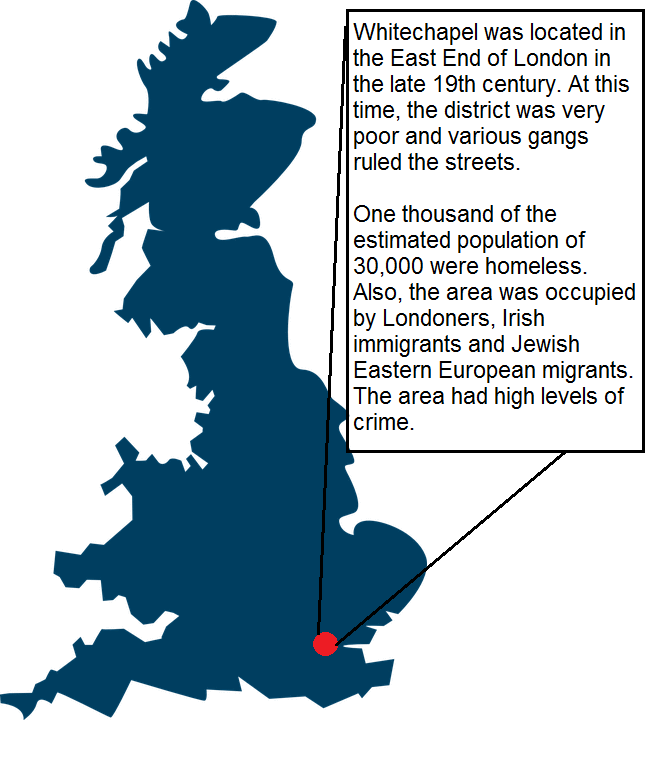
Flowchart content
Whitechapel: Local Context
Poor sanitation and pollution
London was a heavily polluted city due to mass amounts of industrial activity
The prevailing wind would of carried smoke and gas into the all the streets in the East End, resulting in breathing problems
Sanitation (conditions relating to public health, especially the provision of clean drinking water and adequate sewage disposal). London had little safe drinking water and sewage flowed in the streets.
Overcrowding
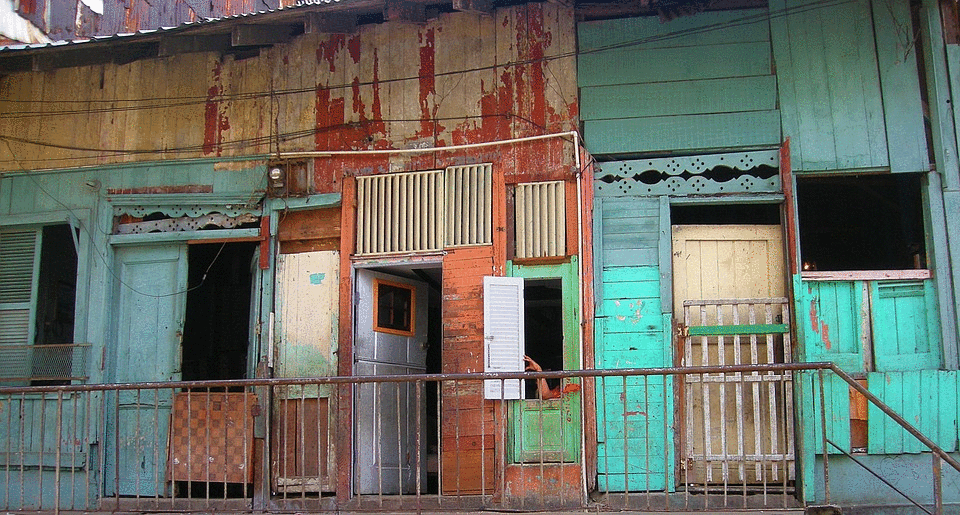
Majority of the housing was found in congested slum areas (rookeries). Dirt and disease was prevalent, while crime was a common occurence
Another form of accommodation was the lodging houses that operated on a three eight hour sleeping shifts per day - this means beds could be used by most other people throughout the day
1881 - the census demonstrated the severe problem of overcrowding in Whitechapel. 30,709 people in the area, but only 4,069 occupied houses
1877 - one rookery in Whitechapel contained 123 rooms, which housed 757 individuals
Families lived in houses that were divided into apartments. There could be up to 30 people living in in a single apartment
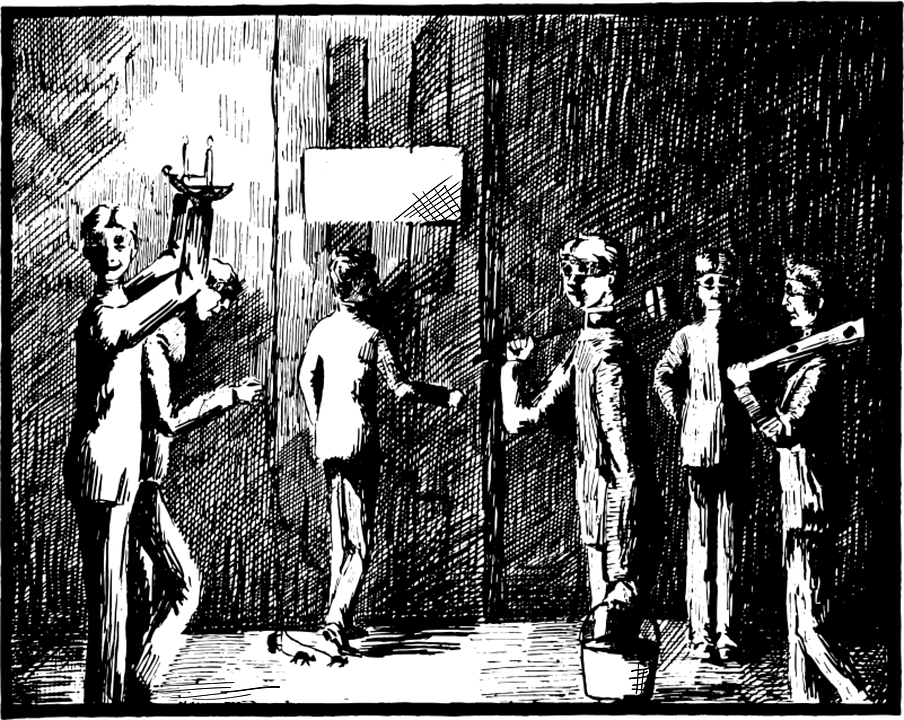
Lodging houses were dirty, contained rats and helped the spread of disease. An estimated 200 lodging houses housed 8,000 people who lived in Whitechapel at the time
The Peabody Estate (Model housing): The Artisan's Dwelling Act 1875 was one of London's earliest slum clearance programmes. Whitechapel received 11 new blocks of flats under this act which replaced a former slum area.
A wealthy American man, George Peabody, paid for the new builds that were designed by architect Henry Darbishire. The estate opened in 1881 with 286 flats. Weekly rents started at a decent three shillings for a one-room flat; six shillings was enough for three rooms. The average weekly wage for a labourer at the time was 22 shillings and 6 pence. Sometimes families would have spent up to 8 shillings on rent.
Workhouses and orphanages
Whitechapel was home to the Bell Foundry, the famous factory where Big Ben was created. Most citizens in Whitechapel worked in sweated trades of tailoring or show-making. These sweatshops (working conditions) were cramped, dark and unnatural. Some workers had 20 hour days and were paid very little.
Work in Whitechapel
Workhouses provided food and shelter for the poor in order to help them survive
Inmates of workhouses were required to carry out tough manual labour and wear uniform
Workhouses were established as part of a system of poor relief
Conditions in workhouses were bad; this was to keep costs down by putting poor people off from entering the workhouse
Demographic of workhouses: the old, sick, disabled, orphans and unmarried mothers
Thomas Barnardo: it was thanks to the efforts of Dr Barnardo that many young people found themselves in better positions than in the workhouses.
Barnardo established a school for children whose parents had died from the outbreak of infectious disease. In 1807, Dr Barnardo opened an orphanage for boys and soon after one for girls. When he died in 1905, there was around 100 Barnardo homes caring for about 85 children each.
Immigration
The Irish
Eastern European Jews
In the East End, the Irish population expanded rapidly from the 1840s. The first Irish immigrants to arrive had originally planned on going to America but ran out of money. They made their wages by working as 'navvies'; working on canals, rails and roadways.
Violence and drunkenness were common attributes of the Irish community in Whitechapel and people were not fond of them. There were a number of Irish nationalists who were demanding independence from Britain (Fenians). They were mainly a Catholic group who were seen as a fanatical terrorist movement. They had organised a bomb attack at Clerkenwell Prison in 1867, and this led to a surge in anti-Irish and anti-Catholic sentiment.
When Tsar Alexander II was assassinated in 1881, a Jew was blamed and this led to many of the Jewish community fleeing Russia, Poland and Germany. Many Jews fled to London and by 1888, 95% of Whitechapel was inhabited by the Jewish population.
Whitechapel became a segregated community where Jews decided to live apart from others.
Jews were widely resented by the community for a number of reasons:
1. They found employment or set up successful businesses compared to the poor working-class
2. They stood out due to their religious and cultural tradition. Moreover, large numbers of Jews meant there was no need to learn English. Locals were suspicious of the unfamiliar
3. Well-established immigrants preferred to employ immigrants, because when they arrived they were desperate for work and would take a lower wage

Information
- Description
- User has deleted their subject information Flowchart on Whitechapel - Local Context, created by Deleted user on 24/08/2017.
- Created by
- Deleted user · Aug 2017
- Updated
- Mar 11, 2019
- Views
- 208
- History
-
- Created by Andrew Burke · Aug 21, 2017
- Copied by Andrew Burke · Aug 24, 2017
- Rating