
Quiz
IGCSE Business - Organisational Structures Quiz
This quiz has question types that open in the usual player.
Questions in this quiz (10)
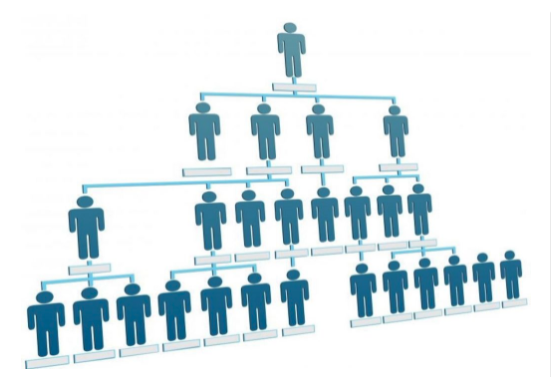
1An organisational structure is how a business organises its staff to represent the different layers of management.
- ATrue
- BFalse
2An organisational structure is how a business organises its staff to represent the different [blank_start]layers[blank_end] of management. This information can be displayed in the form of a [blank_start]chart[blank_end]. There are two main types of organisational structure used in businesses – hierarchical (or tall) and [blank_start]flat[blank_end].

- Alayers
- Btypes
- Cchart
- Dgraph
- Eflat
- Fwide
3Hierarchical Structure
A [blank_start]hierarchical[blank_end] structure is often also referred to as a ‘[blank_start]tall[blank_end]’ organisational structure. A hierarchical structure has many [blank_start]layers of management[blank_end], and businesses with this structure often use a ‘[blank_start]top-down’[blank_end] approach with a long chain of [blank_start]command.[blank_end] In a hierarchical structure, managers will have a narrow span of control and a relatively small number of [blank_start]subordinates[blank_end] (staff).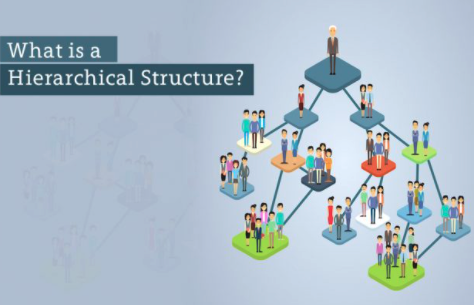
- Ahierarchical
- Btall
- Clayers of management
- Dtop-down’
- Ecommand.
- Fsubordinates
4Flat Structure
A flat structure is an organisational structure with only a [blank_start]few[blank_end] layers of management. In a flat structure, managers have a [blank_start]wide span[blank_end] of control with more [blank_start]subordinates[blank_end], and there is usually a short chain of [blank_start]command[blank_end]. Flat organisational structures are commonly used by [blank_start]smaller[blank_end] businesses or those adopting a more modern approach to management.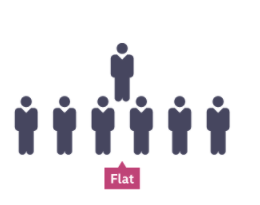
- Afew
- Bwide span
- Csubordinates
- Dcommand
- Esmaller
5Key terms in organisational Structure
There are a number of key terms that apply to organisational structures:
[blank_start]Span of Control[blank_end] - the number of staff that a manager has responsibility for
[blank_start]Chain of Command[blank_end] - the route by which instructions and communications flow from the top to the bottom of a business, explaining who is answerable to whom
[blank_start]Delayering[blank_end] - a process where a business removes layers of its management to make its structure more flat
[blank_start]Delegation[blank_end] - a process where tasks are given to members of staff, where often managers give tasks to employees further down the chain of command
[blank_start]Subordinates[blank_end] - members of staff below a manager in the chain of command
- ASpan of Control
- BChain of Command
- CDelayering
- DDelegation
- ESubordinates
6Businesses usually use two main forms of management, called
- Abottom and top
- Bcentralised and decentralised
- Ctop down and bottom up
7Businesses with a centralised management style can often be slow to respond to changes in the business environment or local changes near their branches.
ADVANTAGES of a centralised management structure include:
(select the 3 correct responses)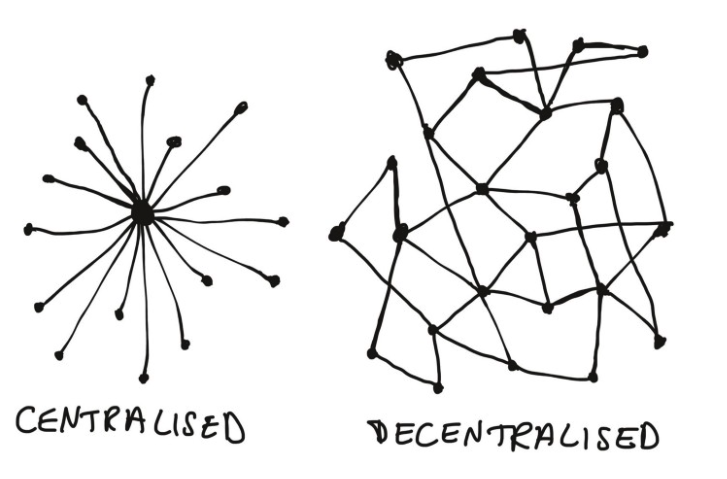
- Ait can demotivate employees
- Bconsistency across the business
- Cthe business has clear direction
- Dthe chain of command and accountability are clear
- Eit may lower productivity
8Decentralised Management Structure
A decentralised approach is where a business [blank_start]allows[blank_end] decisions to be made by managers and [blank_start]subordinates[blank_end] further down the chain. This structure provides staff with [blank_start]more[blank_end] decision-making responsibilities. For example, individual stores or departments may make decisions on [blank_start]staffing[blank_end] levels, which products and services to offer for sale, and pricing.
Businesses with a [blank_start]decentralised[blank_end] management structure can often respond [blank_start]quickly[blank_end] to changes in the business environment and the local area.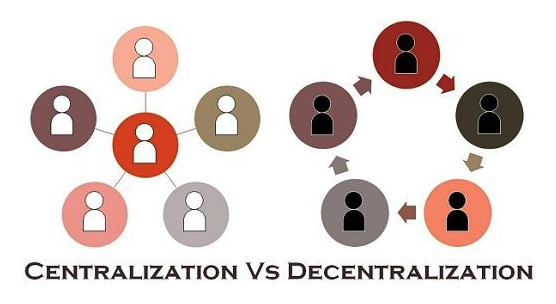
- Aallows
- Bdisallows
- Csubordinates
- Dshareholders
- Emore
- Fless
- Gstaffing
- Hfunding
- Idecentralised
- Jcentralised
- Kquickly
- Lslowly
9DISADVANTAGES of a decentralised management structure include:
(select the 3 correct answers)
- Amay negatively impact sales and overall business performance, eg because of ineffective decisions by managers lower down the chain
- Bconsistency is not achieved across the business
- Cmotivation is improved
- Dmanagers can make ineffective decisions
- Eit may lower productivity
10Businesses with a decentralised management structure can often respond quickly to changes in the business environment and the local area.
- ATrue
- BFalse
Information
- Description
- Organisational Structure Quiz
- Author
- Michelle Parker
- Language
- English
- Views
- 193
- History
- Created on 19 Jun 2021 · updated on 19 Jun 2021
- Tags
- Rating
- No ratings yet Rate this quiz