
Quiz
O&M + A&P study quiz for RMT's (or whoever)
This quiz has question types that open in the usual player.
Questions in this quiz (122)
1Nucleolus/Nucleoli is the site of production of the Ribosomes.
- ATrue
- BFalse
2Genetic Material often called Genes is dispersed in the form of Chromatin in non-dividing cells and organized in the form of chromosomes in dividing cells.
True or False?- ATrue
- BFalse
3A cell has three MAIN parts:
- APlasma membrane; which is composed of a lipid bilayer and membrane proteins
- Bcytoplasm, which contains cytosol and organelles
- CDiffusion, passive process in which random mixing of particles occurs
- DMitochondria, the powerhouse of the cell where ATP is stored.
- ENucleus, which contains most of the cells genes, located on chromosomes.
- FLysosomes, suicide sack that breaks down bodies/organelles.
4Diffusion:
- AMeasure of the solutions ability to change the volume of cells by altering their water content
- BA passive process in which random mixing of particles in a solution occurs because of the particles kinetic energy.
- COccurs almost like osmosis
- DNone of these answers
5Osmosis is a type of diffusion in which there is net movement of a solvent through a selectively permeable membrane.
- ATrue
- BFalse
6Epithelial membrane includes;
- AMucous
- BCutaneous
- CSerous
- DBone
- EConnective Tissue
7Cells in hypertonic solution undergo lysis.
- ATrue
- BFalse
8Distal or proximal end of bone are called epiphysis
- ATrue
- BFalse
9 Connected tissue is the most abundant tissue in the body.
True or false.- ATrue
- BFalse
10Is this true or false
E is where the mitochondrion is
J is Micrvilli and
F is the smooth ER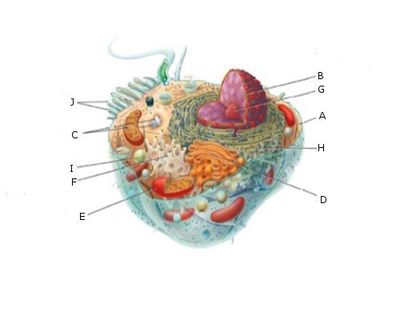
- ATrue
- BFalse
11 The main function of the nucleus is to
- AGenerate ATP for the cell
- B Produce ribosomes
- CStored DNA into slow all the functions of the cell
- D Destroy the cell
12The fibrosis capsule secretes Synovial fluid
- ATrue
- BFalse
13 Extension occurs in what plane?
- A Frontal
- B Oblique
- C Sagittal
- D Transverse
14What type of joint is the 1st carpometacarpal joint?
- AEllipsoid
- BGliding
- CHinge
- DSaddle
15What type of joint is this?
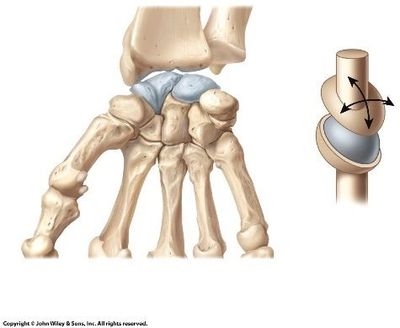
- AHinge
- BSaddle
- CEllipsoid/condyloid
- DGliding
16Which movement occurs add a ball and socket joint?
- ARotation
- B Abduction
- C Flexion
- D All of the above
17 And Aponeurosis is a wide sheet of tendon
- ATrue
- BFalse
18 Elevation occurs in the frontal plane
- ATrue
- BFalse
19Identify this type of muscle
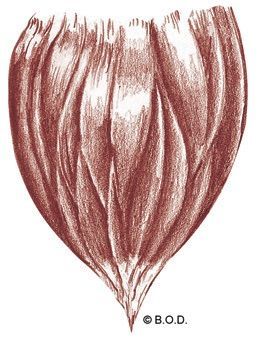
- AMultipennate
- BCircular
- CBipennate
- DSphincter
20The _____________ surrounds individual muscle fibers
- APerimysium
- BEpimysium
- CEndomysium
- DPeriosteum
21An example of a hinge joint would be the wrist
- ATrue
- BFalse
22You sweat (sensible and insensible) up to 600ml a day.
- ATrue
- BFalse
23All diarthrotic joints are synovial joints
- ATrue
- BFalse
24Articulate means where the bones join
- ATrue
- BFalse
25A tendon connects
- ABone to bone
- BMuscle to bone
- CBone to cartilage
- DFascia to skin
26Origin is generally the attachment that is proximal and stationary
- ATrue
- BFalse
27Generally attachment is distal and movable, this is called _______?
- AOrigin
- BInsertion
- COrigin insertion reversed
- DAntagonist
28Smallest units of matter that participate in chemical reactions:
- AMolecules
- BAtoms
- CHormones
- DCells
29Which of the following is true about GAP JUNCTIONS?
- AThey anchor tissue cells to the basement membrane
- BThey allow for tissue cells to communicate with one another
- Cthey keep cells from separating; commonly found in the digestive tract
- Dthey form a secretory surface for exocrine glands
30Science of the body's structures and relationships among them is called what?
- AOsteology
- BAnatomy
- CPhisology
- DOsteoblast
31ALL of the following tissues are vascular EXCEPT:
- Aa skeletal muscle
- BBone
- Csmooth muscle of visceral organs
- Depithelium
- Edense fibrous CT (connective tissue)
32Cartilage Does Not regenerate well or easily
- ATrue
- BFalse
33How many Basic Types of bone tissue are there?
- A2 types
- B6 types
- C3 types
- D0 types
- ENone of the above
34Chemical Bonds:
- AA) Is a force that holds together the atoms of a molecule or compound.
- BB) Each movement or pair of movements is classified as a degree of freedom
- CC) None of the above
- DD) Answers A and C
35Muscle and Serous membranes are examples of muscle tissue
- ATrue
- BFalse
36The Body's ability to maintain relatively stable internal conditions, even though the outside world is continuously changing is called Homeostasis.
- ATrue
- BFalse
37Whats another name for Anterior?
- AExterior
- BVentral
- CDorsal
- DFlexion
- EExtension
38Osteoblasts are Bone resorbing cells
- ATrue
- BFalse
39What prevents passage of substances between cells?
- ATight Junctions
- BGap Junctions
- CFacsia
- DAdipose
- ESuperficial
40Covering and lining epithelial tissue is classified according to the arrangement of cells into layers and functions of the cells making up that tissue
- ATrue
- BFalse
41Superficial Tissue is a structure closer to the body's surface.
- ATrue
- BFalse
42A foramen is a what type of opening through bone?
- ARound
- BSquare
- CDistal
- DDorsal
- EOval
- FRectangular
43NAME THAT BOND:
Positively + Negatively charged ions are attracted to one another. The force of attraction that holds together ions w/ opposite charges is;- AHydrogen Bond
- BIonic Bond
- CColalent Bond
- DAll of the Above
44Covalent Bonds are
- A2 or more atoms that share electrons, rather then gaining or losing them.
- BThey share 1,2 or 3 pairs of Valence electrons.
- CLoose Connective Tissue
- DThey form a Covalently bonded molecule.
- EAre found every where
45Epithelia does not regenerate well or easily
- ATrue
- BFalse
46Vitamine A is needed for the production of healthy C.Tissue
- ATrue
- BFalse
47This tissue Binds, supports, strengthens, protects, insulates, separates, stores energy and transports blood.
- AConnective Tissue
- BBone
- CCartilage
- DLymph
- EAll of the above
48Loose Connective Tissue; some examples are.
- AAreolar
- BAdipose
- CBlood
- DDense Regular Connective tissue
- EReticular connective tissue
49How many types of Chemical bonds are there?
- A2
- B6
- C10
- D3
- E5
- FNone of the above
50The 3 Types of Chemical bonds are?
- AIonic Bonds
- BCovalent Bonds
- CHydrogen bonds
- DDeep Tissue Bonds
- ECatalyst Bonds
51 a Mature bone cell and helps maintain bone tissue.
- AOsteocytes
- BOsteology
- COsteoblasts
- DWhite blood cell
- ECartilage
52List the 3 types of Muscle Tissue
- ADorsal
- BSkeletal Muscle
- CCardica Muscle
- DConnective Muscle
- ESmooth Muscle
53Ability to regenerate depends on what?
- ABlood Supply
- BSeverity of injury
- CHomeostasis
- DStatus of Patient
- EType of tissue injured
- FBone Reabsorbing Cells
54study of bone
- AOsteoblast
- BVentral
- CTrochanter
- DOsteology
- EIlliac Crest
55Osteoblasts are Bone forming cells
- ATrue
- BFalse
56Appendicular Skeleton
- Ais composed of 126 bones
- B Has limbs
- CInvolves the pectoral girdle
- DHas no limbs
- EInvolves pelvic girdle
57Connective Tissue is often found lining the respiratory tract
- ATrue
- BFalse
58Dorsal, also called Posterior is found situated on or toward the upper side of the body (equivalent to the back of the body)
- ATrue
- BFalse
59Parts of the Skeletal System include;
- ABones
- BGap Junctions
- CJoints
- DBlood
- ECartilage
- FGlands
- GLigaments
60The Axial Skeleton Forms the Longitudinal Axis of the body and is divided into 3 parts; Skull, Vertebral Column and Thorax.
- ATrue
- BFalse
61The Pectoralis Major is Superficial to the ribs.
- ATrue
- BFalse
62How many Pennate Muscles are there?
- A2
- B3
- C8
- D5
- E9
63There are only 2 pennate muscles.
- ATrue
- BFalse
64This tissue has a gelatinous consistency
- AAdipose
- BFascia
- CBipennate
- DCartilage
65Unlike bone and all other connective tissue types, cartilage is avascular, lacking blood vessels. For this reason alone, cartilage does not possess the regenerative capacity of bone or the other connective tissue types.
True or False- ATrue
- BFalse
66The Cell junctions are:
- AConnective junctions
- BTight Junctions
- CGap junctions
- DThe Adherens Junctions
(Desmosomes and Hemidesmosomes) - ECell Membrane
67Ligaments Attach Muscle to bone.
- ATrue
- BFalse
68Where are the Veins easily located?
- ADorsal or posterior surface of the hand and feet
- BAnterior surface of the stomach
- CAll of the above of the above
- DOnly where Flexion Occurs
- ENone of the above
69What connective tissue is palpable
- ATendon
- BLigament
- CAdipose and Fascia
- DAponeurosis and Periosteum
- ENerves
- FExocrine Glands
70Mucus, Sweat, Oil, Wax and Digestive glands are examples of Endocrine Glands.
- ATrue
- BFalse
71Nuclear Envelope (Membrane) is a double membrane continuous with Rough ER. preforated by large nuclear pores. (exchanges/communicates between nucleus and cytoplasm)
- ATrue
- BFalse
72Dorsal Body Cavity has two subdivisions.
- ATrue
- BFalse
73Cranial Cavity is
- AThe Spinae
- BSpace inside the skull
- CPhalanges
- DPosterior
- EPalpable
74Spinal Cavity extends from Cranial Cavity to the Caudal end of the spinae
- ATrue
- BFalse
75A feedback system includes 3 basic components.
True or False- ATrue
- BFalse
76The three basic components of a feedback system include:
- AReceptor
- BReverse osmosis
- CEquilibrium
- DControl center
- EEffector
77Metabolism is the sum of ALL chemical processes that occur in the body.
- ATrue
- BFalse
78When _________ dissociates in water, it will form hydroxide ions. (OH+)
- AAcid
- BSalt
- CChemical Bonds
- DBase
- EAtom
79Differentiation is the development of a cell from an unspecialized to a specialized state.
True or False.- ATrue
- BFalse
80A cycle of events in which a body condition is monitored, evaluated, changed and adjusted accordingly. What am I?
- AMetabolic
- BHomeostasis
- CEffector
- DFeedback system
- EMolecule
81a Proton has no negative or positive charge. (is uncharged)
- ATrue
- BFalse
82Organic Compounds never contain Carbon.
- ATrue
- BFalse
83Which bond is most common in the body, and the compounds that result from them/it form most of the body's structures?
- ACatalyst Bond
- BIonic Bond
- CCovalent Bond
- DPositive charged atom
- EHydrogen Bond
84A catalyst is a type of
- AIon
- BAtom
- CCompound
- DChemical Bond
- EMolecule
85When an Acid dissociates in water, it will form hydrogen ions. (H+)
- ATrue
- BFalse
86Enzyme is one kind of Lipid
- ATrue
- BFalse
87The Difference between DNA and RNA in terms of the number of strands; DNA - 2, RNA - 1
- ATrue
- BFalse
88The PH scale is based on the concentration of hydrogen ions in a solution.
- ATrue
- BFalse
89When a _________________ dissociates in water, it will form cations and anions, which is neither H+ or OH-.
- AAcid
- BBase
- CMolecule
- DMagnesium
- ESalt
90Click the boxes that best define a cell
- AThe cell is the basic living, structural, and functional unit of the body
- BA place where prisoners go
- Cconsists of 3 main componants
- DHouses the Mitochondria
- ENone of these answers
91Lysosomes are often referred to as the "power house" of the cell. Stores ATP to be used as energy.
- ATrue
- BFalse
92Check the boxes that are true about Lysosomes.
- AOften called the Suicide sack
- BProduces ATP
- CDigests worn-out organelles and releases components for reuse.
- DContain 40 kinds of powerful digestive enzymes
- Eparticipates in metabolism
93Autolysis is the Destruction of the whole cell.
- ATrue
- BFalse
94Peroxisomes are similar to Lysosomes but contain different enzymes. They participate in metabolism and detoxification.
- ATrue
- BFalse
95Click the boxes that apply to Mitochondria.
- AOuter layer is Smooth while inner layer is Cristae
- BReferred to as the Suicide Sack
- CStores ATP for Energy
- Dinside it also houses a Matrix
- Esite of aerobic phase of cellular respiration
96The nucleus is the control center of the cell. usually the cell only consists of one of these and is spherical or oval in shape/size. Contains the following components; Nuclear Envelope, Nucleoli and the genetic material of that specific cell.
- ATrue
- BFalse
97Click the Answers that are correct
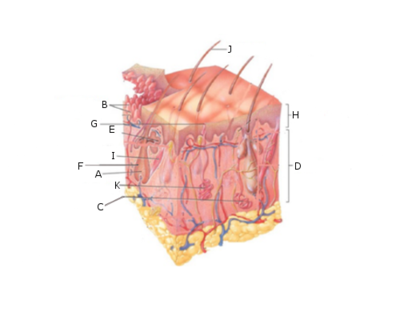
- AH: Epidermis
- BK: Eccrine Sweat Gland
- CG: Sebaceous Gland (OIL)
- DD: Dermis
- EF: Dermal Papillae
- FF: Hair Follicle
- GD: Hair root
- HG:Sweat Pore
- II: Arrector Pilli Muscle
98The Protein Responsible for protecting cellular nuclei from UV light damage is called:
- Amelanin
- Bkeratin
- Celastin
- Dcollagen
99All of the following are a function of the skin EXCEPT:
- AServes as the first and foremost barrier to disease
- Bexcretes and absorbs substances
- Cstores blood
- Dparticipates in synthesis of Vit. C
- Ehouses sensory receptors
100Hair,Sweat glands, sebaceous glands, and nails make up the:
- Aaccessory structures of the skin
- Bsuperficial portion of the sermis
- Cdeep portion of the hypodermis
- Dunderlying structures of the skin
101Erythematous colouring of the skin is indicated when the skin becomes pale.
- ATrue
- BFalse
102The papillary region is found in the:
- Ain the superficial portion of the dermis
- Bin the superficial portion of the hyperdermis
- Cin the sebaceous glands
- Din the stratum glands
- Ein the superficial layer of the epidermis
103THIN skin contains the following layers (Strata)
click all that apply- AStratum Corneum
- BStratum spinosum
- CStratum granulosum
- Dstratum basale
- Estratum lucidum
- Fstratum granulosum
- Gstratum germinativum
104It takes approx. a Month or 4-6 weeks for cells from the stratum basale to rise to the surface, become keratinized and slough off.
- ATrue
- BFalse
105The skin releases all of the following EXCEPT:
- Asalt
- Bheat
- Cwater
- Dcreatinine
- Eurea and ammonia
106Click the answers that are correct
(1-5 only)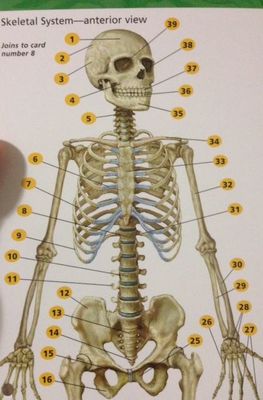
- A1: Frontal bone
- B2:Parietal bone
- C3: Temporal bone
- D4:Maxilla
- E5: Cervical vertebra
- F1: Sacrum
- G2:Radius
- H3:True rib
- I4: Sternum
- J5: Orbit
107Click the Correct Answers:
(34-36 only)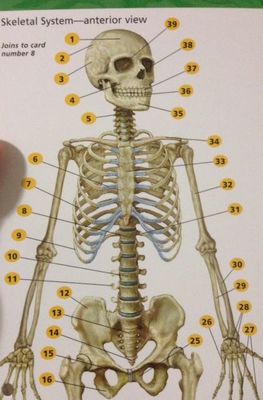
- A34:Clavicle
- B35: Mandible
- C36: Lower teeth
- D34: Humerous
- E35: Ulna
- F36: upper teeth
108Click the correct answers:
(17-19 only)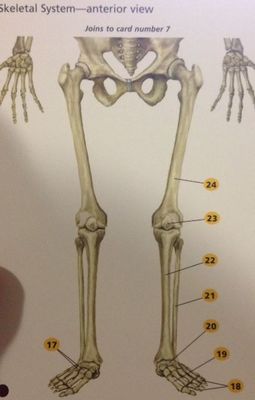
- A17: Tarsal bones
- B18: Phalanges (toes of the feet)
- C19: Metatarsal bone
- D17: Talus
- E18: Femur
- F19: False rib
109Superior is the same as Cranial, they both mean upper or toward the Head of the body.
- ATrue
- BFalse
110Click the correct answers:
(19-21 only)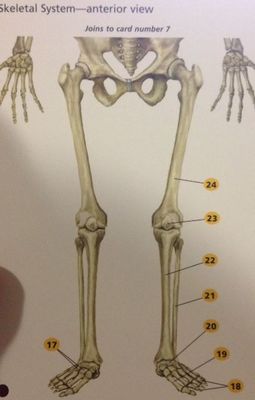
- A19: Metatarsal bone
- B20: Talus
- C21: Fibula
- D19: Femur
- E20: Ulna
- F21: Ilium
111your heart is superior to your stomach
- ATrue
- BFalse
112Anterior and Ventral are the same thing and mean in front of .
example: The kneecap is located on the Anterior side of the leg- ATrue
- BFalse
113Another term for Dorsal
- APosterior
- BProximal
- CDistal
- DLateral
- EVentral
114This means toward the Trunk/Center of the body.
(or nearest to the point of Attachment/Reference)- AProximal
- BDistal
- CDorsal
- DSuperior
- ESupine
- FVentral
115The neck is superior to the chest
- ATrue
- BFalse
116The foot is more distal than the kneecap
- ATrue
- BFalse
117This means Away from or farthest from the Truck or Center of the body.
(away from the point of attachment or reference)- ADistal
- BProne
- CSupine
- DAdduction
- EAbduction
118Flexion is a bending movement that decreases joint angle
ex. elbow joint position when waving hello- ATrue
- BFalse
119 Extension is movement increasing the angle between articulating bones. Another way to express this is "increasing the inner angle of the joint". The opposite movement to that of extension is flexion.
ex. straightening the elbow or arm after waving- ATrue
- BFalse
120Abduction definition
- AMotion that brings (or pulls) a limb away from your body's midline
- Bmotion involving simple twisting of a joint
- Cadding a limb to the body's midline
- Dopposite of flexion
121[blank_start]Histology[blank_end]: the science that deals with the study of tissues
- AHistology
- BAnatomy
- CPhysiology
- DOsteology
122Anatomy: the science of [blank_start]body structures[blank_end] and the [blank_start]relationship[blank_end] among them
- Abody structures
- Batoms
- Cbody systems
- Dcellular motion
- Erelationship
- Fsystem
Information
- Description
- Study Quiz on Both O&M and A&P Ex. Muscles, Cells, Joints, Bones, Chemicals
- Author
- brittany coates
- Language
- English
- Views
- 127
- Tags
- Rating
- No ratings yet Rate this quiz