
Rational Explanations
Slides in this set (5)
-
- The Ancient Greeks had some understanding about the prevention of disease
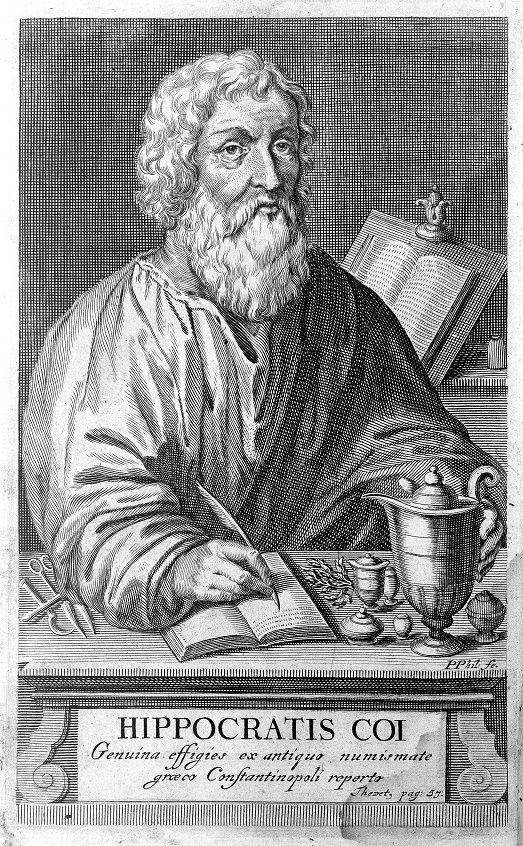
- Hippocrates born in 406 BC was perhaps the first physician to treat and regard the body as a whole
- He based his thinking and writing around the theory of the four humours
- To prevent yourself from disease and illness you had to keep the four humours of blood, phlegm, yellow bile and black bile in balance
- Hippocrates argued 'health is primarily the state in which these constituent substances (the four humours) are in correct proportion to each other, both in strength and quantity, and are well mixed'.
-
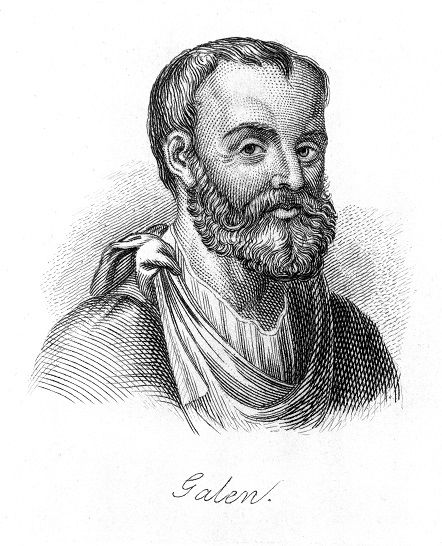
- Galen was born in A.D.130
- He studied medicine in Egypt before he moved to Rome
- He expanded on the the ideas of Hippocrates, this was mainly through dissecting animals
- This allowed him to gain a better understanding of the practical ways the body worked
- Galen placed emphasis on listening to a patient's pulse as a diagnostic tool
- Galen's works arrived in Europe via Islamic texts and beliefs
- After his works were translated, they became accepted as university medical texts
- Church leaders accepted the ideas of Galen
- His ideas spread rapidly in Europe becoming accepted as medical orthodoxy
-
- Poverty:
- Most medieval people depended on their fields for food, a bad harvest meant hunger or starvation
- Population of England was around 4.75 million - with most people living and working in the countryside
- Close to 25% had enough land to support themselves
- Many had no land; an estimated 40% of rural families had to buy all their food
- Most people lived near the poverty line
- Diet consisted of bread, pottage and stew
- Lack of fodder in winter led to animals being slaughtered in autumn
- Child mortality was high and malnutrition common
- Famine:
- Famine regularly occurred, some more fatal than others
- For example, William the Conqueror's anger with Anglo-Saxon rebellions in the north destroyed crops so land would not produce crops
- Thousands died as a famine resulted
- One of the worst famines occurred in 1315-1317 when torrential rain destroyed planting and harvesting for three successive years
- Poor harvests resulted in the death of animals from disease and a shortage of fodder
- Effects of famine continued to around 1325, by then estimated 10-15% of the population died during the famine
-
- At this time towns were much smaller, yet contained no regulation or restriction on what one could and could not build. Life in the town or city was full of danger, with fires spreading rapidly across wooden and thatched houses. While people lived too close together.
- Houses were crowded and sanitation was limited. The inside of homes were covered with straw that was barely changed; a breeding ground for rats, mice, lice and fleas contributing to the easy spread of disease and infection. Also, homes often had no way for smoke to escape from cooking, which led to lung problems among households.
- Clean water for towns was frequently in short supply, while often being drawn from streams and rivers that were contaminated. Moreover, many occupations were carried out in the streets and there were no means for disposing of waste products. Cesspits could have been dug beside wells and people would have to pay someone to remove the waste.
- In the medieval town, animals were also everywhere, from horses to domestic pigs, animal waste was left on the streets. Also, with no sewers all household waste was left on the streets. While trying to keep food fresh was difficult and people often threw out food daily. It is easy to comprehend why disease spread so easily in this environment.
-
- Some of the first public health measures that existed were based on the idea that miasmas (bad smells) caused disease
- Miasma theory argued diseases such as cholera or Black Death were caused by a noxious form of 'bad air'
- Things developed differently in the Islamic world - during the reign of Harun al-Rashid (786-809) Hippocrates works were translated into Arabic
- Muslim doctors worked to conserve the ideas of the Greeks and the Romans
- However, later in history Muslim doctors such as Avenzoar, began to point out errors in these works and develop new ideas
- At this time, Christians were at war with Muslims, so these new ideas spread slowly into Western Europe
Information
- Description
- User has deleted their subject information Slide Set on Rational Explanations, created by Deleted user on 19/07/2017.
- Created by
- Deleted user
- Views
- 23
- History
-
- Created by Andrew Burke · Jul 19, 2017
- Copied by Andrew Burke · Jul 19, 2017
- Rating