
Public Health in the 19th Century
Slides in this set (4)
-
- People in the Victorian era were much better at collating data than the people who came before them. For example, in 1842, 57% of all children in Manchester died before their fifth birthday. While, social surveys from the time illustrate family living conditions; the whole family often lived in one room, or cellars that were prone to flooding and people shared beds, toilets and water supplies.
- Highly contagious diseases, such as typhoid, diarrhoea, smallpox, tuberculosis, whopping cough, scarlet fever, measles and chicken pox, spread quickly in these overcrowded and poor sanitised conditions.
- New industrial diseases:
- Young boys who climbed up chimneys to clean them out came into contact with gases and soot. An English surgeon, Percivall Pott, diagnosed scrotal cancer amongst many of these young boys. 'Phossy jaw', caused by exposure to phosphorus, also developed amongst young women who were making matches in factories. Pneumoconiosis was a lung disease that miners contracted from inhaling large amounts of dust underground. Moreover, there were few regulations regarding working conditions and accidents were common.
-
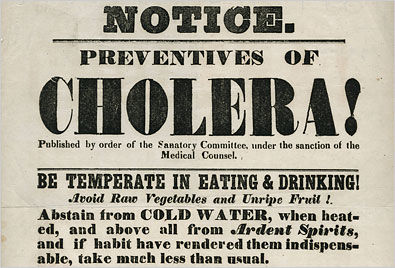
- Caption: Public cholera notice
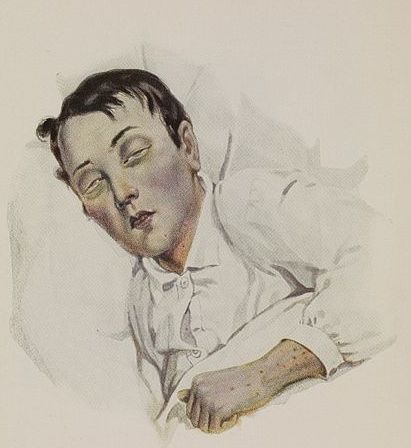
- Caption: A boy suffering from typhoid
-
- Cholera epidemics occurred in: 1831-32, 1848, 1854 and 1866
- This was a bacterial infection that occurred when someone consumed contaminated food or water
- The origin of the disease was in Bengal, India and it spread across the trade routes to Europe
- At the time no one knew what was the cause or solution to curing cholera
- Typhoid is a bacterial infection that is passed from person to person via contaminated food and water or faeces
- Mainly caused by poor sanitation and lack of cleanliness (particularly washing of hands and clothes)
- Typhoid was rampant in industrial cities, where cleanliness was difficult and the water supplies were dirty
- Prince Albert actually died of typhoid in 1861, he caught it from the drains in Windsor Castle
- 1897-1898 - an outbreak of typhoid occurred in Maidstone, Kent
- From a population of 34,000 in Maidstone, 1,800 people contracted the disease and 132 died
- Local medical services could not cope with the outbreak and doctors and nurses were drafted in from around the country
- The cause of the disease was located to a nearby reservoir
-
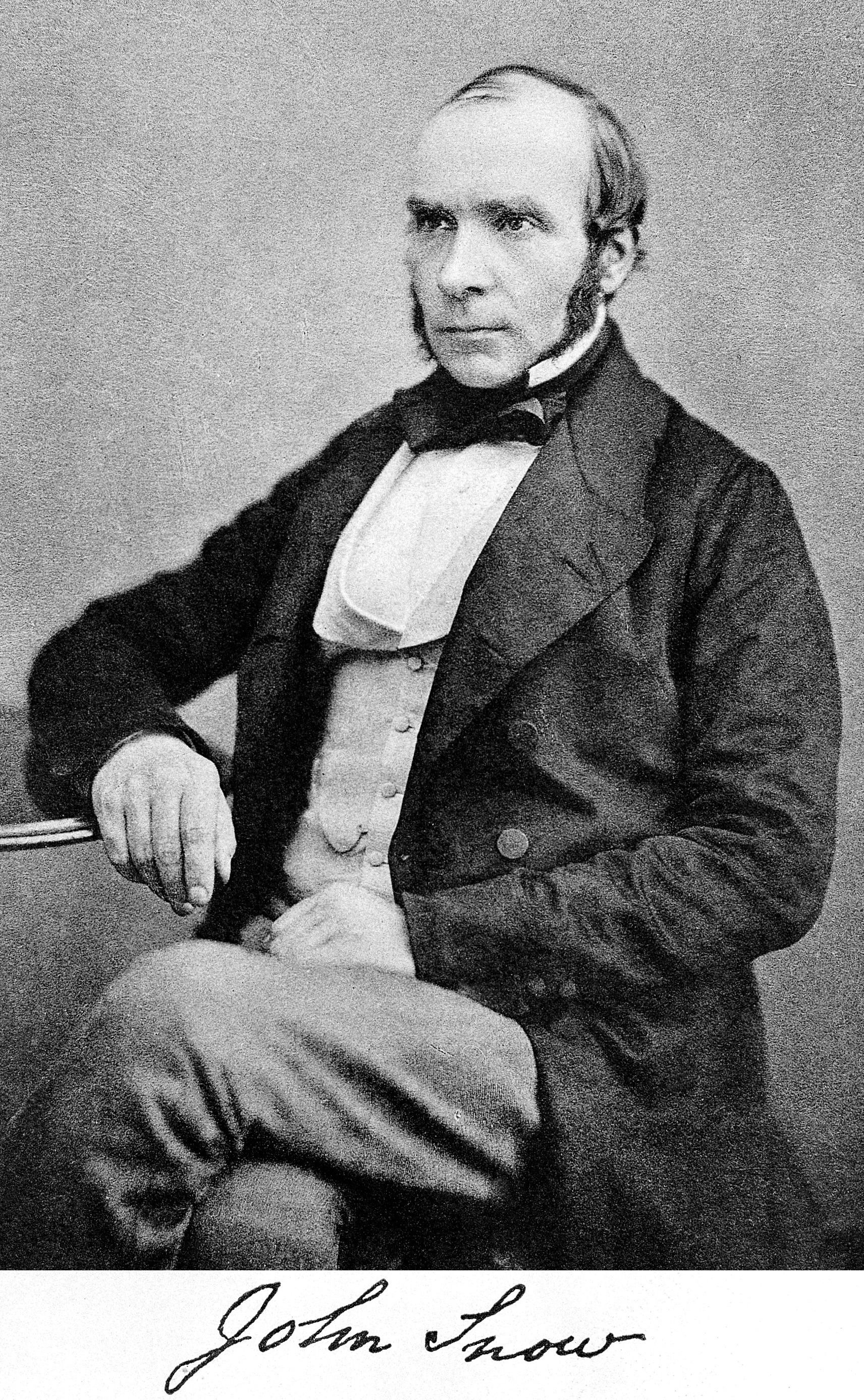
- One of the best examples of the application of science during the 19th century was the efforts of John Snow during the cholera epidemic in London in 1854. Snow created a street map marking all of the cases of cholera that occurred around his surgery. Through statistics, Snow illustrated the link between cholera deaths and different sources of water quality.
- Snow demonstrated that the Southwark and Vauxhall Waterworks Company were drawing water from sewage-polluted sections of the Thames. This water was delivered to homes where there was an increase in the incidence of cholera.
- Eventually, Snow concluded that the source of the infection was one particular water pump located on Broad Street. He took the handle off the pump and this forced residents to obtain their water from elsewhere. After this, the spread of cholera declined.
Information
- Description
- User has deleted their subject information Slide Set on Public Health in the 19th Century, created by Deleted user on 21/07/2017.
- Created by
- Deleted user
- Views
- 28
- History
-
- Created by Andrew Burke · Jul 21, 2017
- Copied by Andrew Burke · Jul 21, 2017
- Rating