
Conservatism Core Values

Slides in this set (8)
-
- Humans are imperfect:
- Hobbes: when people are left to their own devices, war results. Desire for power is the main human urge.
- Thatcher: people need to be selfish, this is what drives change and society
- Burke: ideas of paternalism
- Disraeli: required to help the poor
- People need to seek the familiar and feel secure in their place. They need order, which requires some sacrifice of personal liberty (Hobbes).
- Humans are morally imperfect. Occurrences, such as crime, are not a product of inequality but rather bad character. In order to deter crime then, laws and prisons are utilised.
- Humans are also drawn to the safe and familiar in order to obtain security. Conservatives, therefore, believe in the importance of social order.
-
- Change is not a good thing, in many a case, to do nothing may be the preferred option to doing something. Moreover, Conservatives ground their ideas in tradition (1), empiricism/history (2), and pragmatism (3) in order to avoid dogmatic practices and beliefs.
- Tradition: the passing on of customs or beliefs from generation to generation, or the fact of being passed on in this manner
- Empiricism: the theory that all knowledge is founded on experience derived from the senses
- Pragmatism: the approach of judging theories and beliefs in terms of the success of their practical application
-

- Society is organised in a natural hierarchy, therefore, social equality is undesirable and impossible to achieve.
- Burke argued that there existed a 'natural aristocracy' - this meant talent and leadership skills are innate qualities and cannot be acquired via self-advancement.
- Authority then occurs from above; leadership and discipline are crucial for people in authoritative positions. Further, this view of authority argues various classes and groups within society have defined roles. Most Conservatives believe that authority should be exercised with limits though.
- Also, some people in society possess greater ability than others. Burke believed it was the duty of the upper classes to look after the lower classes. This demonstrates that the working class does not have the livelihood of other humans depending on them. Thus, traditional conservatism tends to lean towards paternalism.
-
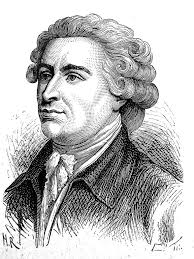
- Conservatives accept that inequality exists within society.
- Burke: makes no attempt to combat this in his works
- Disraeli: puts forward a political statement that government must work to bridge the gap between the rich and the poor
- There is also the view that some are just better than others.
- Thatcher: highlights a meritocratic society; inequality is good for the reason that it pushes individuals to strive for excellence as they are in competition with one another
-
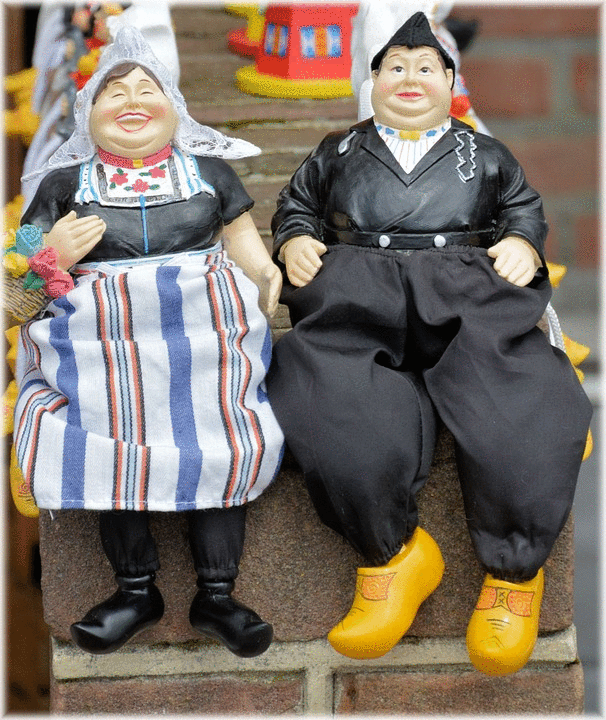
- Tradition reflects on the past and the wisdom that has been accumulated; this creates social cohesion and allows people to feel connected to their 'roots'. Therefore, the process of change is to be labelled uncertain and to be feared.
- Tradition is also honoured amongst Conservatives as it generates as sense of belonging and identity. Customs that have been practised for generations are familiar and comforting. This identity and sense of belonging is strong because it is rooted in the process of history. It leads to a collective sense amongst a group of people about who they are.
- Therefore, tradition includes all customs and social practices that generate this kind of security and association with a community.
-
- Pragmatism:
- Highlights the idea that conservatism is not fully opposed to change
- Requires that there be a functioning relationship between the government and the citizenry
- Individualism:
- Each individual has the right to choices, opportunity and self-fulfilment
- The state should play a role in enhancing and improving individuals' lives
- Clear distinction between public and private spheres
- Best society for individualism is a nomocratic society; a society that is ruled by law
-
- Humans are to be viewed as dependent, security-seeking creatures. Individuals should not be separate from society, but rather part of their social group. In which, they receive nurturing.
- Freedom is thus seen as doing one's duty within society. A type of negative freedom results when an individual is isolated from society.
- With the rise of the New Right there has been a weakening of this conservative idea. Especially, with comments from figures like Thatcher, claiming "there is no such thing as society, only individuals and their families."

-
- Owning your own property gives you a sense of confidence, security and assurance. Further, those who own property are more likely to respect the property rights of others.
- Private property can also be seen as an extension of an individual's personality. This is why burglary is seen as such a horrible crime, as someone has deliberately violated their particular property which is very personal.
- Another idea is that land is passed down from generation to generation and the present generation thus have a duty to protect and preserve it.

Information
- Description
- User has deleted their subject information Slide Set on Conservatism Core Values, created by Deleted user on 27/07/2017.
- Created by
- Deleted user
- Views
- 14
- History
-
- Created by Andrew Burke · Jul 21, 2017
- Copied by Andrew Burke · Jul 27, 2017
- Rating