Flashcards
Chemistry iGCSE - Atomic Structure - 1
Cards in this deck (26)
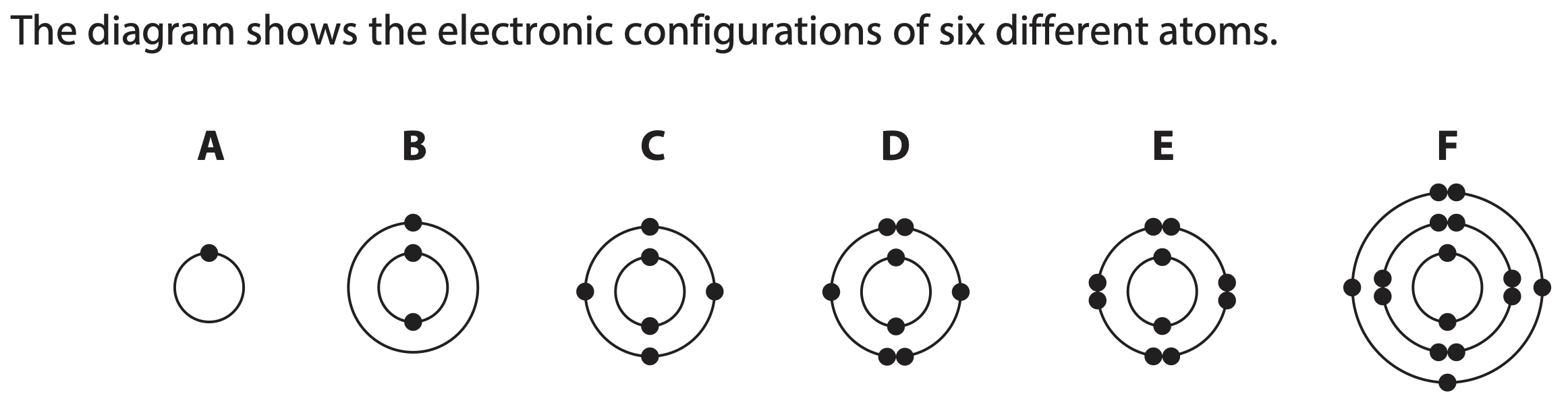
- 1Give the letter that represents an atom of a noble gasan atom of a noble gas
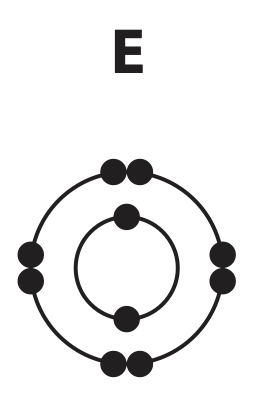
- 2Give the letter that represents an atom that contains three protonsan atom that contains three protons
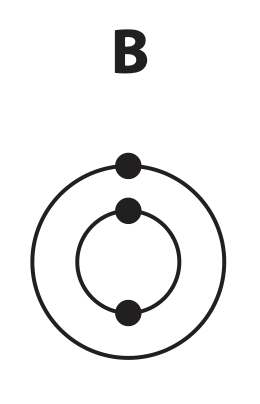
- 3Give the letter that represents an atom of phosphorusan atom of phosphorus
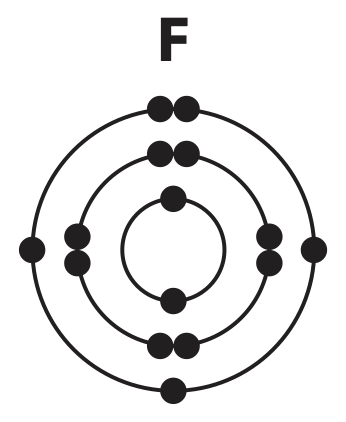
- 4Give the letter that represents an atom of an element in Group 4 of the Periodic Tablean atom of an element in Group 4 of the Periodic Table
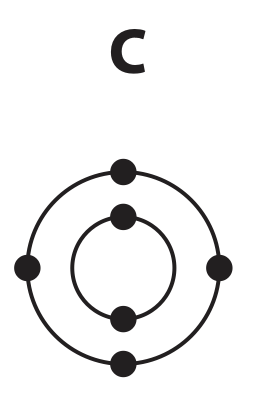
- 5Give the letter that represents an atom of an element in Period 3 of the Periodic Tablean atom of an element in Period 3 of the Periodic Table
- 6Give the letter that represents an atom with a full outer shell of electronsan atom with a full outer shell of electrons
- 7Complete the sentence to describe a covalent bond. A covalent bond is the electrostatic attraction between a pair of ............... and the .......... of two atoms.protons / nucleus(es)
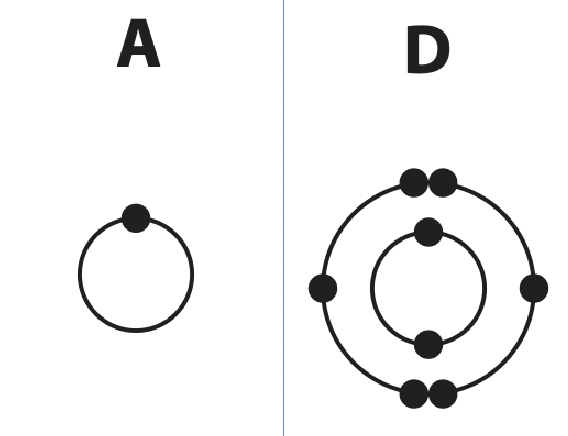
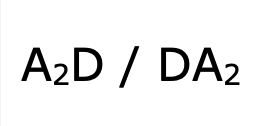
- 8Suggest, with reference to electronic configurations, the most likely formula of the compound formed between atoms of A and D.
- 9Explain why hydrogen has a very low boiling point.M1 weak forces (of attraction) between molecules
M2 (therefore) little (thermal/heat) energy required to overcome these forces - 10—
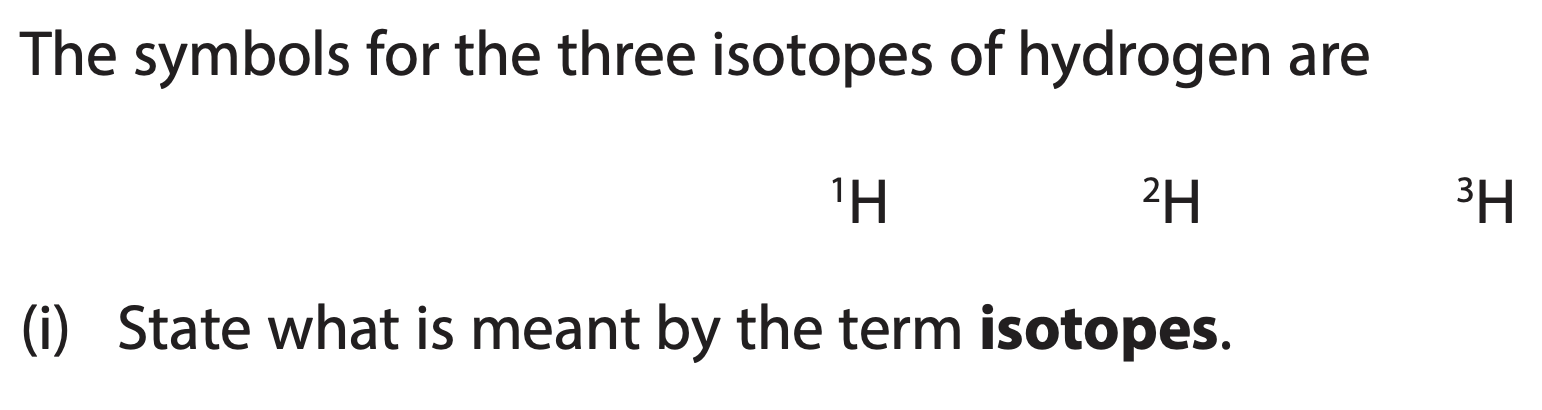
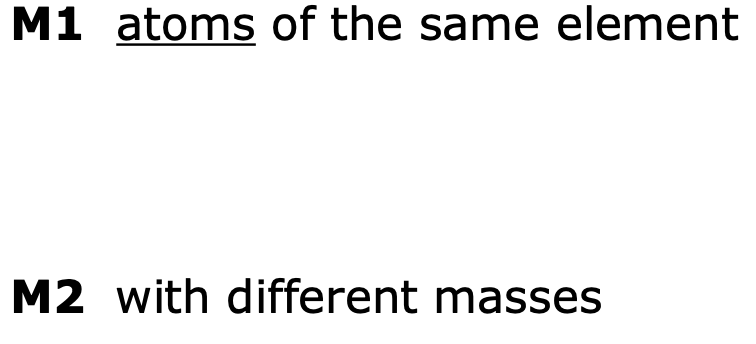
- 11—
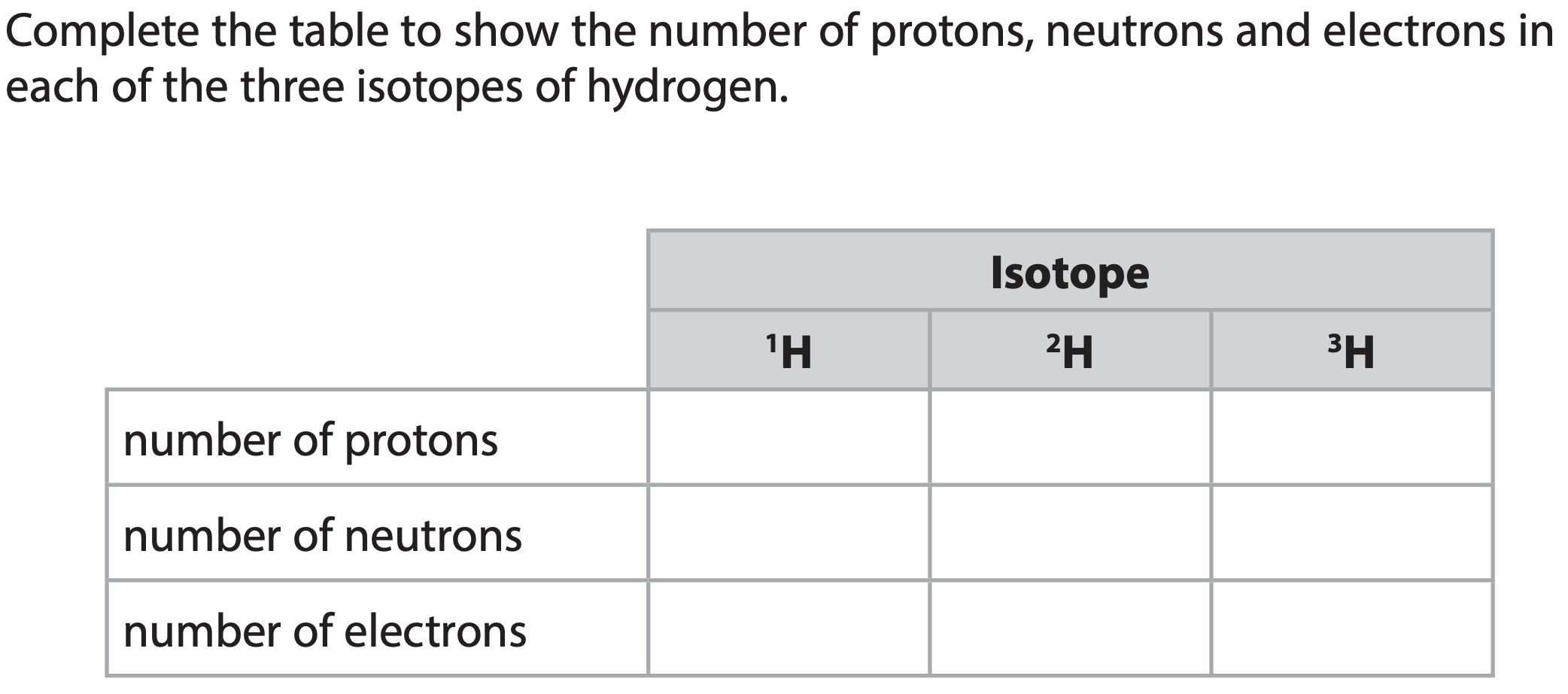

- 12When hydrogen burns in oxygen, heat energy is transferred to the surroundings. State the name given to a reaction in which heat energy is transferred to the surroundings.exothermic
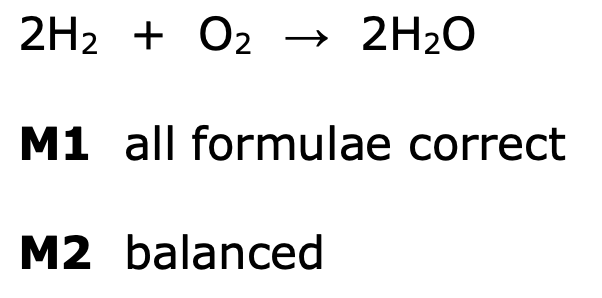
- 13Write a chemical equation to represent the reaction that takes place when hydrogen burns in oxygen.
- 14Describe a chemical test to show that the product is water.
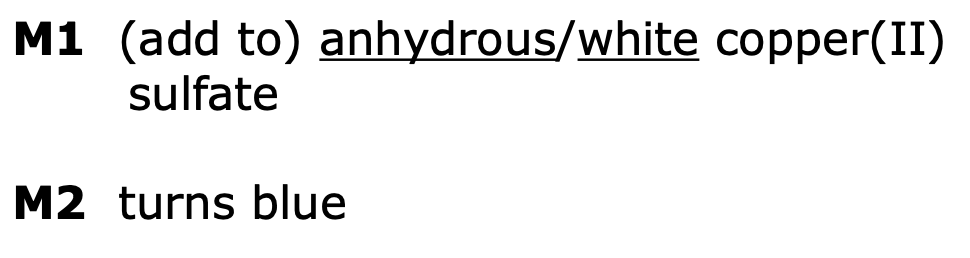
- 15Describe a physical test to show that the product is pure water.
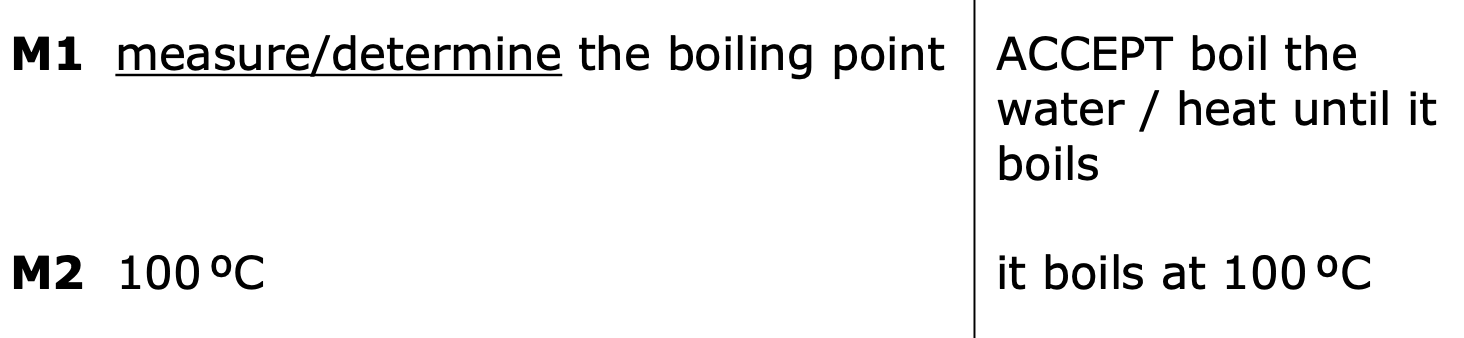
- 16—
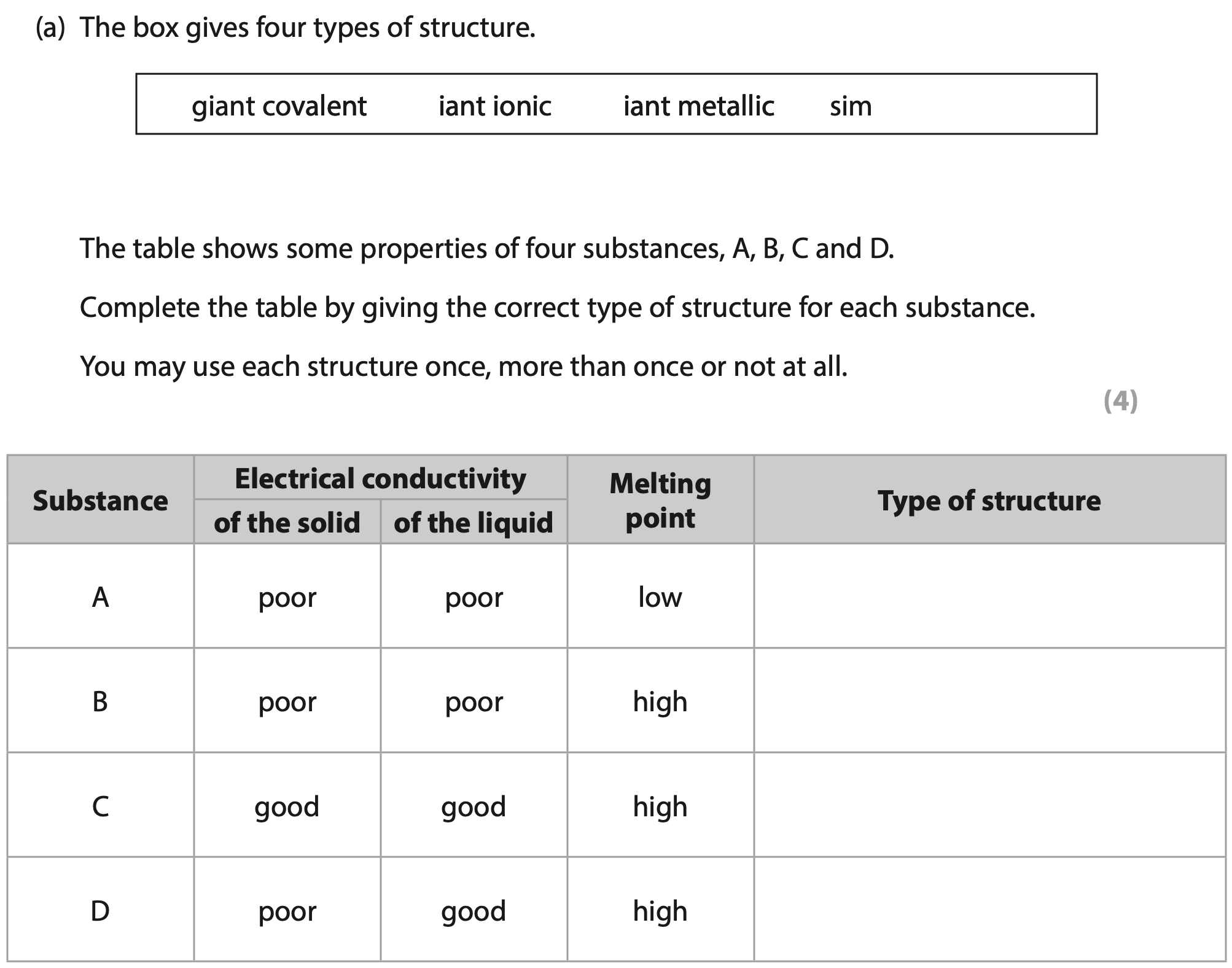
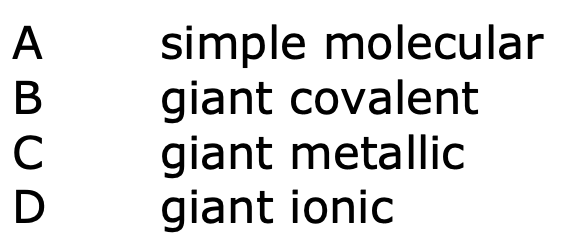
- 17—
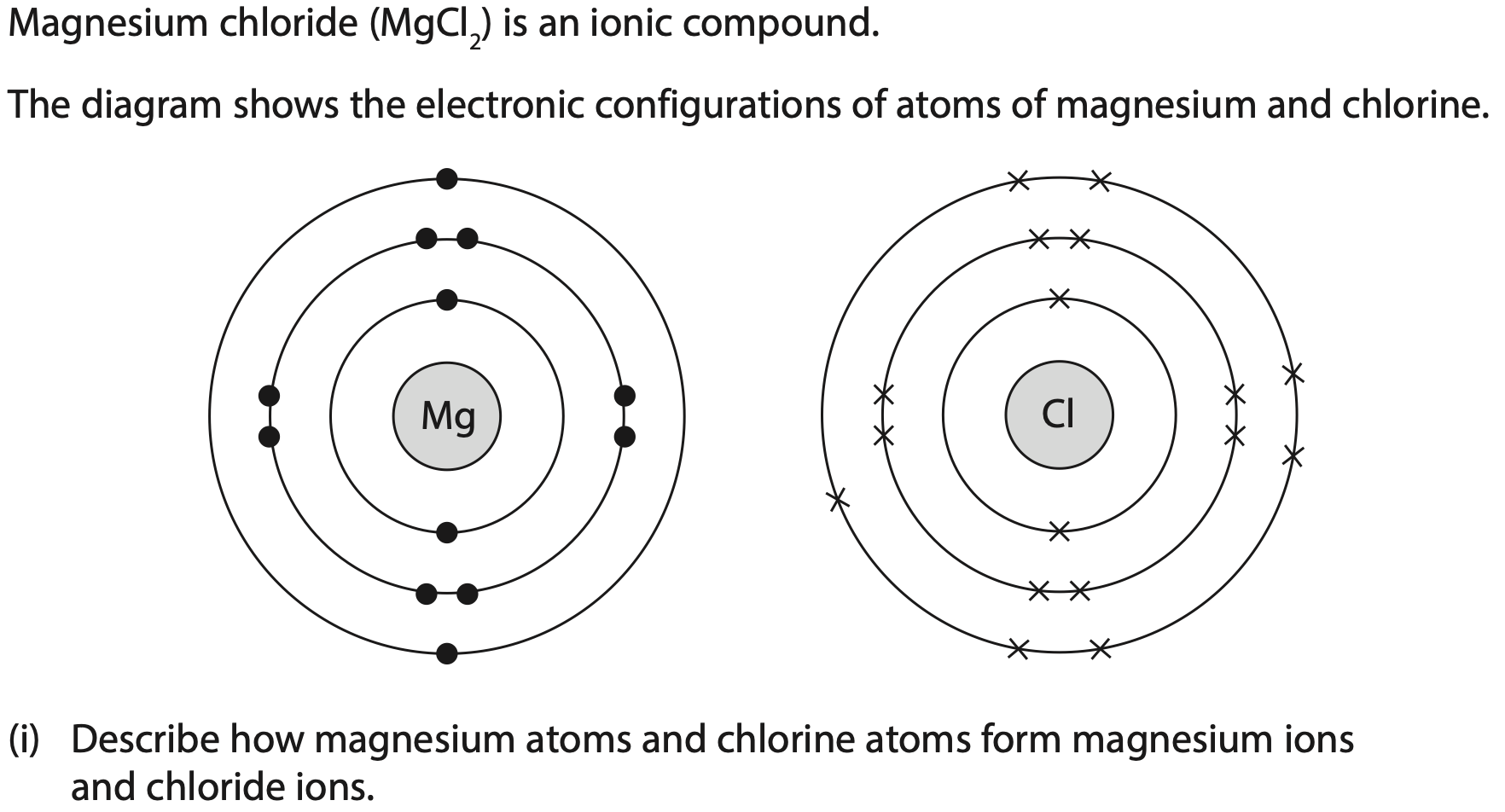
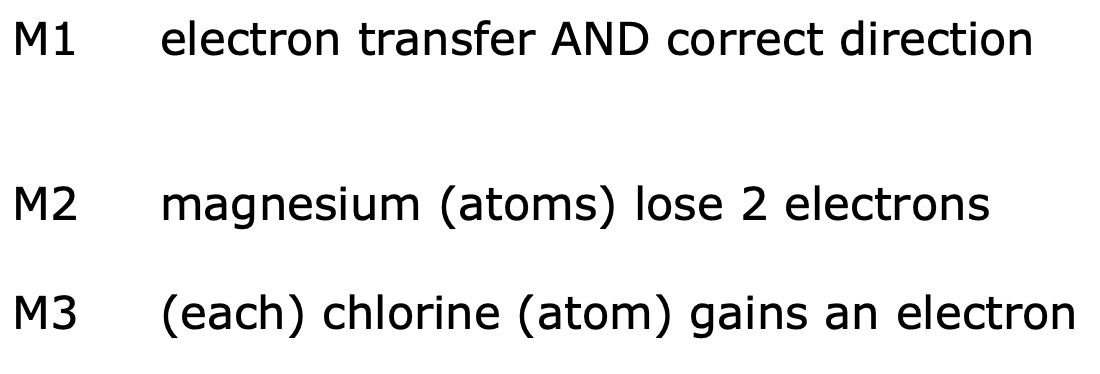
- 183iii 3c 4b?
- 19Indium is a metal in Group 3 of the Periodic Table. (i) Describe the structure and bonding in indium.M1 positive ions / cations
M2 delocalised electrons / sea of electrons
M3 crystal / lattice / regular arrangement / array - 20Explain why indium is malleable.M1 layers/sheets/planes/rows
AND
(positive) ions / atoms / particles
M2 slide (over each other) - 21—12
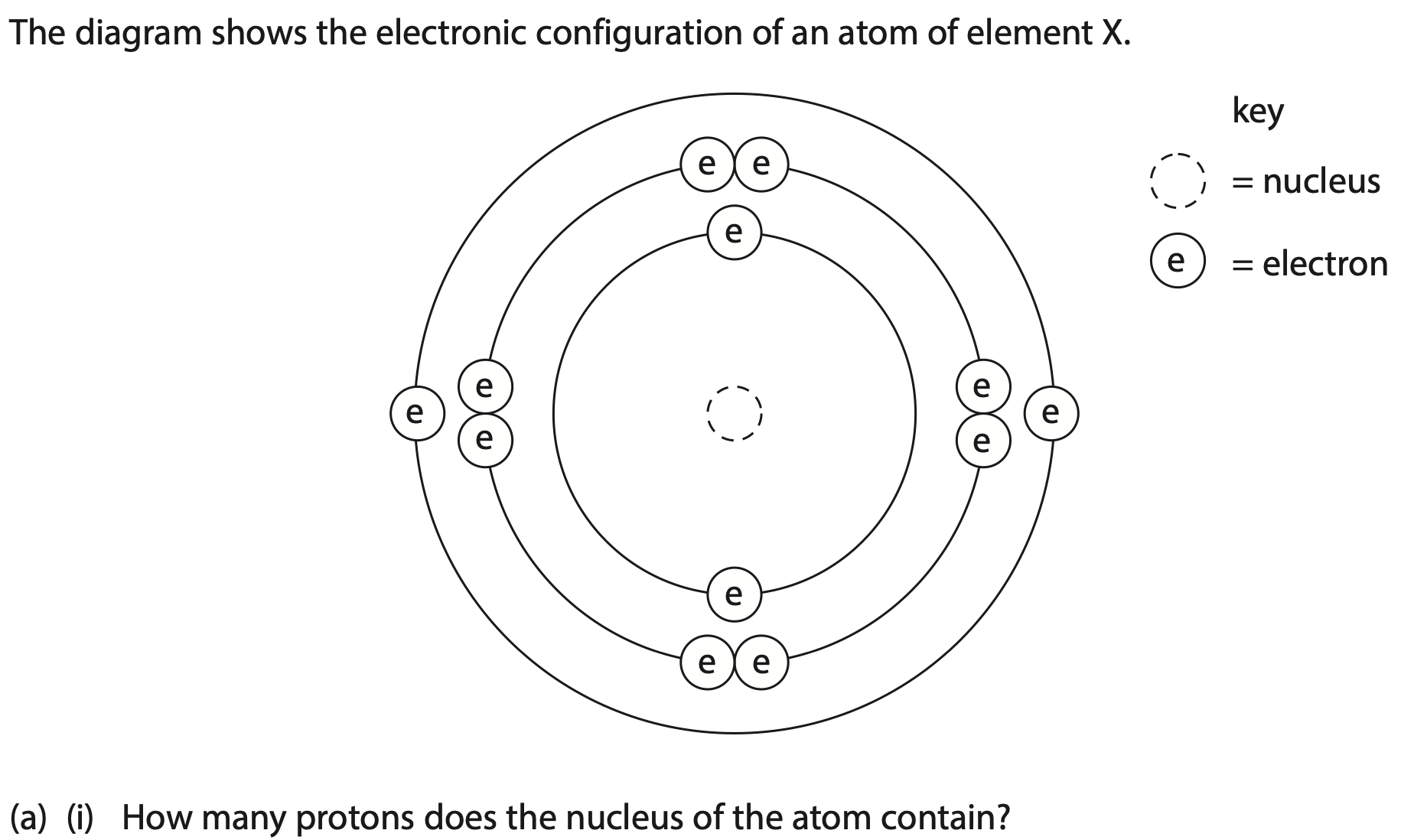
- 22—
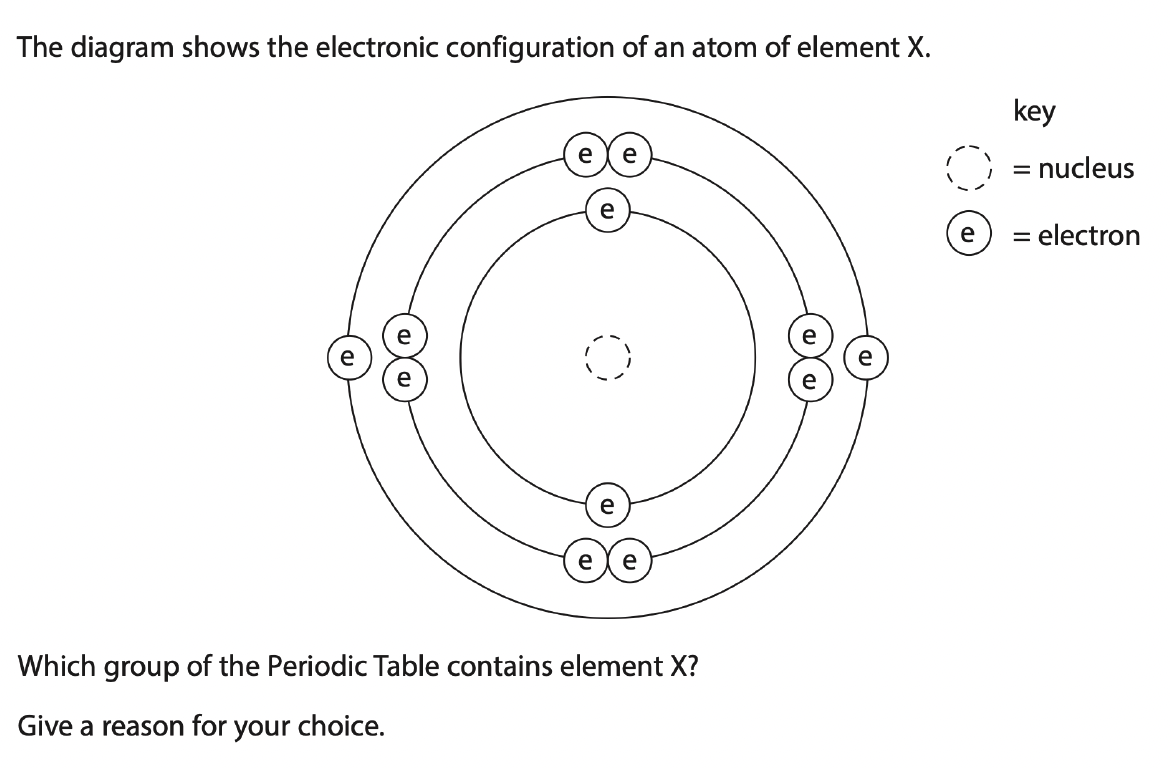
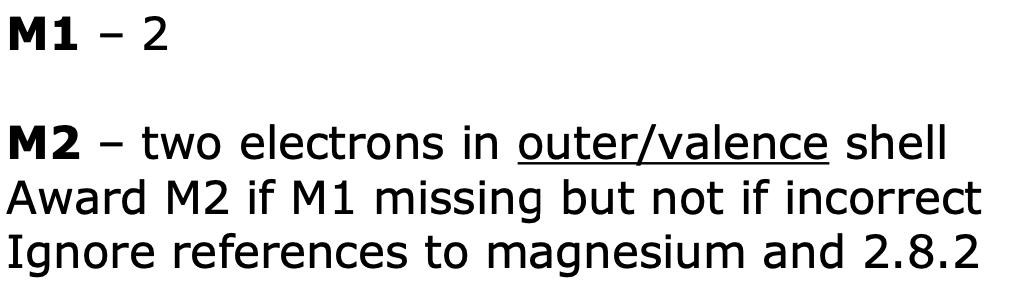
- 23—
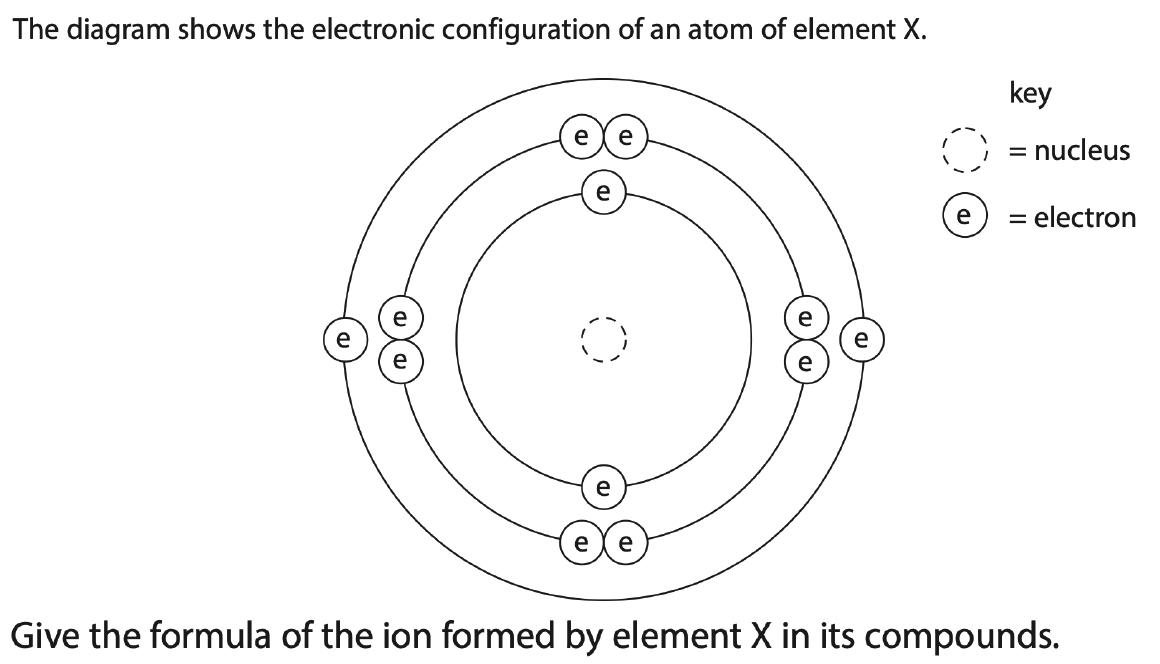
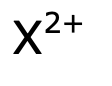
- 24—5
11
5
6
5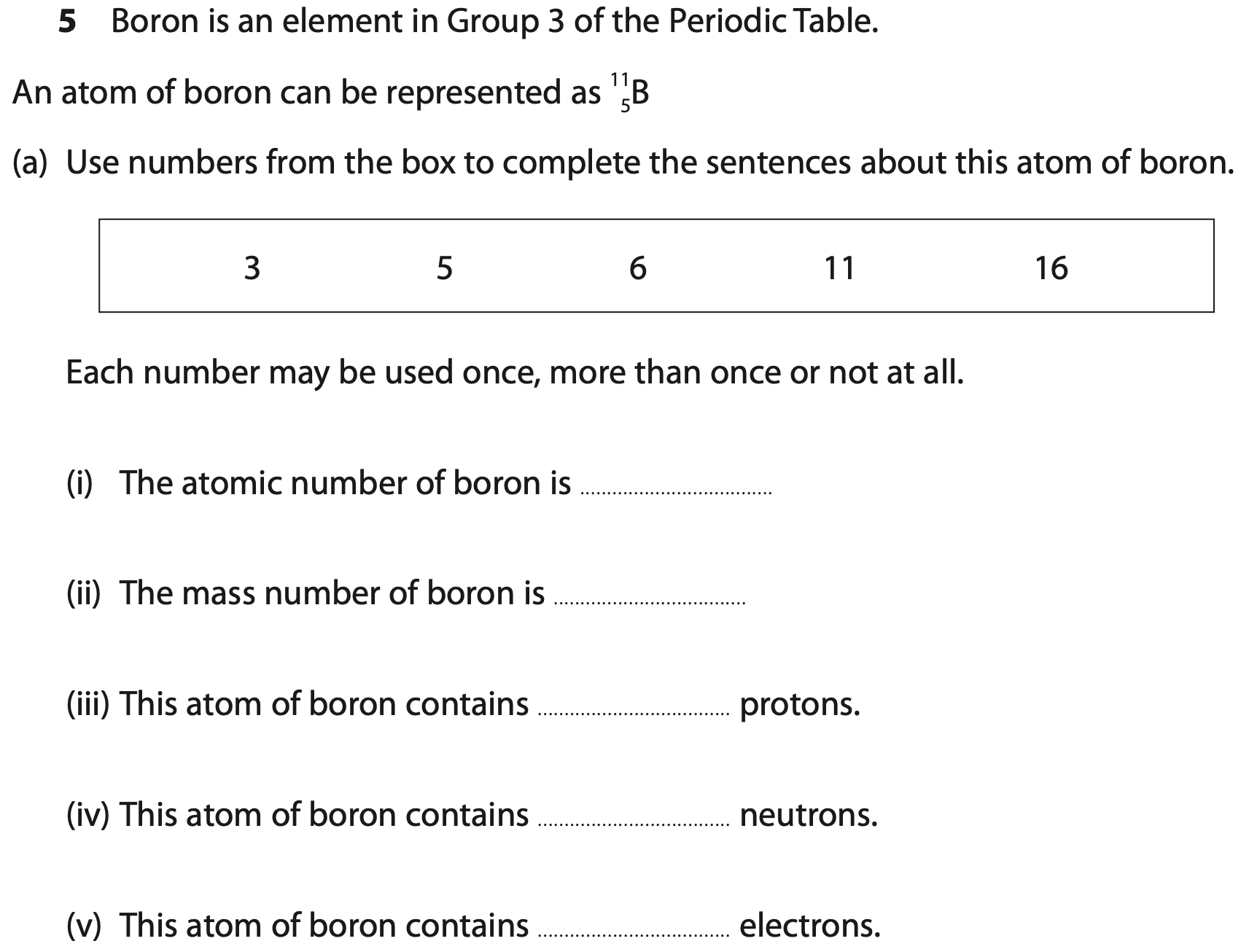
- 25—more
more
the same number of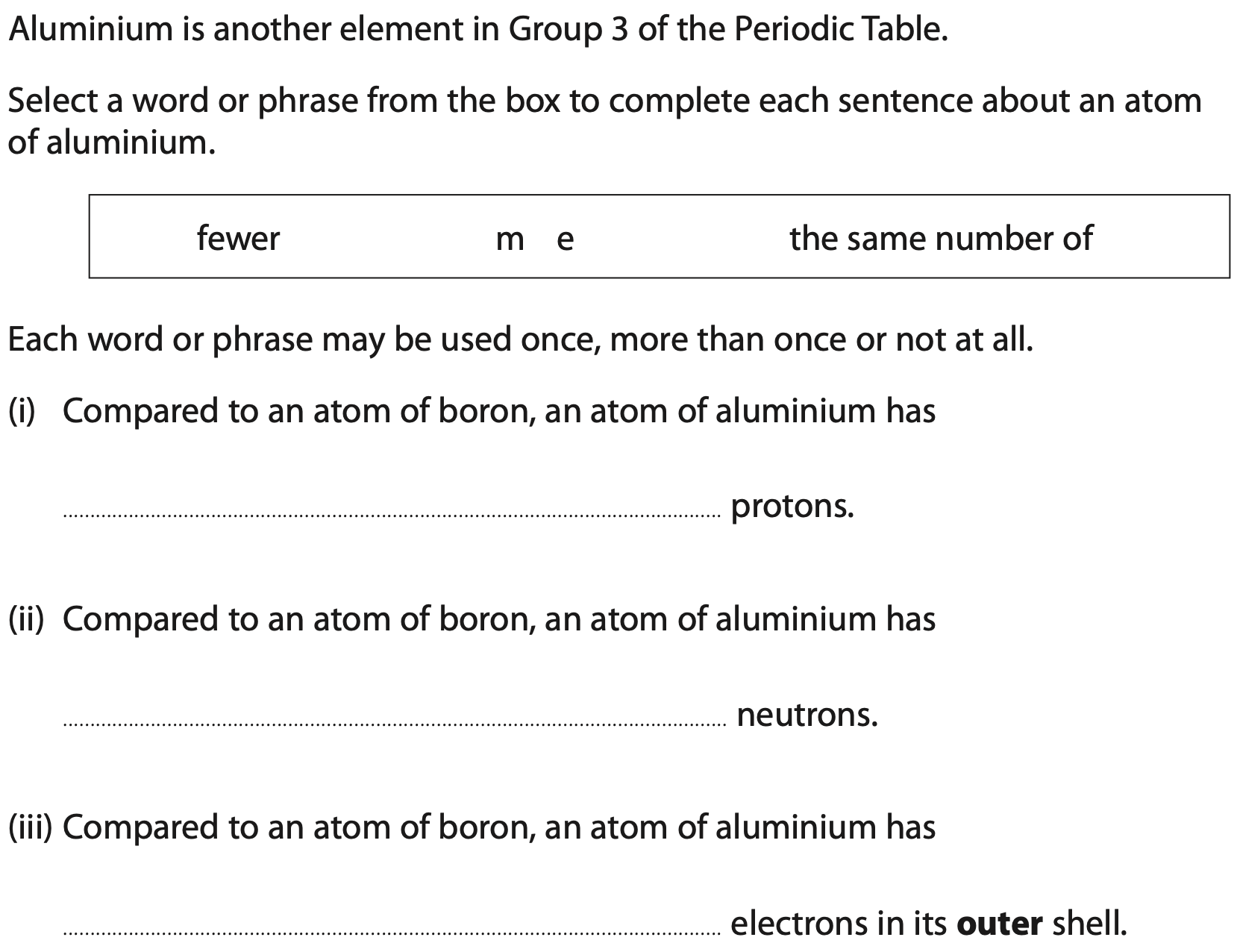
- 26—cross in box D (2.8.3)