
Flashcards
Chapter 9 development flashcards
Cards in this deck (50)
- 1developmental psychologistthe scientific study of how and why human beings develop over the course of their life
- 2nature vs nutureone of the oldest arguments in the history of psychology; each side has good points but it is hard to determine if a person's development is predisposed in their DNA of if the majority of it is influenced by experiences and environment
- 3cross sectional researchtype of observational study that involves the analysis of data collected from a population, or a representative subset, at one specific point and time
- 4longitudinal studystudy conducted over a long period of time
- 5zygote, embryo, fetusan embryo is considered to be defined as the organism between the first division of the zygote ( a fertilized egg) until it becomes a fetus
- 6teratogensan agent of factor that causes malformation in an embryo
- 7fetal alcohol syndrome (FAS)caused by excessive consumption of alcohol by mother during pregnancy
- 8rooting reflexneonates tendency to turn its head toward things that touch its cheek
- 9moro reflexthe infant will spread out its arms when it feels like it is falling
- 10babinski reflexan infant fans out its toes in response to a stroke of the foot
- 11Harry Harlow's attachment researchHarry Harlow used baby monkeys to show contact comfort and applied to baby humans
- 12contact comfortthe innate pleasure derived from close physical contact
- 13Konrad Lorenz and imprintingstudied instinct behavior in animals; young animal comes to recognize something else as its parent
- 14critical periodmaturational stage in the life span in which the nervous system is very sensitive to certain stimuli
- 15Mary Ainsworth /"Strange Situation"observes attachment relationships between a caregiver and child; it applies to children between the ages of nine and eighteen months
- 16secure attachmentclassified by children that show distress when their caregiver leaves
- 17avoidant attachmenttheory that proposes that the type of romantic relationship one has with an adult is determined by the type of relationship had with one's caregiver as a child
- 18anxious ambivalent attachmentattachment style where the child will ignore the caregiver, showing little emotion when the caregiver departs or returns
- 19authoritarian ( parenting style)parents have high expectations and strict rules and expect them to be followed unconditionally
- 20permissivenon directive or lenient parent, normally having few expectations for the child
- 21authoritativeusually not as controlling as authoritarian parents, allowing the child to explore more freely, thus having them make their own decisions based on their own reasoning
- 22Sigmund Freudfather of psychoanalysis
- 23Jean Piaget Cognitive Development Theorycomprehensive theory about the nature and development of human intelligence
- 24schemataa representation of a plan or theory in the form of an outline or model
- 25assimilationthe process by which a person or persons acquire the social and psychological characteristics of a group
- 26accommodationa convenient arrangement; a settlement or compromise
- 27sensorimotor stagethe first stage Jean Piaget uses to define cognitive development; during this period, infants are busy discovering relationships between their body and the environment.
- 28object permanenceunderstanding that objects still exist even when they can not be observed
- 29preoperational stagethe second stage in Piaget's theory of cognitive development; begins at age about age two when child begins to talk and ends at about age seven; children begin to engage in symbolic play and manipulate symbols
- 30egocentricthe thinking only of oneself, without regard to the desires or feelings of others; self centered
- 31animismthe belief in a supernatural power that organizes and animates the material universe
- 32concrete operationsperforming a variety of mental operations and thoughts using concrete concepts
- 33law of conservationprinciple that in any closed system subjected to no external forces, the mass is constant irrespective of its changes in form
- 34formal operationsperson is capable of hypothetical and deductive reasoning
- 35deferred gratification- Stanford University Marshmallow experimentthe ability to resist temptation for immediate reward and wait for a later reward
- 36Lev Vygotskyrussian psychologist ;"social development theory"
- 37zone of proximal development (ZPD)the difference between what a learner can do without help and what he or she can do with help
- 38Erik Erikson's psychological development theorypsychoanalytical theory which identifies eight stages through which a healthy developing human being should pass through from infancy to adulthood
- 39trust vs. mistrusttrust is defined as "an essential truthfulness of others as well as a fundamental sense of one's own trustworthiness"
- 40autonomy vs. shame and doubtis the second stage of Erik Erikson's stages of psychological development; this stage occurs between the ages of 18 months and to approximately age two to three years; children at this stage are focused on developing a greater sense of self control
- 41initiative vs. guiltthis stage occurs in the preschool years between the ages of three and five ; children begin to assert their power and control over the world through directing play and social interaction
- 42industry vs. inferiorityfourth stage in theory of psychological development; occurs during childhood between ages six and eleven
- 43identity vs. role confusionadolescence go through a psychological crisis , which involves exploring who they are as adults
- 44intimacy vs. isolationsixth stage of psychosocial development, this stage takes place during young adulthood usually between the ages of 19 and 40; during this period, the major conflict centers on forming intimate, loving relationships with other people
- 45generativity vs. stagnationthe seventh stage of Erik Erikson's theory of psychosocial development; take place during middle adulthood between the ages of 40 and 65
- 46integrity vs. despairthe final stage of Erik Erikson's theory of psychosocial development
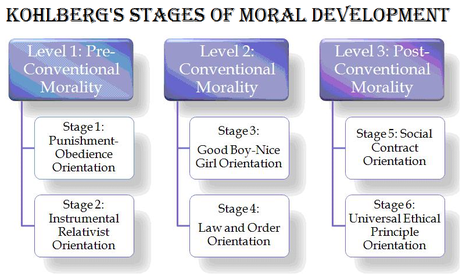
- 47Lawrence Kohlberg Theory of Moral Developmentconstitute an adaptation of a psychological theory originally conceived by the Swiss psychologist Jean Piaget
- 48preconventional stagethe conventional level of moral reasoning is typical of adolescents and adults
- 49conventional stageconsists of the third and fourth stage of moral development
- 50—
Information
- Description
- These are my chapter nine flashcards vocabulary.
- Created by
- bcarlton
- Views
- 26
- Tags
- Rating