
Ancient and Classical Art Overview
52 resources created by 48 users
This Ancient and Classical Art Overview page on GoConqr gathers community-made quizzes, mind maps, flashcards, notes and slides, from Paleolithic figures like the Venus of Willendorf to Egyptian, Mesopotamian, Greek, Etruscan and Roman art. It's built for university students and professional candidates revising for tests, and for teachers after ready-made material. There are over 360 resources here, including more than 10 quizzes and over 300 flashcards, mostly at university level. Pick a topic, try a quiz to spot your gaps, then make your own set.
Top Ancient and Classical Art Overview resources
-
48 cardsArt History 2 Statue of Seated Scribe 2450-2325 BCE (Old Kingdom) Saqqara (Egypt). Pudginess indicates life of luxury.
-
87 cardsArt History- test 2 Exam 2 periods
-
210 questionsHIstory of Art and Interior Design The first technological stage when stone was used as tools.
-
104 cardsArt History 102 Midterm Review
-
56 cardsPrehistoric and Egyptian
-
Mind map Ancient Art History
-
15 questionsCA2: Ancient Mediterranean Identification CA2: Ancient Mediterranean. Information from AP Art History Crash Course 2nd Edition (2018). Framework #12-47.
-
38 cardsAHST 1303: test 1 There is an app you can download so you can study on mobile devices without using their site. Good luck.
Quizzes
-
210 questionsHIstory of Art and Interior Design The first technological stage when stone was used as tools.
-
15 questionsCA2: Ancient Mediterranean Identification CA2: Ancient Mediterranean. Information from AP Art History Crash Course 2nd Edition (2018). Framework #12-47.
-
47 questionsMidterm From 3000 BCE-112 CE
-
40 questionsHumanities Humanities
-
28 questionsTest 1 Because of the word limit, a lot of the answers are really contracted (e.g. S.= Sanctuary, T. Solmon= Templ...
Mind maps
-
Ancient Art History
-
Mesopotamian Architecture Brief descriptive examples of mesopotamian architeecture
-
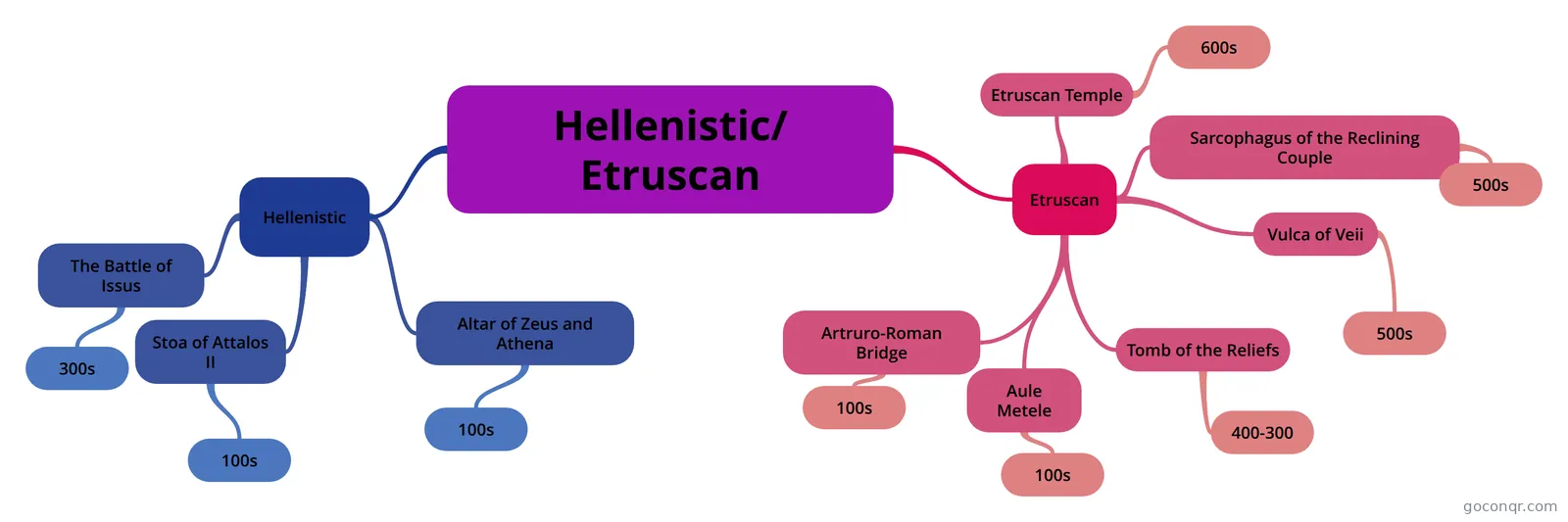 Hellenistic/ Etruscan
-
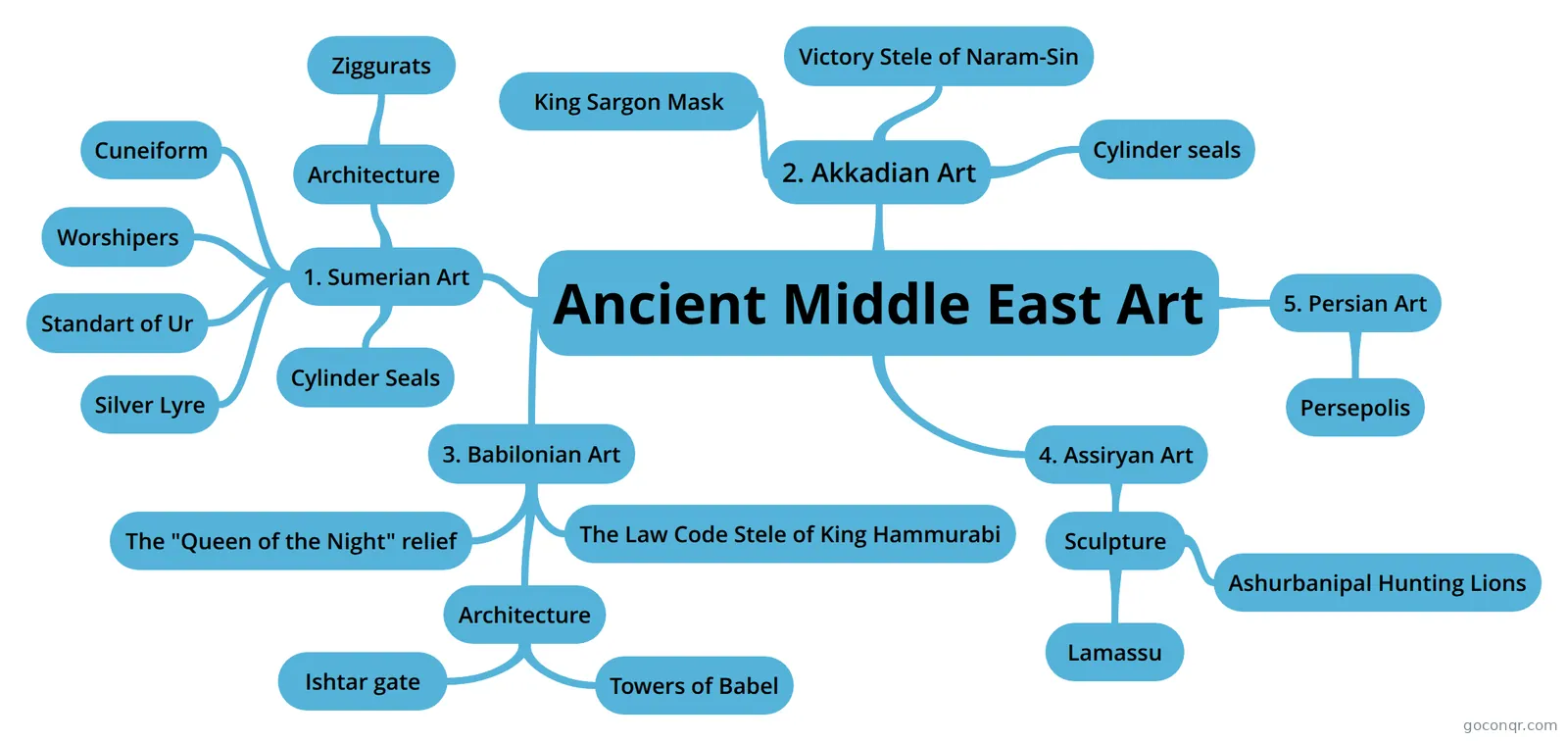 Ancient Middle East Art Ancient Art of theMiddle East
-
Stone Age Mind Map on HISTORY, created by Kim Tabangcura on 19/12/2018.
-
Temples ( WIP ) Simple, short and sweet mindmap of the similarities and differences of Greek and Roman temples. ( WIP )
Flashcards
See all 38 flashcards-
48 cardsArt History 2 Statue of Seated Scribe 2450-2325 BCE (Old Kingdom) Saqqara (Egypt). Pudginess indicates life of luxury.
-
87 cardsArt History- test 2 Exam 2 periods
-
104 cardsArt History 102 Midterm Review
-
56 cardsPrehistoric and Egyptian
-
38 cardsAHST 1303: test 1 There is an app you can download so you can study on mobile devices without using their site. Good luck.
-
55 cardsArt 140 - Egyptian - Hellenistic Greek Art Palatte of King Narmer, Egyptian Art, Predynastic Period, 3000 B.C.
-
108 cardsArt History Western I
-
168 cardsArt History Slide Test
Notes
-
Art History Midterm Study Guide Art History Study Guide Questions: Order the following pyramids and identify what unique architectural aspects determine this order: Snefru’s 3 pyramids, the pyramids at Giza, Djoser’s step pyramid, Senusret III’s pyr...
-
Greek/Roman Quiz Identify and describe the 4 styles of wall decoration. Define Verism and how it affects art – what happens with Verism – why would a man want to appear that way? Identify the name of and explain what the emperors are ...
Slides
More Art history topics
About Ancient and Classical Art Overview
GoConqr OriginalWhat the resources cover
The unit follows the ancient world in roughly chronological order. Stone Age material comes first: the mind map Ancient Art History starts with hand axes and decorated ocher from Blombos, South Africa. The flashcards in AHST 1303: test 1 pick up the Venus of Willendorf and the two bison from Le Tuc d'Audoubert.
Egypt and Mesopotamia follow. Art History 2 covers the Statue of Seated Scribe from Saqqara and Imhotep's funerary complex of Djoser. The slides Ancient Near East Art describe the rise of Uruk and its mud-brick buildings decorated with painted clay cones.
Greek, Etruscan and Roman art close the unit. Art History- test 2 asks about amphorae, black figure against red figure, the kouros and kore, the archaic smile and contrapposto. The mind map Hellenistic/ Etruscan lists the Battle of Issus, the Stoa of Attalos II and the Sarcophagus of the Reclining Couple.
Where to start
- Open a mind map such as Ancient Art or Mesopotamian Architecture to see the period as a whole.
- Work through a flashcard deck, for example Ancient Mediterranean, to fix names, dates and places.
- Test yourself with a quiz such as Ancient Art Quiz or Classical Greek Architecture Quiz.
Using quizzes and maps together
Use a map to see how works connect, then a quiz to check what stuck. The fill-in-the-blank quiz CA2: Ancient Mediterranean Identification is a good example. It asks you to recall the White Temple, its ziggurat, Uruk and the Sumerians. Wrong answers show which map branch to revisit. Some listed material mentions AP Art History, so it may help learners preparing for that course too.
Teachers can use the maps and notes, such as Art History Midterm Study Guide, as ready-made starting points for a lesson or revision session.
Where this unit sits
This unit belongs to the Prehistoric and Ancient Art strand of Art history. It gives an overview before you go deeper into any single civilisation.
Choose one resource that matches your current topic and give it a go. Then add your own notes alongside it.
Frequently asked questions
Which resource should I open first?
If you want the big picture, start with a mind map such as Ancient Art or Ancient Art History. They lay out periods from the Stone Age onwards. Once the outline is familiar, move on to a flashcard deck like Ancient Mediterranean, then test yourself with the Ancient Art Quiz.
What do the mind maps cover?
They range across the whole unit. Some deal with early art and the Stone Age, others with Mesopotamian architecture, Egypt, classical architecture and Greek columns. There are also maps on Hellenistic and Etruscan art, plus an essay plan on the Laocoon and one on the Philippeion.
Are these resources free to use?
Yes. Every resource listed here is free to open, study and take, with no account needed. The resources were made by GoConqr users rather than by GoConqr itself, so it is worth checking them against your own course materials.
Who are the resources aimed at?
Most of them suit university students and professional candidates, who will find midterm and exam-style decks and quizzes. Teachers can borrow maps, notes and slides. A small share suits school students. One listed resource mentions AP Art History.
Can I make my own versions?
Yes. A free account saves your quiz scores and lets you create your own quizzes, mind maps, flashcards and notes. You could build a deck for the Greek and Roman works your course covers, or a map of Egyptian monuments.
What if my topic is not listed?
Try nearby resources first. Broad decks such as Greek and Roman Art or Prehistoric and Egyptian may include it. If not, you can create your own flashcards or notes on it and use the listed sets as a model.