
Computational Thinking and Problem Solving mind maps
389 mind maps by 361 users · Page 1 of 10
This page gathers GoConqr users’ mind maps on Computational Thinking and Problem Solving, covering decomposition, abstraction, algorithms and programming tools. They help school students revise these topics and give teachers ready-made material to use. There are over 360 mind maps, mostly at school level with some beyond it; pick one to start exploring.
Mind maps
-
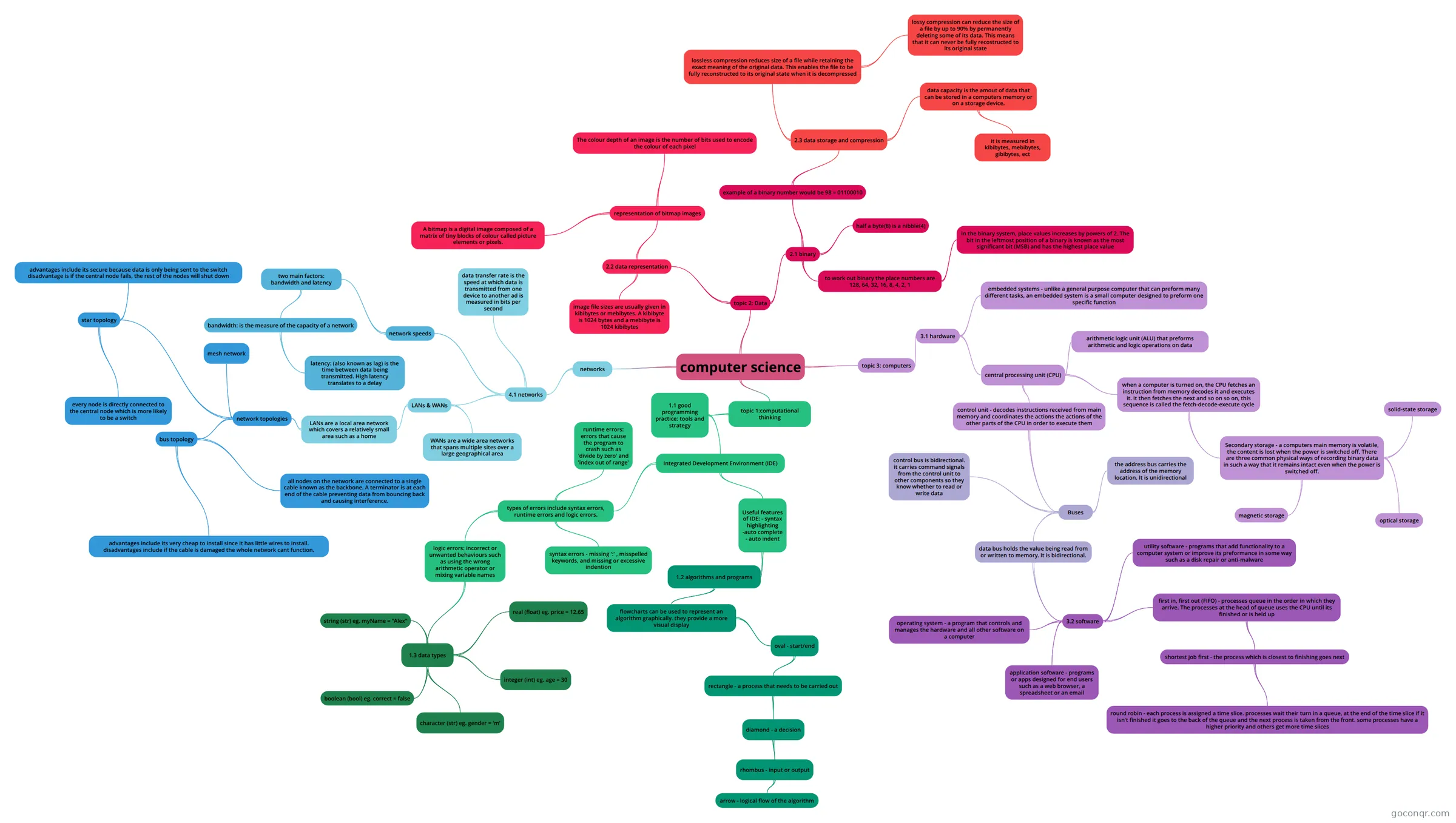 computer science computer science mindmap (not finished)
-
Decomposition and abstraction
-
Computational thinking
-
computational thinking
-
Computing Paper 2
-
Problem solving
-
2.1 Algorithms
-
2.1
-
2.1
-
2.1
-
Computational Thinking Strands
-
revision for computer science
-
Algorithims
-
Algorithms
-
Computational thinking and Computational Methods
-
Algorithms
-
Algorithms
-
Thinking Abstractly
-
2.1 Algorithms josh merc
-
Unit 1: Computational Thinking
-
Understanding and Defining the Problem
-
Revision
-
Computational Thinking Revision Resource
-
Unit 1
-
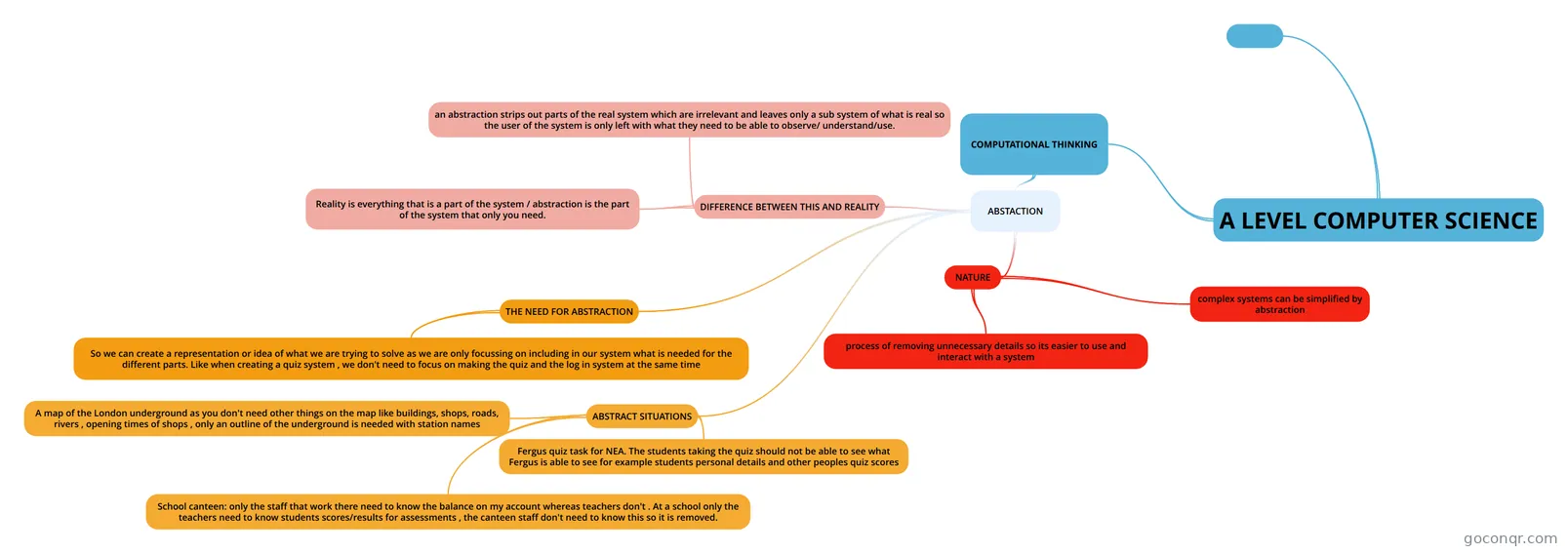 A LEVEL COMPUTER SCIENCE
-
2.1
-
paper 2
-
1_Chapter 1 Computational Thinking
-
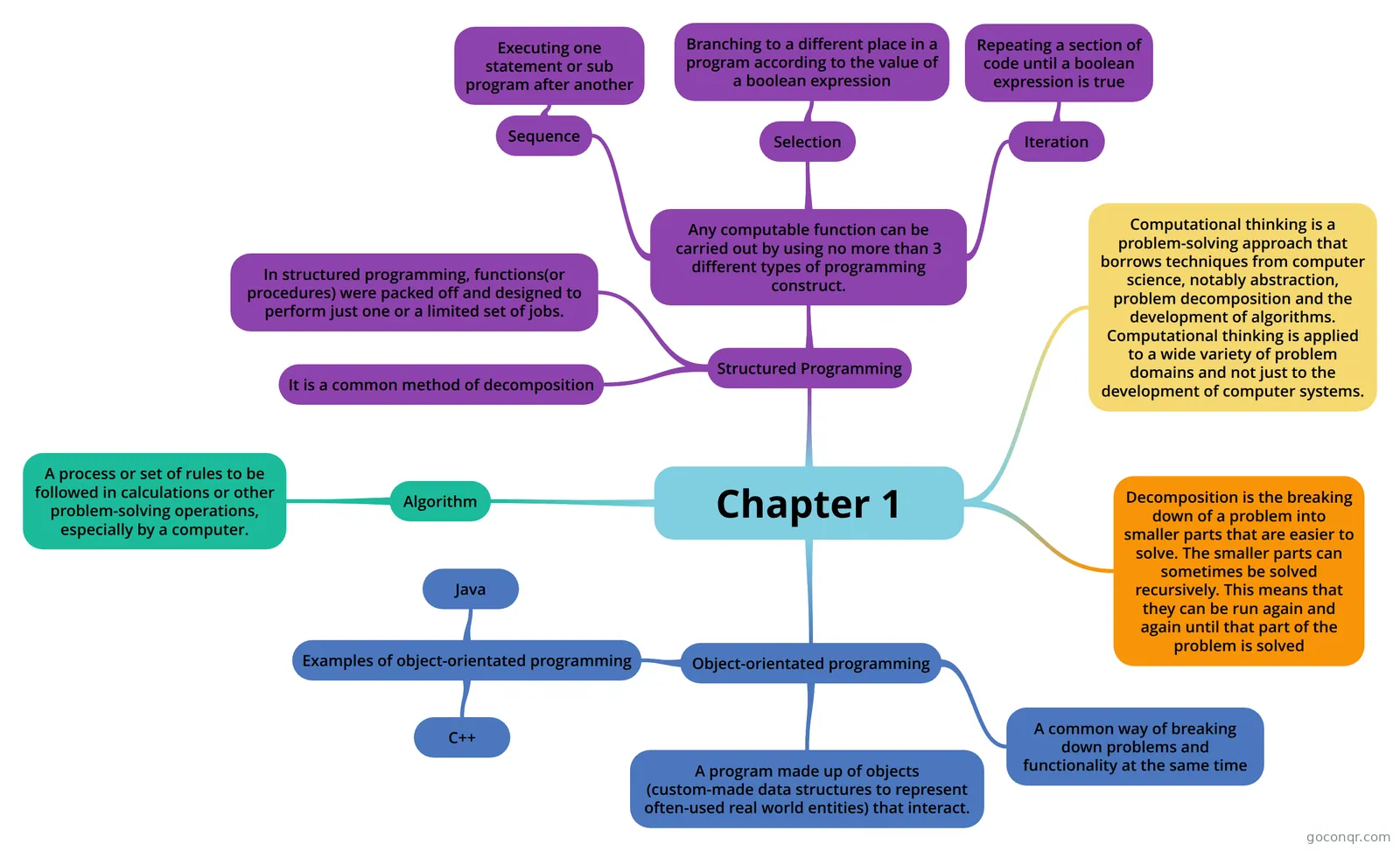 Chapter 1 Computational Thinking
-
Chapter 1 Computational Thinking
-
Unit 2.1 -
-
Computational Thinking
-
Enter text here
-
Problem solving and algorithms
-
Problems, Solutions, and Tools
-
Computational thinking
-
Computional thinking
-
Unit 10 Computational Thinking
-
Year 7 revision 7.3
-
Chapter 2 Elements of Computational thinking
More Computational Thinking and Problem Solving resources
About computational thinking and problem solving mind maps
GoConqr OriginalComputational Thinking and Problem Solving mind maps
The maps on this page connect ideas through branches. Decomposition and abstraction links problem solving with algorithm design, while Computational thinking brings together decomposition, abstraction and pattern recognition. Other maps cover algorithms, syntax and programming tools.
Choosing and using a map
Start with Computational thinking if you want to review the main terms together. Follow each branch, then look away and see which connections you can recall. Return to the map to check anything you missed.
For a different focus, Problem solving includes Backus-Naur Form and syntax. A map on programming practice covers tools such as an integrated development environment and syntax highlighting.
Once you have reviewed a map, switch to a quiz on the unit page to check your recall, or use flashcards to revisit individual terms. Choose a map that matches the topic you are working on.
Frequently asked questions
Which mind map is a good place to start?
Start with Computational thinking if you want an overview of several key terms. Its branches cover decomposition, abstraction and pattern recognition. If you are concentrating on the relationship between problem solving and algorithm design, Decomposition and abstraction offers another starting point.
Are the mind maps free to use?
Yes. Every resource listed here is free to open and study without an account. The maps were made by GoConqr users rather than by GoConqr. A free account can save your quiz scores and lets you make your own quizzes, mind maps, flashcards and notes.
Who are these mind maps for?
The collection is mainly school-level material, with some resources beyond school level. School students can use the maps to revisit topics such as algorithms and decomposition. Teachers can use them as ready-made material when covering computational thinking and problem solving.