
Computational Thinking and Problem Solving
537 resources created by 477 users
This Computational Thinking and Problem Solving page on GoConqr gathers community-made quizzes, mind maps, flashcards, notes and flowcharts on decomposition, abstraction, pattern recognition and algorithms. It's built for school students revising for GCSE Computer Science, A-level Computer Science or Leaving Certificate Computer Science, and for teachers after ready-made material. There are over 500 resources here, including more than 20 quizzes, over 300 mind maps and more than 90 flashcard decks. Open a quiz to find your gaps, then build your own maps and flashcards.
Top Computational Thinking and Problem Solving resources
-
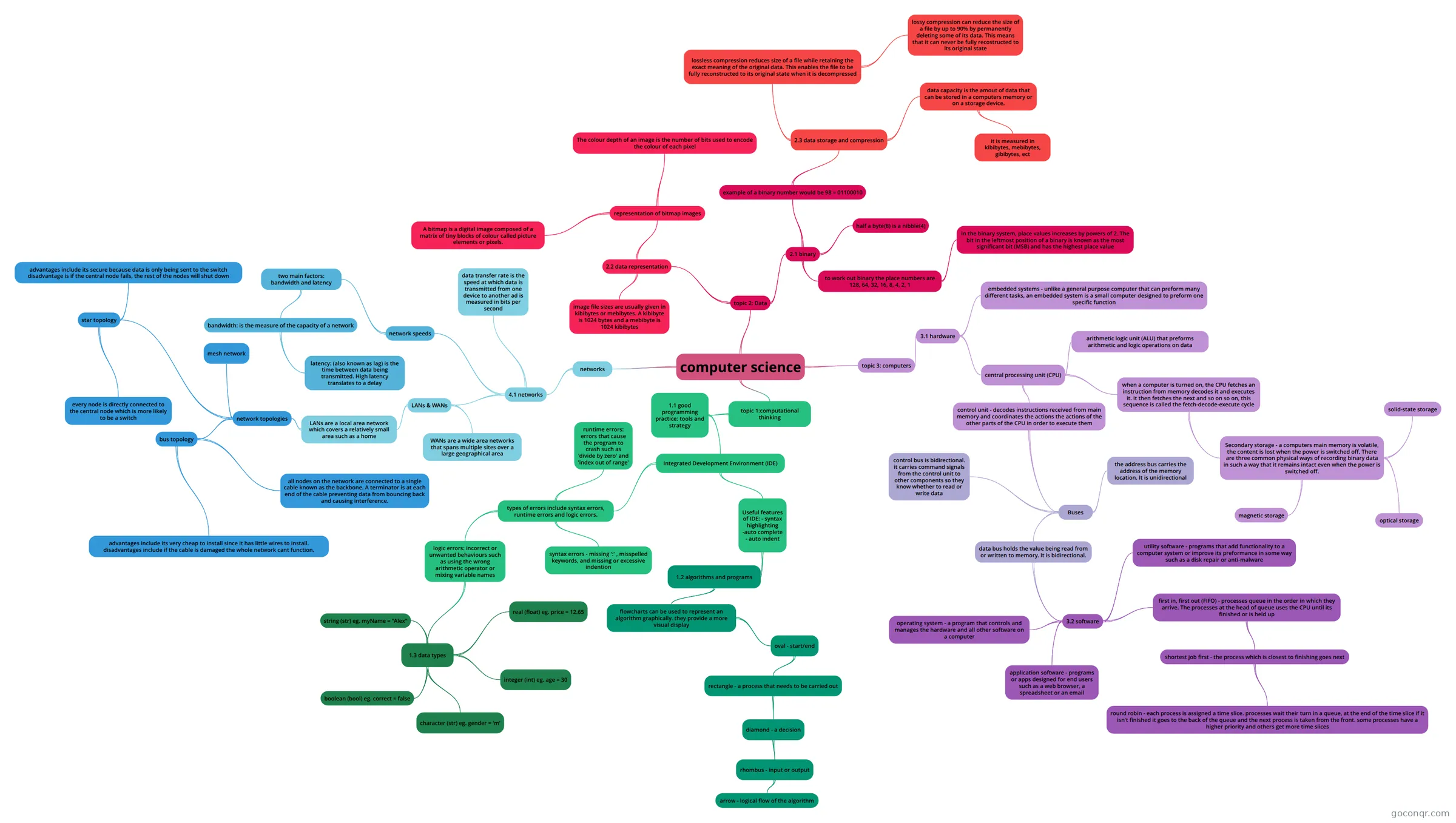 Mind map computer science computer science mindmap (not finished)
-
Mind map Decomposition and abstraction
-
4 cards2.1.1 computational thinking name the three computational thinking:
-
Mind map Computational thinking
-
4 questionsComputational Thinking What is decomposition ?
-
Mind map computational thinking
-
Mind map Computing Paper 2
-
28 cardsWhat Type of problem do we have to solve? Give three different notions relating to general problem solving that are key concerns in computer science.
Quizzes
See all 32 quizzes-
4 questionsComputational Thinking What is decomposition ?
-
11 questionsUnit 5 - Algorithms - Quick Quiz Which of these is the definition of Decomposition?
-
10 questionsGCSE CS Problem solving Quiz 2 Complete the Trace table
-
5 questionsComputational thinking short quiz Computational thinking is a skill that focuses on logical thinking and 21st century thinking
-
7 questionsComputational Thinking What is this Flow Chart symbol called?
-
11 questionscomputational thinking
-
7 questionsComputationalThinkingQuiz What is computational thinking ?
-
5 questionsUntitled what is the correct description for abstraction?
Mind maps
See all 389 mind mapsFlashcards
See all 101 flashcards-
4 cards2.1.1 computational thinking name the three computational thinking:
-
28 cardsWhat Type of problem do we have to solve? Give three different notions relating to general problem solving that are key concerns in computer science.
-
32 cardsComputer Science Paper 2 - Computational Thinking and Problem Solving
-
12 cards2.1 and 2.2.2 Computational Thinking and Computational Method Wh are the 5 elements of computational thinking?
-
14 cardsUntitled What is problem recognition ?
-
39 cardsComputational Thinking 2023 - 1st Partial
-
23 cards2.1 - Elements of computational thinking - Flashcards
-
14 cardscomputing revision cards what is Decomposition?
Flowcharts
Notes
-
EDEXCEL IGCSE (9-1) COMPUTER SCIENCE Chapter 1 : Problem Solving 1.1 Algorithms 1.1.1 An algorithm is a precise method for solving a problem. Algorithms can be displayed as written description, flowcharts and in pseudo-code. Written descriptions: Simples...
-
2.1 - Elements of Computational Thinking 2.1.1 - Thinking Abstractly Abstraction Applied to High-Level Languages: First Generation of Language: Machine Code. Represented using binary. Writing a program to solve the simplest of problems was a tedious a...
-
Topic 4: Computational thinking 4.1.1:Procedural Thinking An algorithms is a set of instructions to be followed in a clear manner. Procedural thinking Eg. A procedural algorithm for making a cup of tea: 1. Put water in kettle 2. Turn on kettle 3. Ge...
-
Abstraction Procedural Decomposition - the act of breaking down a problem into smaller, more manageable problems. - Each sub-problem can be further subdivided until each one accomplishes an identifiable task Representational Abst...
-
Stages of Problem Solving Given - an inital siutationProblem - a given where it is not immediatley Goal - a desired outcomeResources - things that can be used to reach a goal and impose constraints Understanding a problem - turning an ill-defi...
-
Computational Thinking Computational Thinking Computational Thinking - Using computers to solve problems. Algorithmic Thinking - Identifying the steps in solving a problem. This involves 4 components... Decomposition - Breaking a larger tas...
-
Computational Thinking - created from Mind Map Pattern recognition Algorithm abstraction
-
Computational Thinking - created from Mind Map Decomposition Pattern Recognition Algorithmic Thinking
Slides
Topics in Computational Thinking and Problem Solving
More Computing and ICT (programming, computer science, digital skills, educational technology) topics
About Computational Thinking and Problem Solving
GoConqr OriginalWhat this page covers
The resources here centre on the core ideas of computational thinking. The mind map Decomposition and abstraction links problem solving, algorithm design and the first step in the problem-solving process. The mind map Computational thinking sets out decomposition as breaking a problem into smaller parts, abstraction as taking out irrelevant information, and pattern recognition as spotting similarities.
There is also material on algorithms. The notes on Chapter 1 of an Edexcel IGCSE (9-1) Computer Science course describe an algorithm as a precise method for solving a problem, shown as a written description, a flowchart or pseudo-code. The mind map Problem solving covers Backus-Naur Form, a way of expressing syntax in computing. Another mind map, computer science, looks at good programming practice, including the useful features of an IDE such as syntax highlighting.
Where to start
- Skim Computational thinking, the mind map, to meet the key terms.
- Work through the flashcard deck 2.1.1 computational thinking, which asks you to name the three elements and define abstraction and decomposition.
- Read the Edexcel IGCSE notes to see how algorithms are written down.
- Try the quiz Computational Thinking, which asks what decomposition, pattern recognition, abstraction and an algorithm are.
Using quizzes and maps together
Take a quiz first, without looking at anything. Note the questions you missed, then open the matching mind map and read that branch again. Afterwards, turn the gaps into flashcards and test yourself a day later. The flowcharts, such as decomposition example and Decomposition Task, give you a visual way to practise breaking a problem into steps.
Quizzes such as GCSE CS Problem solving Quiz 1 and GCSE CS Problem solving Quiz 2 suit exam-style practice. Teachers can use any of these as ready-made starters or revision tasks.
Where it fits
This unit sits in the Programming strand of Computing and ICT. It supports the later work on writing and testing code, because planning a solution comes before the program itself.
Pick a resource that matches what you are revising today, then make a map or deck of your own to go with it.
Frequently asked questions
Which resource should I open first?
Start with the mind map called Computational thinking. It sets out decomposition, abstraction and pattern recognition in short branches. After that, try the flashcard deck 2.1.1 computational thinking to check you can define each term, then take the Computational Thinking quiz.
What do the mind maps on this page cover?
They cover decomposition, abstraction, pattern recognition, algorithms and problem solving. Some go further, such as the one on Backus-Naur Form and another on good programming practice and IDE features. There are over 300 mind maps, so you can compare how different students have organised the same ideas.
Are the resources free to use?
Yes. Every resource listed here is free to open, study and take, with no account needed. They were made by GoConqr users, not by GoConqr itself. If you want to save quiz scores or make your own quizzes, maps, flashcards and notes, a free account lets you do that.
Which exams do these resources suit?
The listed resources mention GCSE Computer Science, A-level Computer Science and Leaving Certificate Computer Science. There are also notes from an Edexcel IGCSE (9-1) Computer Science course. Most of the resources are at school level, so they suit students revising for these courses.
Are there resources for practising decomposition?
Yes. The flowcharts decomposition example and Decomposition Task let you see a problem broken into smaller parts. There is also a flashcard deck called decomposition and a mind map of the same name. Use them after reading the definition, then try the quizzes.
What if I can't find what I need?
With over 500 resources, try searching related terms such as algorithms, abstraction or problem solving. If a topic is still missing, you can make your own quiz, mind map, flashcards or notes with a free account, and use the existing resources as a model.