
Contemporary, Street and Digital Art
101 resources created by 95 users
This Contemporary, Street and Digital Art page on GoConqr gathers community-made mind maps, flashcards, quizzes and notes, from Banksy and graffiti to performance art, installation and technology in art. It's built for school students revising a topic, university students filling gaps, and teachers after ready-made material. There are over 80 resources here, including more than 50 mind maps and 20 flashcards, pitched mostly at secondary level with a good share for university. Open a mind map, try a quiz to spot your gaps, then make your own notes.
Top Contemporary, Street and Digital Art resources
-
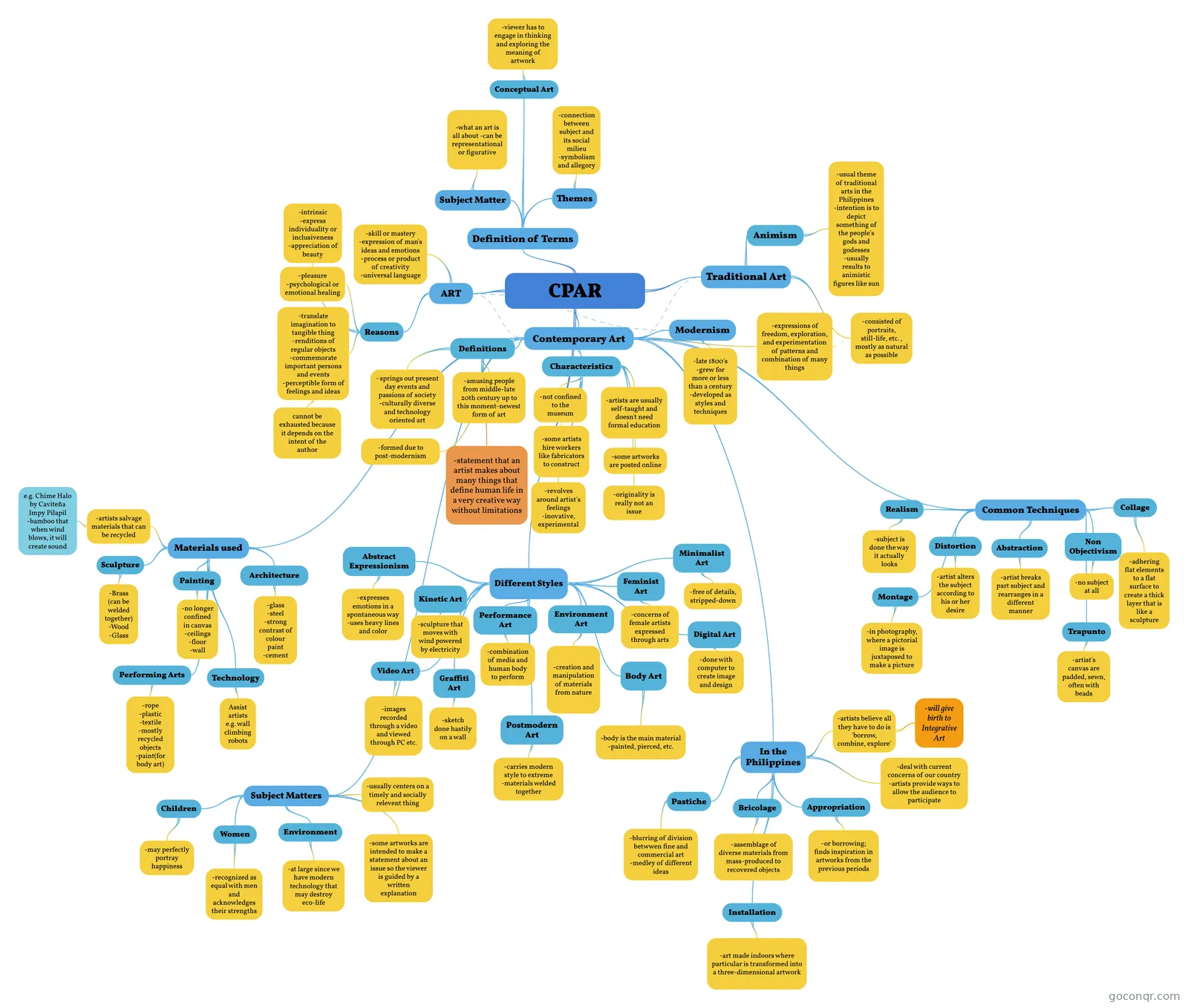 Mind map CPAR Reviewer for prelims second sem
-
7 cardsDuchamp, Boonma and Japar
-
15 cardsQuiz/Final Unifying art + technology, it could be rewritten for today. Only truly has been relevant for the last 20 ye...
-
14 cardsVAG: CARR/PAALEN Birth/Death Dates of Emily Carr?
-
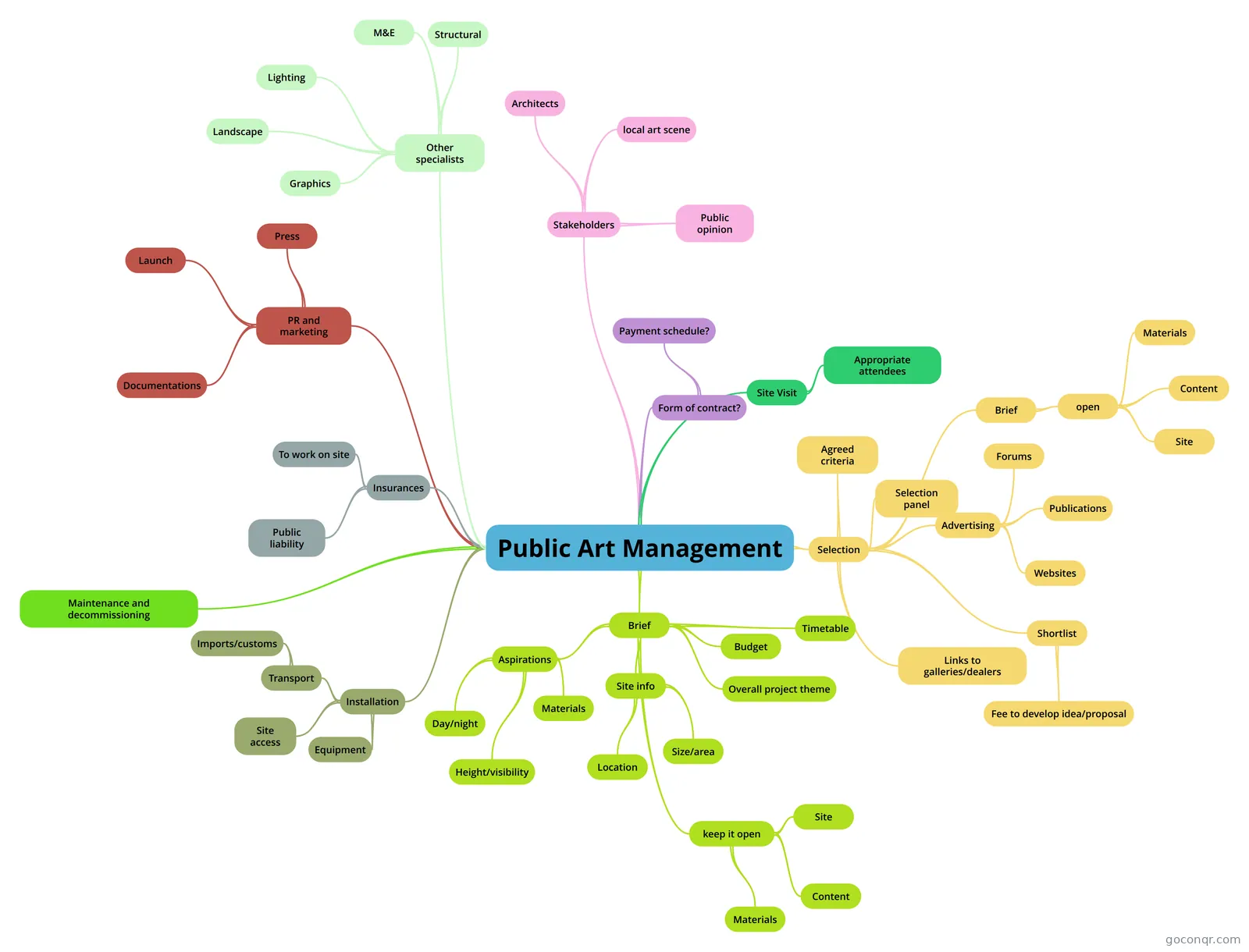 Mind map Public Art Management Considerations for Public Art Management
-
7 questionsI. Art Chapter 1 of CPAR
-
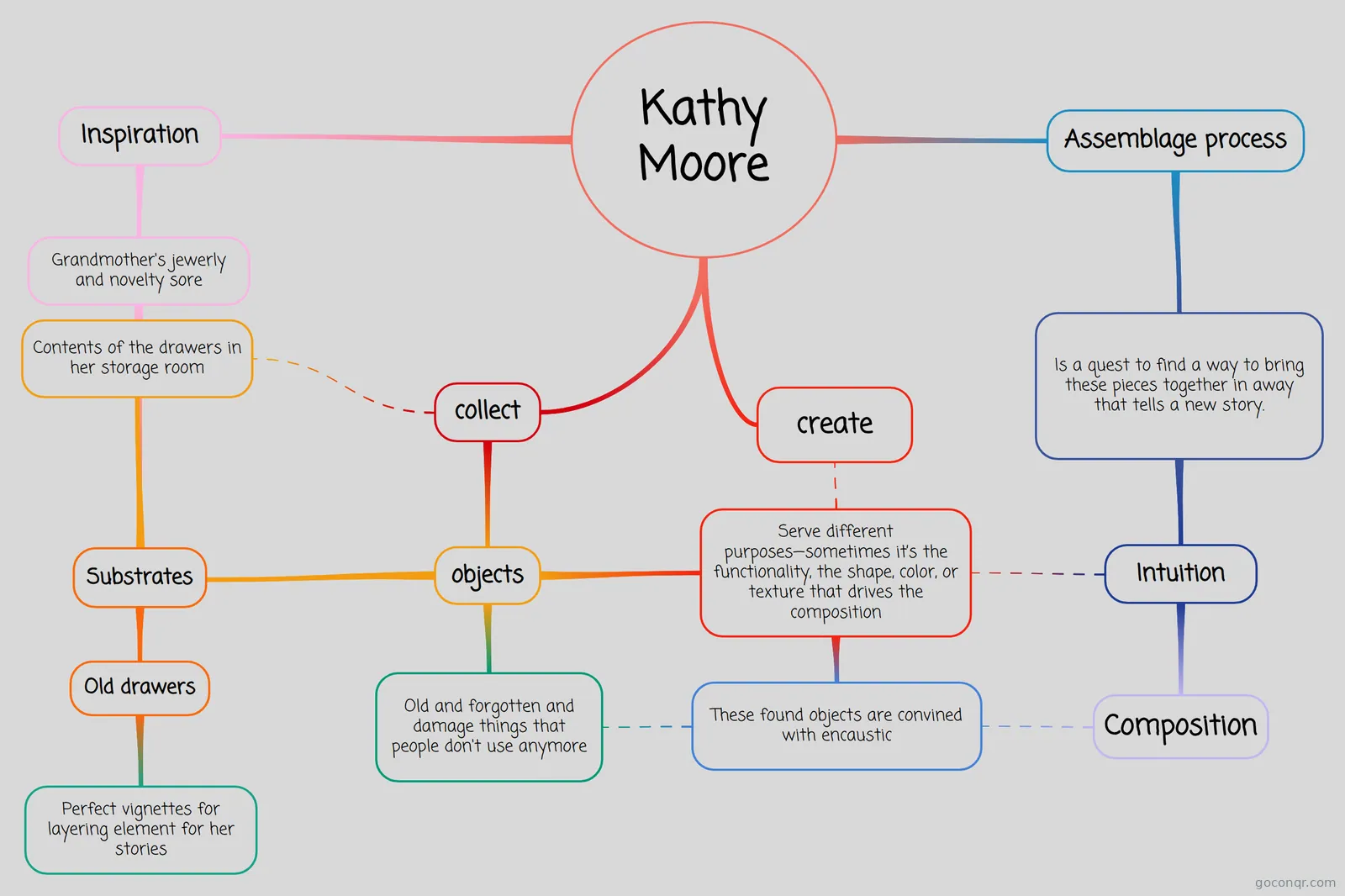 Mind map Kathy Moore project english
Quizzes
Mind maps
See all 63 mind mapsFlashcards
See all 28 flashcardsNotes
Topics in Contemporary, Street and Digital Art
More Visual arts topics
About Contemporary, Street and Digital Art
GoConqr OriginalWhat this unit covers
The resources here move between artists, movements and ideas. Mind maps make up most of the page, with flashcard decks, a few quizzes and some notes alongside them. Street art is a strong thread: you will find maps on Banksy, Graffiti, Yarn Bombing and Street Art, plus a map asking how street art affects a community and notes on street art in New Zealand by Erika Pearce.
Artists and big ideas
Several resources focus on individual artists. The Chuck Close map covers his background, face blindness, influences such as Jackson Pollock and Willem de Kooning, and themes like photorealism. The Marina Abramovic notes describe her as the grandmother of performance art and mention Rhythm 0 from 1974. Other maps look at William Kentridge, Louise Bourgeois and Damien Hirst.
For wider ideas, try Language of Contemporary Art, The impact of technology in Art, Installation and POST MODERNISM. The Public Art Management map is useful for the practical side, with headings such as brief, site, budget, timetable and selection.
Where to start
- Begin with a broad map such as Street Art or Language of Contemporary Art to get the vocabulary.
- Move to single-artist maps and the Marina Abramovic notes to attach names to ideas.
- Use flashcard decks such as Body Art and Technology-Based Production Art to fix key terms and examples.
- Finish with the quizzes, including STREET ART and CPAR, to see what stuck.
Using quizzes and maps together
Read a map first, then take the matching quiz without looking back. Wherever you slip, return to that branch of the map and read it again. The Duchamp, Boonma and Japar flashcards also suit comparison work, since they weigh the choice of materials and the status of an artwork.
Where it fits
This unit sits in the Art History and Movements strand of Visual arts. Pick a map that interests you, work through it, and add your own notes or flashcards where a gap remains.
Frequently asked questions
Which resource should I open first?
Start with a broad mind map such as Street Art or Language of Contemporary Art. They set out definitions, styles and recurring ideas in a compact form. Once the vocabulary feels familiar, move on to the artist maps and flashcard decks, and leave the quizzes until last.
What do the mind maps cover?
They cover street art and graffiti, individual artists such as Banksy, Chuck Close and Damien Hirst, and wider topics like installation, postmodernism and the impact of technology in art. There is also a map on public art management, covering briefs, budgets and timetables.
Are the resources free to use?
Yes. Every resource listed here is free to open, study and take, with no account needed. They were made by GoConqr users, not by GoConqr itself, so styles and depth vary from one resource to the next.
Which levels do these resources suit?
Most are at secondary level, with a sizeable share for university students. School students can use the maps and flashcards to revise a topic, while university students can use them to fill gaps. Teachers can pick out ready-made material for lessons.
Are there quizzes on this page?
Yes, a handful. They include I. Art, STREET ART and CPAR. Because there are fewer quizzes than maps and flashcards, pair them with the related mind maps. A free account saves your scores and lets you write your own quizzes.
What if the artist or topic I need is missing?
Try the broader maps and flashcard decks, since they often mention several artists and ideas together. If your topic is still absent, you can make your own mind map, flashcards or notes and build up the material you need.