
Photography
130 resources created by 121 users
This Photography page on GoConqr gathers community-made mind maps, flashcards and notes on genres and themes, from cityscapes and portraiture to commercial car photography and photomontage. It's built for school students planning projects and analysing images, and for teachers after ready-made material. There are over 100 resources here, including more than 100 mind maps made by over 100 contributors, mostly at secondary level. Pick a map that suits your project, then build your own maps and flashcards.
Top Photography resources
Mind maps
See all 126 mind mapsFlashcards
Notes
Slides
Topics in Photography
More Visual arts topics
About Photography
GoConqr OriginalWhat this unit covers
This unit sits in the Lens-Based and Graphic Media strand of Visual arts. Almost everything here is a mind map, so it works well for planning shoots and gathering ideas. Topics range across genres, themes, artists and ways of looking at a photograph.
Genres and subjects
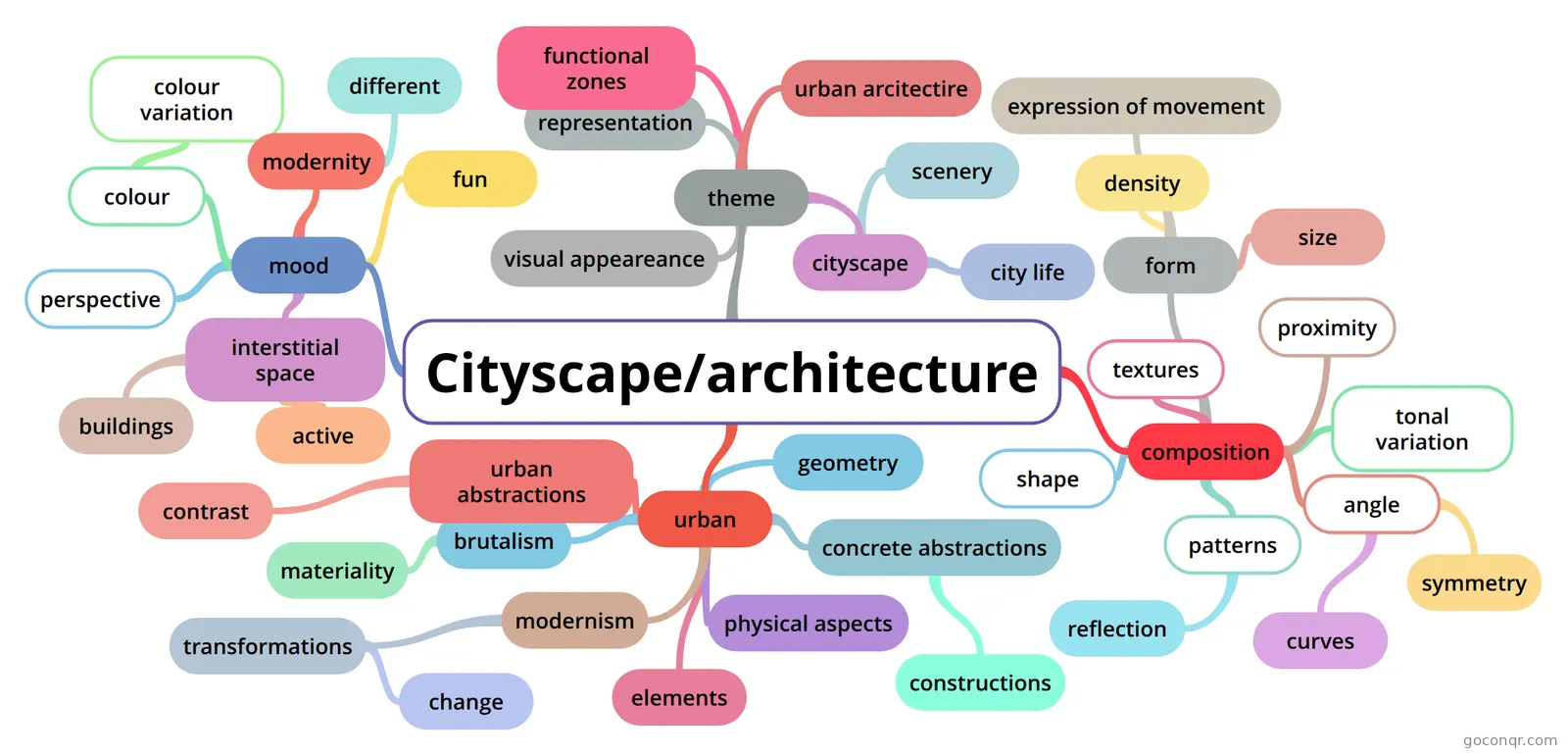
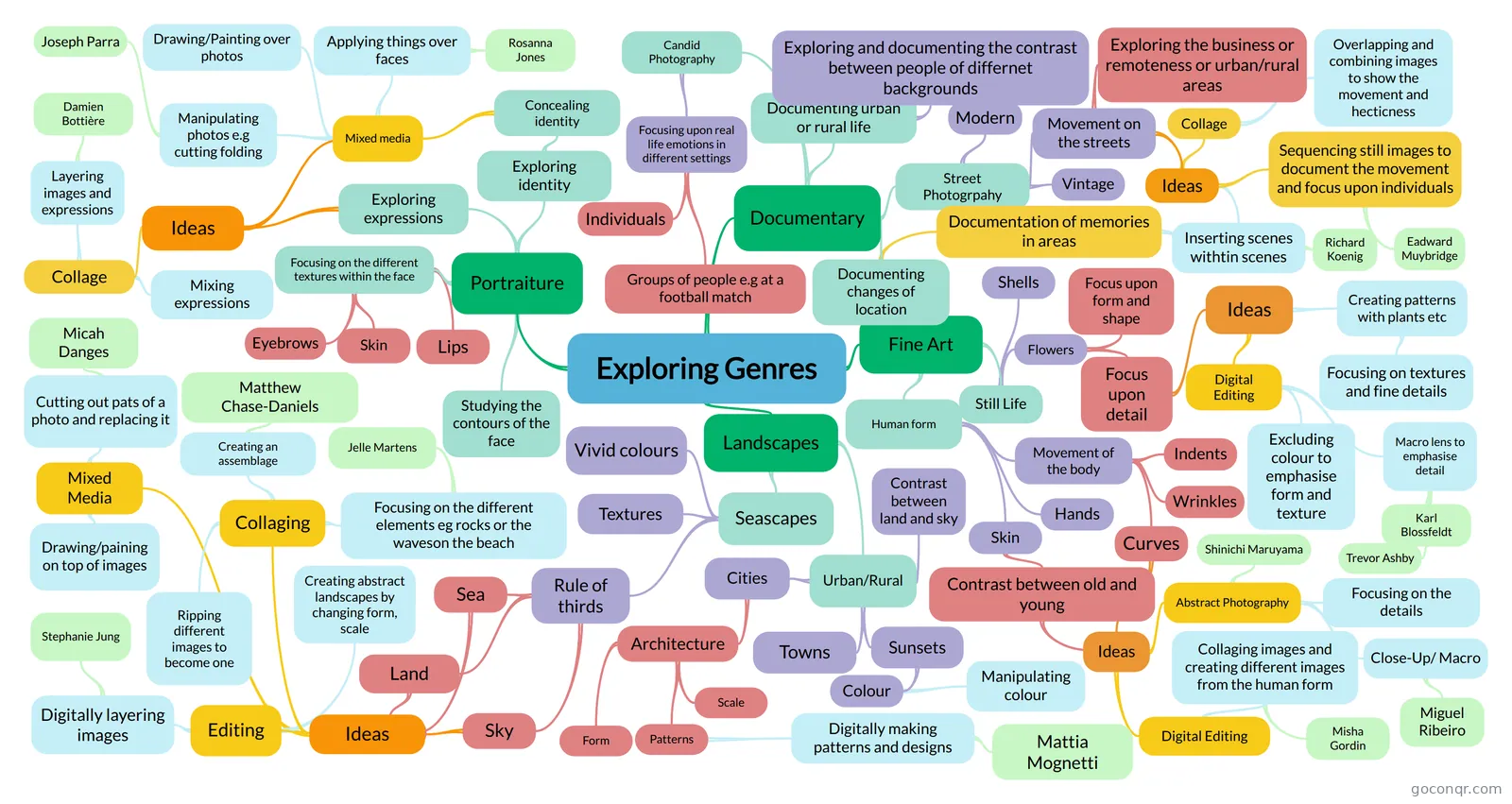
Start with Exploring Genres, which covers landscapes, seascapes, towns and cities, with notes on vivid colours, textures, the rule of thirds and collaging. The Cityscape/architecture map goes further into urban abstractions, brutalism, modernism, geometry, patterns, angle and proximity. For people, the Portraiture/Self-portraits/selfies map traces portraits from the Egyptians, Ancient Greeks and Romans through royalty, clergy and nobles. Shorter maps such as Portrait & Identity and Expressive Faces add more angles.
Analysing and researching
Two maps help you write about images. Analyzing Photographs. separates a visual, objective description from a subjective reflection. Analyzing photos lists the elements to check: line, shape, form, space, colour and texture. Another map covers movement, the path the viewer's eye takes, noting that jagged lines suggest excitement and curves slow the viewer down. For artist research, PHOTOGRAPHY REASEARCH groups artists by period from 1920 onwards, including Man Ray, Andy Warhol and Hannah Hoch.
Planning your own work
Several maps are project aids: Project proposal, Final Piece Plan, Ideas for shoots and 1_developing ideas. Themed maps such as Atmosphere, Anguish, Photomontage and Changing the scale give starting points. The Commercial Photography - Cars map shows miniature car photography and forced perspective.
A sensible order
- Browse Exploring Genres to choose a direction.
- Read an analysis map so you can describe photographs clearly.
- Look at an artist or genre map close to your idea.
- Use a planning map to organise your shoot.
The flashcard deck called Photography is a quick way to revisit key terms between sessions. When you're ready, make a map of your own project and see how your ideas fit together.
Frequently asked questions
Where should I start on this Photography page?
Open the Exploring Genres mind map first. It gives a broad view of landscapes, seascapes and urban scenes, with notes on colour, texture and the rule of thirds. From there, move to a map that matches your own idea, such as the cityscape or portraiture maps.
Which mind maps help me analyse a photograph?
Try Analyzing Photographs. and Analyzing photos. One separates an objective visual description from a personal reflection. The other lists elements to consider, including line, shape, form, space, colour and texture. Used together, they give you a clear way to write about any image.
Are there quizzes on this page?
No, this page has no quizzes. It is mostly mind maps, with a flashcard deck and a few notes. Use the maps to plan and understand ideas, and the flashcards to revisit key terms. You can also make your own quiz with a free account.
Are the resources free to use?
Yes. Every resource listed here is free to open and study, with no account needed. They were made by GoConqr users rather than by GoConqr itself, so they reflect real students' and teachers' project work and research.
Who are these resources for?
They suit school students, since most of the material is at secondary level, and teachers looking for ready-made examples. Students can use them to develop ideas and practise describing images. Teachers can use them to show how a project might be planned.
What if I can't find the topic I need?
Look through the project maps, such as Ideas for shoots or Photo Series, which may touch on related themes. If nothing fits, you can build your own mind map or flashcards on the topic and keep them for later.