
Microscopy, Staining and Laboratory Techniques mind maps
69 mind maps by 56 users · Page 1 of 2
This page gathers mind maps on microscopy, staining and laboratory techniques, from culture media to bacterial identification. It is for university students reviewing laboratory topics and teachers looking for study material. There are more than 60 mind maps, made by over 50 users, for university-level study. Choose a map to get started.
Mind maps
-
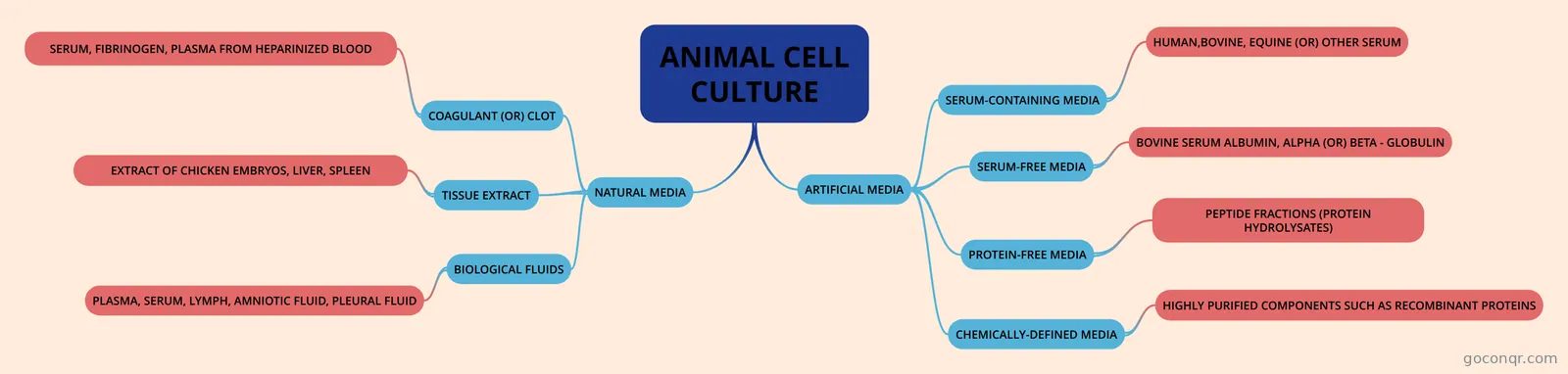 ANIMAL CELL CULTURE
-
Growth Media
-
Cell Lines
-
Methods of Studying Microorganisms
-
Digital PCR as a tool to measure HIV persistence
-
CALU-3
-
Microscopy 01/10/18
-
Isolation of T Cells Using Rosetting Procedures
-
Agar
-
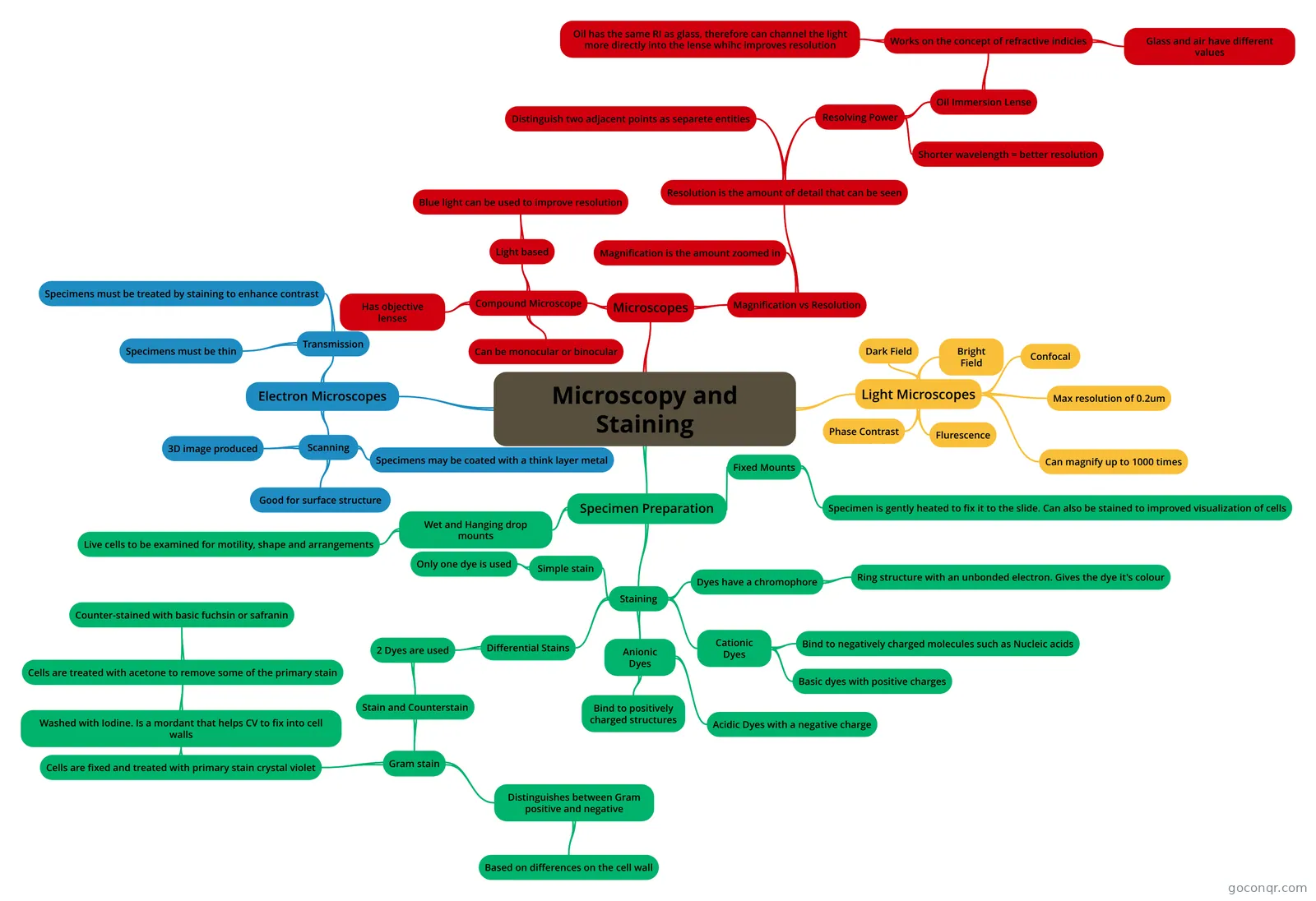 Microscopy and Staining
-
Biochemical Tests
-
MICROSCOPY TECHNIQUES_1
-
MICROSCOPY TECHNIQUES
-
1_CELL CULTURE CELULA
-
Media
-
Stain
-
P_yfiRNB-trun Effects on c-di-GMP production Experimental Mind Map
-
Preparation of solutions and reagents
-
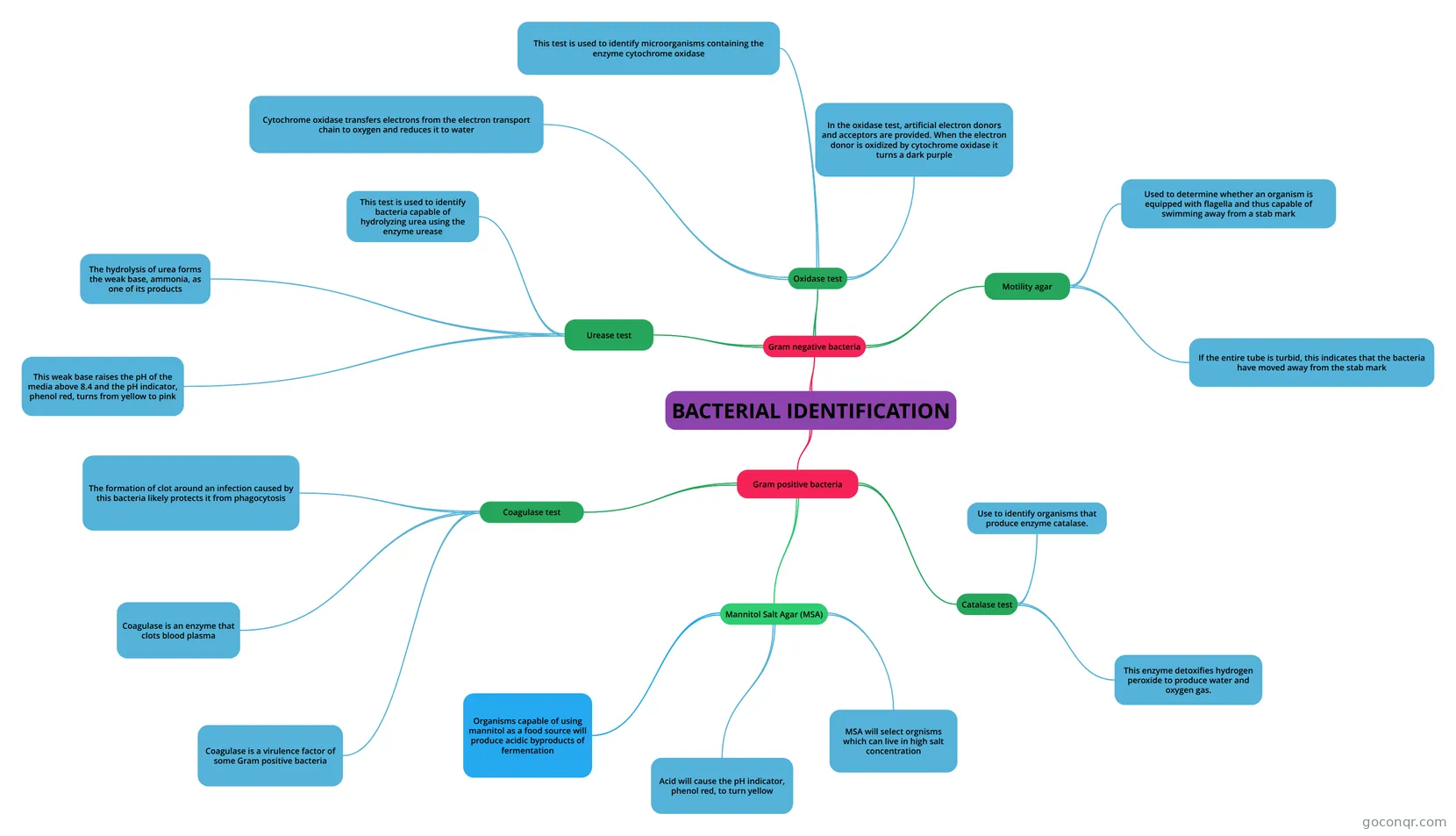 BACTERIAL IDENTIFICATION A series of test to identify the type of bacteria.
-
Detection of Mycoplasma
-
Research Breakthroughs Involving HeLa Cells
-
Types of Media Used to Culture Bacteria
-
Microbiological Media
-
Lab 1
-
Differential Tests
-
Types of Media
-
PREPARING A SMEAR AND SIMPLE STAIN
-
Immunoprecipitation
-
Classes of Infectious Micro-organisms
-
Gram Staining
-
Lab 2
-
artificial media (synthetic)
-
Schaeffer-Fulton stain
-
Laboratory Operations
-
STAINING
-
Classification of culture media
-
CarbGem Poc Pilot
-
Differential Stain
-
ANIMAL CELL CULTURE
-
 ANIMAL CULTURE MEDIA
More Microscopy, Staining and Laboratory Techniques resources
About microscopy, staining and laboratory techniques mind maps
GoConqr OriginalMicroscopy, Staining and Laboratory Techniques mind maps
These user-made maps bring together topics from culture media and staining to laboratory methods. Growth Media includes agar plates, broth and several types of media. Gram Stain sets out the stains and their roles, while Differential Stain looks at cell types and staining.
How to use the maps
Start with Growth Media if you want to review how different media are grouped. Follow its branches, then look at Media for terms and examples of broth growth. For staining, use Gram Stain to trace the sequence of reagents and their roles.
After reading a map, try recalling its branches without looking. Return to any terms you missed, then use a quiz on the unit page when you want to check your recall. Flashcards on the unit page offer another way to revisit individual details. Pick a topic and explore its branches.
Frequently asked questions
Which mind map should I start with?
Growth Media is a useful starting point for reviewing culture media. Its branches include agar plates, broth and enriched, selective and differential media. For staining, Gram Stain sets out the reagents and their roles, as well as Gram-positive and Gram-negative results.
What topics do the mind maps cover?
The maps cover culture media, staining, microscopy and laboratory methods. Growth Media and Media focus on media and broth growth, while Gram Stain and Differential Stain cover staining. Other maps include Immunoprecipitation, Biochemical Tests and Preparation of solutions and reagents.
Are the mind maps free to use?
Yes. Every resource listed here is free to open and study, with no account needed. The maps were made by GoConqr users. A free account also lets you save quiz scores and make your own quizzes, mind maps, flashcards and notes.