
Negligence
275 resources created by 142 users
This Negligence page on GoConqr gathers community-made mind maps, flashcards, notes, quizzes and flowcharts on tort and delict, from duty of care and breach to causation, remoteness and psychiatric injury. It's built for university students and professional candidates, school students, and teachers after ready-made material. There are over 270 resources here, including more than 100 mind maps and over 100 flashcards, with A-level Law among the exams mentioned. Pick a topic, try a quiz, then build your own maps and flashcards.
Top Negligence resources
-
10 cardsOccupiers' Liability Key Cases by Name Glasgow Corporation v Taylor
-
43 cardsTort - Breach In every case, when considering breach, the courts must decide two things - a question of law and a questio...
-
14 cardsPsychiatric injury The theory and principles of psychiatric injury + cases
-
 Mind map Duty of care
-
Mind map Negligence Mind Map
-
23 questionsDuty of Care Fill in the blanks quiz on duty of care.
-
50 cardsTort (3) - Negligence Psychiatric illness: Negligence - Psychiatric illness
-
64 cardsTort - W5 -Vicarious liability and employers’ primary liability in negligence Employers’ primary liability
Quizzes
Mind maps
See all 146 mind maps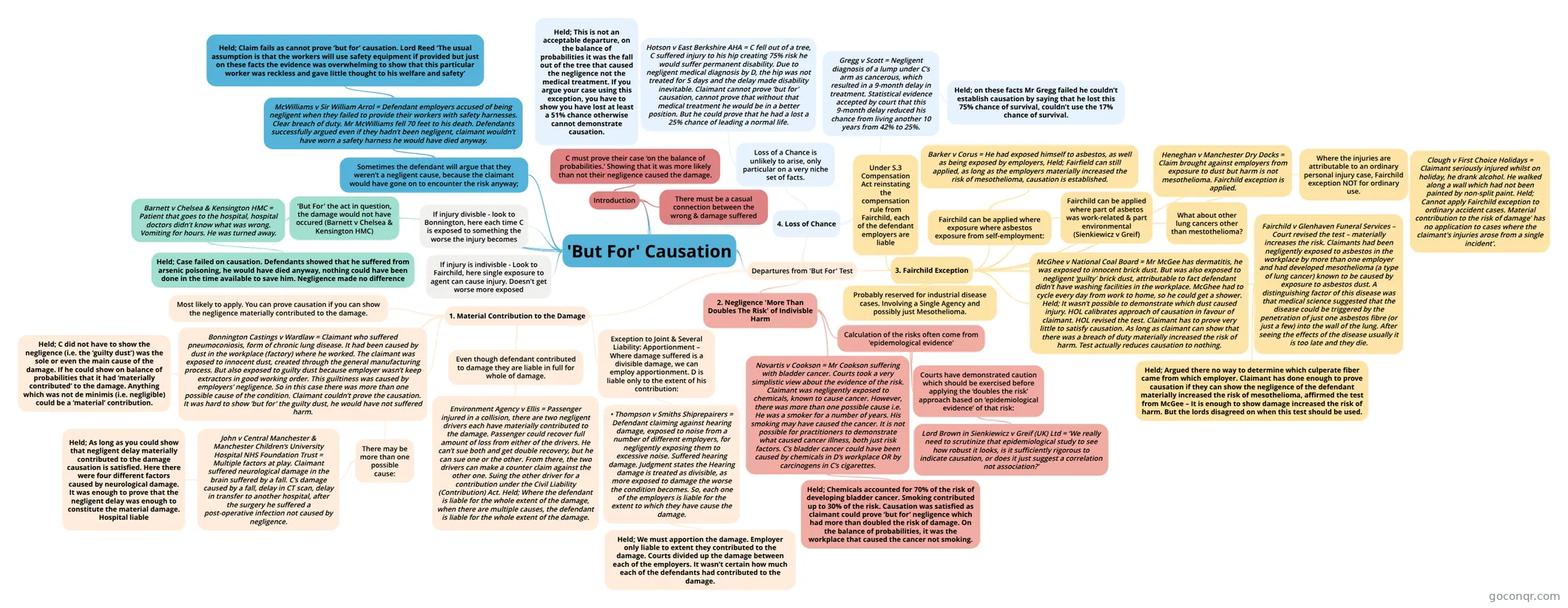
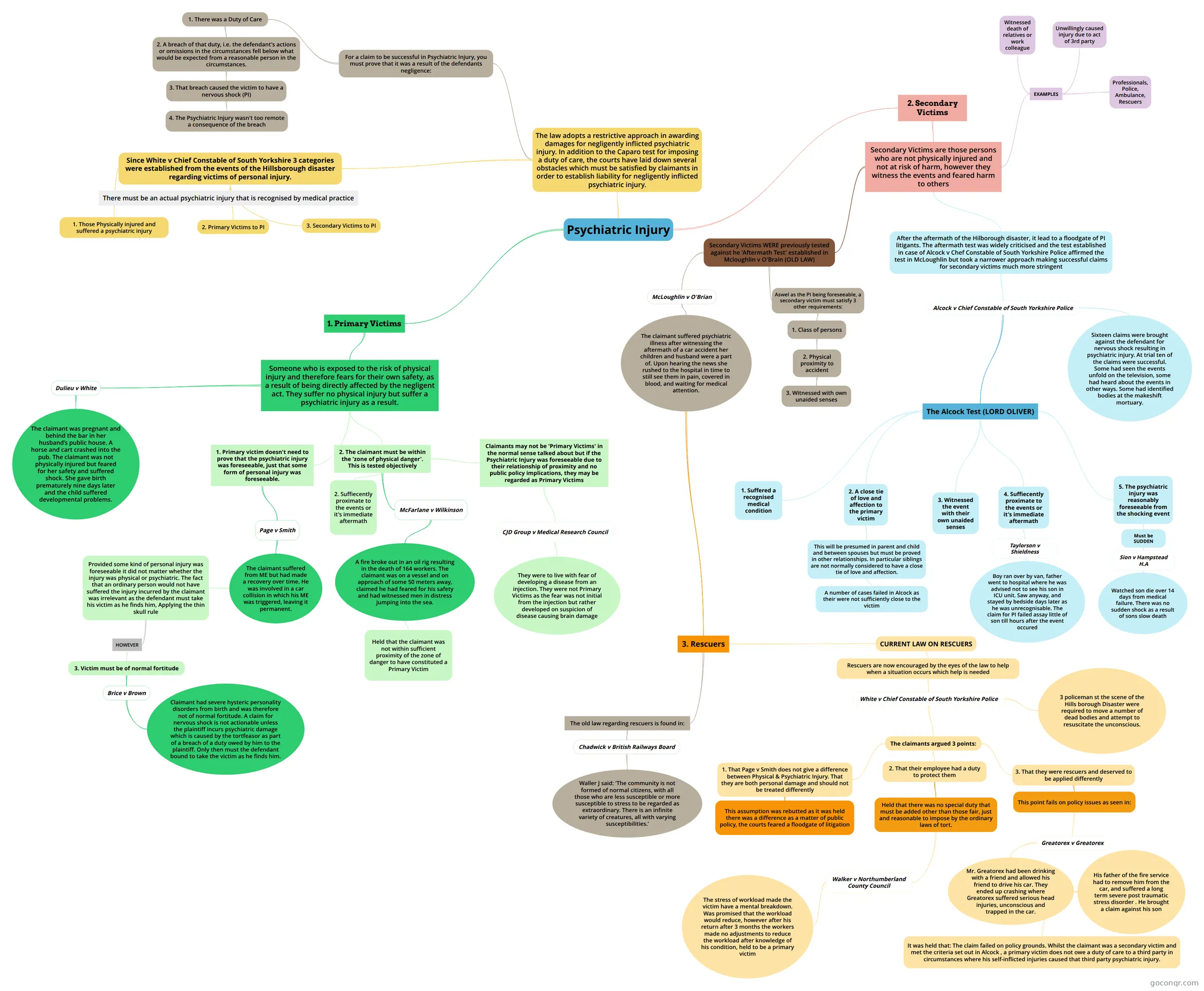

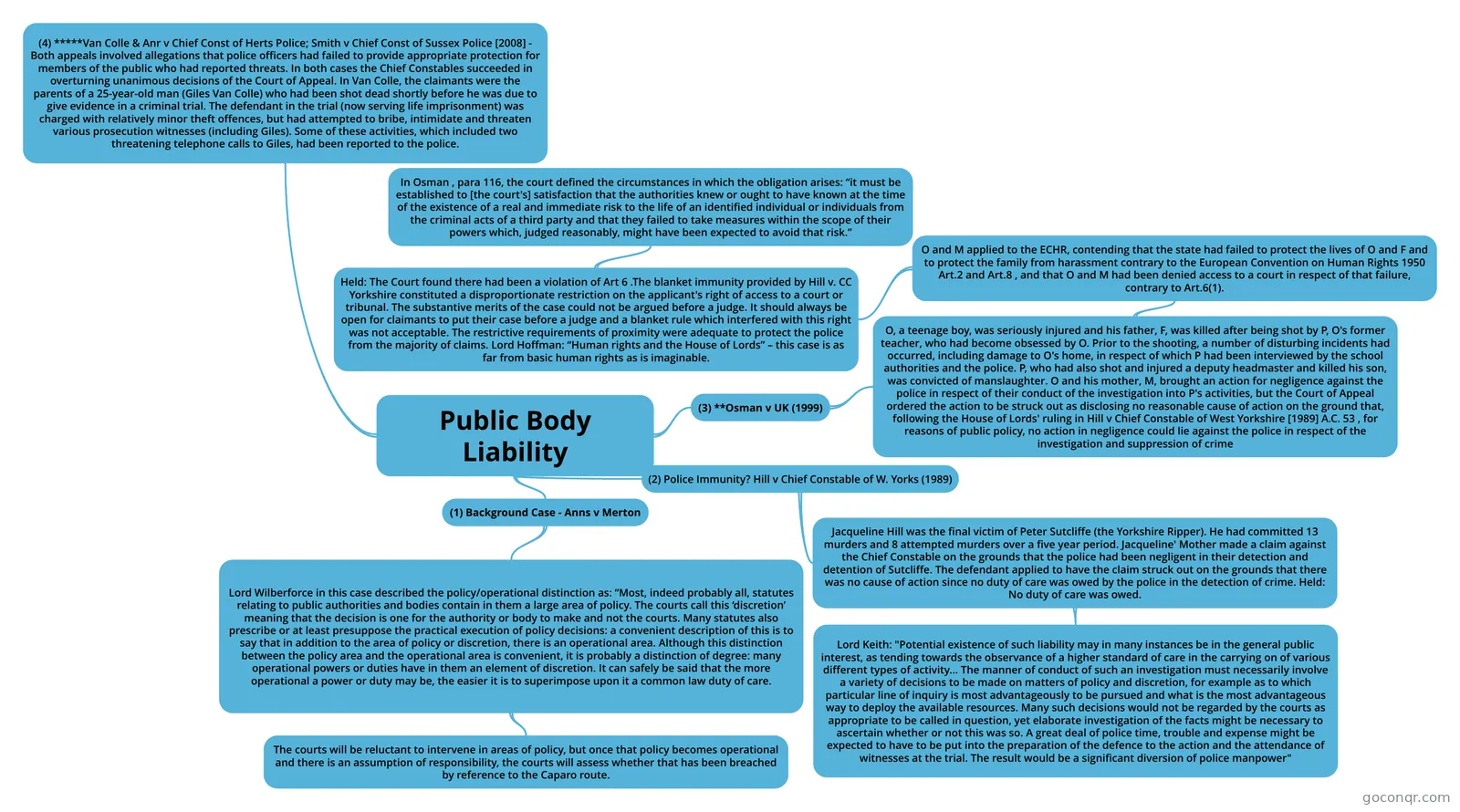
Flashcards
See all 108 flashcards-
10 cardsOccupiers' Liability Key Cases by Name Glasgow Corporation v Taylor
-
43 cardsTort - Breach In every case, when considering breach, the courts must decide two things - a question of law and a questio...
-
14 cardsPsychiatric injury The theory and principles of psychiatric injury + cases
-
50 cardsTort (3) - Negligence Psychiatric illness: Negligence - Psychiatric illness
-
64 cardsTort - W5 -Vicarious liability and employers’ primary liability in negligence Employers’ primary liability
-
44 cardsTort - W7 - Pure Economic Loss Introduction to pure economic loss
-
36 cardsTort Law - W6 - Special type of loss in negligence: psychiatric harm Introduction to psychiatric harm
-
57 cardscausation
Flowcharts
Notes
See all 15 notes-
Factual Causation FACTUAL CAUSATION Whenever considering factual causation, default position is to apply 'but for' test - cite Barnett v Chelsea and Kensington Hospital Management Committee But for D's negligence, C would not have suff...
-
Product Liability Product Liability Duty of care Neighbour principle – Lord Atkin Donoghue v Stevenson – manufacturer to ultimate consumer Retailer as defendant – Fisher v Harrods Who can be claimant? Anyone affected by defective produ...
-
Tutorial 2 Tort Tutorial 2: What is an “objective” standard of care? Why, if at all, is it superior to a subjective one? According to Macmillan L: “It eliminates the personal equation and is independent of the idiosyncrasies of the p...
-
Causation Causation Establish: actionable damage and then existence of a duty of care via established duty situations e.g. police (CHILDREN and PARENT?), sufficient proximity of relationship, reasonable foresigh...
-
Advising Yonny - created from Mind Map 1) Who is the Claimant and Defendant? 2) In what tort? 3) What act of the Defendant and 4) Damage to Claimant
-
Tutorial 3 Tort Tutorial 3: 1. To what extent is it important to distinguish between factual and legal causation? In which category would you place the novus actus interveniens principle? Factual causation – link between cause...
-
Causation and Remoteness Tort - created from Mind Map Causation Factual Causation- But For Test. Breach of Duty must have caused the damage Novus Actus Interviens Problems Multiple Causes Lost Chances Multiple Consecutive Causes Defendant's breach must be the substantial...
-
Legal Causation - created from Mind Map Remoteness Break of COC Re Polemis (old test): D liable for all consequence of his negligence
Topics in Negligence
More Civil law topics
About Negligence
GoConqr OriginalWhat this unit covers
The resources follow the usual shape of a negligence claim: duty, breach, causation and damage. The Negligence Mind Map lays out that skeleton, with branches for plaintiffs, the standard of care, reasonable person, professionals, children and more. The mind map on duty of care starts from Donoghue v Stevenson and Lord Atkin's idea of foreseeing harm to those closely and directly affected.
Where to start
Begin with the Negligence Mind Map to see the whole structure. Then move through the parts in order:
- Duty of care, using the mind map on duty of care and the Duty of Care quiz.
- Breach, using the Tort - Breach flashcards, which ask what the courts must decide on law and fact, and for the classic definition of the standard of care.
- Causation, using the causation flashcards, which cover factual and legal causation, the but for test and cases such as Barnett v Chelsea and Kensington Hospital management committee.
- Remoteness, using the Remoteness of Damages mind map, which contrasts the old directness test with the Wagon Mound approach.
Harder topics
Several resources deal with special areas. The Psychiatric injury flashcards cover controlling factors, primary victims, secondary victims and the thin skull rule. There are also mind maps on public body liability, omissions, acts of third parties and defences, plus notes on product liability and economic loss. Occupiers' Liability Key Cases by Name is a deck of case names for quick recall.
Using quizzes and maps together
Read a mind map first, then take a quiz such as Breach of Duty to see what stuck. Where you stumble, go back to the matching flashcards and test yourself again. The Causation flowchart-style maps help when you need to decide which test applies to a set of facts.
Where it sits
This unit belongs to the Tort and Delict strand of Civil law. Choose one topic that you find hardest, open the matching map, and make your own flashcards from it.
Frequently asked questions
Where should I start on the Negligence page?
Start with the Negligence Mind Map, which sets out duty, breach, causation and damage on one page. After that, move to the duty of care mind maps, then the breach and causation flashcards. This order follows the way a negligence claim is usually analysed.
Are the resources free to use?
Yes. Every resource listed here is free to open, study and take, with no account needed. They were made by GoConqr users, not by GoConqr itself, so it is worth checking them against your own course materials.
Which topics do the mind maps cover?
The mind maps cover duty of care, breach of duty, causation, remoteness of damages, defences, omissions, acts of third parties, public authorities and psychiatric injury. There is also one on res ipsa loquitur and a causation flowchart for working through problem questions.
Is there anything for psychiatric injury?
Yes. There are flashcard decks, mind maps, notes and a flowchart on psychiatric harm. The flashcards include controlling factors, primary and secondary victims and the thin skull rule, and there is a separate deck of key cases.
Which levels and exams do these resources suit?
Most resources suit university students and professional candidates, with a good share for school students. A-level Law is the exam mentioned in the listed resources. Teachers can use the maps and flashcards as ready-made material for lessons.
What if I cannot find what I need?
Try a nearby topic, since causation, remoteness and breach resources often overlap. If a gap remains, a free account lets you save quiz scores and make your own quizzes, mind maps, flashcards and notes to fill it.