
Tort Law: General Principles
96 resources created by 74 users
This Tort Law: General Principles page on GoConqr gathers community-made quizzes, mind maps, flashcards and notes, from negligence, causation and occupiers' liability to nuisance, defamation and trespass to the person. It's built for university students and professional candidates revising a topic or filling gaps, and for teachers after ready-made material, with school students catered for only in passing. There are over 900 resources here, including more than 40 quizzes, over 460 mind maps and more than 360 flashcards. Pick a topic, try a quiz, then build your own maps.
Top Tort Law: General Principles resources
-
22 cardsTrespass to the person Which are the torts of trespass to the person?
-
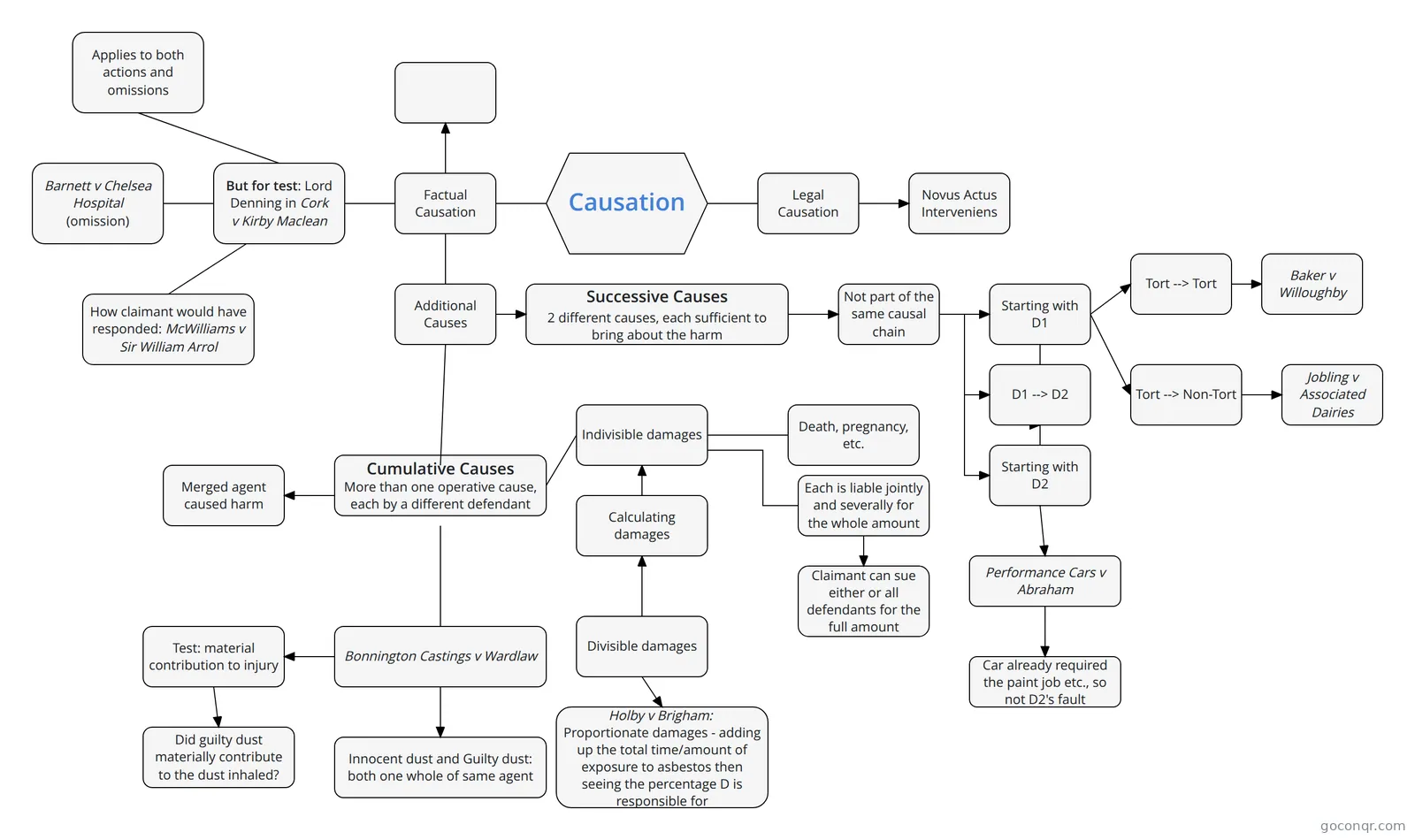
37 cardsTort - Causation What is factual causation?
-
Mind map Breach & Causation
-
Mind map Occupiers Liability
-
23 questionsVicarious Liability What is Vicarious Liability?
-
16 questionsTort Law L2/W2 DCFR ONLY In accordance with the DCFR, a person can cause legally relevant damage intentionally when:
-
12 questionsOccupiers' Liability Which Act covers duty owed to lawful visitors?
-
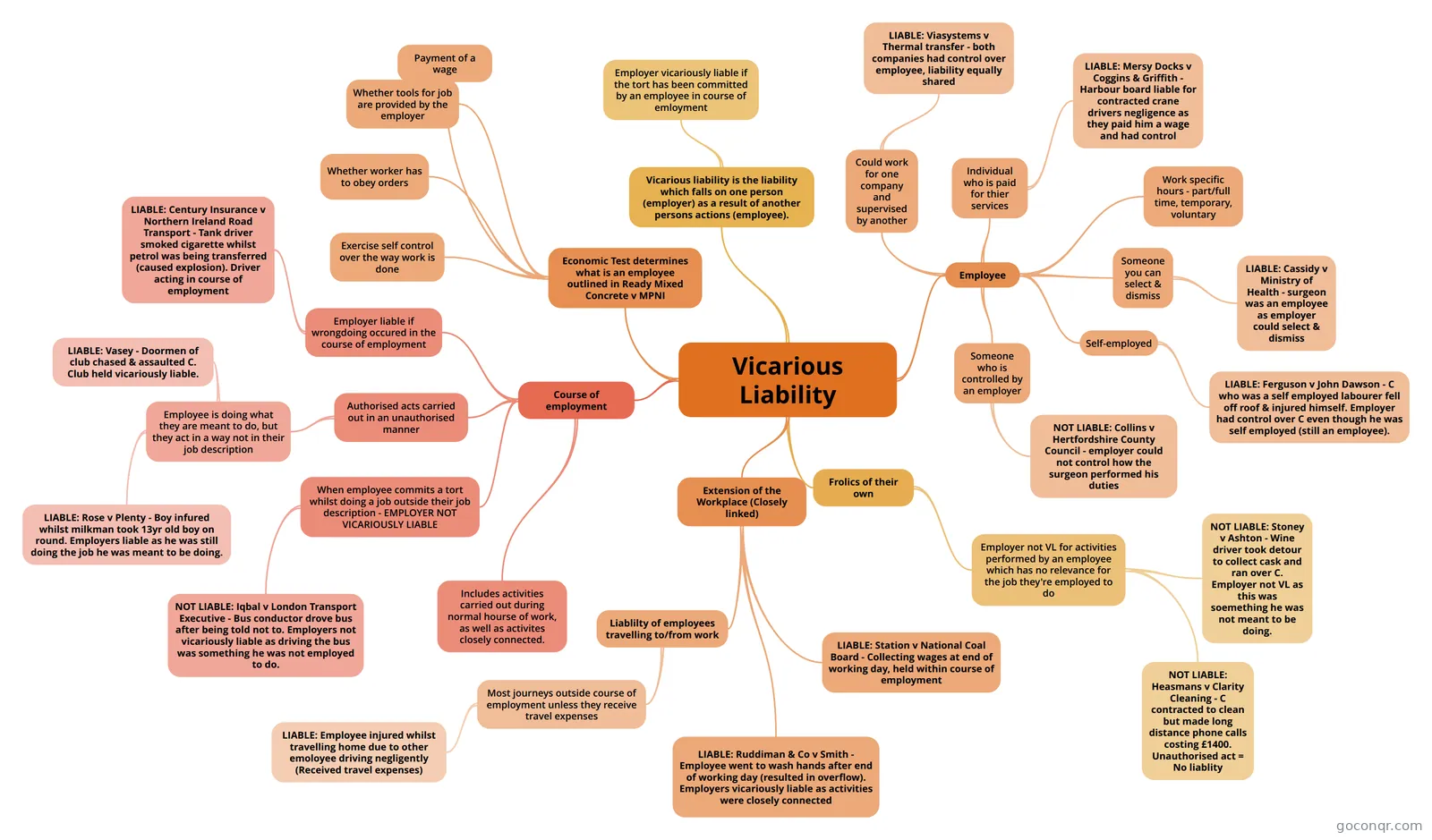 Mind map Vicarious Liability
Quizzes
See all 10 quizzes-
23 questionsVicarious Liability What is Vicarious Liability?
-
16 questionsTort Law L2/W2 DCFR ONLY In accordance with the DCFR, a person can cause legally relevant damage intentionally when:
-
12 questionsOccupiers' Liability Which Act covers duty owed to lawful visitors?
-
101 questionsQuiz T Quiz on Quiz T, created by V vv on 18/12/2018.
-
8 questionsNegligence Quiz Fill in the blanks quiz on negligence.
-
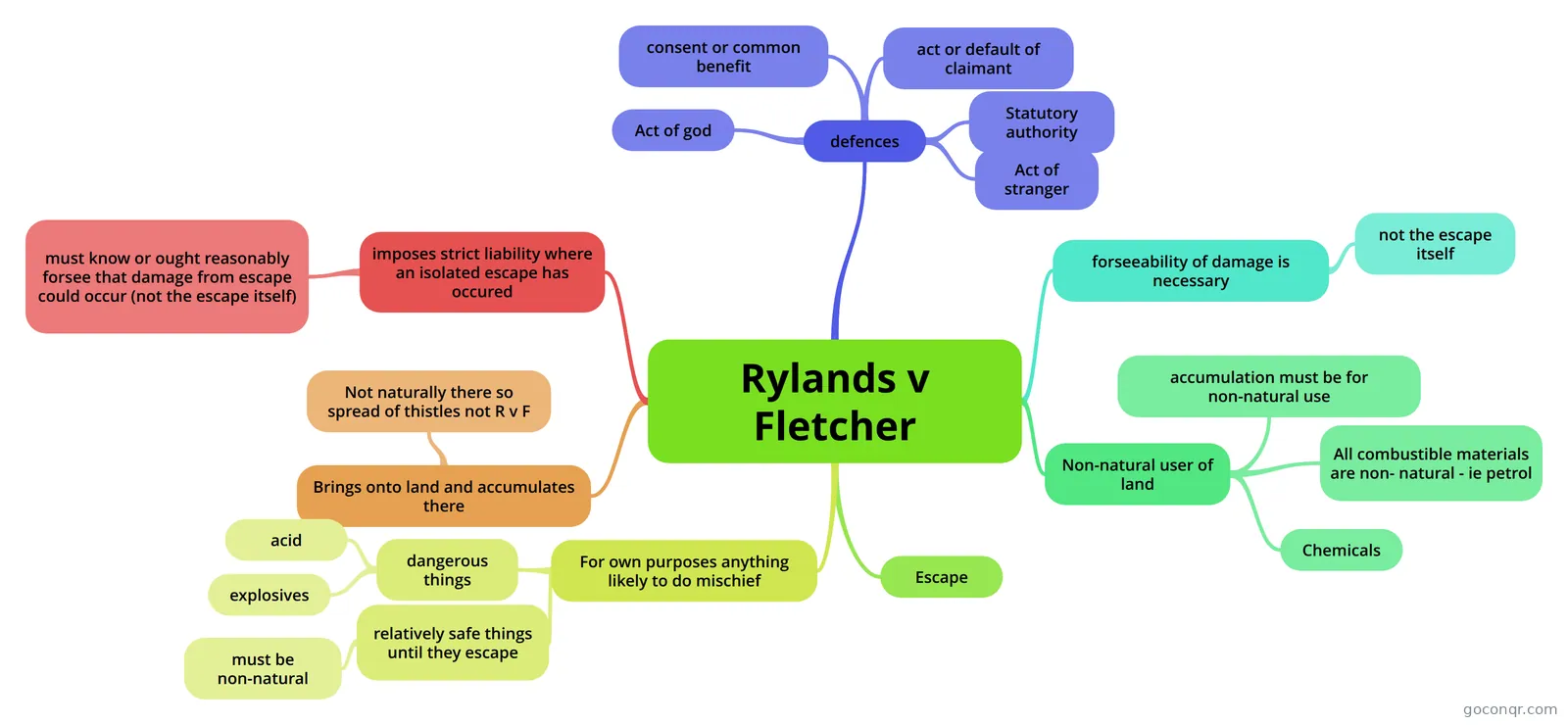
23 questionsRylands V Fletcher Give a definition of the rule in Rylands v Fletcher
-
4 questionstort law When another person injures you or someone you love, the conduct of the defendant falls into a category kno...
-
7 questionsCollocations - Negligence and Strict Liability
Mind maps
See all 37 mind maps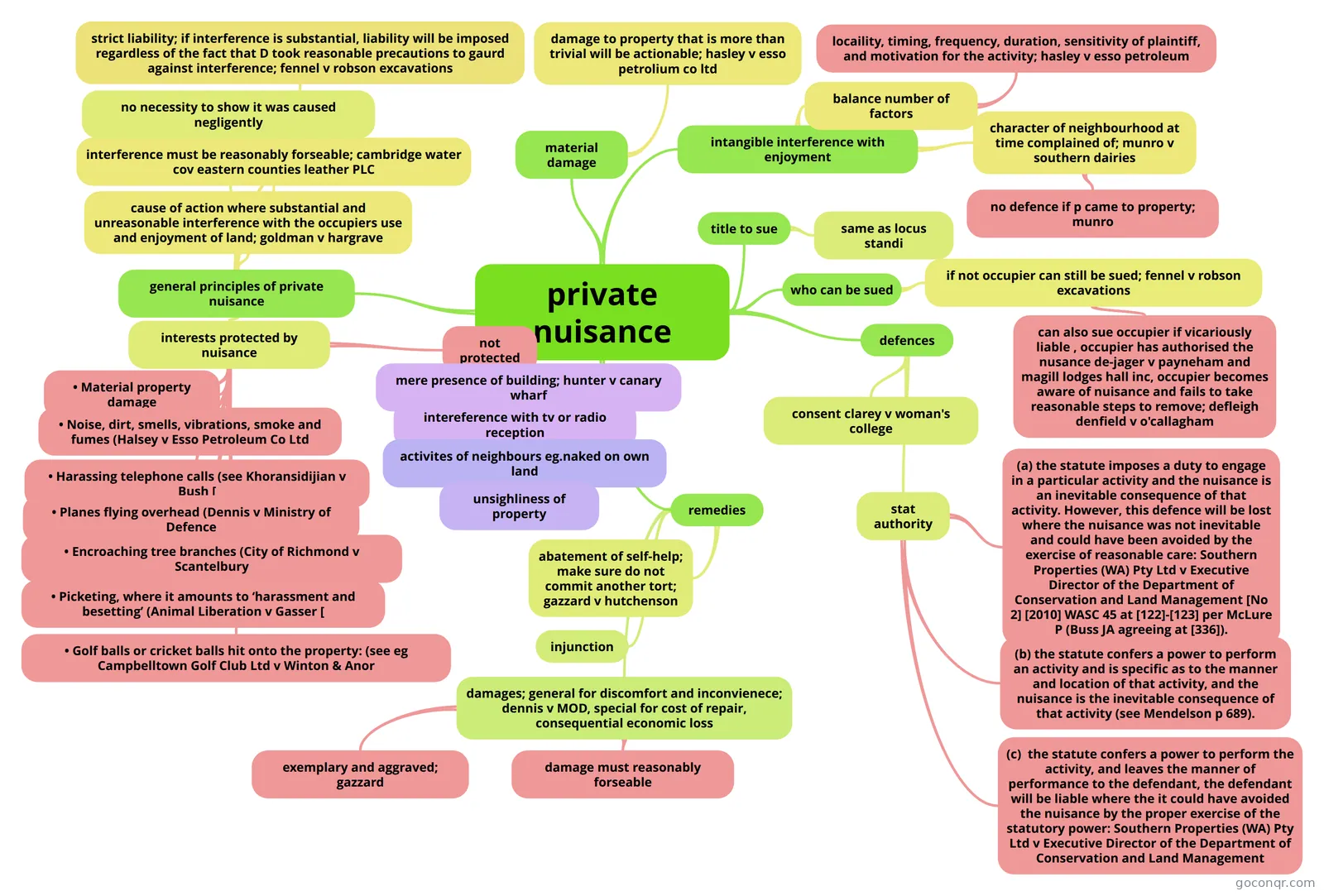

Flashcards
See all 34 flashcards-
22 cardsTrespass to the person Which are the torts of trespass to the person?
-
37 cardsTort - Causation What is factual causation?
-
190 cardsTORTS Establishing Tort Liability
-
66 cardsTort W4 - Remoteness, defences and damages Remoteness, defences and damages
-
38 cardsTort - Breach of Duty Workshop 2 Standard of care: general rule
-
31 cardsTort Workshop 3 - Causation 'But for' test
-
145 cardsRemedies What is the principle of mitigation
-
34 cards02: Tort law and professional liability A tort is a
Flowcharts
Notes
See all 12 notes-
Torts. I. INTENTIONAL TORTS. A. PRIMA FACIE CASE. To establish a prima facie case of intentional tort, plaintiff must prove: (1) act by defendant; (2) intent; and (3) cau...
-
Key Points: Tort Caparo Test: + Duty of Care 1) Harm to C was reasonably foreseeable - objective test - Easily satisfied (notwithstanding palsgraf and Bourhill) -reasonable...
-
Tort: Damages The indemnity principle · The object of an award of damages is to give the claimant full compensation for the damage, injury or loss that D’s tort has caused him. · ...
-
INJURIES TO SPECIFIC INTERESTS - created from Mind Map A. DELICTS AGAINST THE PERSON (1) ASSAULT (2) HARASSMENT (3) WRONGFUL DEPRIVATION OF LIBERTY A wrongful physical act directed against another with the intention of causing affront, insult or harm. (Bell Principles, § ...
-
LIABILITY - created from Mind Map
-
VICARIOUS LIABILITY - created from Mind Map Who is an Employee Control test Organisation or Integration Test Economic reality test Distinguishes between an employee and independent contractor on the basis of whether the employer had the right to control the wor...
-
Tort of Negligence - created from Mind Map Tort is used to protect those who do not have a contract 1. Defendant owes plaintiff a duty of care "Neighbourhood Principle" in Donohuge v Stevenson (1932) Ann's 2-Stage Test in Anns v Merton London Borough Council (...
-
Tort Law II Private Nuisance defendant unlawfully interferes with his use or enjoyment of his land plaintiff complains of an 'invasion' of his land resulting from activities committed on defendants land usually smell or noise rel...
Slides
More Civil law topics
About Tort Law: General Principles
GoConqr OriginalWhat this unit covers
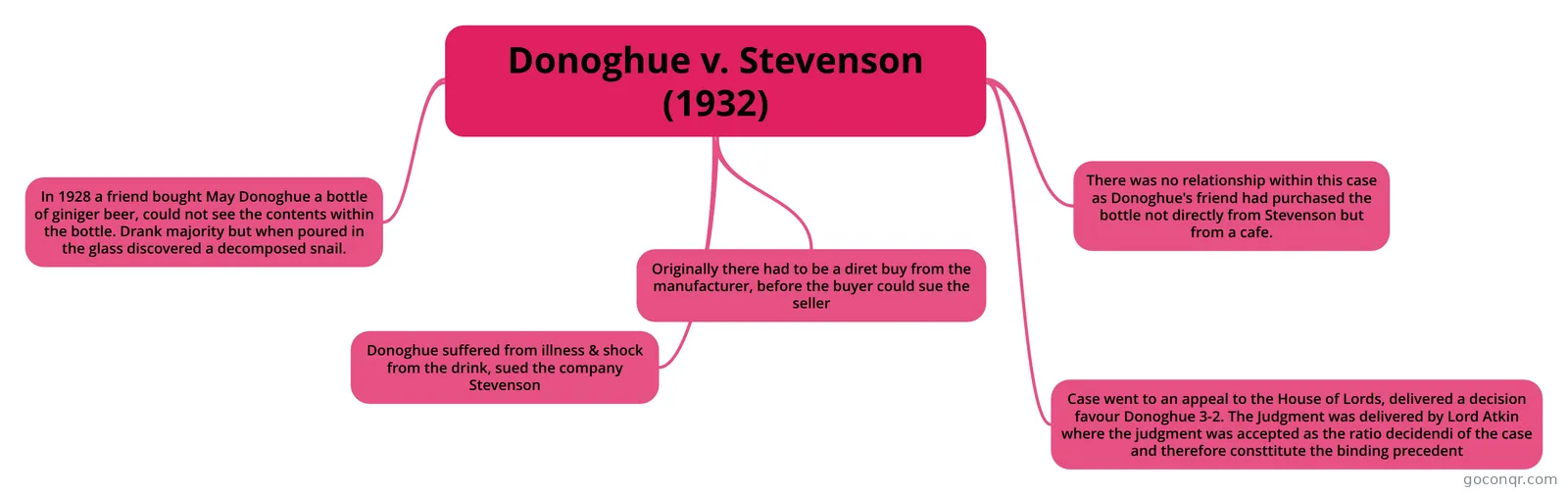
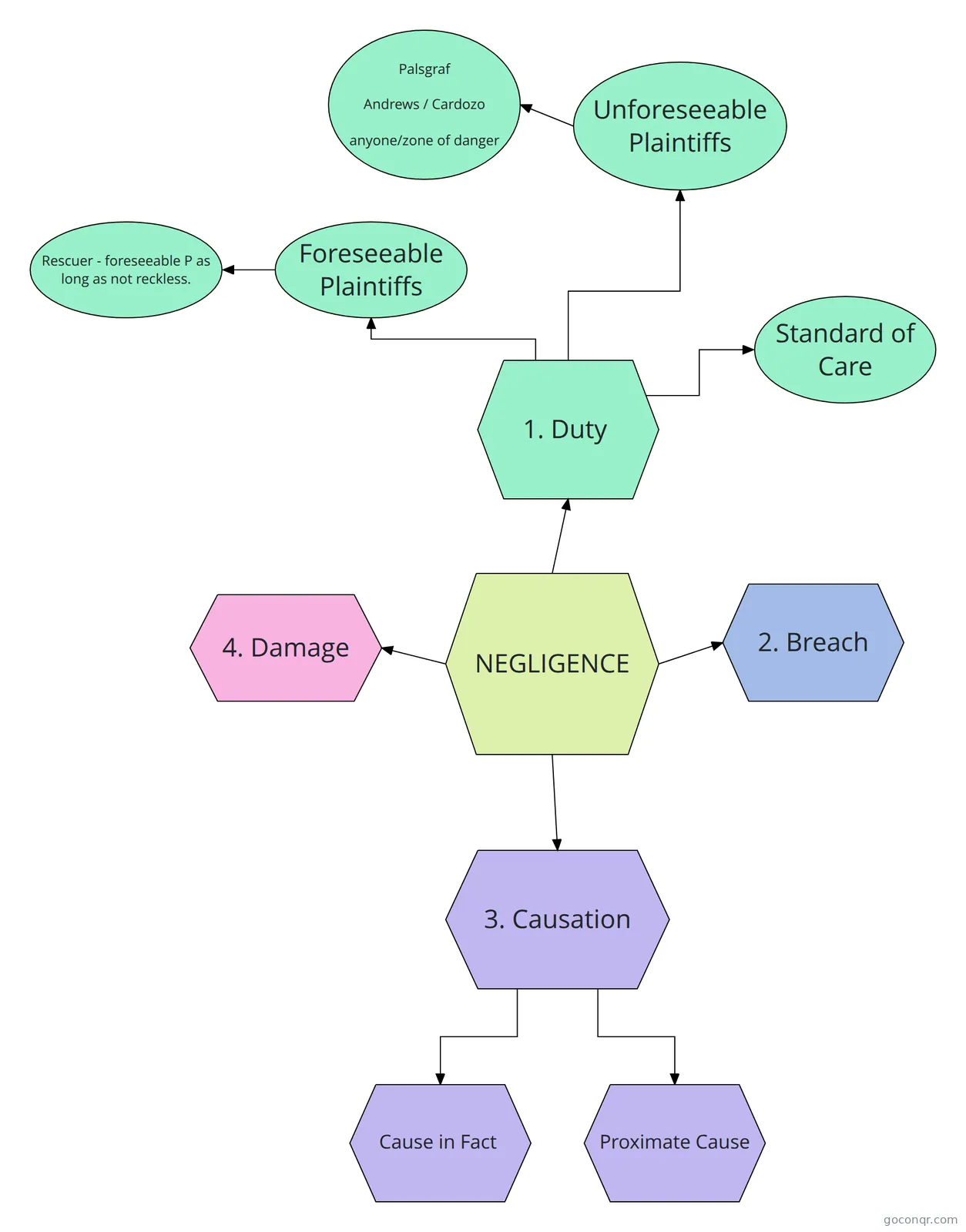
The unit brings together the building blocks of tort law. Negligence is the largest thread, with mind maps such as Duty of Care and Breach of Duty of Care, the Negligence Flow Chart and the Donoghue v. Stevenson (1932) map. Alongside it sit causation, remoteness, damages, vicarious liability and employers' liability.
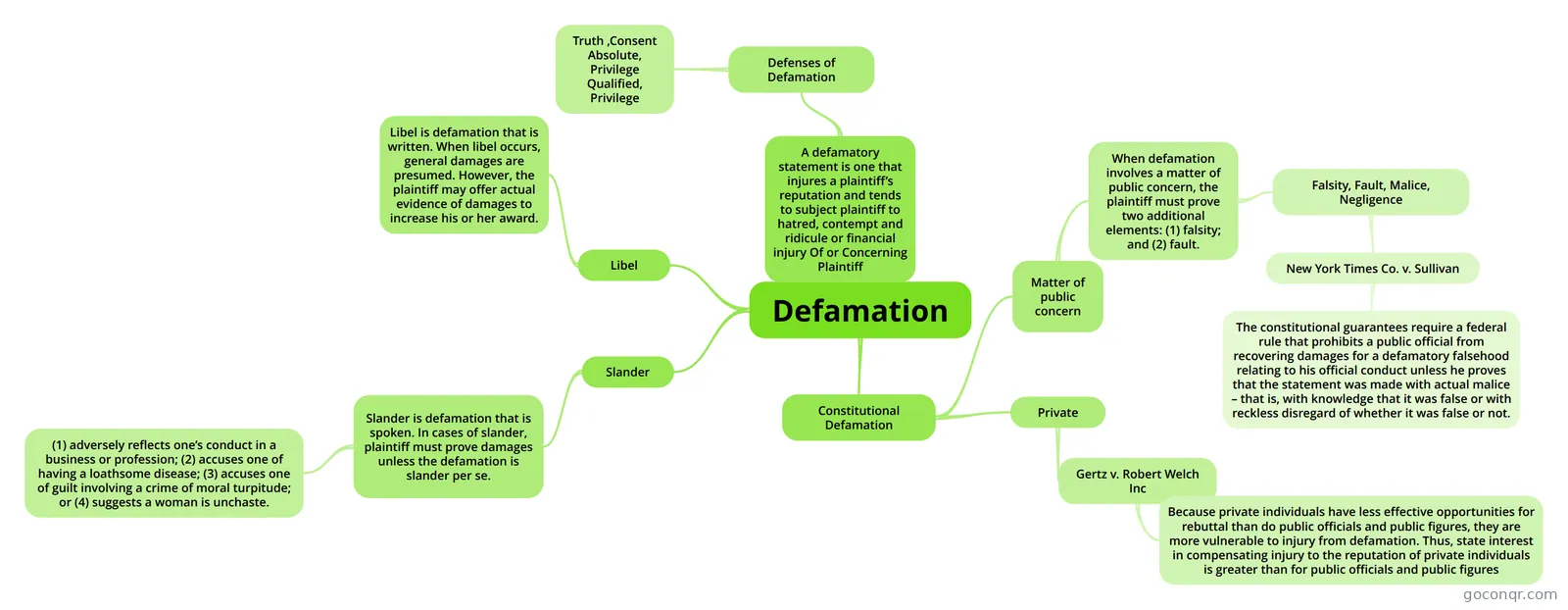
There is also material on land and property torts: Occupiers Liability, private nuisance and Rylands v Fletcher. Defamation, economic loss, psychiatric injury and wrongful interference with chattels are covered too.
Where to start
- Begin with the flashcard deck Trespass to the person for intentional torts, or the notes called Torts. for a prima facie case overview.
- Move to negligence: open the Law of Tort - General Negligence mind map, which sets out duty, breach and damage.
- Add causation with the Tort - Causation flashcards, which ask about factual and legal causation and the 'but for' test.
- Finish with land-based torts and vicarious liability.
Using quizzes and maps together
Read a mind map first to see how a topic fits together. Then take a quiz, such as the Vicarious Liability quiz, Negligence Quiz or Causation and Remoteness, to see what you actually remember. Return to the map for any gap, and use flashcards for case names and tests.
The resources come from many courses, so you will see exams such as the NY bar exam and the SQE mentioned. Check that the wording matches your own jurisdiction before relying on it.
Where it sits
This unit belongs to the Tort and Delict strand within Civil law. It works as the general-principles starting point for that strand.
Choose one topic today, open a map or a quiz, and see what you already know.
Frequently asked questions
Which resource should I open first?
For intentional torts, start with the Trespass to the person flashcard deck. For negligence, the Law of Tort - General Negligence mind map explains duty, breach and damage in one place. Then test yourself with the Negligence Quiz before moving on to causation and remoteness.
What do the mind maps cover?
There are over 460 mind maps. They cover negligence, duty of care, breach, causation, occupiers' liability, nuisance, Rylands v Fletcher, vicarious liability, defamation, economic loss and psychiatric injury. Some are case-based, such as the Donoghue v. Stevenson (1932) map.
Are the resources free to use?
Yes. Every resource listed here is free to open, study and take, with no account needed. A free account also saves your quiz scores and lets you make your own quizzes, mind maps, flashcards and notes.
Who made these resources?
They were made by GoConqr users, not by GoConqr itself. Over 480 contributors have added quizzes, notes, maps and flashcards, so styles and depth vary. It is worth comparing a couple of resources on the same topic.
Which exams and levels do they suit?
Most resources are aimed at university study, with some for professional candidates. Some mention the NY bar exam or the SQE. Because jurisdictions differ, check each resource against your own syllabus or course materials.
What if I cannot find my topic?
Try a related title first, since topics overlap, for example causation sits inside negligence resources. If a gap remains, make your own quiz, mind map, flashcards or notes and use them for revision.