
Relational Model, Relational Algebra and Normalization mind maps
32 mind maps by 28 users
This page gathers more than 30 mind maps on relational database concepts, keys and normalisation. Most are suited to university students, with some for school students; teachers can also find material to support revision. Explore the maps to practise database terminology and review normalisation steps. Pick a map to start.
Mind maps
-
First Normal Form (1FN) Mapa mental Primera Forma Normal(Normalización).
-
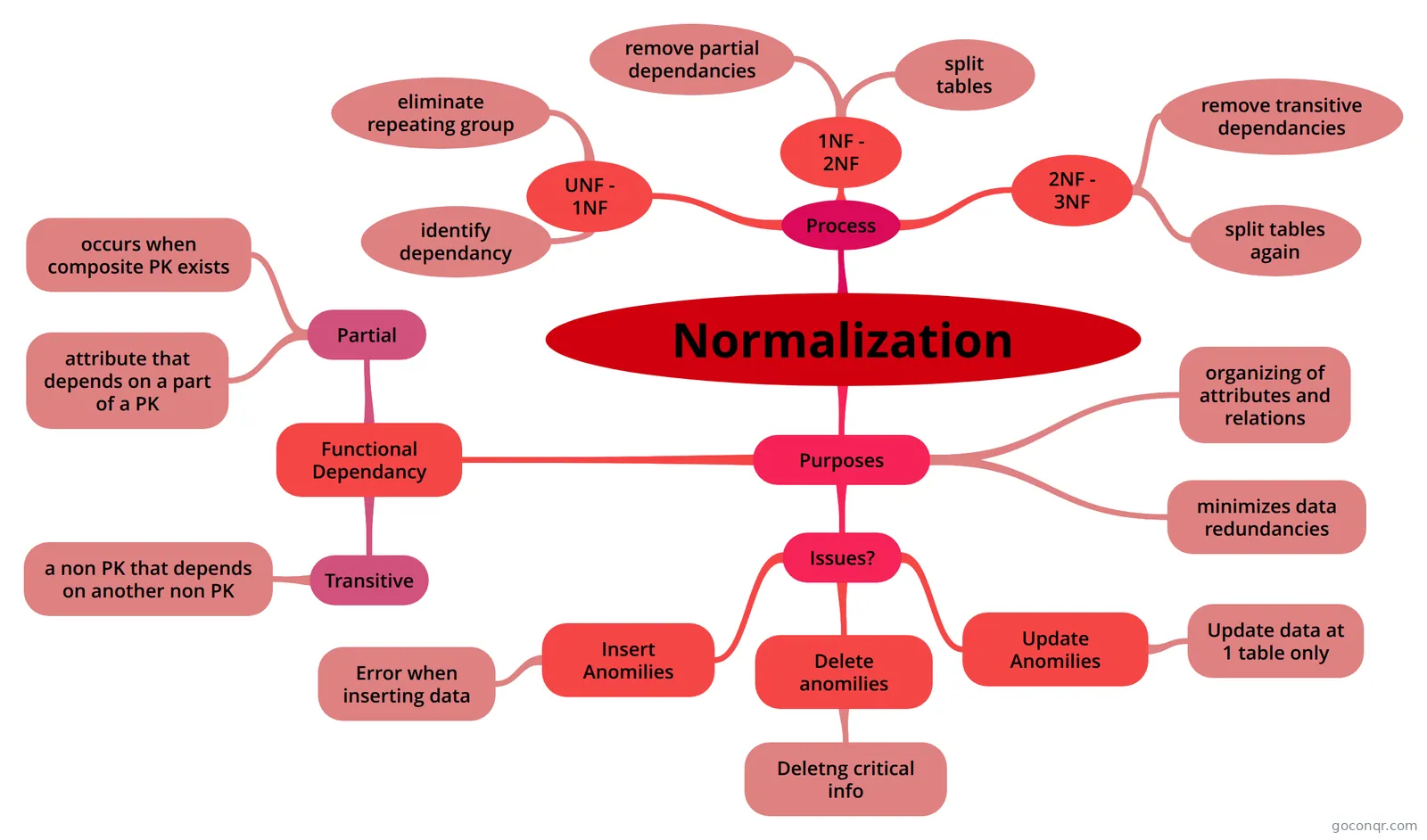 Normalization
-
Database Systems
-
Chapter 5- Relational Databases
-
Unit 5 - Relational database concepts
-
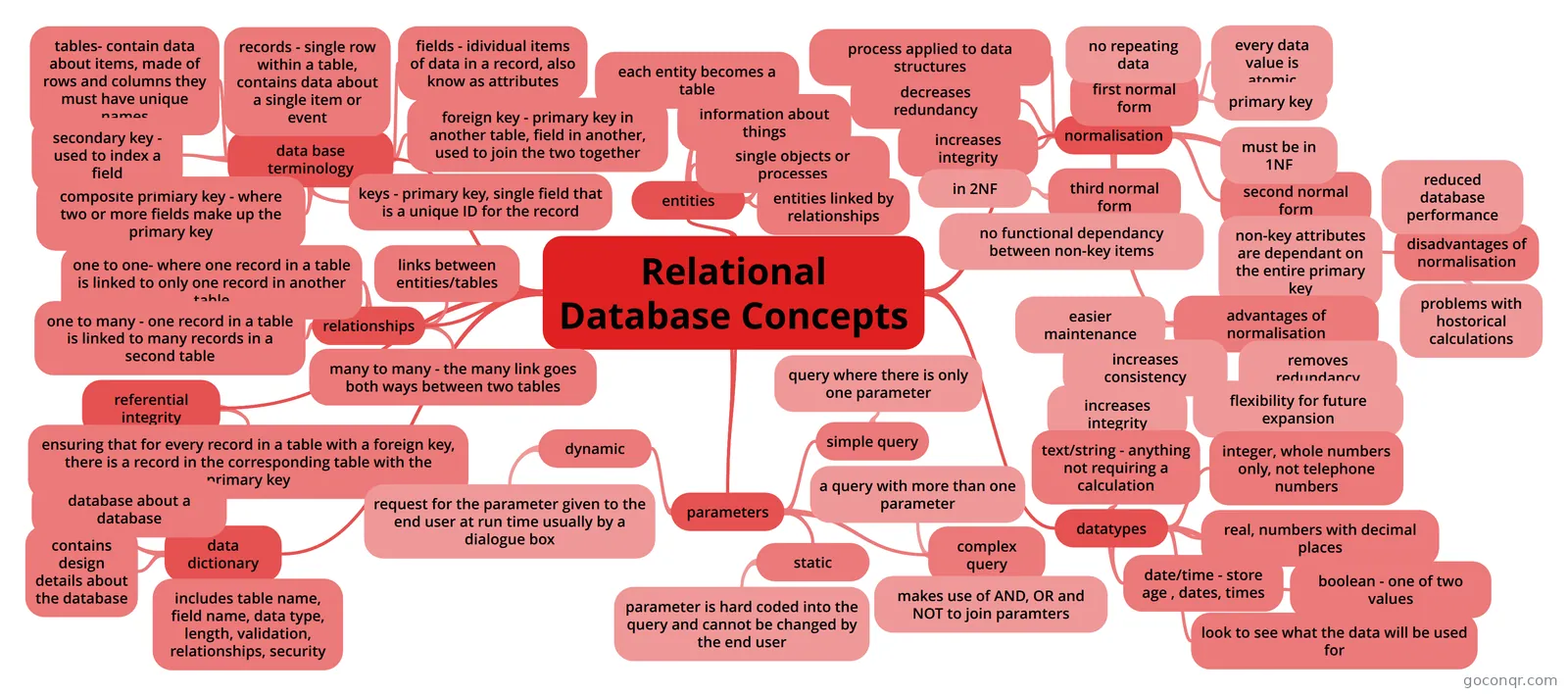 Relational Database Concepts
-
Chapter 16 - Relational Databases
-
The Relational Model
-
Normalisation - Advantages and Disadvantages
-
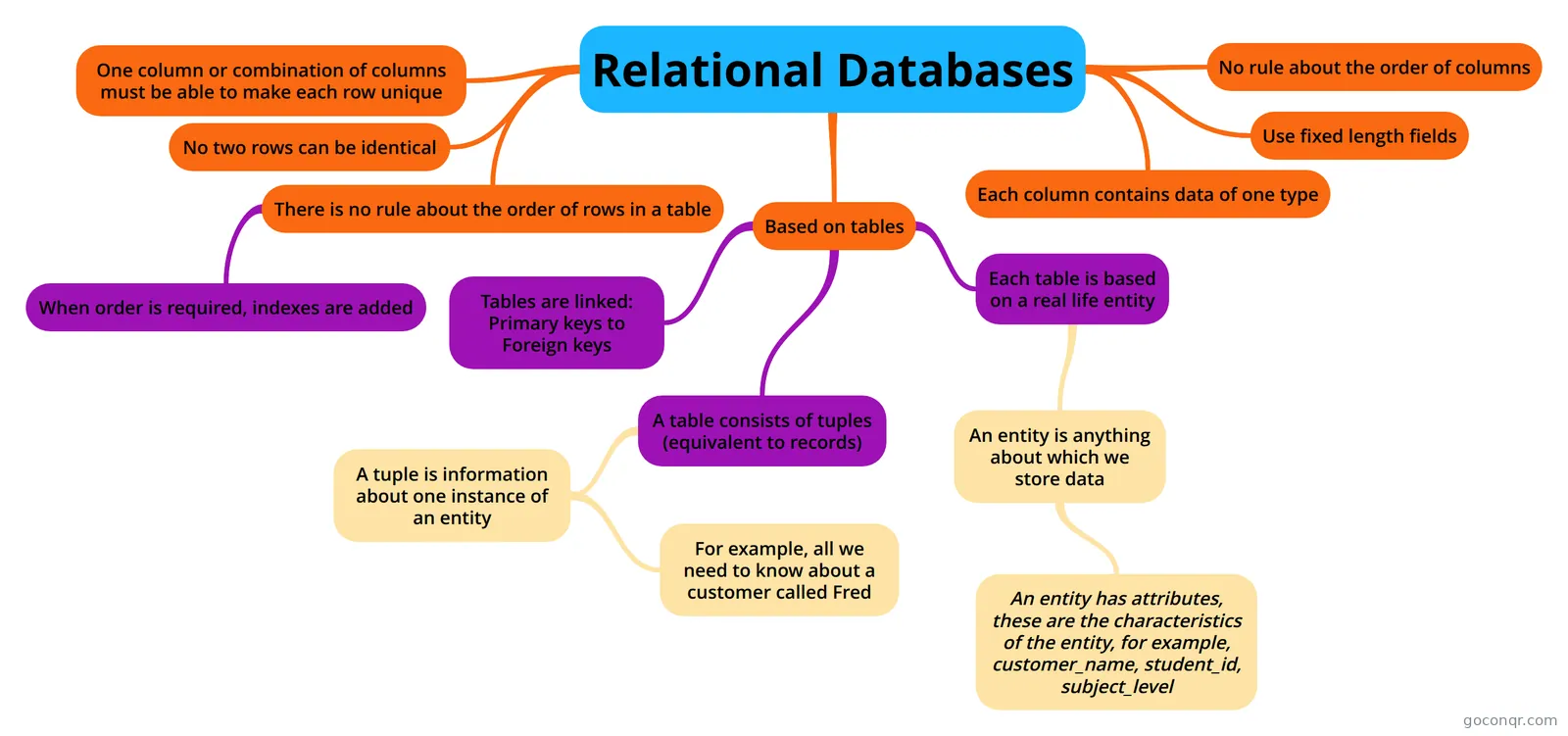 Relational Databases
-
Database Design
-
DB Codd Rules
-
Relational DBs
-
Relational Databases A Mind Map containing a compacted verion of everything you need to know for relationa database.
-
Third normal form
-
Relation DB Model
-
1_DATABA NORMALIZATION
-
SECOND NORMAL FORM
-
5. Examine the example
-
Database Relational Model
-
Conceptual Database
-
DB Relational Model
-
SQL Based Relational Database Application
-
4.10.1 & 4.10.2 Entity relationship modelling and relational databases
-
Primary and foreign keys
-
Database terms
-
Rules of Normalisation
-
Chapter 3 - Relational Model & Normalisation
-
Benefits of Normalisation
-
Relational Scheme
-
Relational Databases
-
Relational Model.
More Relational Model, Relational Algebra and Normalization resources
About relational model, relational algebra and normalization mind maps
GoConqr OriginalRelational model, relational algebra and normalization mind maps
These mind maps cover relational database terminology, database design, keys and normalisation. Relational Database Concepts is a useful starting point if you want to review tables and records. Its branches group the terms together, so you can follow the connections as you read.
For a narrower topic, try Primary and foreign keys or Database Design. The design map includes attributes, associations and multiplicity. You can compare its branches with the terms in a database concepts map.
Using the maps to revise
Move on to First Normal Form (1FN) for steps such as removing repeating groups and separating related data into tables. The Normalization map brings together purposes and possible anomalies.
After reading a branch, cover it and explain the idea in your own words. Return to the map to check what you missed. If you want a different way to recall terms or check your understanding, switch to flashcards or a quiz on the unit page. Choose a branch and give it a try.
Frequently asked questions
Which mind map should I start with?
Start with Relational Database Concepts if you want an overview of database terminology. It groups ideas such as tables and records into branches. If you are already comfortable with those terms, First Normal Form (1FN) offers a more focused look at the steps for organising related data.
What do the mind maps cover?
The maps cover relational database concepts, database design, primary and foreign keys, and normalisation. Some focus on individual areas: Database Design includes attributes and associations, while Normalization brings together purposes and anomalies. You can select a map that matches the part of the unit you want to revisit.
Who are these maps for?
Most of the resources are suited to university students, with some for school students. Teachers can also use the maps as material for revision. Students can review database terms, explore connections between ideas or follow the steps shown in the map on first normal form.
Are the mind maps free to use?
Yes. Every resource listed here is free to open and study without an account. The maps were made by GoConqr users. A free account also lets you make your own mind maps, quizzes, flashcards and notes, and save your quiz scores.