
Statutory Interpretation mind maps
97 mind maps by 62 users · Page 1 of 3
This GoConqr page gathers statutory interpretation mind maps on the literal rule, the purposive approach, rules of language and aids to interpretation. It is for school students, university students and professional candidates practising interpretation, as well as teachers looking for teaching material. There are over 90 maps made by more than 60 users. Choose a map to begin.
Mind maps
-
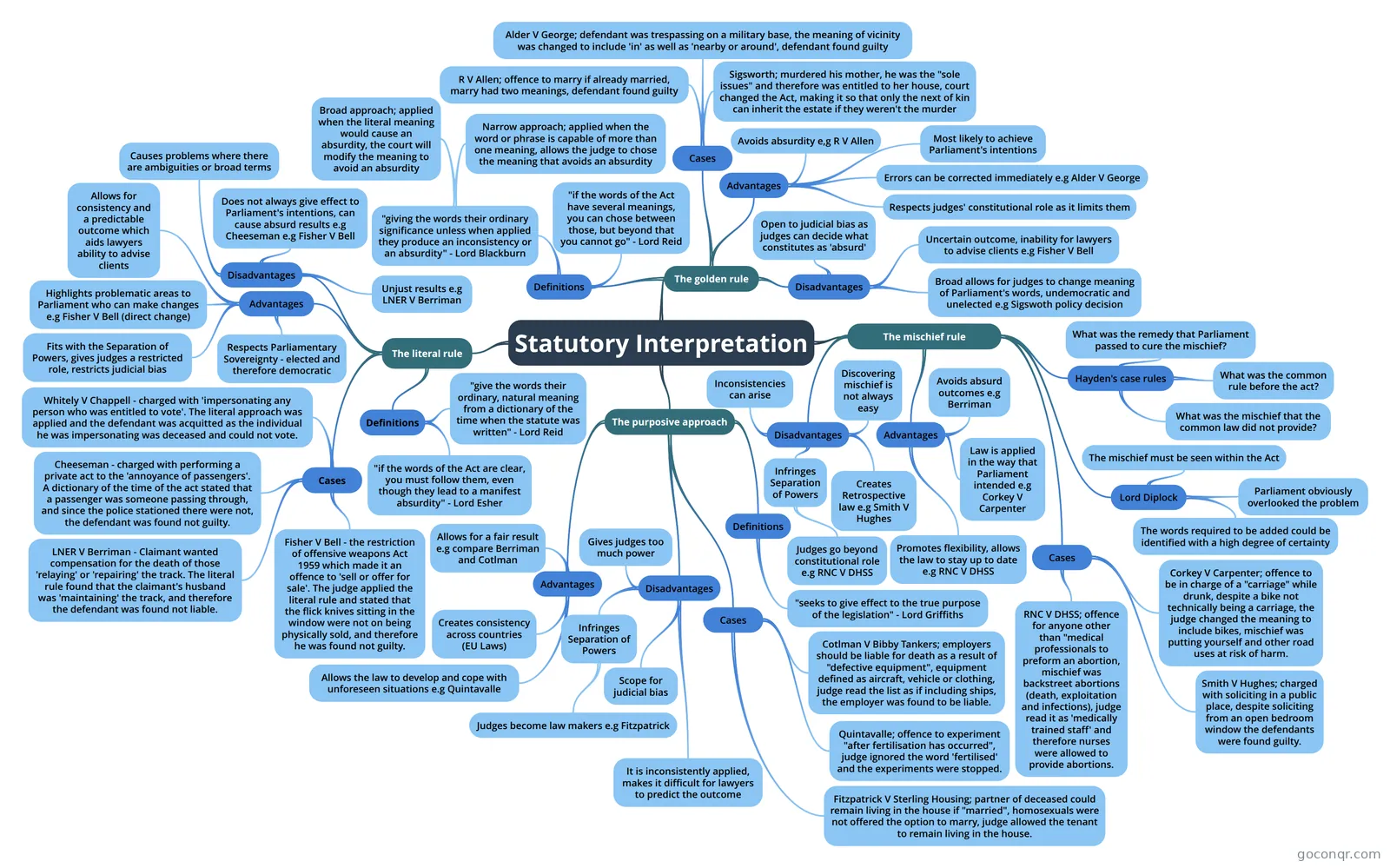 Statutory Interpretation covers the four ways of interpreting statutes
-
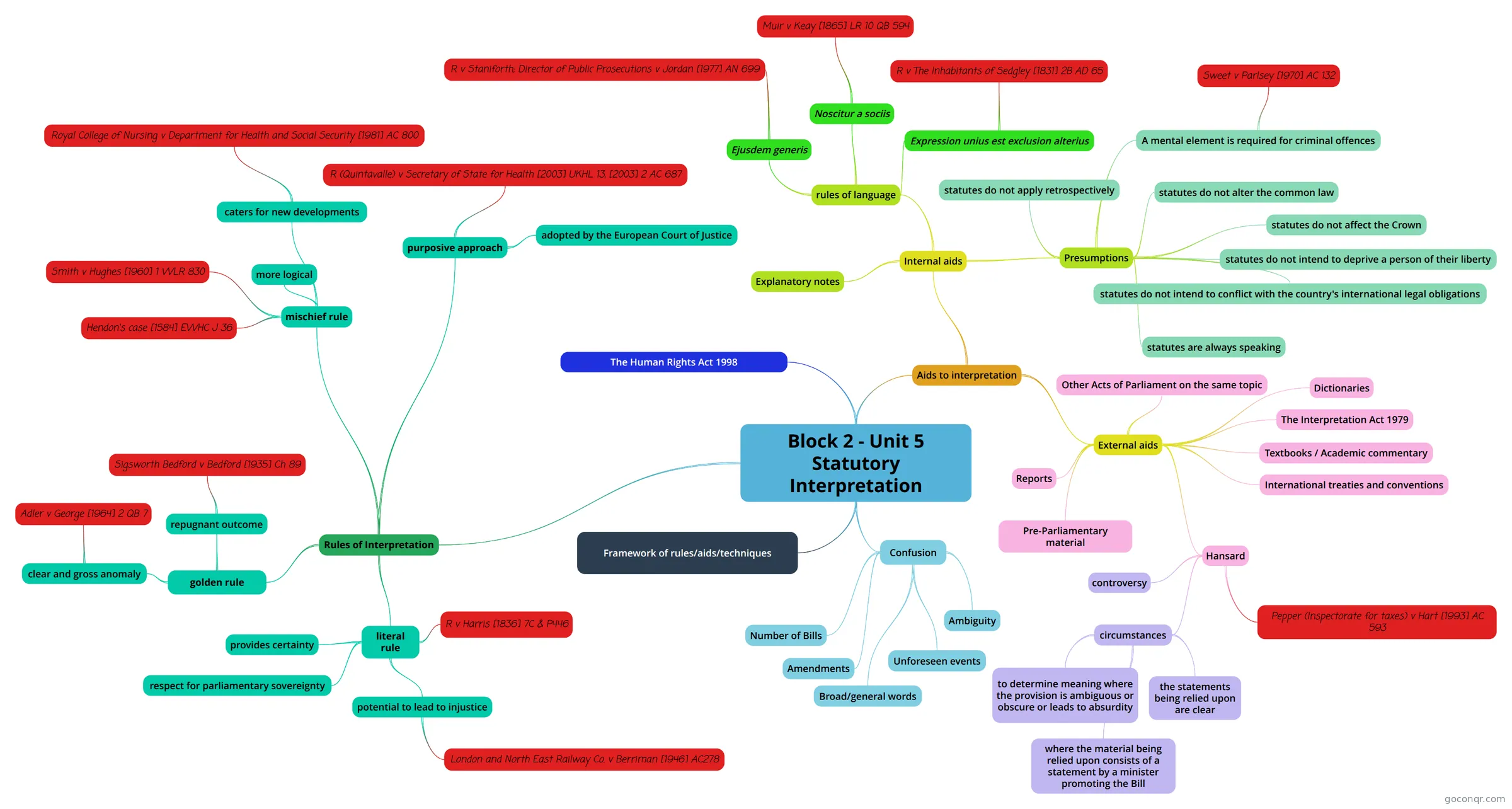 Block 2 - Unit 5 Statutory Interpretation
-
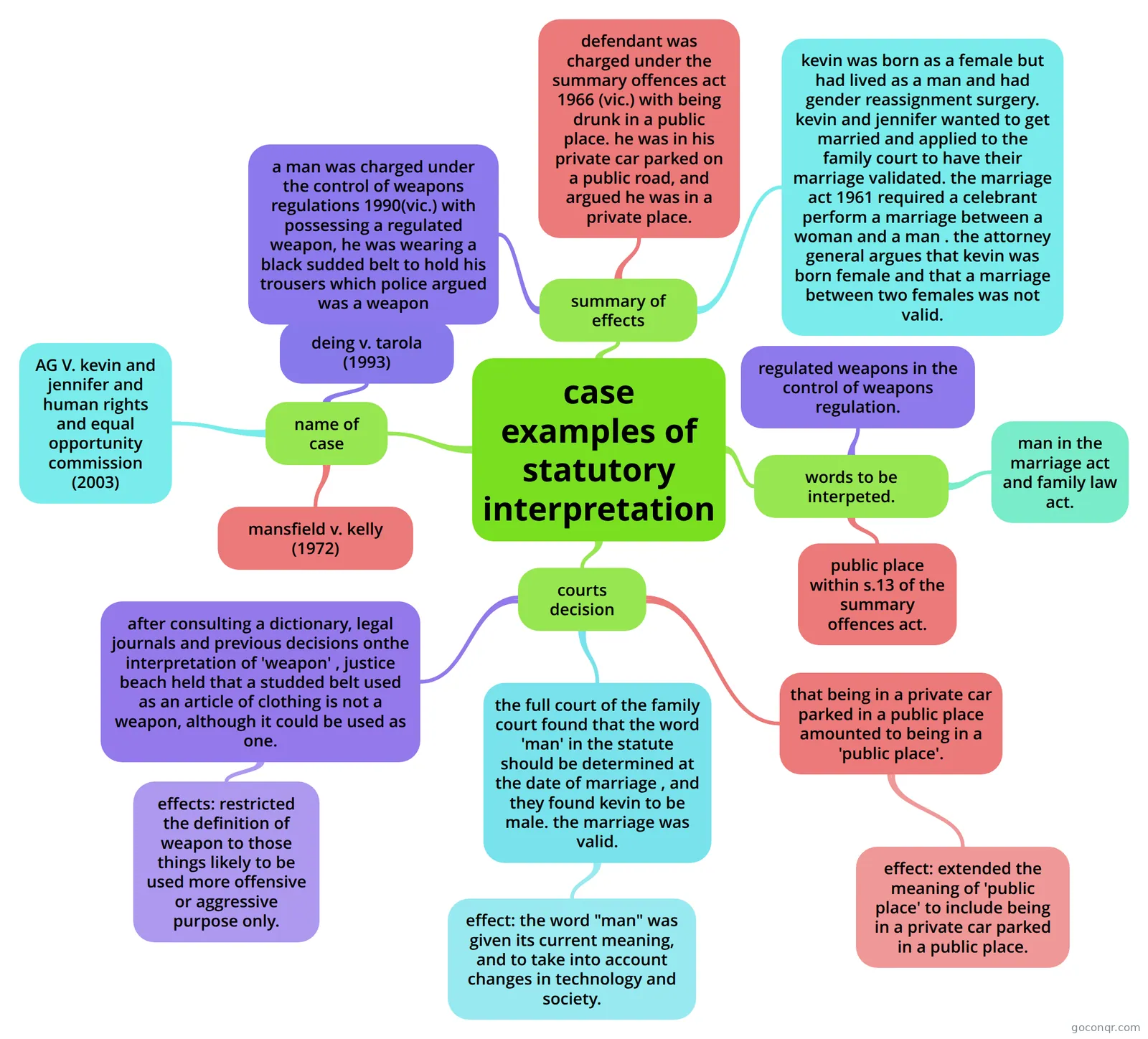 case examples of statutory interpretation
-
Statutory Interpretation
-
Block 2 - Unit 5 Statutory Interpretation
-
Statutory Interpretation
-
Statutory Interpretation
-
Statutory Interpretation 2 -
-
Statutory Interpetation
-
Law 01
-
Statutory Interpretation Pt 2- Mischief Rule and Purposive Approach
-
Statutory Interpretation
-
Enter text here
-
Rules of Interpretation
-
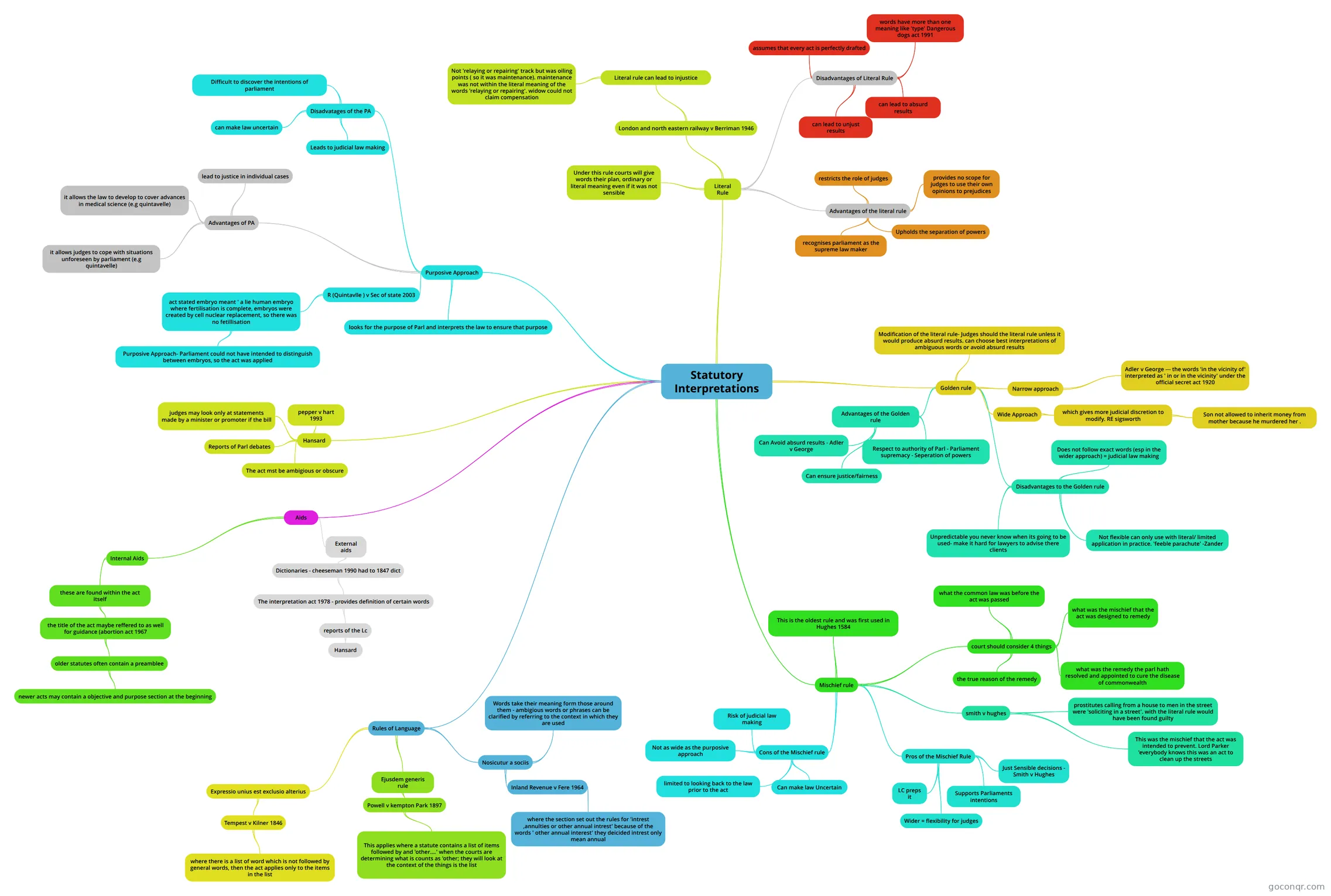 Statutory Interpretations
-
Statutory Interpretation Pt 3- Intrinsic and Extrinsic Aids
-
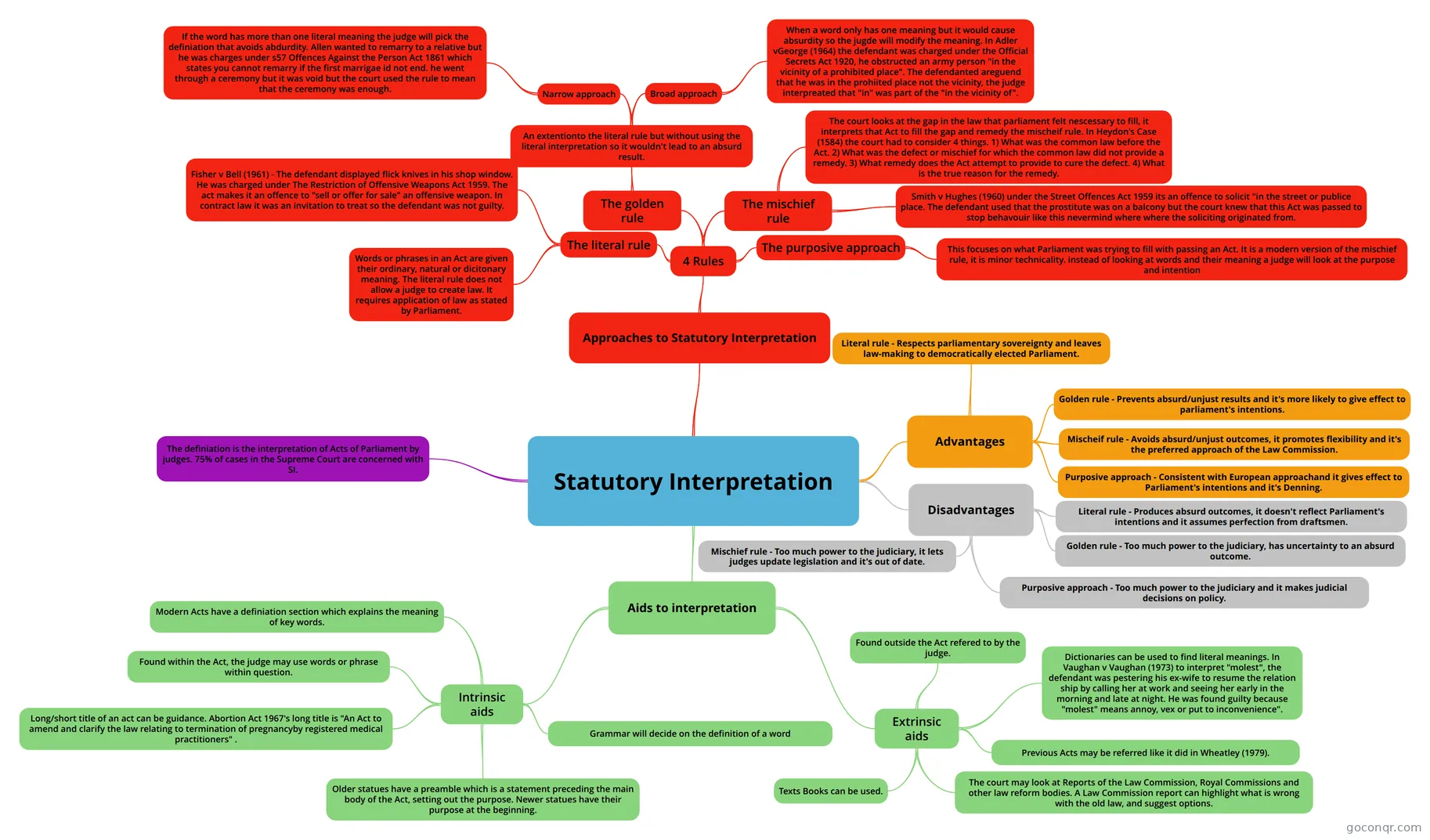 Statutory Interpretation
-
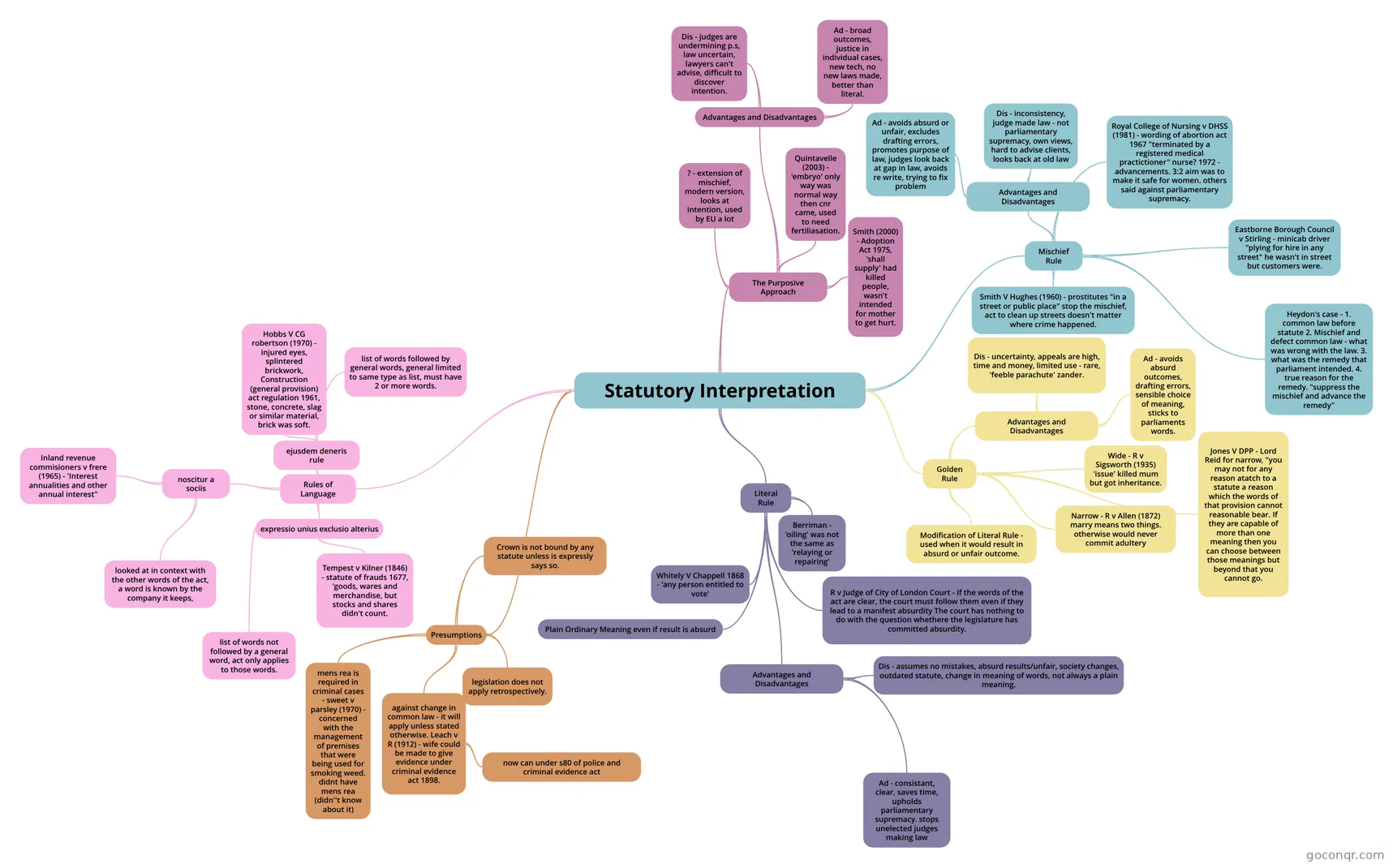 Statutory Interpretation
-
statutory interpretation
-
Statutory Interpretation Pt 1- Literal and Golden Rules
-
Law Making and the Legal System
-
Statutory Interpretation SI Literal, Golden, Mischief, Purposive, Intrinsic/Extrinsic aids
-
Describe the golden rule of statutory interpretation (with ad's and disad's)
-
Describe the mischief rule of statutory interpretation (with ads and disads)
-
Describe the purposive with (ads and disads)
-
English legal system and law making
-
Golden Rule
-
Statutory Interpretation
-
Adv and Dis for Statutory Interpretation
-
Purposive Approach
-
Statutory Interpretation Cases
-
statutory interpretation
-
Literal Rule
-
Statutory interpretation
-
Describe the literal rule of (approach to) statutory interpretation which helps judges to interpret
-
Mischief Rule
-
Statutory Interpretation_2
-
Statutory Interpretation_3
-
Statutory Interpretation Statutory Interpretation or Interpretation of Statutes Mind map with examples, cases & instances from UK
-
Presumptions
More Statutory Interpretation resources
About statutory interpretation mind maps
GoConqr OriginalUsing statutory interpretation mind maps
The maps on this page organise interpretation topics into branches, from the literal, golden and mischief rules to the purposive approach. Some bring several topics together, while others focus on a single rule, an aid or its advantages and disadvantages.
For a broad starting point, look for the Statutory Interpretation map that includes rules, aids and presumptions. Its branches give you a way to see those topics together before moving to a narrower map such as Literal Rule. The maps titled Internal aids and External aids offer separate starting points for those topics.
Revise with a map
Follow the branches of one map, then cover them and try to recall the main points. Compare what you remember with the map before moving to another topic. When you want to check your recall in a different way, the unit page also has quizzes and flashcards. Pick a map and trace its branches at your own pace.
Frequently asked questions
Which mind map should I start with?
A broad map is a useful first choice. Look for the Statutory Interpretation map with branches for rules of construction, the purposive approach, rules of language and aids. Once you have explored those branches, a focused map such as Literal Rule can help you revisit one topic.
What do the mind maps cover?
The maps cover the literal, golden and mischief rules, the purposive approach, rules of language, presumptions and aids to interpretation. Some also bring together case examples or advantages and disadvantages. You can choose a broad overview or a map centred on one of these topics.
Are the mind maps free to use?
Yes. Every resource listed on this page is free to open and study without an account. The maps were made by GoConqr users. A free account also lets you save quiz scores and make your own quizzes, mind maps, flashcards and notes.