
Statutory Interpretation
196 resources created by 109 users
This Statutory Interpretation page on GoConqr gathers community-made flashcards, mind maps, quizzes, notes and slide sets on the literal, golden and mischief rules, the purposive approach, rules of language, and internal and external aids. It's built for school students revising a topic, university students and professional candidates filling gaps, and teachers after ready-made material. There are over 190 resources here, including more than 18 quizzes, over 90 mind maps and over 70 flashcard decks. Try a quiz to find your gaps, then build your own revision.
Top Statutory Interpretation resources
-
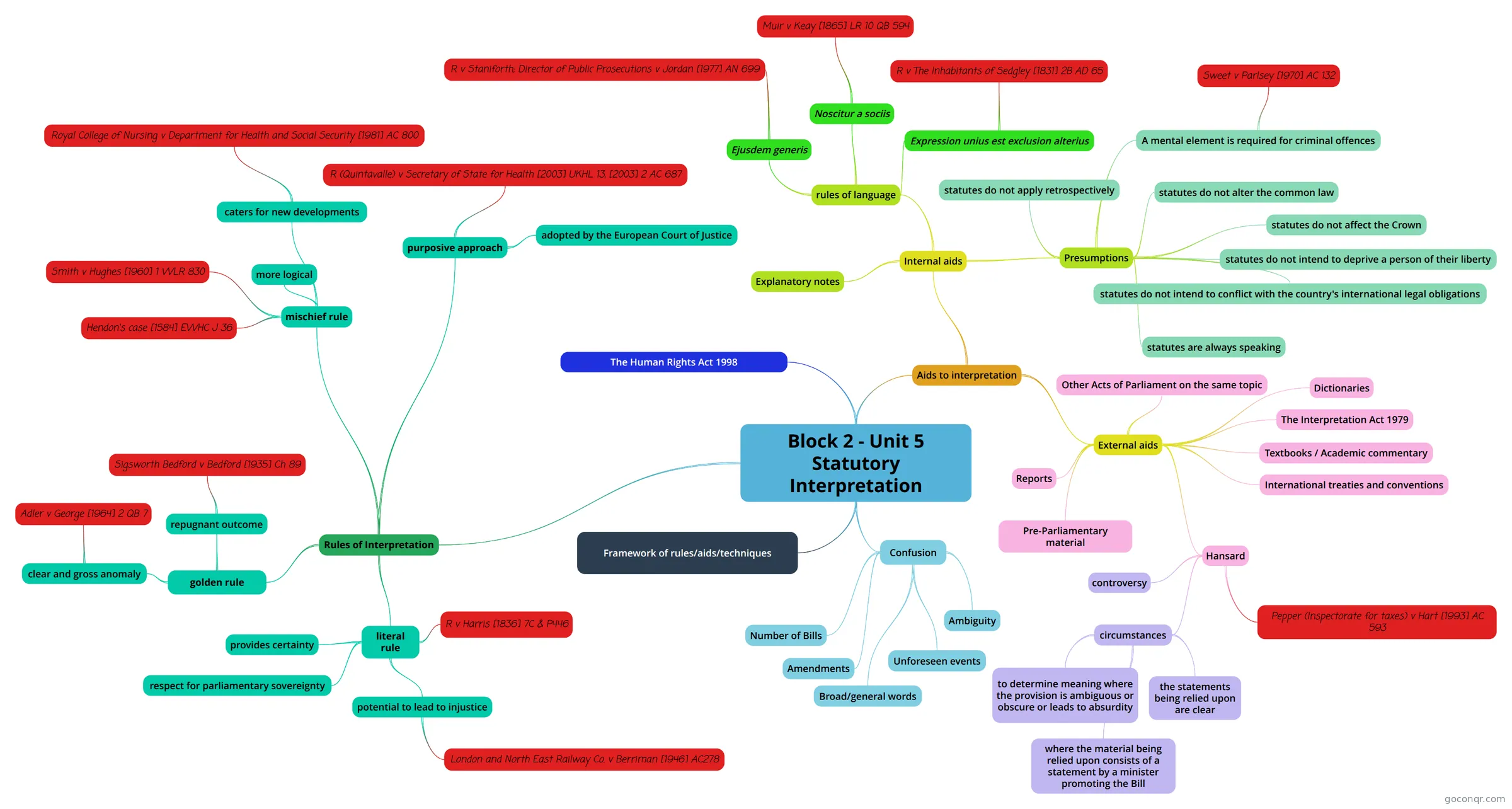 Mind map Block 2 - Unit 5 Statutory Interpretation
-
21 cardsStatutory Interpretation Key Cases Brock v DPP 1993
-
18 cardsImportant cases - statutory interpretation (Scottish legal system) Pepper v Heart (1993) AC
-
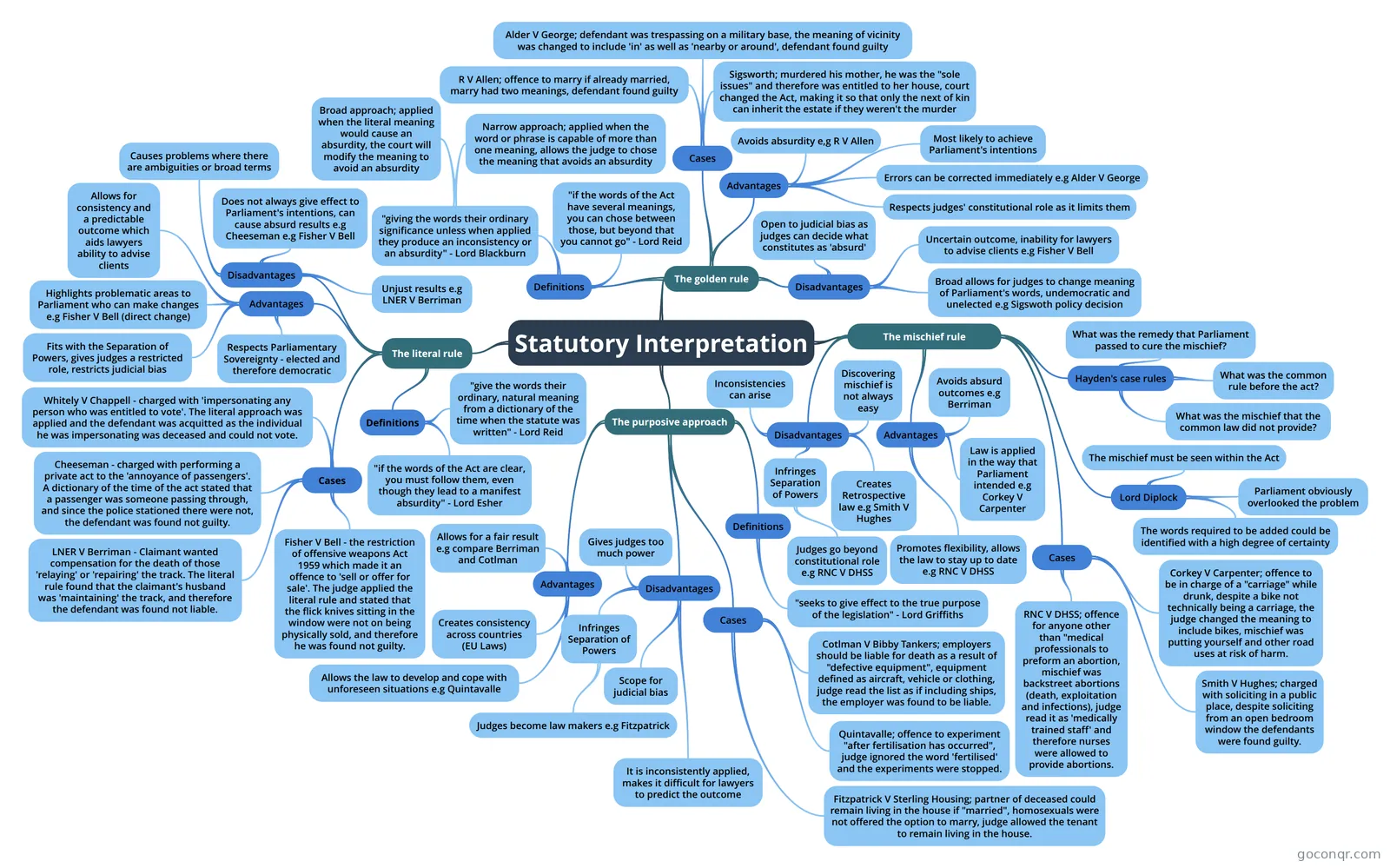 Mind map Statutory Interpretation covers the four ways of interpreting statutes
-
9 cardsThe Mischief Rule What is the mischief rule?
-
10 cardsLiteral Rule What is the Literal Rule?
-
8 cardsRules of Language What does 'the euisdem generis rule' mean?
-
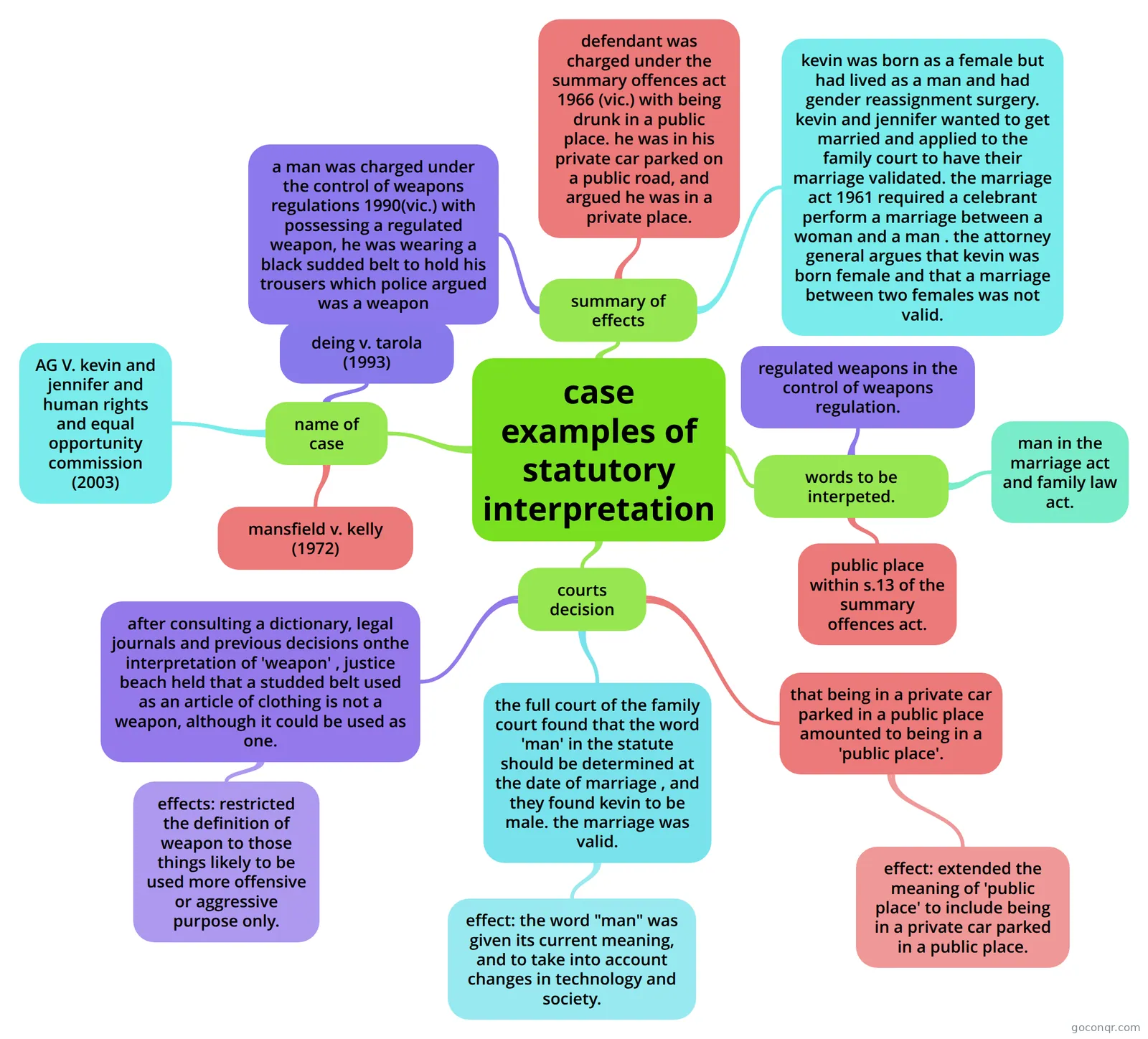 Mind map case examples of statutory interpretation
Quizzes
See all 18 quizzesMind maps
See all 97 mind maps-
Block 2 - Unit 5 Statutory Interpretation
-
Statutory Interpretation covers the four ways of interpreting statutes
-
case examples of statutory interpretation
-
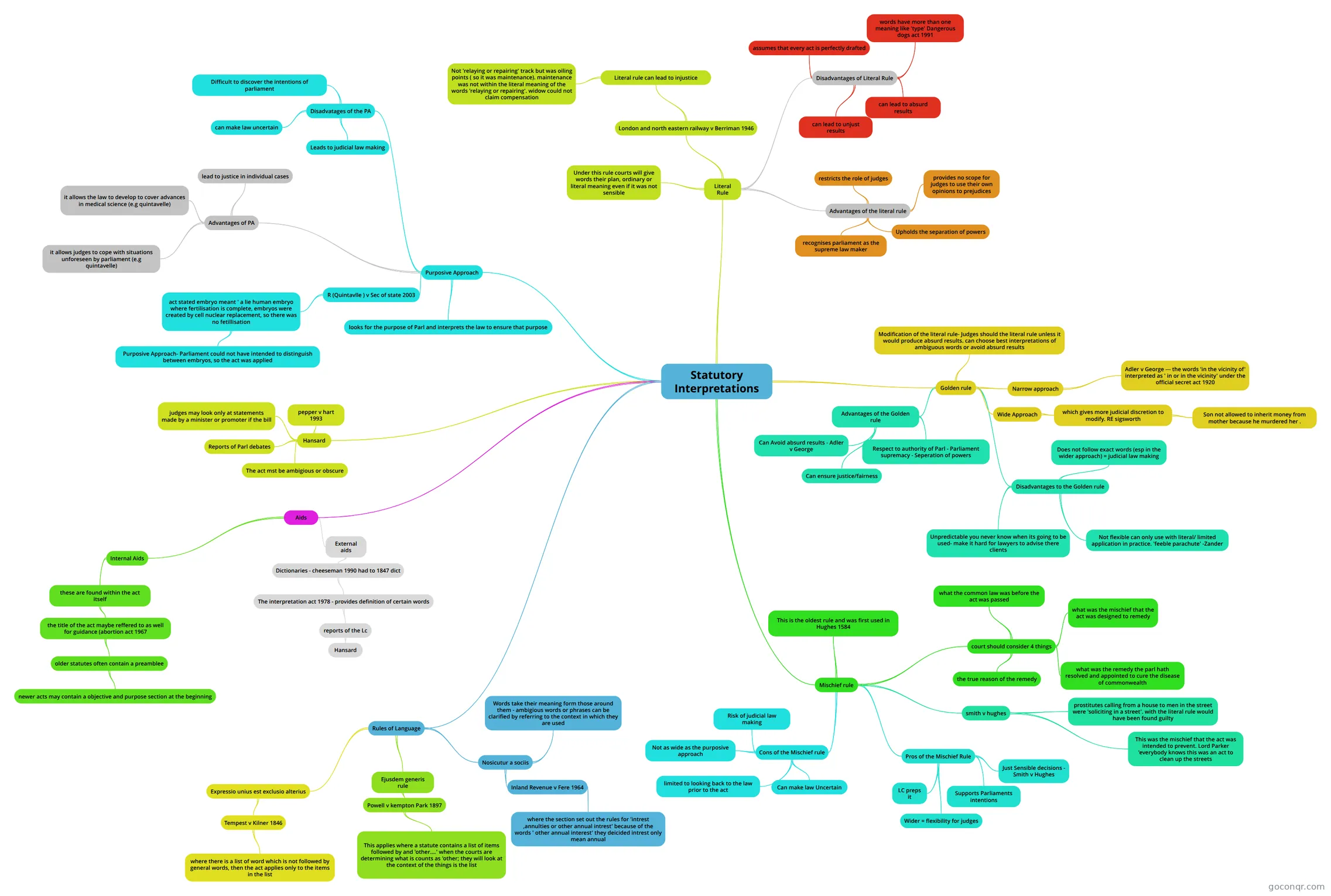 Statutory Interpretations
-
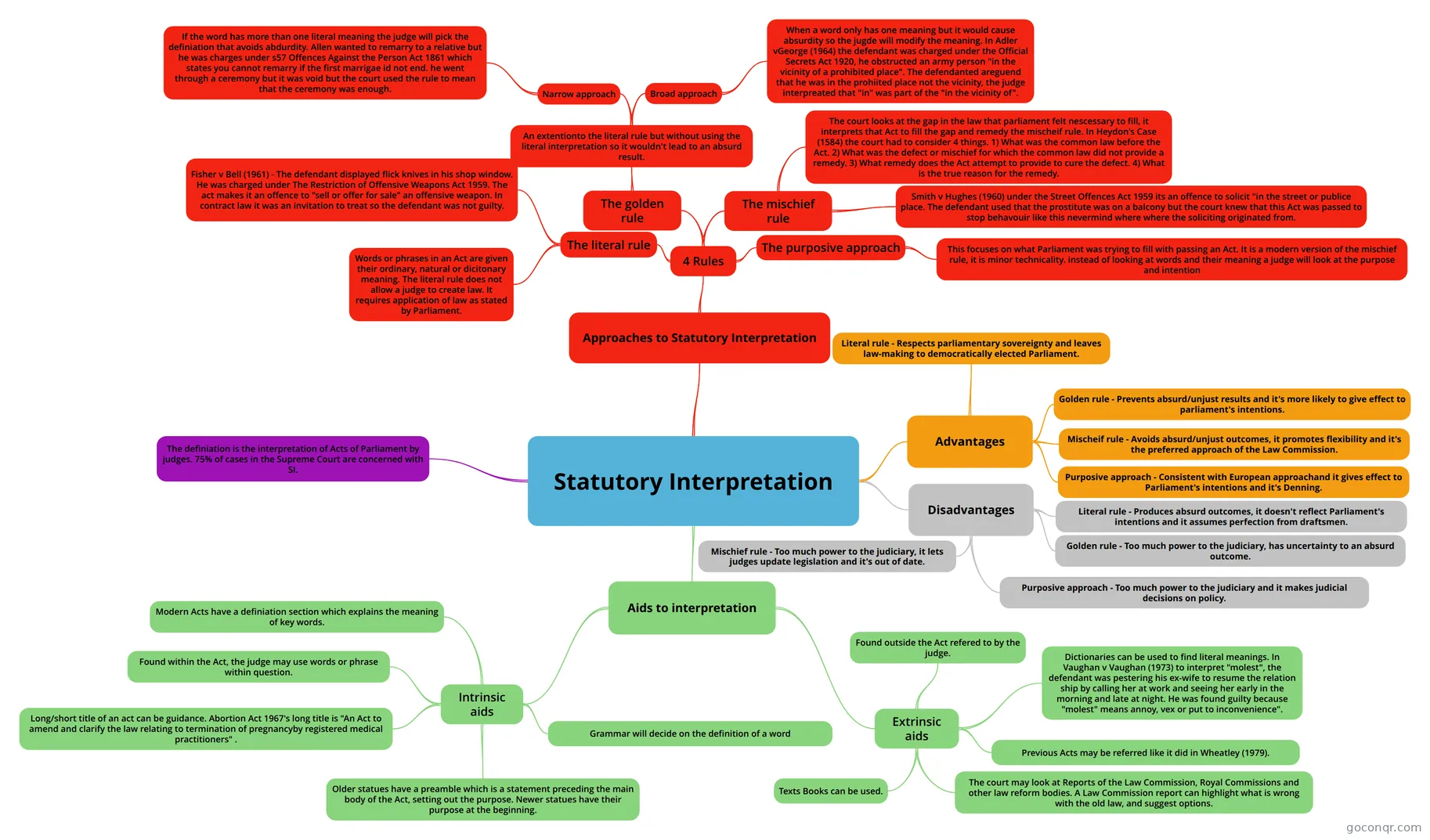 Statutory Interpretation
-
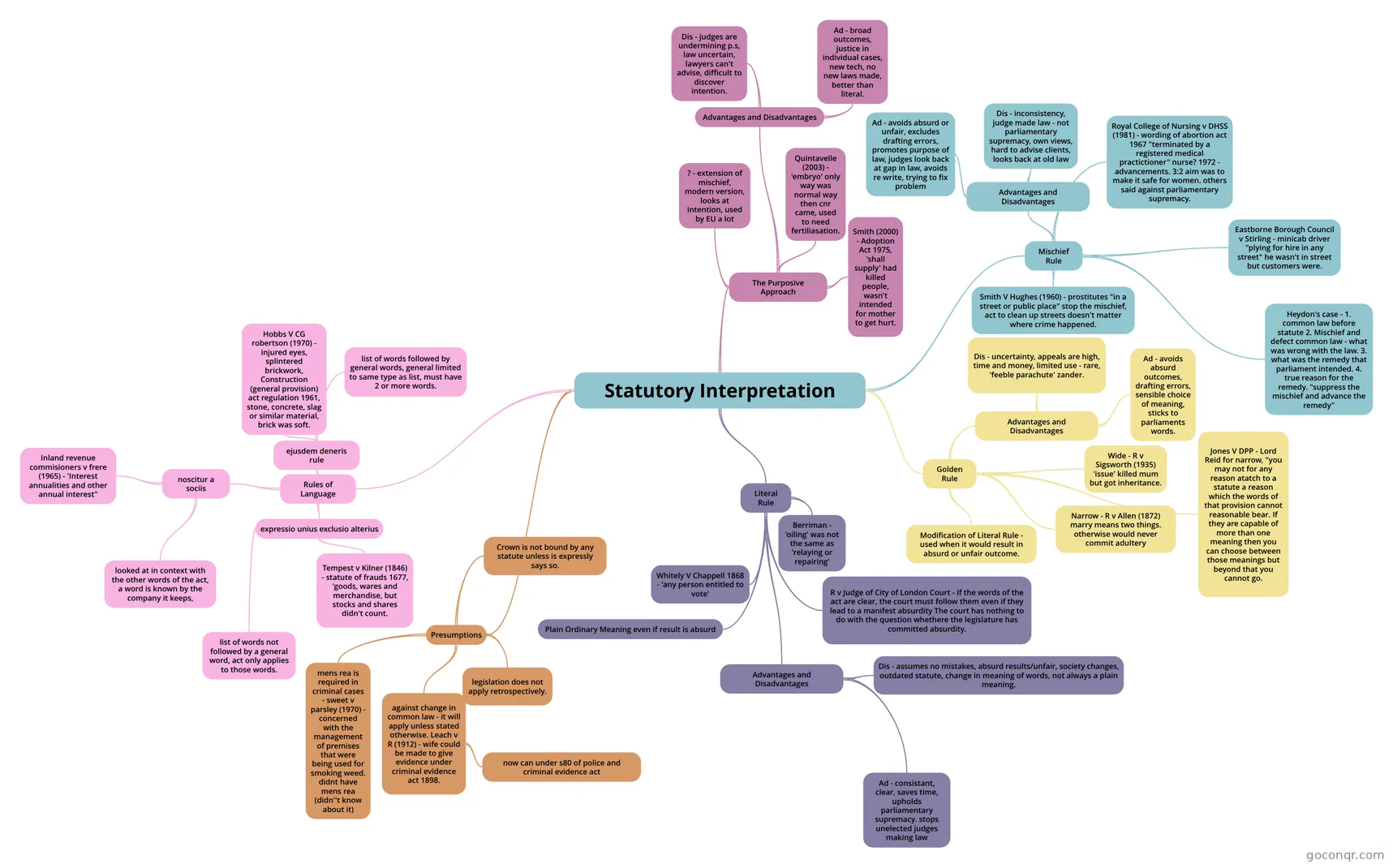 Statutory Interpretation
-
RULES OF LANGUAGE Three rules of language from the UK AQA AS Unit 1 syllabus.
-
The Purposive approach
Flashcards
See all 71 flashcards-
21 cardsStatutory Interpretation Key Cases Brock v DPP 1993
-
18 cardsImportant cases - statutory interpretation (Scottish legal system) Pepper v Heart (1993) AC
-
9 cardsThe Mischief Rule What is the mischief rule?
-
10 cardsLiteral Rule What is the Literal Rule?
-
8 cardsRules of Language What does 'the euisdem generis rule' mean?
-
9 cardsRules with evaluation Describe Literal rule (10)
-
32 cardsLeg. Reg. Enrolled Bill Doctrine
-
27 cardsPrimary Rules of Statutory Interpretation What are the Primary Rules of Statutory Interpretation?
More Law (general and introduction) topics
About Statutory Interpretation
GoConqr OriginalWhat this page covers
This unit page brings together material on how judges read the words of an Act of Parliament. You will find the main approaches: the literal rule, the golden rule, the mischief rule and the purposive approach. You will also find the rules of language, such as eiusdem generis, and the aids judges can use, both internal and external.
Where to start
Begin with a broad overview. The mind map called Statutory Interpretation sets out the rules, the aids and the quotation from Lord Reid on the literal rule. The mind map called Block 2 - Unit 5 Statutory Interpretation adds why interpretation is needed at all, from ambiguity and broad words to unforeseen events.
Then move to one rule at a time. There are separate flashcard decks called Literal Rule, The Mischief Rule, Golden Rule and Purposive Approach. The deck called Rules of Language covers eiusdem generis and expressio unius.
Learning the cases
Cases carry a lot of weight in this topic. The deck called Statutory Interpretation Key Cases includes Brock v DPP, Jones v DPP, Adler v George and Re Sigsworth. Another deck covers cases from the Scottish legal system, including Pepper v Hart and Fisher v Bell. Pair each case with the rule it illustrates.
Using quizzes with maps
Read a mind map, then test yourself. The quizzes called The Literal Rule, The Golden Rule, The Mischief Rule and Extrinsic Aids each focus on one idea. Where a quiz catches you out, go back to the matching map. The mind maps on advantages and disadvantages are useful for evaluation points, which A-level Law answers often need.
Where it sits
This unit belongs to the strand Sources of Law and Law-Making, in the subject Law (general and introduction). Work through it alongside your own course notes.
When you are ready, pick one rule, open its quiz and see what you remember.
Frequently asked questions
Which resource should I open first?
Start with the mind map called Statutory Interpretation, which outlines the rules, the aids and the idea behind the literal rule. Once you have the overall picture, move to the single-rule flashcard decks and then the matching quizzes, one rule at a time.
Which cases can I revise here?
The deck called Statutory Interpretation Key Cases lists cases such as Brock v DPP, Jones v DPP, Adler v George and Re Sigsworth. A second deck covers cases from the Scottish legal system, including Pepper v Hart and Fisher v Bell.
Are there quizzes on each rule?
Yes. There are separate quizzes on the literal rule, the golden rule, the mischief rule, the purposive approach, rules of language and extrinsic aids. There are also quizzes on intrinsic aids and on the advantages and disadvantages of each approach.
Are these resources free, and who made them?
Every resource listed here is free to open, study and take, with no account needed. They were made by GoConqr users, not by GoConqr itself. A free account lets you save quiz scores and make your own quizzes, maps, flashcards and notes.
Which levels do the resources suit?
Most of the resources suit school students, and the page mentions A-level Law. About a quarter suit university students and professional candidates. Teachers can use the ready-made maps, decks and slide sets in lessons.
What if I cannot find what I need?
Try searching related titles on this page, such as the ones on aids to interpretation or presumptions. You can also make your own mind map, flashcards or notes to fill the gap, using the community resources as a starting point.