
Test
Highway Engineering 1 lecture 2
Crea una cuenta gratis para terminar este test
Guarda tu progreso y consulta tu resultado final.
¿Ya tienes cuenta? Inicia sesión
Preguntas del test (29)
1What are key differences between an Urban Road(UR) and a Rural Road (RR)?
- Aa UR has a kerb and channel
- BAn UR is black with grey stones and the RR is grey with black stones
- CAn UR has a footpath and a RR has none
- DA RR has a subsoil drain
- EThe RR has been strengthen to take live stock walking on it
- FThe RR has a feathered edge
2What are the similarities between a Urban Road and a Rural Road?
- ACamber-usually 3%. under channel drains, waterproofing surface, road boundaries, pavement layers
- BCamber 6%, footpaths, berms, kerbs and pavement layers
- CThere are no similarities between a Urban road and a rural road
3Other differences between urban roads and rural roads are: cost, environmental issues, design, maintenance, surface water management, resource consent process
- AVerdadero
- BFalso
4What are the road user expectations when it comes to the design of a road?
- ADirect route between two points
- BUseable in all weather conditions
- CProvides a smooth comfortable surface
- Dallows traffic to ravel safely at a reasonable uniform cruising speed
- EIs pleasing to the eye and has lots of nice scenery
- Fhas petrol stations every 500m
5What are the consultation requirements?
- ACommunicating with the community even though the construction is a Permitted activity
- BConsidering Risks
- CInclude time, cost implications, resources and raising community expectations
- DTake into consideration the principles of the Treaty of waitangi
- Eall of the above
6What is the best practice for consultation
- AHold initial discussions with community leaders, key agencies and local government politicians to gauge the level of understanding and support for the proposed project
- BClearly state the issues that are being consulted on
- CDisseminate information and educational material to the community on the rationale for the project
- DIncluded community leaders etc in the site selections process and scoping of the community interest
- ESeek legal advice - compliance with the ACT is crucial
- Fall above
7There are 18 Factors to consider for a new alignment. Learn 5 of them for the test
- A1. keep grades and curvature to the minimum necessary to satisfy the service requirements of the highway
2. Always provide adequate sight distance and avoid sudden changes in sight distance especially near intersections
3. Avoid having a sharp horizontal curve on or adjacent to a pronounced vertical curve
4. Locate the highway wherever possible along property boundaries not through the middle of blocks of land particularly farm land - B5. Where it is practical maximize use of existing highway alignment to reduce land purchase costs
6. Avoid areas or objects of historical, recreational or cultural significance
7. Never have two roads intersecting near a bend or at the top or bottom of a hill
8. Avoid at grade intersections with railway lines. If possible cross the railway where it enters a cutting - C9. Keep road and stream crossing to a sensible minimum and if possible have crossing at right angles
10. Avoid horizontal curves in bridges, tunnels or culvert structures
11. Avoid where possible unstable ground prone to erosion or land slips
12. Avoid low lying land prone to flooding
13. Avoid if possible locations with rock close to the surface - D14. In hilly terrain the highway should cross ridges at their lowest point. Avoid creating severe breaks n the natural skyline
15. Minimize destruction of natural forest areas where some felling is necessary locate the road on a curve to preserve an unbroken background and minimize visual impact.
16. Avoid placing a road at right angles to natural drainage pattern
17. Balance volumes of cut and fill within a section of road to avoid need to purchase or tip large quantities of fill
18. To relieve the monotony of driving on a long straight road it is an advantage to site it so as to give a view of some prominent feature ahead. - EAll of the above
- A1. keep grades and curvature to the minimum necessary to satisfy the service requirements of the highway
8The highway location process is an iterative (repetitive) one where a design is gradually refined until the most suitable location is decided upon.
- AVerdadero
- BFalso
9The highway location process is:
- A1. choose site
2. buy the land
3. decide where to place the road
4. Draw it on a map
5. Take it to council for approval - B1. Fix end points of alignment
2. Examine the region containing both end pints and all feasible routes between them
3. Decide on a number of broad bands in which to concentrate further investigations (8 to 16km wide for major motorway)
4. Narrow bands down to corridors 3-8kms wide
5. Compare three corridors in detail and select the best
6. Generate a route within the selected corridor 1-1.5km wide
7. Search route area and locate one or more possible alignments up to 30 m wide
8. Select final alignment
- A1. choose site
10What are the elements of a Roadway
- ALane
- BMedian
- CTraffic Islands
- DRight and left turn lanes
- EMedian openings
- FShoulder
- GCarriageway
11Design Parameters: What do we need to consider in designing a road?
- ARoad Classification, Traffic volumes and composition,
- BDesign speed, design vehicle, Environment,
- C Access, Drainage, Utility services
12A road design needs to consider horizontal, vertical alignment and the cross section
- AVerdadero
- BFalso
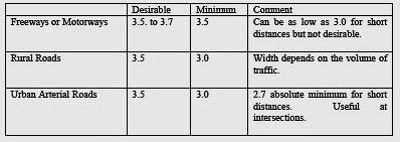
13The desirable standard lane width is 3.5 and up to 3.7m for freeways or motorways
- AVerdadero
- BFalso
14The minimum lane width is 3.5 for standard roads and 3.0 for Motorways
- AVerdadero
- BFalso
15What is the camber on a cross section of a chip Seal road
- A6%
- B2%
- C3%
16Horizontal curves should be of the same type, have the same design speed or gradually reduce (<10%/cure)over the length of the road
- AVerdadero
- BFalso
17Compounded curves are to be avoided What are compound curves
- Adifferent radii turning in the same direction
- Btwo curves in same direction with little or no straight in between
- Cto curves turning in opposite directions with little or no straight in between
18Broken back curves are to be avoided what are broken back curves?
- Adifferent radii turning in the same direction
- Btwo curves turning in the same direction with little or no straight in between
- Ctwo curves turning in opposite directions with little or no straight in between
19Reverse curves are to be avoided when designing a road, what is a reverse curve?
- Adifferent radii turning in same direction
- Btwo curves turning in same direction with little or no straight in between
- Ctwo curves turning in opposite directions with little or no straight in between
20What is superelevation on a road
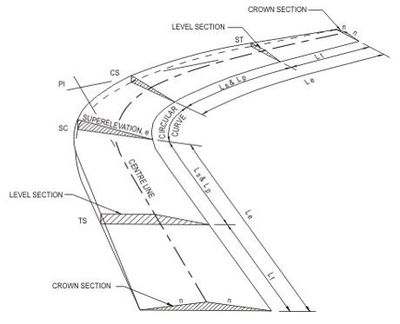
- Athe amount by which the outer edge of a curve on a road or railway is banked above the inner edge
- Bthe camber of 3%
21A transition curve smooths travel around a curve of speeds less than 60km/h, radius of curve greater than 500m and Shift greater than 0.3m
- AVerdadero
- BFalso
22What is an intersection in the road
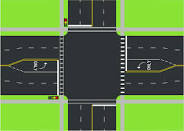
- AAn intersection is the junction at grade (that is to say, on the same level) of two or more roads either meeting or crossing.
- BAn intersection may be three-way (a T junction or Y junction – the latter also known as a fork), four-way (a crossroads), or have five or more arms.
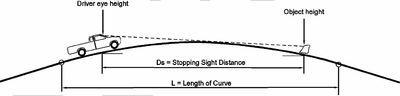
23What is sight distance?
- AThe distance it takes in the dark to see an elephant
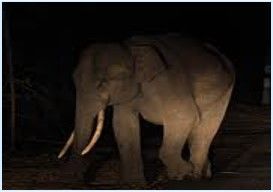
- BThe distance at which a driver will be able to perceive an object of a specific height on the road ahead and safely stop their vehicle before it reaches that object
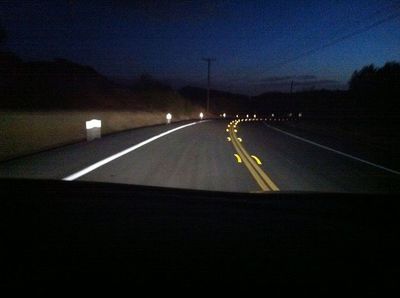
- AThe distance it takes in the dark to see an elephant
24A sag curve is determined by the headlight sight distance not just a sag at the bottom of the road
- AVerdadero
- BFalso
25What are the grades for road designs?
- Anot steeper than 10% average or 12.5% maximum
- Blot access can be up to 1V:5H
- CMinimum grades for roads with kerb and channel = 0.3%, Unkerbed roads =0.5% Unkerbed roads with side drainage = 0%
26a vertical curve is the curve on the road design running the length of the road vertical curves can be on the top of a crest or the sag at the bottom.
- AVerdadero
- BFalso
27The Design process has 7 Steps Learn all 7 steps
- A1. Identify Controls
- B2. Prepare Horizontal Alignment
- C3. Select grading points
- D4. Prepare longitudinal section
Show natural GL and Grading Points
Include Intersections,structures, services, and crossings - E5. Prepare Trial grade-line
Consider controls
try to coordinate horizontal and vertical alignments - F6. Calculate earth works quantities
- G7. Adjust vertical alignment so that :
Controls are met
Earthworks are minimized
28Controls are the factors that influence the design
- AVerdadero
- BFalso
29What are factors that influence design levels?
- Aoperating speed, required sight distances, overtaking requirements, drainage systems
- BEarthworks, topography, flood levels, water table levels
- CGeotechnical conditions, existing intersections, property entrances
- Doverpasses and underpasses, pedestrian access, services
- EAll of the above
Información
- Descripción
- Quiz for lecture 2 highway Engineering
- Autor
- Pauline Leota
- Idioma
- English
- Visitas
- 83
- Historial
- Creado el 12 may 2015 · actualizado el 6 ago 2016
- Etiquetas
- Valoración
- Aún sin valoraciones Valora este test