
Test
Grade Nine Science Exam Review
Este test tiene tipos de pregunta que se abren en el reproductor de siempre.
Preguntas del test (57)
1The major source of energy for earth is
- APlants
- BOxygen
- CThe Sun
- DFood
2The Earth's solid outer layer is the
- ACore
- BAtmosphere
- CBiosphere
- DLithosphere
3[blank_start]Extinct[blank_end]- A species that has died, and no longer remains on Earth
- AExtinct
- BExtirpated
- CThreatened
- DEndangered
4-A species that no longer exists in a certain area is [blank_start]extirpated[blank_end]
[blank_start]-Threatened:[blank_end] a species that is likely to become [blank_start]endangered[blank_end] if factors reducing it's survival are not changed
- [blank_start]Endangered[blank_end]: a species facing imminent [blank_start]extirpation or extinction[blank_end]- Aextirpated
- B-Threatened:
- Cendangered
- DEndangered
- Eextirpation or extinction
5CELLULAR RESPIRATION EQUATION
[blank_start]oxygen[blank_end] + [blank_start]sugar[blank_end] > [blank_start]carbon dioxide[blank_end] + water + energy- Aoxygen
- B)(
- Csugar
- D???
- Ecarbon dioxide
- F?
6Label The Hydrologic Cycle
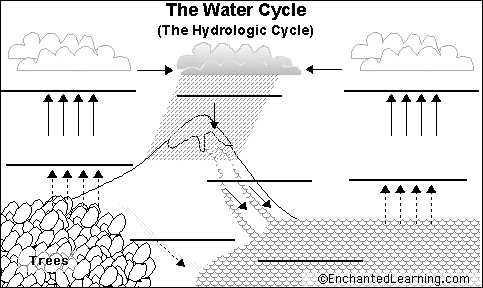
- ASurface run-off
- Brunoff
- CAccumaltion
- Devaporation
- ECondensation
- FPrecipitation
- GRunoff
- HTranspiration
- I(condensation)
7The Carbon Cycle includes Cellular Respiration and Photosynthesis
- AVerdadero
- BFalso
8Ecosystem- all living organisms and their chemical and physical [blank_start]environment[blank_end]
- Aenvironment
9How can humans restore biodiversity?
- APlant trees
- BPick up garbage
- Cwalk instead of driving
- Dhunting
10A representation of the feeding relationships within a community
- AFood Web
- BFood Chain
11A sequence of organisms, each feeding on the next, showing how energy is transferred from one organism to another
- AFood Web
- BFood Chain
12The process in which the Sun's energy is converted into chemical energy is called cellular respiration
- AVerdadero
- BFalso
13Biodiversity: a number of different types of [blank_start]organisms[blank_end] in an area
- Aorganisms
14the level of an organism in an ecosystem depending on it's feeding position along a food chain
- ACarrying capacity
- BTrophic level
- CEcological Niche
- DSustainability
15the maximum population size of a particular species that a given ecosystem can sustain
- Asustainability
- Becological niche
- Ccarrying capacity
16Sustainability: The ability to maintain [blank_start]an ecological balance[blank_end]
- Aan ecological balance
17[blank_start]Ecological Niche[blank_end] : The function a species serves within an ecosystem, Including what it eats, and what eats it as well as behaviour
- AEcological Niche
18In Open Ecosystems , things [blank_start]can[blank_end] leave and enter and in Closed Ecosystems things [blank_start]cannot[blank_end] leave or enter
- Acan
- Bcannot
19Int[blank_start]ra[blank_end]specific- Competition between same species ex. bear vs. bear
- Ara
- Ber
20Int[blank_start]er[blank_end]specific - competition between different species ex. bear vs. wolf
- Aer
- Bra
21The Sun is made up of
- AHydrogen (25%) and Helium (75%)
- BHydrogen (75%) and Helium (25%)
- CFire and Heat
22Why can we see non-luminous objects?
- AThey give off light
- BDue to light reflected by the Sun.
23The spinning of an object on it's axis
- ARotation
- BRevolution
24The movement of the Earth around the Sun.
- ARotation
- BRevolution
25[blank_start]New Moon[blank_end] : occurs every 29.5 days when the unilluminated side of the moon is facing Earth (so it is not visible)
- ANew Moon
26[blank_start]Blue Moon[blank_end] : The name for the second full moon to occur in a month, (this only occurs every 2.7 years)
- ABlue Moon
27Occurs when the shadow if the moon falls on the Earth. The Earth passes through the moon's shadow.
- ALunar Eclipse
- BSolar Eclipse
28Occurs when the moon passes through the Earth's shadow.
- ALunar Eclipse
- BSolar Eclipse
29[blank_start]Constellation[blank_end] : a grouping of stars as observed from Earth
- AConstellation
- BAsterism
- CStars
30[blank_start]Asterism[blank_end] : a pattern of stars (example-Big Dipper)
- AAsterism
- BConstellation
31a celestial object that travels around a planet or a dwarf planet
- ASatellite
- BAsterism
- CComet
32Made of carbon and silicon rock
- Acomet
- Basterism
- Cnebulae
33A meteor is a lump of rock, trapped in Earth's gravity
- AVerdadero
- BFalso
34The nebulae is the first stage of a star's life
- AVerdadero
- BFalso
35[blank_start]Gravity[blank_end] - The force that attracts anything with mass to the center of the Earth
- AGravity
36The brightest star in the sky is
- Athe Sun
- Bthe Moon
- CSirius
37How easily something can dissolve in a liquid is called [blank_start]solubility.[blank_end]
- Asolubility.
38To conduct electricity
- Aamps
- Bconductivity
39Density is the amount of [blank_start]mass[blank_end] to a certain [blank_start]volume.[blank_end]
- Amass
- Bvolume.
40Three things required for combustion
- AFuel
- BOxygen
- CHeat
- DFire
41Neutrons have a ... charge.
- ANeutral
- BPositive
- CNegative
42Protons have a ... charge.
- Apositive
- Bnegative
- Cneutral
43Electrons have a ... charge.
- APositive
- BNegative
- CNeutral
44Atoms have a ____ charge.
- APositive
- BNegative
- CNeutral
45Ground state means
- ALittle to no energy
- BFull of energy (given off as light, heat or sound)
46Excited state means
- AFull of energy (given off as light, heat or sound)
- BLittle to no energy
47The formula for density is
- Amass divided by volume
- BVolume divided by mass
48A physical change is a change of state. Which are examples of a physical change?
- ACandle wax melting
- BRusting metal
- CIce melting into water
- DChopping up a carrot
49Chemical change - [blank_start]bubbles[blank_end] , new colour appears , form of precipitate , energy change. Examples- baking a cake or metal rusting
- Abubbles
50LAWS OF ELECTRIC CHARGES
[blank_start]Repulsion[blank_end]- same charges repel
[blank_start]Attraction[blank_end]- opposites attract- ARepulsion
- BAttraction
51Electric charge can be created by the [blank_start]movement of electrons.[blank_end]
- Amovement of electrons.
52The force moving electrons in an electric circuit
- AVoltage
- BCurrent
- CResistance
53The amount of electrons moving in a circuit is called the current
- AVerdadero
- BFalso
54Resistance [blank_start]slows[blank_end] down the flow of electrons.
- Aslows
55Current Electricity is the controlled flow of [blank_start]electrons[blank_end] through a [blank_start]conductor[blank_end].
- Aelectrons
- Bconductor
56[blank_start]Amps[blank_end] is the number of electrons passing through per second.
- AAmps
- BVolts
57The four basic parts of an electric circuit are
- AAmps, Volts, Current or Resistance
- BSource, Load, Connectors, Control device
Información
- Descripción
- Test sobre Grade Nine Science Exam Review, creado por 371153 el 31/01/2016.
- Autor
- 371153
- Idioma
- English
- Visitas
- 92
- Etiquetas
- Valoración
- 3,5 de 5 · 2 valoraciones Valora este test