
Quiz
Grade Nine Science Exam Review
Este quiz tem tipos de pergunta que abrem no player de sempre.
Perguntas do quiz (57)
1The major source of energy for earth is
- APlants
- BOxygen
- CThe Sun
- DFood
2The Earth's solid outer layer is the
- ACore
- BAtmosphere
- CBiosphere
- DLithosphere
3[blank_start]Extinct[blank_end]- A species that has died, and no longer remains on Earth
- AExtinct
- BExtirpated
- CThreatened
- DEndangered
4-A species that no longer exists in a certain area is [blank_start]extirpated[blank_end]
[blank_start]-Threatened:[blank_end] a species that is likely to become [blank_start]endangered[blank_end] if factors reducing it's survival are not changed
- [blank_start]Endangered[blank_end]: a species facing imminent [blank_start]extirpation or extinction[blank_end]- Aextirpated
- B-Threatened:
- Cendangered
- DEndangered
- Eextirpation or extinction
5CELLULAR RESPIRATION EQUATION
[blank_start]oxygen[blank_end] + [blank_start]sugar[blank_end] > [blank_start]carbon dioxide[blank_end] + water + energy- Aoxygen
- B)(
- Csugar
- D???
- Ecarbon dioxide
- F?
6Label The Hydrologic Cycle
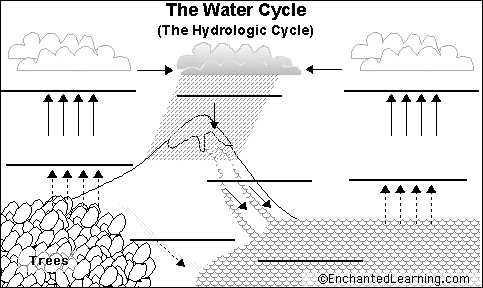
- ASurface run-off
- Brunoff
- CAccumaltion
- Devaporation
- ECondensation
- FPrecipitation
- GRunoff
- HTranspiration
- I(condensation)
7The Carbon Cycle includes Cellular Respiration and Photosynthesis
- AVerdadeiro
- BFalso
8Ecosystem- all living organisms and their chemical and physical [blank_start]environment[blank_end]
- Aenvironment
9How can humans restore biodiversity?
- APlant trees
- BPick up garbage
- Cwalk instead of driving
- Dhunting
10A representation of the feeding relationships within a community
- AFood Web
- BFood Chain
11A sequence of organisms, each feeding on the next, showing how energy is transferred from one organism to another
- AFood Web
- BFood Chain
12The process in which the Sun's energy is converted into chemical energy is called cellular respiration
- AVerdadeiro
- BFalso
13Biodiversity: a number of different types of [blank_start]organisms[blank_end] in an area
- Aorganisms
14the level of an organism in an ecosystem depending on it's feeding position along a food chain
- ACarrying capacity
- BTrophic level
- CEcological Niche
- DSustainability
15the maximum population size of a particular species that a given ecosystem can sustain
- Asustainability
- Becological niche
- Ccarrying capacity
16Sustainability: The ability to maintain [blank_start]an ecological balance[blank_end]
- Aan ecological balance
17[blank_start]Ecological Niche[blank_end] : The function a species serves within an ecosystem, Including what it eats, and what eats it as well as behaviour
- AEcological Niche
18In Open Ecosystems , things [blank_start]can[blank_end] leave and enter and in Closed Ecosystems things [blank_start]cannot[blank_end] leave or enter
- Acan
- Bcannot
19Int[blank_start]ra[blank_end]specific- Competition between same species ex. bear vs. bear
- Ara
- Ber
20Int[blank_start]er[blank_end]specific - competition between different species ex. bear vs. wolf
- Aer
- Bra
21The Sun is made up of
- AHydrogen (25%) and Helium (75%)
- BHydrogen (75%) and Helium (25%)
- CFire and Heat
22Why can we see non-luminous objects?
- AThey give off light
- BDue to light reflected by the Sun.
23The spinning of an object on it's axis
- ARotation
- BRevolution
24The movement of the Earth around the Sun.
- ARotation
- BRevolution
25[blank_start]New Moon[blank_end] : occurs every 29.5 days when the unilluminated side of the moon is facing Earth (so it is not visible)
- ANew Moon
26[blank_start]Blue Moon[blank_end] : The name for the second full moon to occur in a month, (this only occurs every 2.7 years)
- ABlue Moon
27Occurs when the shadow if the moon falls on the Earth. The Earth passes through the moon's shadow.
- ALunar Eclipse
- BSolar Eclipse
28Occurs when the moon passes through the Earth's shadow.
- ALunar Eclipse
- BSolar Eclipse
29[blank_start]Constellation[blank_end] : a grouping of stars as observed from Earth
- AConstellation
- BAsterism
- CStars
30[blank_start]Asterism[blank_end] : a pattern of stars (example-Big Dipper)
- AAsterism
- BConstellation
31a celestial object that travels around a planet or a dwarf planet
- ASatellite
- BAsterism
- CComet
32Made of carbon and silicon rock
- Acomet
- Basterism
- Cnebulae
33A meteor is a lump of rock, trapped in Earth's gravity
- AVerdadeiro
- BFalso
34The nebulae is the first stage of a star's life
- AVerdadeiro
- BFalso
35[blank_start]Gravity[blank_end] - The force that attracts anything with mass to the center of the Earth
- AGravity
36The brightest star in the sky is
- Athe Sun
- Bthe Moon
- CSirius
37How easily something can dissolve in a liquid is called [blank_start]solubility.[blank_end]
- Asolubility.
38To conduct electricity
- Aamps
- Bconductivity
39Density is the amount of [blank_start]mass[blank_end] to a certain [blank_start]volume.[blank_end]
- Amass
- Bvolume.
40Three things required for combustion
- AFuel
- BOxygen
- CHeat
- DFire
41Neutrons have a ... charge.
- ANeutral
- BPositive
- CNegative
42Protons have a ... charge.
- Apositive
- Bnegative
- Cneutral
43Electrons have a ... charge.
- APositive
- BNegative
- CNeutral
44Atoms have a ____ charge.
- APositive
- BNegative
- CNeutral
45Ground state means
- ALittle to no energy
- BFull of energy (given off as light, heat or sound)
46Excited state means
- AFull of energy (given off as light, heat or sound)
- BLittle to no energy
47The formula for density is
- Amass divided by volume
- BVolume divided by mass
48A physical change is a change of state. Which are examples of a physical change?
- ACandle wax melting
- BRusting metal
- CIce melting into water
- DChopping up a carrot
49Chemical change - [blank_start]bubbles[blank_end] , new colour appears , form of precipitate , energy change. Examples- baking a cake or metal rusting
- Abubbles
50LAWS OF ELECTRIC CHARGES
[blank_start]Repulsion[blank_end]- same charges repel
[blank_start]Attraction[blank_end]- opposites attract- ARepulsion
- BAttraction
51Electric charge can be created by the [blank_start]movement of electrons.[blank_end]
- Amovement of electrons.
52The force moving electrons in an electric circuit
- AVoltage
- BCurrent
- CResistance
53The amount of electrons moving in a circuit is called the current
- AVerdadeiro
- BFalso
54Resistance [blank_start]slows[blank_end] down the flow of electrons.
- Aslows
55Current Electricity is the controlled flow of [blank_start]electrons[blank_end] through a [blank_start]conductor[blank_end].
- Aelectrons
- Bconductor
56[blank_start]Amps[blank_end] is the number of electrons passing through per second.
- AAmps
- BVolts
57The four basic parts of an electric circuit are
- AAmps, Volts, Current or Resistance
- BSource, Load, Connectors, Control device
Informações
- Descrição
- Quiz sobre Grade Nine Science Exam Review, criado por 371153 em 31-01-2016.
- Autor
- 371153
- Idioma
- English
- Visualizações
- 92
- Etiquetas
- Avaliação
- 3,5 de 5 · 2 avaliações Avalie este quiz