
Test
Mammalian Lungs
Este test tiene tipos de pregunta que se abren en el reproductor de siempre.
Preguntas del test (13)
1Label this diagram of the lungs
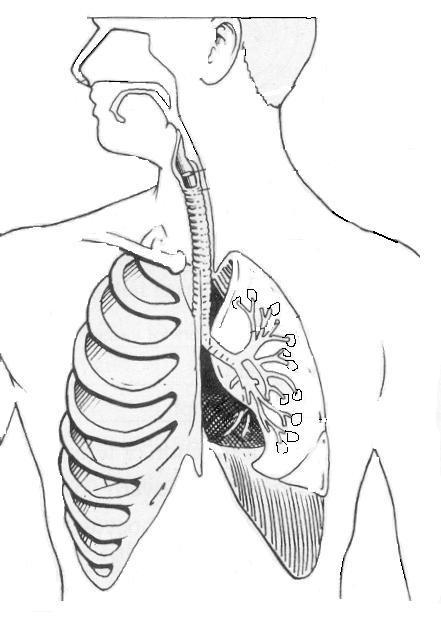
- ABronchioles
- BBronchus
- CLeft Lung
- DRight Lung
- ERibs
- FExternal and Internal Intercostal Muscle
- GLarynx
- HTrachea
- IRings of Cartilage
2Label the alveoli
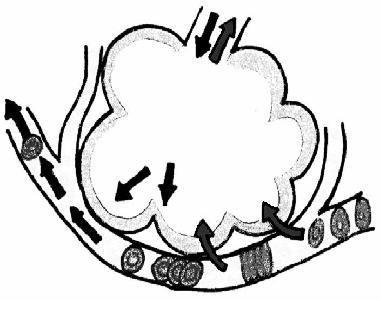
- AAir out
- BAir in
- CDeoxygenated blood in
- DOxygenated blood out
- ERed blood cells
- FCarbon dioxide out
- GOxygen in
3Match the definition up with the area of the lungs
A pair of lobed structures made up of highly branched tubules called bronchioles which end in tiny air sacs called alveoli.- ALungs
- BTrachea
- CBronchi
- DBronchioles
- EAlveoli
4Match the definition with the structure
A flexible airway that is supported by rings of cartilage preventing them from collapsing. They are lined with ciliated epithelium and goblet cells.- ALungs
- BTrachea
- CBronchi
- DBronchioles
- EAlveoli
5Match the definition with the structure
Produces mucus to trap dirt particles and have cilia to move dirt- ALungs
- BTrachea
- CBronchi
- DBronchioles
- EAlveoli
6Match the definition with the structure
Branching subdivision that is lined with epithelial cells. Muscles allow them to constrict the flow of air into the alveoli- ALungs
- BTrachea
- CBronchi
- DBronchioles
- EAlveoli
7Match the definition with the structure
Minute air sacs at the end of the bronchioles that are lined with epithelium, collagen and elastic fibres allowing them to stretch during inhalation.- ALungs
- BTrachea
- CBronchi
- DBronchioles
- EAlveoli
8Inspiration
1. The [blank_start]external[blank_end] intercostal muscles [blank_start]contract[blank_end] while the [blank_start]internal[blank_end] intercostal muscles relax
2. The ribs are pulled [blank_start]upwards[blank_end] and [blank_start]outward[blank_end], increasing the volume in the [blank_start]thorax[blank_end]
3. The diaphragm muscles contract causing it to [blank_start]flatten[blank_end], increasing the volume in the thorax
4. The increased thorax volume leads to a reduction of [blank_start]pressure[blank_end] in the lungs
5. The [blank_start]atmospheric[blank_end] pressure is greater than the [blank_start]pulmonary[blank_end] pressure so air is forced into the lungs- Aexternal
- Bcontract
- Cinternal
- Dupwards
- Eoutward
- Fthorax
- Gflatten
- Hpressure
- Iatmospheric
- Jpulmonary
9Exhalation
1. The [blank_start]intercostal[blank_end] muscles [blank_start]contract[blank_end] while the [blank_start]external[blank_end] intercostal muscles [blank_start]relax[blank_end]
2. The ribs move [blank_start]downward[blank_end] and [blank_start]inward[blank_end], decreasing the volume of the [blank_start]thorax[blank_end]
3. The diaphragm muscles relax causing it to be [blank_start]curved,[blank_end] this further decreases the volume in the thorax
4. The decreased volume of the thorax [blank_start]increases[blank_end] the pressure in the lungs
5. The [blank_start]pulmonary[blank_end] pressure is greater than the [blank_start]atmospheric[blank_end] pressure so air is forced out- Aintercostal
- Bcontract
- Cexternal
- Drelax
- Edownward
- Finward
- Gthorax
- Hcurved
- Iincreases
- Jpulmonary
- Katmospheric
10Diffusion between the alveoli and the blood is rapid because red blood cells are slowed as they pass through the pulmonary capillaries
- AVerdadero
- BFalso
11Diffusion between the alveoli and the blood is rapid because the distance between the alveolar air and red blood cells is increased
- AVerdadero
- BFalso
12Diffusion between the alveoli and the blood is rapid because the walls of the alveoli and capillaries are very thin so the diffusion pathway is short.
- AVerdadero
- BFalso
13Diffusion between the alveoli and the blood is rapid because the alveoli and pulmonary capillaries have a small surface area.
- AVerdadero
- BFalso
Información
- Descripción
- AQA
- Autor
- Joanne North
- Idioma
- English
- Visitas
- 34
- Etiquetas
- Valoración
- Aún sin valoraciones Valora este test