Fichas
Coasts Test
Fichas del conjunto (52)
- 14 spheres of coastal processesHydrosphere
Lithosphere
Biosphere
Atmosphere - 2AtmosphereThe body of gases that envelop the globe.
- 3BiosphereAll living organisms on earth.
- 4LithosphereSolid, rocky crust covering the planet. Composed of minerals. (Sand, dirt, mud, rock).
- 5HydrosphereAll of the water existing on the planet in all three forms.
- 6A system is made up of (four)...Inputs
Outputs
Components
Processes - 7Example of Input:Wind
- 8Example of Output:Water vapour
- 9Example of Component:Rock, existing sand.
- 10Example of Process:Longshore drift, evaporation etc.
- 11Three aspects of Sustainability:Economic
Environmental
Social - 12Why are the three aspects of sustainability necessary for a sustainable city?Because they ensure the needs of the present are met without compromising the needs of the future.
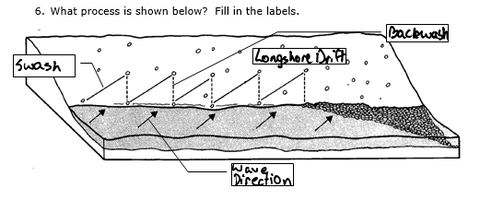
- 13SwashThe rush of seawater up the beach after the breaking of a wave.
- 14BackwashA backward flow of water towards a building wave.
- 15SwellThe movement of wave energy through an ocean, caused by wind and tidal factors.
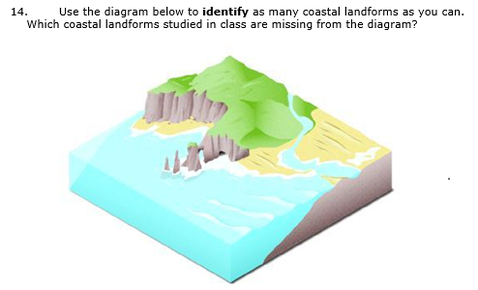
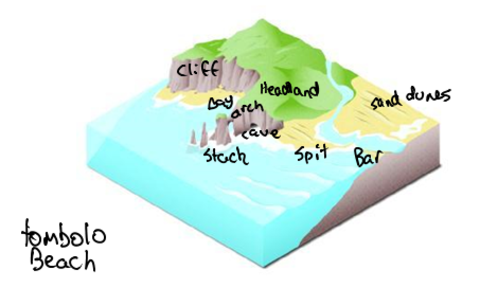
- 16SpitA long, narrow deposit of sand extending out from the shore into the sea.
- 17Sea CaveA cave formed in a cliff by the erosion caused by wave action.
- 18FetchThe uninterrupted stretch of water that the wind has to build up wave energy.
- 19BayA broad inlet of the sea where the land curves inwards, formed by wave action.
- 20HeadlandA narrow piece of land that projects from a coastline into the sea.
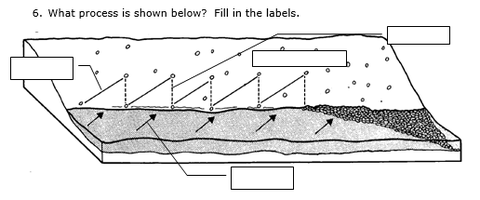
- 21Longshore DriftThe transportation of sediments along a beach due to the zigzag motion of waves and backwash
- 22TomboloWhen a spit connects a stack or small island to the coastline it becomes a tombolo.
- 23BeachA shore developed from eroded material on a coastline.
- 24Sand DuneA ridge of sand created by the wind on a shore.
- 25BarWhen the side of a headland is eroded all the way through to form a bridge-like shape.
- 26StackA pinnacle of rock standing just off a headland formed when an arch collapses.
- 27BlowholeWhen a cave has cracked to the surface, allowing water to escape through the roof.
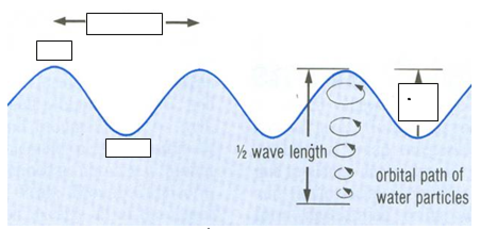
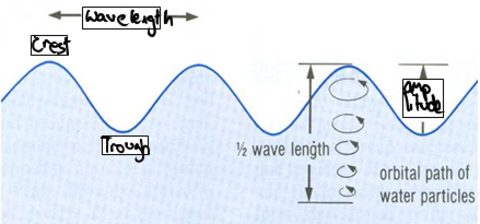
- 28Wave troughThe lowest point of a wave.
- 29Wave crestThe highest point of a wave.
- 30Constructive waveLow, powerless waves with long wavelengths and a strong swash.
- 31Destructive waveHigh, powerful waves with short wavelengths and a strong backwash.
- 32ErosionThe process by which rock is loosened or dissolved by wave action.
- 33TransportationThe movement of sediment along a coastline by processes such as longshore drift.
- 34DepositionWhen eroded material is dropped by constructive waves.
- 35Wave refractionThe process by which a wave approaching the shore changes direction due to slowing of the parts that enter shallow water first.
- 36SustainabilityWhen the needs of the present are met without compromising the ability of future generations to meet their own.
- 37—Unknown
- 38—
- 39—
- 40—
- 41How is material eroded in a coastal environment (4 ways)?Erosion
Abrasion
Attrition
Hydraulic action - 42ErosionThe process by which rock is loosened or dissolved by wave action.
- 43AttritionThe process of materials within a wave dissolving by rubbing against eachother.
- 44AbrasionWhen rock is eroded through the friction caused by sediments in the wave.
- 45Hydraulic ActionWhen rock is eroded purely through the water's strength.
- 46How is sediment transported in the coastal environment (4 ways)?Suspension
Solution
Traction
Saltation - 47Orbital MotionThe rotation of water beneath the wave caused by the wind.
- 48How does a wave form?The orbital motion of the water is interrupted by the incline of land, pushing the wave energy upwards and forming a wave crest.
- 49What 3 factors contribute to wave size?Wind
Wavelength
Inclination of land - 50—
- 51—
- 52—