
Coasts
13 resources created by 13 users
This GoConqr page gathers over 140 community-made resources on Coasts: quizzes, mind maps, flashcards and notes to revise and practise with.
Top Coasts resources
-
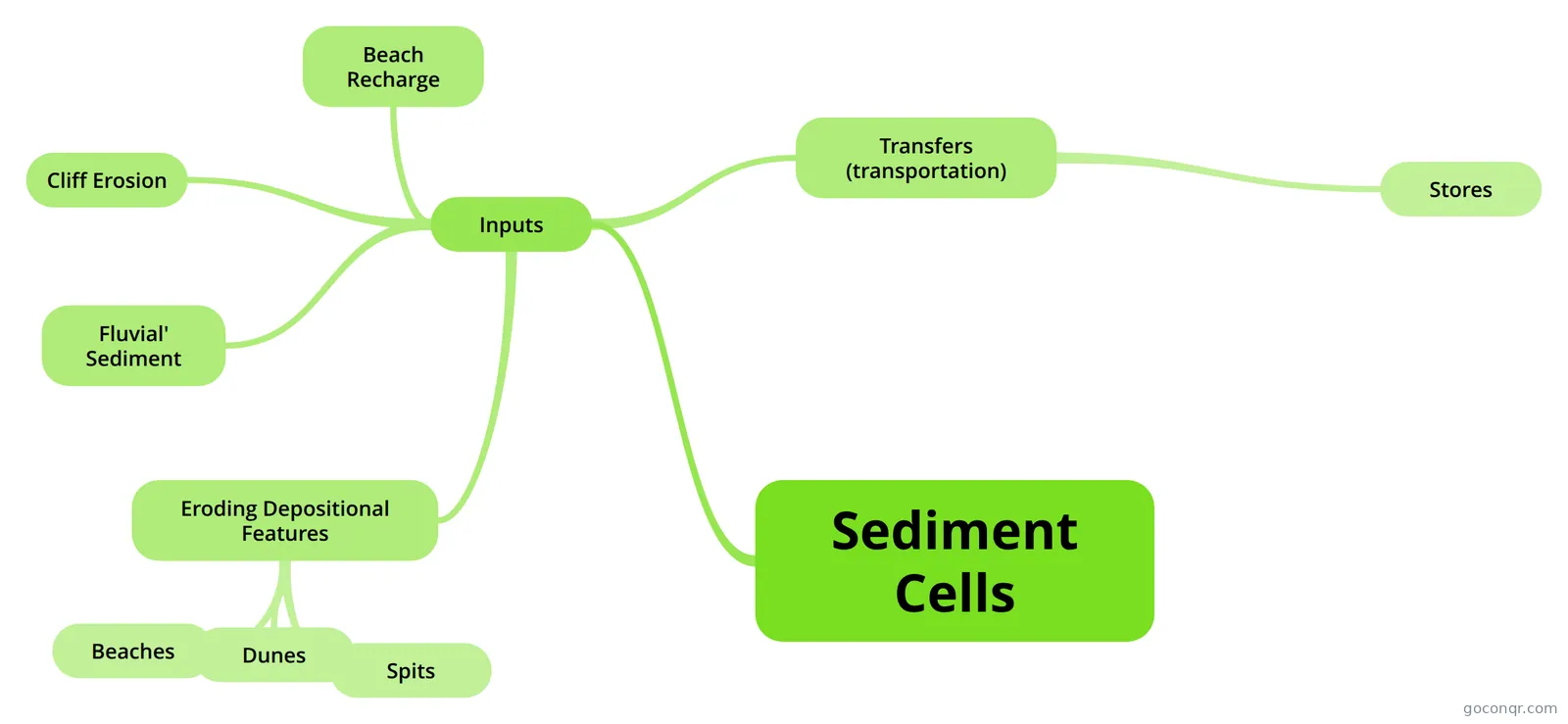 Mind map Sediment Cells
-
Mind map Case Study of a coastal landscape: the Holderness Coast, East Yorkshire GCSE Geog 2019
-
52 cardsCoasts Test 4 spheres of coastal processes
-
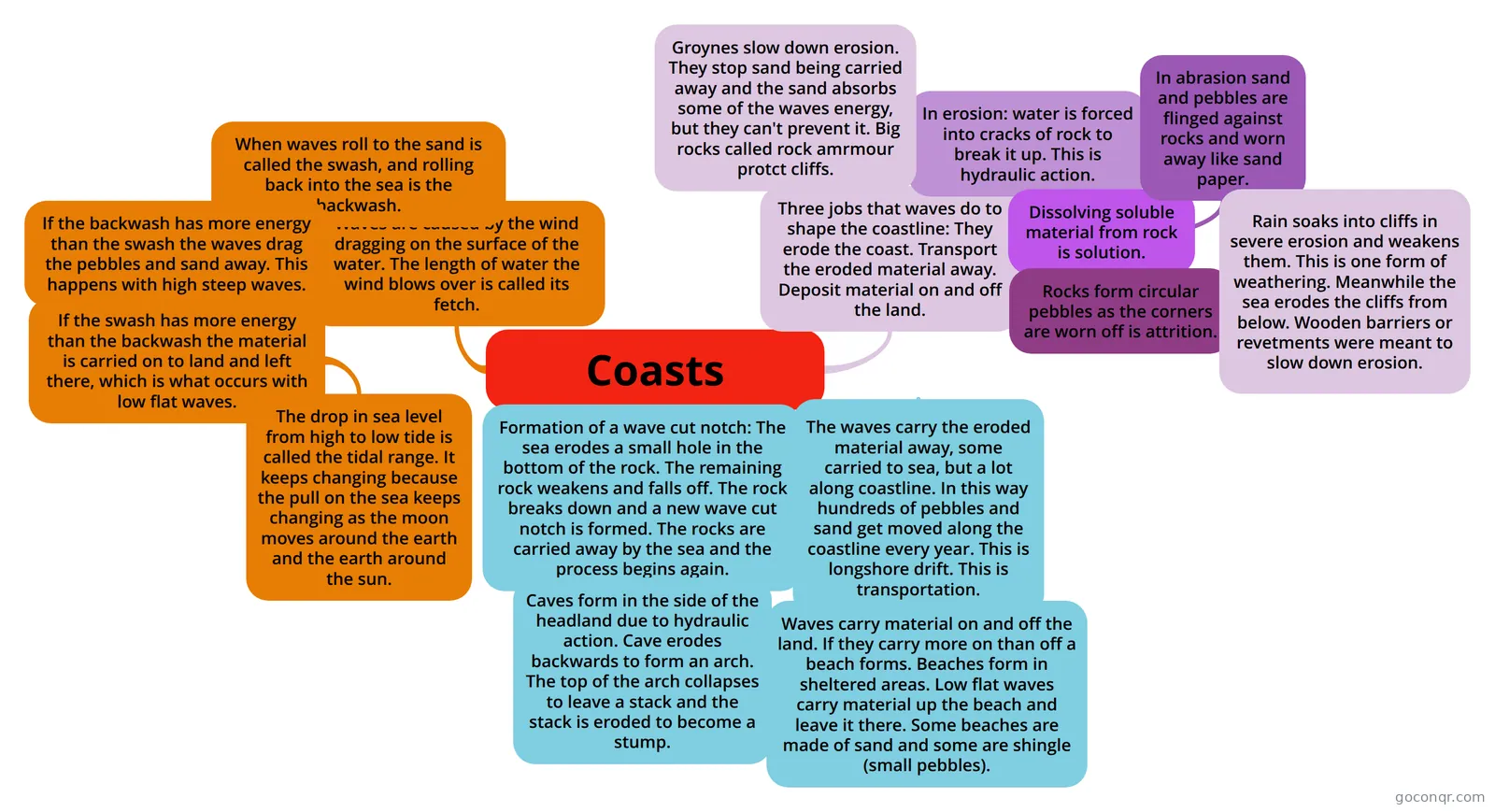 Mind map Coasts dww
-
20 cardskey words What is Weathering?
-
Mind map Coast GW1(Coastal processes+Coastal landforms) Second part of Secondary Three Pure Geography Topic 1 Coast GW 1
-
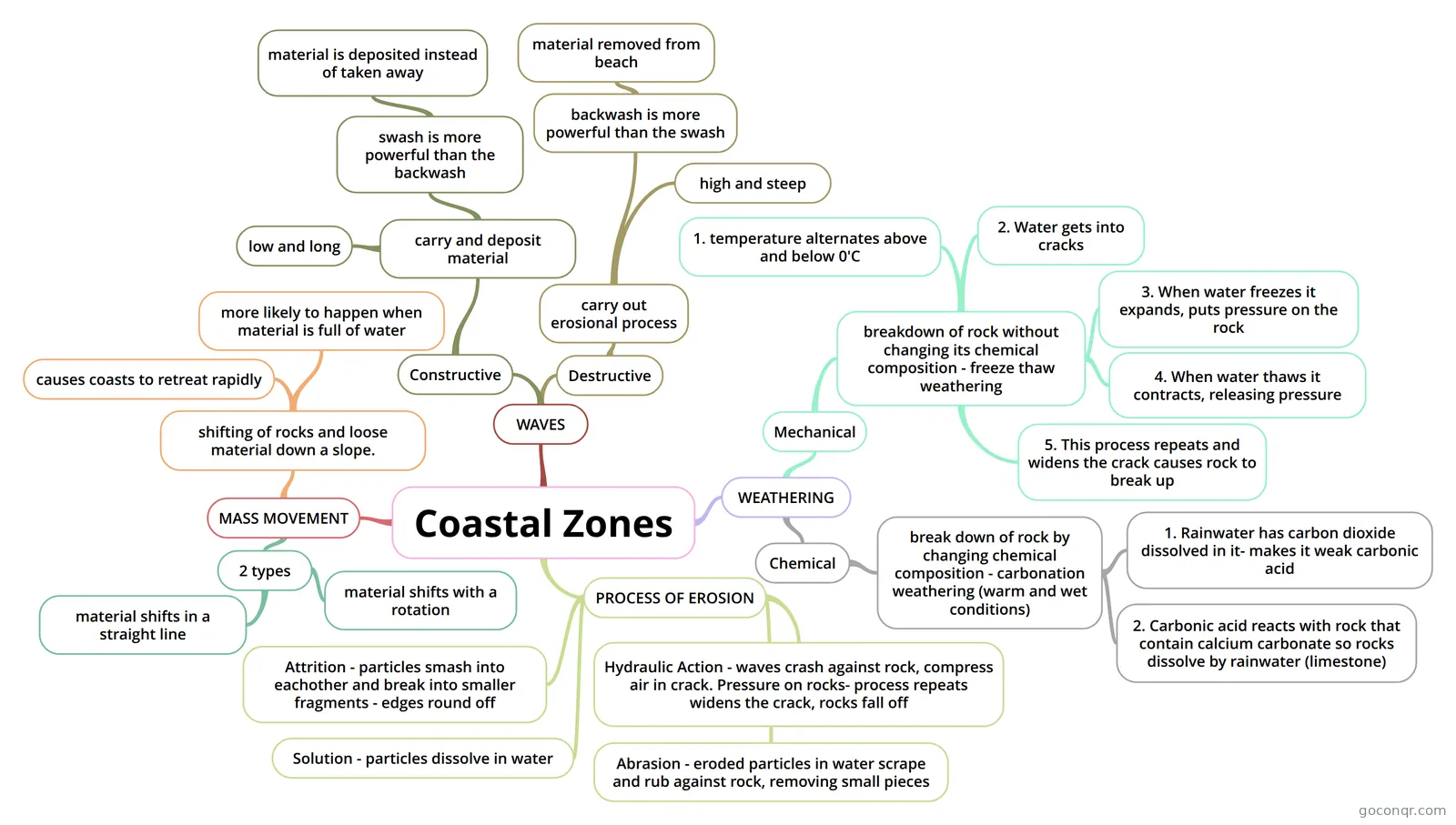 Mind map Coastal Zones Mass movement Weathering Waves Erosion
-
7 cardsCoastal erosional features
Mind maps
Flashcards
Notes
-
spits, bars and tombolo's Spits- Eroded materials are carries along the beach by long shore drift. The direction of prevailing wind causes the wind to approach the coastline at an angle. Beach sediment moves in zigzag patterns along the coast ...
-
Coastal Erosion Coastal Erosion: Hydraulic Action The sheer force of waves breaking against a cliff which causes parts of the cliff to break away.
More Geology and earth sciences topics
About Coasts
GoConqr OriginalWhat the Coasts resources cover
The unit follows the coast from process to landform to management. The Mind Map Sediment Cells sets out inputs, transfers, stores, cliff erosion, beaches, dunes, spits and beach recharge. The notes on spits, bars and tombolos explain how longshore drift carries material along the beach when wind arrives at an angle.
Landforms and case studies
The Mind Map costal landforms covers spits, cliffs and wave-cut platforms, headlands and bays, and caves, arches, stacks and stumps. Emergent Features looks at raised beaches and wave-cut notches. For real places, try the Mind Map Spit Case Study and the one on cliff collapse at Holderness. The Mississippi Delta maps give figures such as a delta area of 26,000km2 and a river carrying 450m tonnes of sediment a year.
A sensible order
- Start with Coasts or Coastal Landscapes maps for the big picture.
- Move to Sediment Cells and the erosion and deposition maps.
- Add case studies and the coastline management maps.
- Finish with flashcards and quizzes.
Using quizzes and maps together
Read a map first, then try the quiz Natural Processes - Coastal Quiz. It asks about the coast as the zone where land and sea meet, how water particles move and what fetch is. Wrong answers show which map to reopen. The flashcard deck Coasts Test is useful for systems vocabulary such as inputs, outputs and the four spheres.
Where it fits
Coasts sits in the Surface Processes and Landscapes strand of Geology and earth sciences. Most resources suit school students, including GCSE Geography and A-level Geography revision. Pick one map today and see what you can recall.
Frequently asked questions
Which resource should I open first?
Start with a broad mind map such as Coasts or Sediment Cells. They lay out processes, stores, transfers and landforms in one view. Once the structure feels familiar, move on to the case study maps and then the flashcards and quizzes.
What do the mind maps cover?
They cover sediment cells, erosion processes, spits, cliffs, wave-cut platforms, stacks, emergent features, sea level change and coastline management. There are also case studies, including the Holderness Coast, South Devon and Dorset, and the Mississippi Delta.
Are the resources free to use?
Yes. Every resource listed here is free to open, study and take, with no account needed. They were made by GoConqr users rather than by GoConqr itself, so it helps to check them against your own course notes.
Which exams do they suit?
Resources here mention GCSE Geography and A-level Geography, and most of the material is aimed at school level. A smaller share is university level. Check the topic against your own specification before relying on any one resource.
How can I test myself on coasts?
Try the quiz Natural Processes - Coastal Quiz, or the quiz on erosion and movement of rocks and land. Flashcard decks such as Coastal landforms and Rock types and coastal erosion are good for quick recall of key terms.
What if I can't find what I need?
Make your own. A free account lets you save quiz scores and build your own quizzes, mind maps, flashcards and notes, so you can fill any gap in a topic in your own words.